
Reviewed · FOOD & DRINK
Arequipa Tasting Tour
Arequipa’s best introduction may be a walk that moves from old plazas to a working market, then finishes with queso helado and pisco. You’ll hear how earthquakes reshaped the city, see white volcanic-stone buildings, and sample the local character rather than simply ticking off monuments.
I like the small maximum group of eight, which gives guides such as José, Daniel, and Jorge room to answer questions. I also like the San Camilo Market stop, where fruit, tubers, meat, and other local foods make Arequipa feel like a living city. The main drawback is simple: this is more walking-and-history tour than tasting tour, and the food sampling comes mostly near the end.
Key points at a glance
- San Camilo Market gives the tour its strongest local flavor, with time to see regional produce and try selected foods.
- Queso helado and pisco come at the finish, at the Centro Artesanal Fundo el Fierro.
- The route covers major central sights, including Plaza de Armas, La Compañía, San Francisco, and the Jesuit cloisters.
- Guides add real value, especially José, Daniel, and Jorge, who are praised for answering questions and explaining the city clearly.
- The group is limited to eight people, making it easier to ask for extra detail or clarification.
- At $13, the tour is excellent value, but you should book it for context and orientation, not a full meal or a long series of tastings.
What this Arequipa walk is really about
The name suggests a food tour, but the experience is built around the story of Arequipa. You spend most of the first part on foot, moving through the historic center and learning how the city developed, suffered earthquakes, and rebuilt itself.
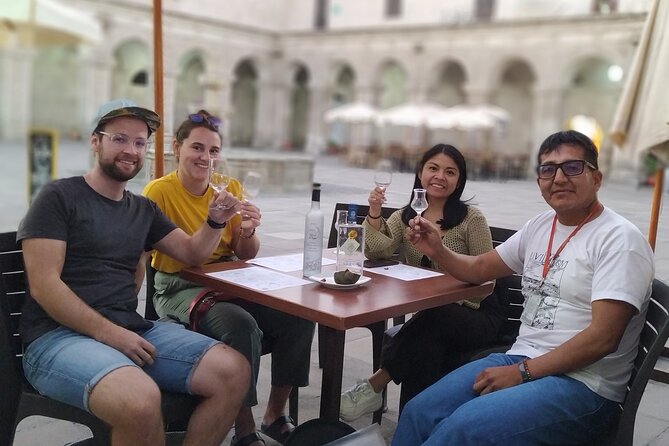
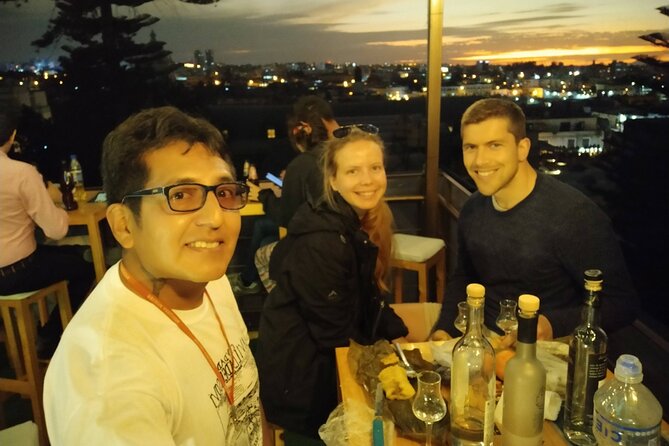
Food enters the picture through the market and the final tasting. You can expect local fruit and market samples along the route, followed by traditional queso helado and pisco at Fundo el Fierro. The pisco portion is not just a quick shot. Guides explain the drink and how it is made, and the tasting gives you a better sense of Peru’s national spirit.
That balance works well if you are new to Arequipa. I would take this early in a stay, ideally on your first or second day, because it helps you understand buildings and streets you may otherwise pass without noticing. It also points out places you may want to revisit on your own.
The tour has a 5 out of 5 rating from 92 reviews, with 99 percent of bookers recommending it. That is a strong signal, though you should read the format correctly: it is an educational city walk with food highlights, not a three-hour progressive meal.
More Food Tours in Arequipa:
- Arequipa Food Tour: Ancestral Cuisine & City Tour
★ 5.0 · 11 reviews - Cooking Class Typical Food in Arequipa
★ 3.9 · 3 reviews - Lima: Ultimate Peruvian Food Tour
★ 4.9 · 700 reviews
Starting in Plaza Campo Redondo
The route begins at Plaza de Armas, but the first listed stop is Plaza Campo Redondo. This traditional neighborhood is linked to the earliest settlement of the Spanish conquerors in the area.
You only spend about 10 minutes here, so do not expect a long architectural visit. Its value is context. Before you look at Arequipa’s polished central buildings, you get a glimpse of an older neighborhood and the beginnings of the colonial city.
I like this kind of opening because it keeps the tour from treating the Plaza de Armas as if Arequipa appeared fully formed. You start with the question of how the city began, then follow its growth toward the better-known churches and public squares.
San Francisco and the street of Santa Catalina
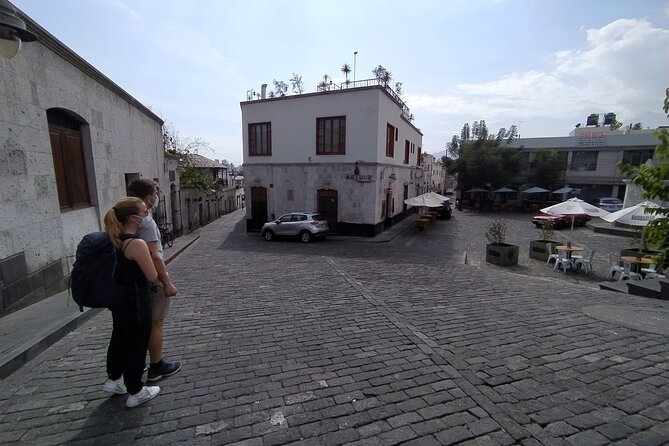
The walk continues past the Santa Catalina Convent and along the street that shares its name. The convent itself is not listed as an included interior visit, so you should not book this experience expecting a guided tour inside Santa Catalina.
At San Francisco Plaza, you see the large Church and Monastery of San Francisco. The nearby Centro Artesanal Fundo el Fierro is also part of the area. This artisan center later serves as the finishing point for the pisco tasting, giving the tour a useful sense of return.
The stop lasts about 20 minutes. That is enough for an outside explanation and a look at the setting, but not a slow examination of every detail. If you want to visit Santa Catalina or the churches in depth, plan a separate visit and budget for any entrance fees.
Plaza de Armas and Arequipa’s changing face
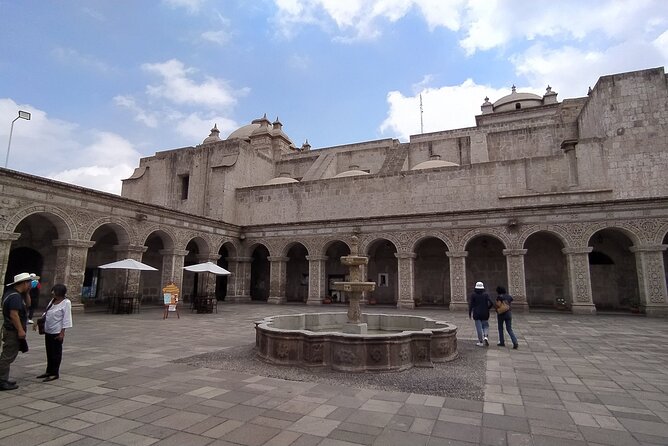
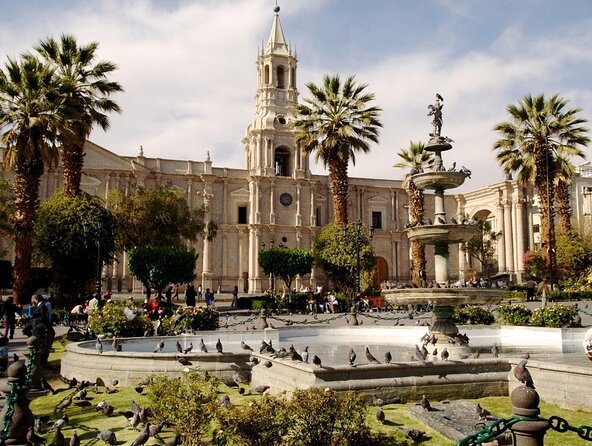
The Plaza de Armas is the main meeting point and the heart of the central walk. Here the guide discusses the founding of Arequipa, the city’s changes over time, and the effect of repeated earthquakes.
This is where a guide can make a major difference. José is praised for answering questions and making sure the group stays engaged. Daniel is especially good at connecting architecture, religion, local industries, and daily life into one story. Jorge is described as warm and approachable, with a knack for introducing visitors to key parts of the city.
The stop takes around 25 minutes. You will hear about the Cathedral and the buildings around the square, with the guide filling in details that are easy to miss when you explore alone. I find this useful because the square can look straightforward at first glance. Once you understand how earthquakes shaped construction and repairs, the buildings become easier to read.
There is also a practical benefit. The Plaza de Armas is the city’s main reference point, so learning its layout early helps you find your way back to cafés, shops, and other sights later.
A few more Arequipa days worth weighing up
- Tour to the Salinas Lagoon and National Reserve in Arequipa
★ 4.5 · 548 reviews - From Arequipa: Sillar Route Trek
★ 4.2 · 461 reviews - Arequipa: Chili River White Water Rafting with Hotel Pickup
★ 4.8 · 329 reviews - Walking tour in the Historic Center of Arequipa
★ 4.4 · 180 reviews
La Compañía’s baroque facade and gold altars
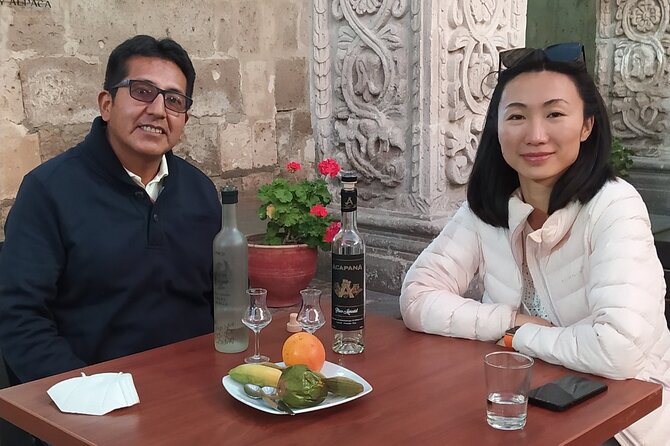
From the square, the walk reaches the Church of the Company of Jesus, commonly called La Compañía. Its carved baroque facade is one of the visual highlights of the route.
Inside, the church is described as more restrained than the exterior, with altars covered in gold leaf. The visit is scheduled for about 10 minutes, and entrance fees are not included. Since opening access and ticket details can vary, be prepared for a short exterior-focused explanation if the interior cannot be entered at that moment.
The stop matters because it shows the contrast between Arequipa’s dramatic stone carving and its quieter interior spaces. The church also leads naturally into the nearby Jesuit cloisters, which receive a longer visit later.
San Camilo Market is the strongest food stop
Allow 30 minutes for San Camilo Market, one of the most varied markets in Peru. This is the point where the tour feels most connected to everyday food.
You can expect to see regional tubers, meat, fruit, and other produce. The guide may lead you to different stands and offer small samples of local food. Specific tastings can vary, so do not assume every item will be available on every departure.
Several details make this stop especially worthwhile. You get to see what people in the region buy and eat, not just a restaurant version of Arequipa. You also learn how broad local produce can be, from fruit to unfamiliar tubers, without needing to commit to a full market meal.
The market is best approached with an open mind and a little patience. It is an active public market, not a staged tasting room. If you want a quiet, polished food presentation, this may feel rough around the edges. If you want a direct look at local ingredients, it is the most revealing stop.
One caution: the tour does not include lunch. If you choose an afternoon departure, eat beforehand. Thirty minutes in the market is not intended to replace a proper meal.
The Jesuit cloisters and the final tasting
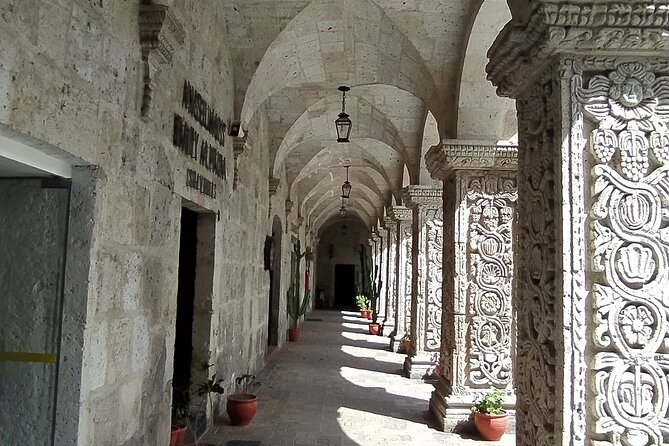
The cloisters of La Compañía receive about 40 minutes, the longest scheduled stop. These former spaces belonged to the Jesuit school and convent, and they offer one of the clearest examples of religious viceregal architecture in Arequipa.
This is the section for people who enjoy carved stone, courtyards, religious architecture, and the layers of history inside old institutions. The guide can explain how the complex functioned and connect it with the church seen earlier.
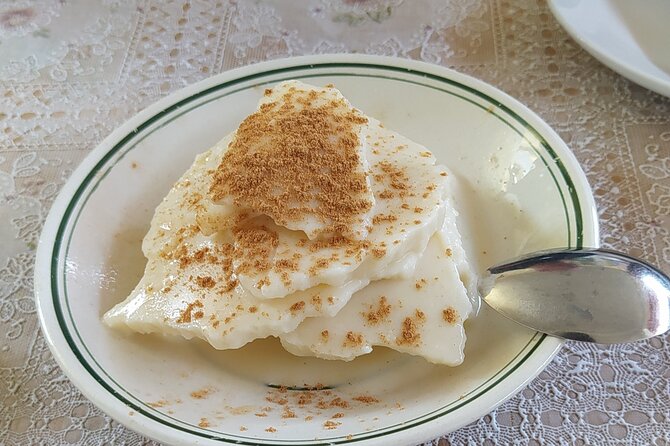
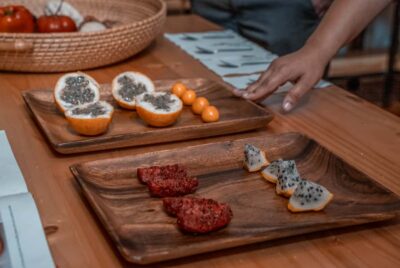
The tour finishes at Centro Artesanal Fundo el Fierro on C. Zela, where the pisco tasting takes place. The final food portion includes pisco, queso helado, traditional dessert, and local fruits. Some small samples may appear earlier at the market, but the main tasting is saved for the end.
Queso helado is a local frozen dessert with a name that can confuse first-time visitors. It is not cheese ice cream in the usual sense. The experience gives you a chance to try this Arequipa specialty alongside pisco, and the pairing makes a pleasant close to a walking tour.
The pisco lesson is one of the tour’s most praised elements. You learn about the drink and how it is made rather than simply receiving a glass. Some past arrangements have included a pisco sour, though you should treat that as dependent on the venue and day, not as a guaranteed extra.
How much walking and time should you expect?
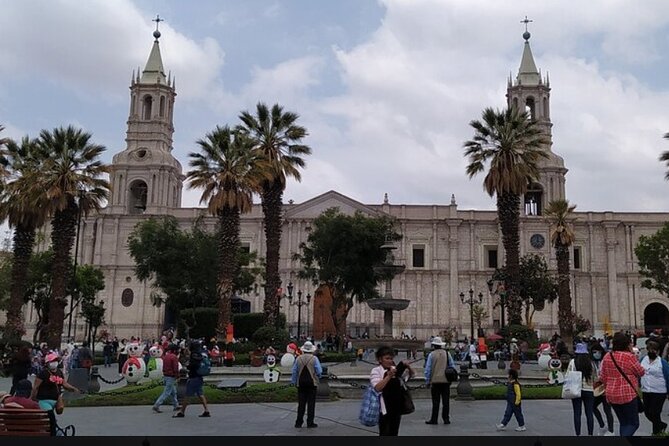
The full experience lasts about three hours and 30 minutes. With stops at six places and a route through the center, you should expect steady walking rather than long periods of sitting.
A moderate level of physical fitness is recommended. The tour does not call for strenuous hiking, but cobbled streets, standing at sights, and several hours on your feet can be tiring. Wear practical walking shoes and bring protection from the sun. Bottled water and soda are not included, so carry water with you.
The small group limit of eight is a real advantage. It helps the guide keep the pace manageable and makes it easier for you to ask about a church facade, a market product, or the pisco-making process. Several guides have been singled out for taking time with questions, which matters more on a walking tour than a polished script does.
Service animals are allowed, and the route is near public transportation. The meeting point is Plaza de Armas, while the end point is Fundo el Fierro near Plaza San Francisco. You should pay attention to that difference when planning your next activity.
Is $13 a good value?
At $13 per person, this is an unusually inexpensive way to get a guided introduction to central Arequipa. The price covers the walking tour, guide service, pisco tasting, traditional dessert, and local fruits. It does not include bottled water, soda, lunch, or entrance tickets.
The value is strongest if you would otherwise explore the center without much explanation. A good guide turns the churches, plazas, and market into a connected story, then adds a few tastes you might not know how to find alone.
The value is weaker if your main goal is to eat a large amount of food. The title may lead you to expect several substantial tastings, but the main tasting is toward the end and the tour spends considerable time on architecture and history.
I would rate it as a strong budget choice for first-time visitors, solo bookers, couples, and families who enjoy walking. It is also a good option for anyone who wants a gentle introduction before arranging longer visits to Santa Catalina, La Compañía, or other central sights.
Choosing the right guide and departure
The available guide can shape the tone of the experience. José is praised for his patience and for answering a large number of questions. Daniel brings extra detail about architecture, religion, local industries, alpaca wool, and vicuña. Jorge is described as friendly and easy to talk with.
You cannot necessarily choose among them, so book for the route and format rather than a specific guide. Still, the pattern is encouraging: the guide is not simply escorting you from one stop to the next. You can ask questions and request clarification.
For an afternoon departure, have lunch first. The walk is long enough that beginning hungry could make the history portion feel longer than it is. If you want the best chance of enjoying the market and final tasting, start with food and water already taken care of.
The experience requires good weather. If poor weather cancels the tour, you are offered another date or a full refund. You can cancel for a full refund up to 24 hours before the start time, while late cancellations and changes are not accepted.
Who should book this Arequipa tasting tour?
Book it if you want three things in one outing: a city orientation, an introduction to Arequipa’s architecture, and a small taste of local food and drink.
It suits:
- First-time visitors who want a useful overview of the center
- Solo visitors who prefer a small guided group
- Couples looking for a low-cost cultural activity
- Families with enough stamina for a three-and-a-half-hour walk
- Food-minded visitors who want to see a real market
- History and architecture fans who do not mind that tasting comes late
Think twice if you want a dedicated food crawl, a sit-down lunch, or extensive time inside every church. You may prefer a separate market visit and a focused architecture tour.
Should you book it?
I would book this tour early in an Arequipa stay, especially at $13. It gives you the city’s basic map, explains why the white-stone center looks as it does, and introduces local foods without taking up a full day.
Just set the right expectation. This is a walking tour with a tasting finish, not a meal on foot. If San Camilo Market, queso helado, pisco, and the story of Arequipa sound like a good mix, it is an easy value. If you want nonstop samples, choose something built around food alone.
FAQ
Where does the tour start?
The tour starts at Plaza de Armas in Arequipa, Peru.
Where does the tour finish?
It finishes at the Centro Artesanal Fundo el Fierro, at C. Zela 202 near Plaza San Francisco. The pisco tasting takes place there.
How long does the tour last?
The experience lasts approximately three hours and 30 minutes.
What food and drink are included?
The tour includes a pisco tasting, traditional dessert, and local fruits. Queso helado is also part of the final tasting experience.
Is lunch included?
No. Lunch is not included. Anyone taking the tour in the afternoon is advised to eat beforehand.
Are entrance tickets included?
No. Entrance tickets are not included in the tour price.
How large is the group?
The tour has a maximum of eight travelers.
Can I cancel for a full refund?
Yes. You can cancel at least 24 hours before the start time for a full refund. Cancellations or changes made less than 24 hours before the start are not accepted.
Just added around Arequipa
- Walking tour through the Historic Center of Arequipa★ 4.0 · 3 reviews
- Trek to the Route of the Sillar and Culebrillas in Arequipa★ 4.0 · 9 reviews
- Arequipa, Historic and Colonial City and Santa Catalina Monastery★ 4.5 · 42 reviews
- 8-Hours Tour in Arequipa Laguna de Salinas with Pick-up★ 4.5 · 56 reviews
- Tour to the Sillar Route from Arequipa | Half Day★ 4.2 · 4 reviews
- Tour + Hike to the Sillar Route and Culebrillas in Arequipa★ 4.1 · 5 reviews
- Arequipa: The White City Origins – Sillar Route Half Day★ 5.0 · 4 reviews
- Sillar Stone Tour from Arequipa★ 4.0 · 22 reviews
Food & Drink, compared.
Historic Center Street Food, Market, and Eateries Tour
Read our review →
Food and Culture Full day Tour in the Sacred Valley
Read our review →
Experience Lima: Taste 12 Snacks and Visit Top Monuments
Read our review →

Cook an Authentic Ceviche And Peruvian Pisco Sour!
Read our review →
Miraflores Trending Flavors Half-Day Walking Tour
Read our review →
Browse the lists this tour appears in