
Reviewed · AREQUIPA TOURS
8-Hours Tour in Arequipa Laguna de Salinas with Pick-up
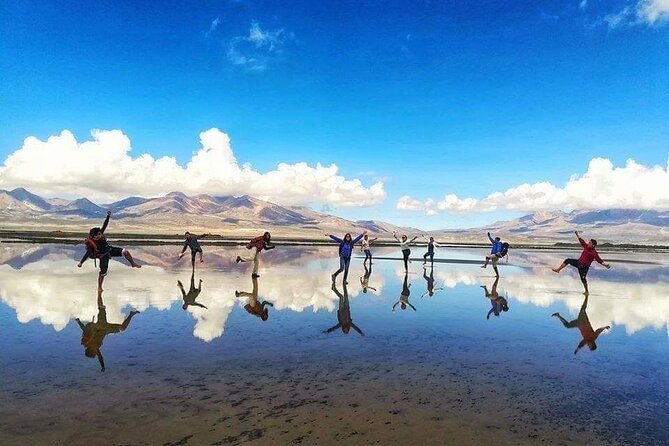
Laguna de Salinas is one of Arequipa’s most striking day trips: a broad salt plain and high-altitude wetland framed by volcanoes, with flamingos and vicuñas often appearing in the distance. The mirror effect is wonderful when the shallow water is still, but it depends entirely on rain, wind, and season. Misti Volcano views and the open Andean scenery are reliable highlights.
I like the early start, which can get you to the lagoon before the crowds, and the chance to see wild camelids rather than only visiting a polished sightseeing stop. I also like the low $30 price, especially when the group is small enough for a faster 4×4 vehicle. The trade-off is a long, dusty ride over rough roads, with altitude reaching about 4,200 meters.
Key points to know before booking
- The salt flats change with the weather: Rain can create beautiful reflections, while wind or dry conditions can leave the surface plain and white.
- Expect high altitude: The reserve reaches roughly 4,200 meters, and several people have struggled with altitude sickness or motion sickness.
- Wildlife is a major reason to go: You might see vicuñas, llamas, alpacas, guanacos, flamingos, Andean geese, and viscachas.
- The road is part of the experience: About four hours of the day can be spent driving through the reserve, much of it on a bumpy, dusty track.
- Extra cash is needed: Breakfast, the PEN10 community tax, reserve admission, and the optional PEN5 hot-spring entry are not included.
- Guide quality may vary: Patricia, Jack, Fanny, Fernando, Jennifer, and Jefferson have received praise, but English-language service should be confirmed in advance.
The real attraction is the high Andean setting
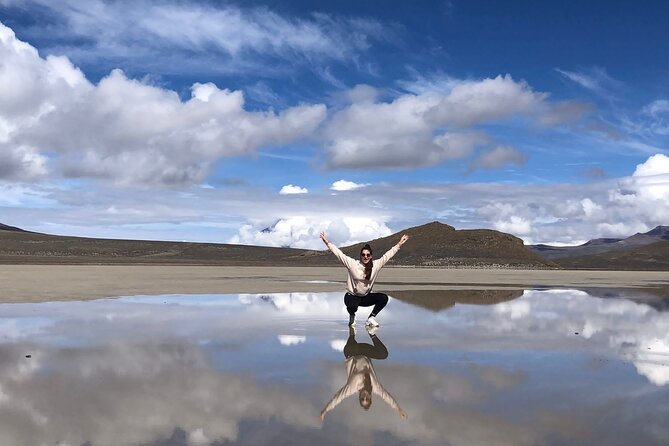
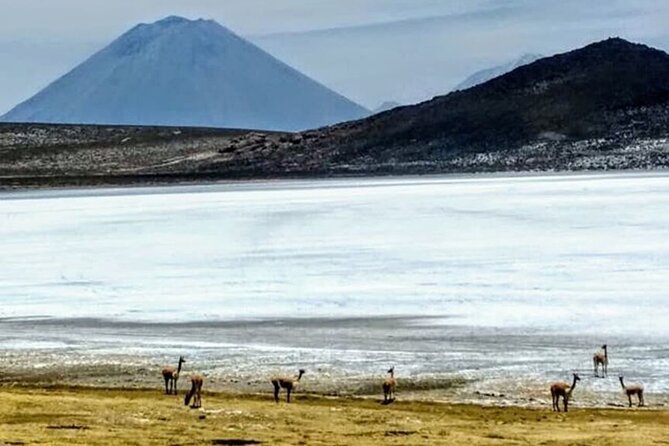
This is not simply a visit to a lake. You are heading into the Salinas y Aguada Blanca National Reserve, a huge highland area where salt, volcanoes, wetlands, and grazing camelids meet. The open space can feel almost otherworldly, especially when the salt plain catches the sky.
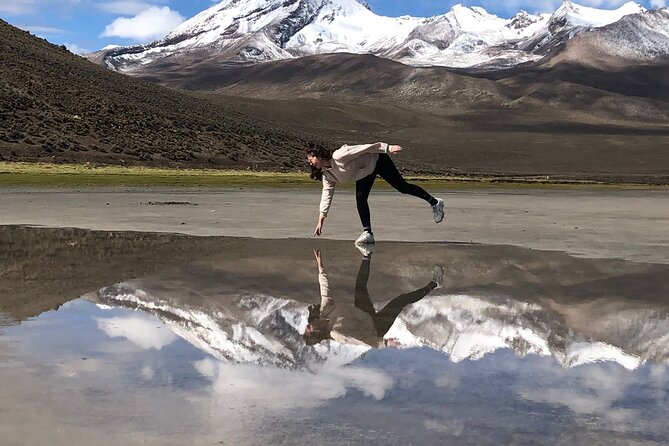
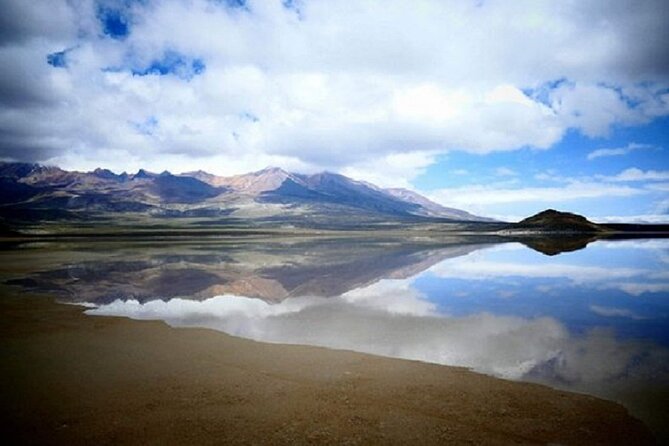
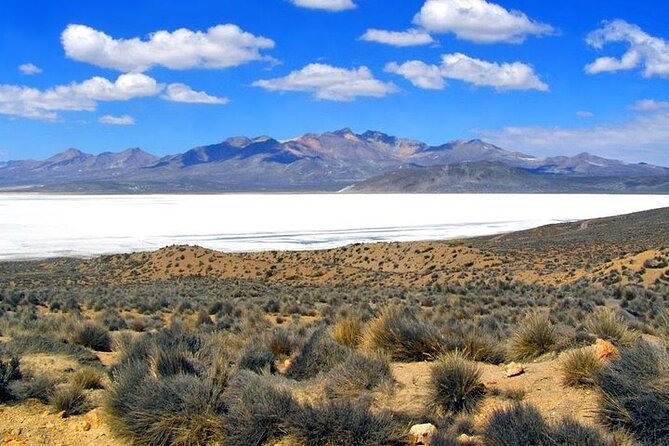
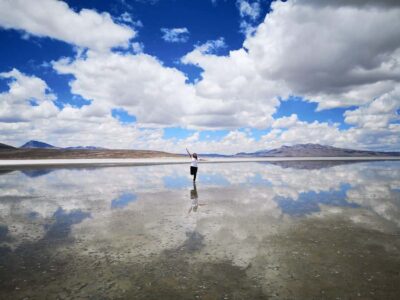
The central sight is Laguna de Salinas, a shallow seasonal lagoon and salt-producing area. After rain, water spreads across the flat surface and can create mirror-like photographs. In dry periods, the scene changes completely. You may see white salt crusts and broad pale plains rather than reflections.
That seasonal difference matters. If your main goal is the famous reflection photograph, you need to accept that nature decides. Wind can break the mirror effect even when water is present. Some departures have produced excellent mirrored photographs, while others have found the lagoon too windy or too dry for the same image.
The setting is still worthwhile without a reflection. Volcano views, distant birds, salt workers, and the sheer scale of the high plain give the outing more substance than a single photo stop. I would book it for the full setting, not only for one camera effect.
A few more Arequipa days worth weighing up
- Tour to the Salinas Lagoon and National Reserve in Arequipa
★ 4.5 · 548 reviews - From Arequipa: Sillar Route Trek
★ 4.2 · 461 reviews - Arequipa: Chili River White Water Rafting with Hotel Pickup
★ 4.8 · 329 reviews
An early 6 a.m. start and a long ride from Arequipa
The tour begins at 6 a.m. on Calle Álvarez Thomas in central Arequipa and ends on Calle San Agustín, two blocks from the Plaza de Armas. That finish is convenient after a tiring day, since you can walk straight into the historic center for dinner or a quiet rest.
The drive takes roughly two hours each way through the reserve, according to the planned schedule. The total outing is advertised at eight to ten hours, though one departure ended closer to six hours. Timing can depend on road conditions, stops, group size, weather, and how long you spend at each site.
The included vehicle is air-conditioned, and the group limit is 20 people. Smaller groups may use a Toyota Land Cruiser or another 4×4, which can make the rough route quicker and more comfortable than a larger minibus. That is not guaranteed, so ask what vehicle is planned if the ride matters to you.
The road deserves honest attention. Several sections are dusty and very bumpy, with sudden turns, steep drops, and rough dirt surfaces. A careful driver can reduce the jolts, but no vehicle can turn this into a smooth road trip. If you suffer from motion sickness, sit where movement is least noticeable, bring medication that you already know works for you, and keep water close.
Salt plains, working areas, and the first major stop
The first listed stop is the salt-producing area in Arequipa. You will see broad plains covered with salt and the simple geometry created by evaporation and collection. This gives useful context before reaching the lagoon, because Salinas is not just a scenic body of water. It is also a working resource for nearby communities.
The stop lasts about an hour and has no admission charge listed. The appeal is visual and local rather than museum-like. You should not expect a formal industrial tour or a long presentation about salt production. The quality of the explanation depends heavily on the guide.
That difference is important. Some guides, including Patricia and Fernando, have been praised for clear explanations and patience. Other departures have felt more like transport with occasional commentary. If you want detailed cultural or environmental interpretation, ask at the start for explanations in your language and stay near the guide during stops.
Wildlife in Salinas y Aguada Blanca Reserve
The reserve is a strong part of the trip because wildlife appears in a setting where you are not looking at animals behind fences. Vicuñas are among the most memorable sights. You might also see guanacos, llamas, alpacas, flamingos, Andean geese, and small Andean rabbits or viscachas.
The animals are not guaranteed, and many birds can be far from the viewing area. Bring binoculars if you have them. Without them, flamingos may look like small pink marks across the water, though the broad view remains attractive.
The flamingos and parihuanas are tied to the lagoon conditions and season. You may see several birds feeding in the shallows, or only a few distant shapes. The high plain can look empty at first, so slow down and scan the waterline and rocky slopes.
There is also a practical point here: the reserve is not a quick roadside photo stop. The schedule includes a long drive through the protected area with stops along the way. This gives you more chances to spot animals and see changing views, but it also explains why the day can feel tiring.
Same base, a completely different kind of day:
- Walking tour in the Historic Center of Arequipa
★ 4.4 · 180 reviews - Adventure Day in Arequipa: Pillones Waterfall + Rock Forest
★ 4.7 · 120 reviews - Arequipa Tasting Tour
★ 5.0 · 92 reviews - Sillar Route and Culebrillas Petroglyphs
★ 4.5 · 89 reviews
Laguna de Salinas and the reflection question
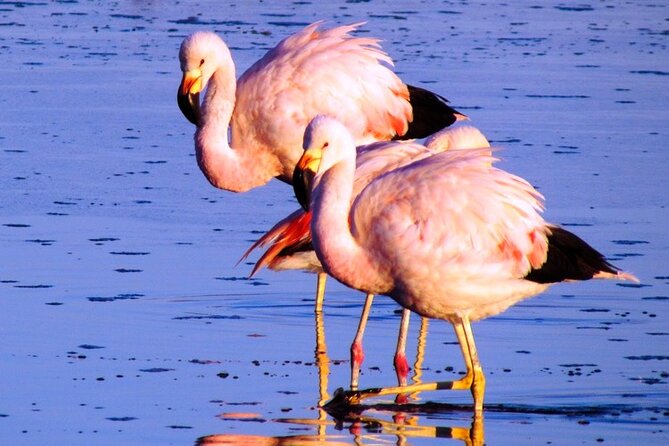
At the lagoon, you generally have about 30 minutes to walk nearby, look for birds, and take photographs. The stop can feel wonderfully quiet, especially when the vehicle arrives early and few other groups are present.
The mirror effect is created when shallow water lies smoothly over the salt surface. It is not a permanent feature. Rain, wind, dry weather, and the time of year all make a difference. One departure in late June found plenty of water but no useful reflection, while another had conditions good enough for mirrored photographs.
This is where expectations can make or break the day. If you want a specific photograph with your reflection, treat it as a bonus. You will have a better experience if you also value the volcanoes, wildlife, salt patterns, and silence.
The 30-minute stop may feel short if conditions are perfect. It is enough for a walk and photographs, but not enough for a long hike or a slow picnic. The area is exposed, so wind and cold can also limit how long you want to remain outside.
The optional hot springs are warm, not hot
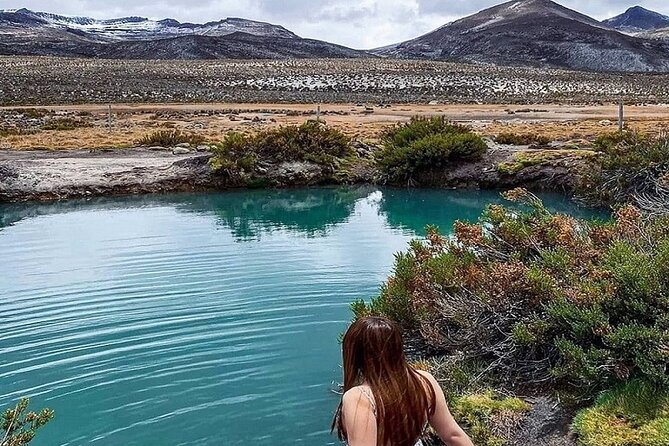
The thermal wells are small natural pools with moderately warm water. You have about 30 minutes here, and entry costs PEN5 per person. The fee is optional.
Do not picture a large spa complex. The pools are basic, and one account described the water as about 19 degrees Celsius. At this altitude, that may not feel hot at all, particularly when the air is cold or windy. Some people may enjoy a brief soak, while others will decide it is not worth changing clothes for.
Llamas may be seen around this part of the route, adding to the rural feel. Bring a small towel and spare clothing only if you genuinely want to enter the water. Otherwise, you can use the stop to stretch, take photographs, and watch the surrounding mountains.
The guide makes a major difference
The strongest departures have had guides who stay involved, explain the route, and make sure different language groups understand what is happening. Patricia has been praised for looking after an English-speaking participant, while Jack, Fanny, Fernando, and Jennifer have also received warm comments for their friendliness, patience, or explanations.
That said, English service is not completely consistent. At least one departure assigned a Spanish-speaking guide despite an English request, and other accounts described limited commentary. Some guides may be bilingual but less comfortable in English than expected.
I would contact Arequipa Explorer before paying and ask two direct questions: Will the guide speak English throughout the day, and will the guide provide explanations at each stop? Do not assume that selecting English automatically guarantees a full guided experience.
The difference between a good guide and a quiet driver is substantial here. The scenery needs little help, but information about salt production, the reserve, wildlife, and local communities gives the long ride a purpose. Without that, the day can feel like transportation to a scenic place.
Altitude and physical demands at 4,200 meters
This is not a physically difficult tour in the hiking sense. Most stops involve short walks, and a moderate fitness level is requested. The greater challenge is the combination of altitude, cold, motion, and a long day in a vehicle.
The route reaches about 4,200 meters. That is high enough for headaches, nausea, shortness of breath, dizziness, and vomiting. One person became sick during the ride, while others struggled when the vehicle reached the salt flats. Those problems are not always preventable, but you should take the risk seriously.
If you have just arrived in Arequipa, consider allowing time to adjust before booking. The tour starts early and climbs quickly. Eat lightly, drink water, avoid alcohol the night before, and carry snacks. Do not plan a demanding activity immediately afterward.
If you feel very unwell, tell the guide rather than trying to hide it. Service animals are allowed, but the altitude and rough ride still require careful thought for both you and the animal.
What the $30 price really covers
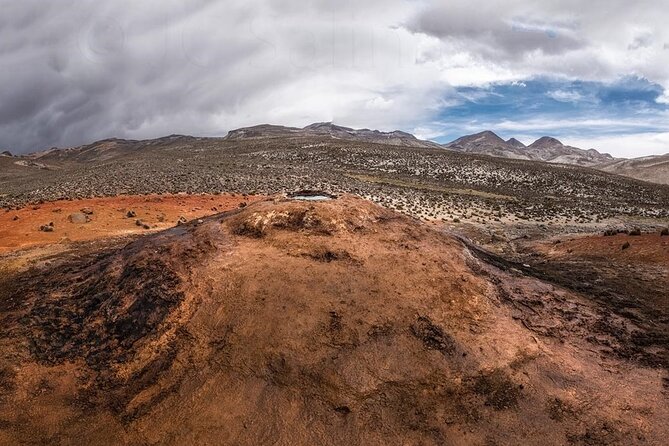
At $30 per person, this is inexpensive for an eight to ten-hour outing with an air-conditioned vehicle and a professional guide. The price works best when you want transport, basic guiding, wildlife viewing, and access to several places in one day.
It is not an all-inclusive price. You need extra money for:
- Breakfast, which has been available for about 7 to 15 soles
- The PEN10 community tax
- Reserve admission, which is listed as not included but has no fixed amount in the supplied details
- The optional PEN5 thermal-well entry
- Lunch, water, and snacks
Breakfast is not included, and the schedule can put the meal after several hours of driving. One departure stopped around 9 a.m., after roughly three hours on the road. I would carry something small to eat even if a breakfast stop is planned.
The value is strongest for budget-conscious visitors who want to see a remote part of the Arequipa region without arranging private transport. It is weaker if you expect a polished, deeply narrated tour, guaranteed English commentary, or a comfortable road surface.
Who will enjoy this day most
I would recommend the trip to you if you enjoy wide-open scenery, wildlife, volcano views, and places that feel far removed from the city. It suits photographers who are flexible about conditions, couples who want an unusual day outside Arequipa, and anyone curious about highland Peru beyond the usual city sights.
It can also work well for solo visitors if the group is friendly and the guide is attentive. A smaller group and 4×4 vehicle are especially useful for solo participants, though neither is guaranteed.
I would think twice if you have severe altitude concerns, strong motion sickness, limited tolerance for dust and jolts, or a strict need to return at a precise time. I would also reconsider if your only reason for booking is the mirror photograph. The view may be magnificent, but the water may not cooperate.
The booking is flexible in one useful way: you can cancel for a full refund up to 24 hours before the start time. If poor weather cancels the experience, you should be offered another date or a full refund. Weather remains important even when the tour operates, since wind and cloud can change what you see.
Should you book the Laguna de Salinas tour?
Book it if you want an affordable, full-day introduction to the salt flats and high country around Arequipa, and you are prepared for altitude and a rough road. The most praised parts are the views of Misti and other volcanoes, the chance to see flamingos and vicuñas, the quiet setting, and the occasional excellent guide.
Skip it if comfort is your priority or if you need a guaranteed English-speaking guide with detailed commentary. Before booking, confirm the language, ask about the vehicle, budget for every extra fee, and check the likely weather. Go for the complete high Andean experience, not just the reflection photograph.
FAQ
Where does the tour start and finish?
It starts at C. Álvarez Thomas 115 in Arequipa at 6 a.m. It ends on Calle San Agustín, about two blocks from Arequipa’s Plaza de Armas.
How long does the tour last?
The planned duration is about eight to ten hours. Some departures may finish sooner, depending on road conditions, stops, weather, and the day’s organization.
How high does the tour go?
The route reaches approximately 4,200 meters. You should have a moderate fitness level and prepare for possible altitude sickness.
Is breakfast included?
No. Breakfast is not included in the tour price. Breakfast has been available during the route for an additional cost, and you should also bring water and snacks.
Are the hot springs included?
No. Entry to the thermal wells is optional and costs PEN5 per person. The pools are small and have moderately warm water.
Are entrance fees included?
No. Admission charges for the reserve are not included. The tour also excludes a PEN10-per-person community tax. The exact reserve admission amount is not specified in the provided tour details.
Can I cancel for a full refund?
Yes. You can cancel at least 24 hours before the experience begins for a full refund. Cancellations or changes made less than 24 hours before the start time are not refunded, and poor-weather cancellations should result in another date or a full refund.
Just added around Arequipa
- Walking tour through the Historic Center of Arequipa★ 4.0 · 3 reviews
- Trek to the Route of the Sillar and Culebrillas in Arequipa★ 4.0 · 9 reviews
- Arequipa, Historic and Colonial City and Santa Catalina Monastery★ 4.5 · 42 reviews
- Tour to the Sillar Route from Arequipa | Half Day★ 4.2 · 4 reviews
- Tour + Hike to the Sillar Route and Culebrillas in Arequipa★ 4.1 · 5 reviews
- Arequipa: The White City Origins – Sillar Route Half Day★ 5.0 · 4 reviews
- Sillar Stone Tour from Arequipa★ 4.0 · 22 reviews
- Rock Climbing in Arequipa, Perú★ 5.0 · 28 reviews
Arequipa Tours, compared.
Tour to the Salinas Lagoon and National Reserve in Arequipa
Read our review →
Chili River White Water Rafting with Hotel Pickup
Read our review →
Walking tour in the Historic Center of Arequipa
Read our review →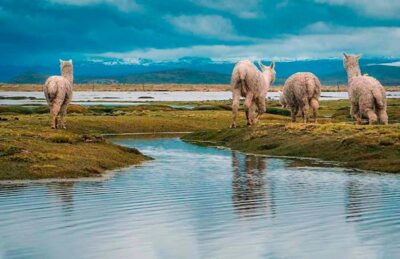
Adventure Day in Arequipa: Pillones Waterfall + Rock Forest
Read our review →
Browse the lists this tour appears in