
Reviewed · SILLAR ROUTE TOURS
From Arequipa: Sillar Route Trek
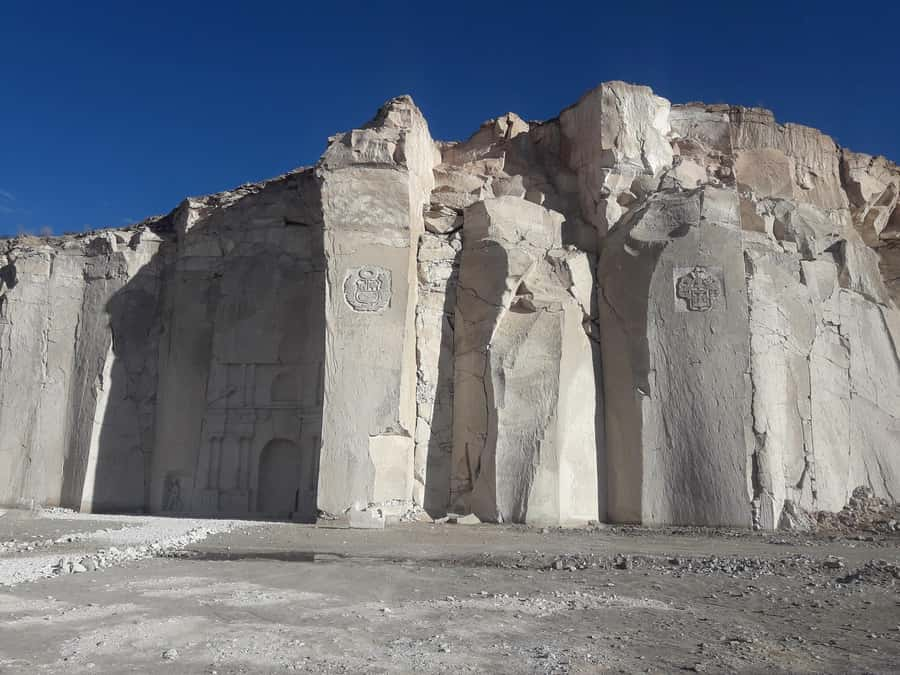
Arequipa’s white stone is not just pretty building material. It is the product of volcanic eruptions, hard labor, and a craft still practiced in the quarries outside the city. This half-day outing takes you to the source, where the Añashuayco Quarry reveals towering walls of pale ignimbrite and stonemasons shaping blocks by hand.
I like the mix of living craft and older culture, especially the chance to see a working quarry before walking into Culebrillas Canyon for Wari petroglyphs and stacked-stone apachetas. The tour also gives you broad views toward Arequipa’s volcanoes without taking up a full day. The main drawback is that the quarry can feel arranged for photos, and busy groups may leave you wishing for more time there.
Key points at a glance
- Añashuayco is a working quarry: See how ashlar, the white volcanic stone used across Arequipa, is extracted and shaped.
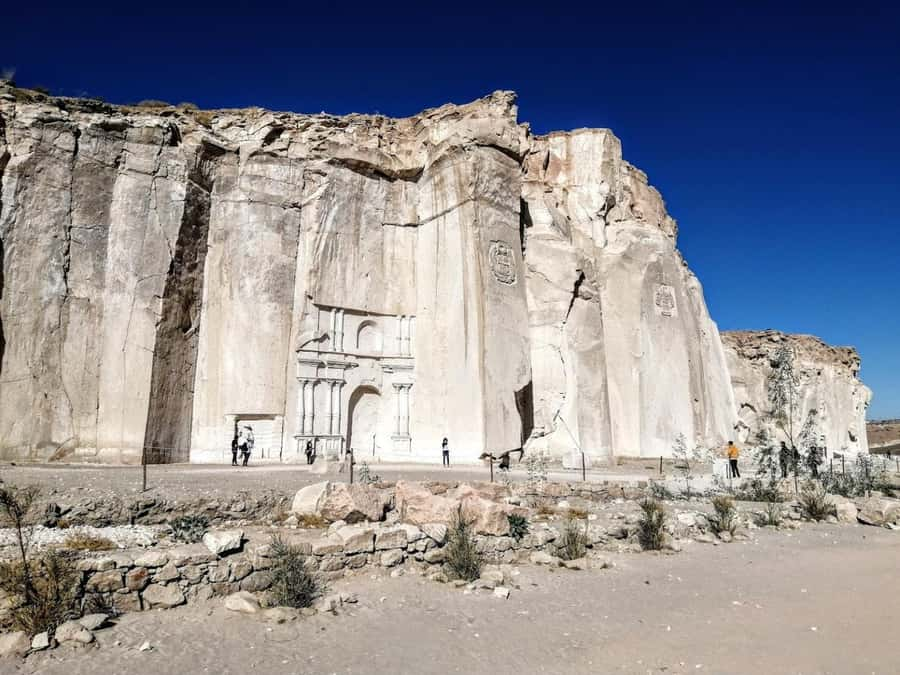
- The Church of the Company appears in stone: A large carving made by local stonemasons gives the quarry a memorable focal point.
- Culebrillas is the strongest walking stop: The narrow canyon has walls reaching 15 to 20 meters and ancient Wari petroglyphs.
- The route takes about four hours: Morning departures return around 1:30 PM, while the 2:00 PM departure can catch warmer evening light.
- Expect a small entrance fee: Transportation and a guide are included, but entrance fees total 18 soles and should be paid in cash.
- Bring practical gear: Closed shoes, sunscreen, a hat, and insect repellent will make the short walks more comfortable.
Why Arequipa’s white stone matters
Look around central Arequipa and you will see pale façades, churches, courtyards, and carved details made from sillar, usually called ashlar in English. The stone gives the city its famous white appearance, but it is not marble and it is not simply cut from an ordinary rock face.
Sillar is volcanic ignimbrite, formed from hot ash and material released by eruptions. The stone is relatively light and workable, which made it useful for construction and detailed carving. At the quarry, your guide explains where it came from, how workers extract it, and how the blocks have been used in Arequipa for generations.
This context makes the trip more worthwhile than a quick photo stop. You are not just looking at a white wall. You are seeing the raw material behind much of the city’s architecture and meeting a craft that remains part of local working life.
More Hiking Tours in Arequipa
- 4 hours Tour: Route of Sillar with Trek in Culebrillas
★ 4.2 · 69 reviews - Trekking, Waterfalls and Thermal Baths
★ 4.5 · 47 reviews - 4-hour excursion: Sillar Route with Hiking in Culebrillas
★ 4.0 · 21 reviews
Starting from central Arequipa
The meeting point is the main office at C. Álvarez Thomas 115, near the center of Arequipa. Your name is checked there before the group receives basic instructions and boards the vehicle.
The drive to the quarry takes about 45 minutes, although the timetable allows roughly an hour for the first transfer. That time gives the guide room to explain Arequipa, the volcanoes, local food, and the origin of the stone. Guides work in English and Spanish, though the balance can depend on the group. English speakers have had good experiences with guides including Jose, Mike, Roni, Alexandra, Julia, and Alexa.
The vehicle is described as comfortable and safe, but it may not have air conditioning. One departure had about 25 people, so do not expect a private excursion or a quiet car ride. The group format helps keep the price low, but it also means you may wait while others take photos.
Volcano views and the Chilina Valley
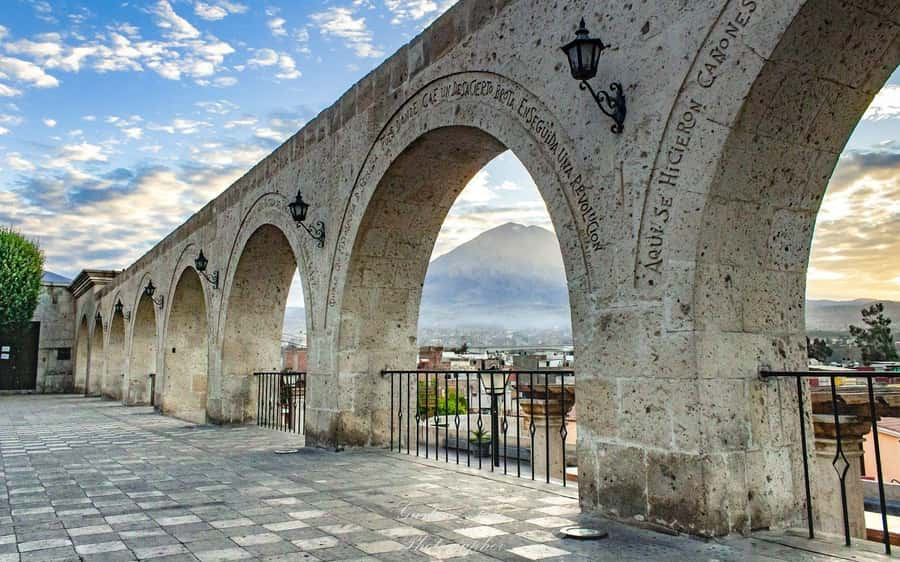
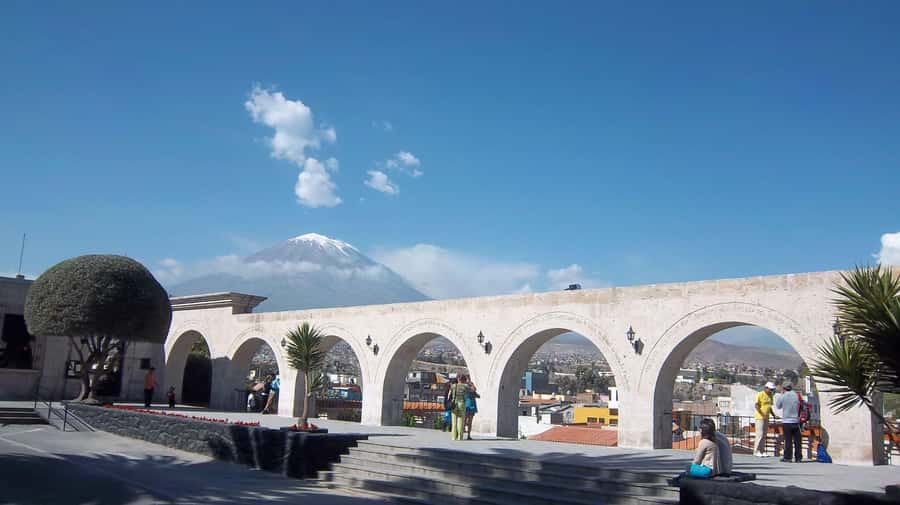
A viewpoint near the start or end of the route gives you a broad look toward Arequipa’s volcanoes and the Chilina Valley. The exact order can change with the season, traffic, and the guide’s plan. Some departures begin with the viewpoint, while others visit it after the quarries and canyon.
This is a short stop rather than a long scenic walk. You get time for photographs and a guided explanation of what you are seeing, including the surrounding volcanoes and agricultural terraces, known locally as andenerías. The stop is useful for orientation because it places the quarry route in the wider setting around Arequipa.
The value depends on your itinerary in the city. If you have already visited the Yanahuara viewpoint, this stop may feel familiar and less essential. If this is your first day in Arequipa, it gives you a quick visual introduction without requiring a separate excursion.
Inside the Añashuayco Quarry
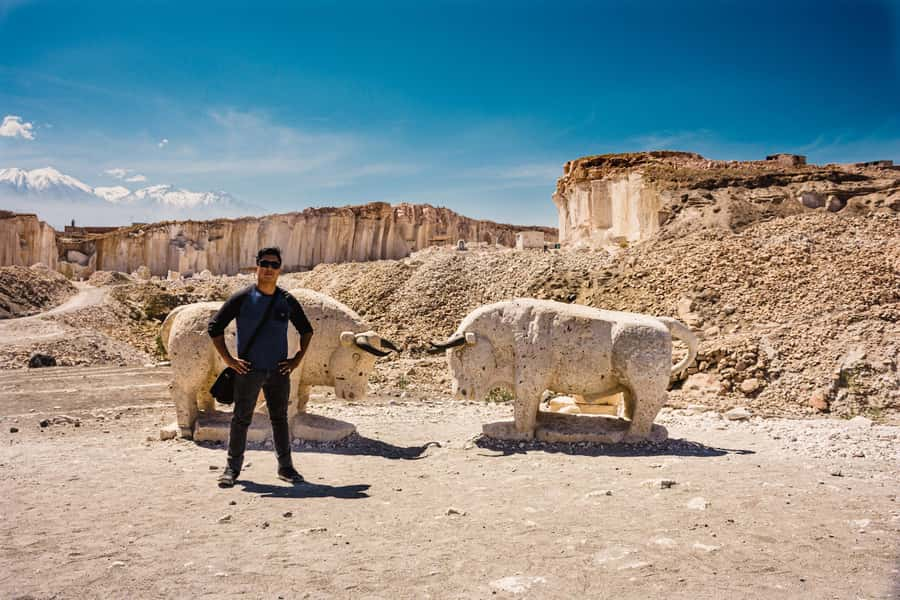
The Añashuayco Quarry is the main stop, reached after the first drive. It is still operating, and stonemasons begin work early in the day. The quarry itself is a broad cut into pale volcanic rock, with high walls shaped by years of extraction.
The scale is the first thing you notice. The cliffs are several meters high, and the exposed stone creates a stark contrast with the darker desert surroundings. Your guide explains how blocks are removed and prepared, then points out the marks and cuts left by quarry work.
You may also meet a stonemason who explains the daily routine and demonstrates the process. In some visits, you can try cutting or shaping part of a stone block yourself. This is a small hands-on moment, but it helps you understand that the white buildings of Arequipa came from demanding manual work, not from a factory line.
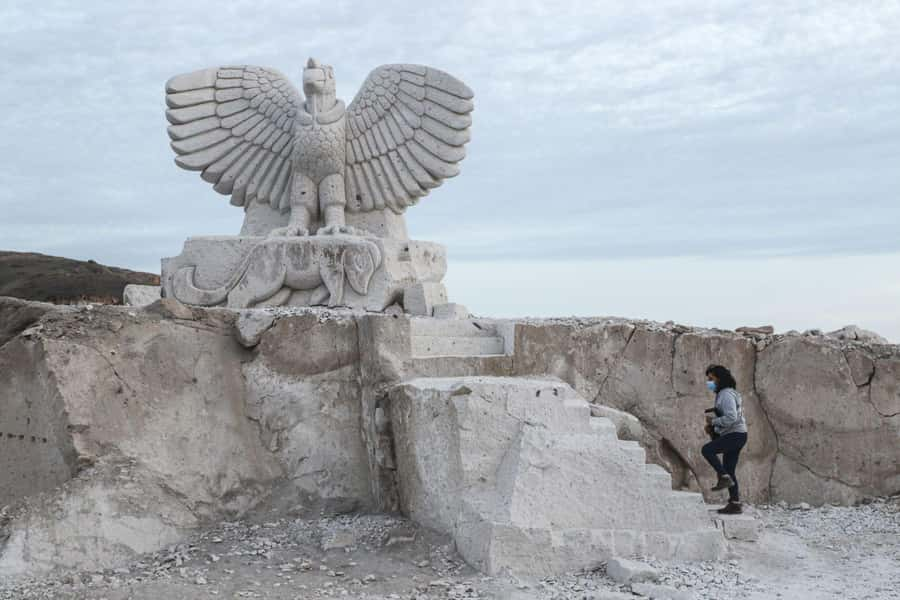
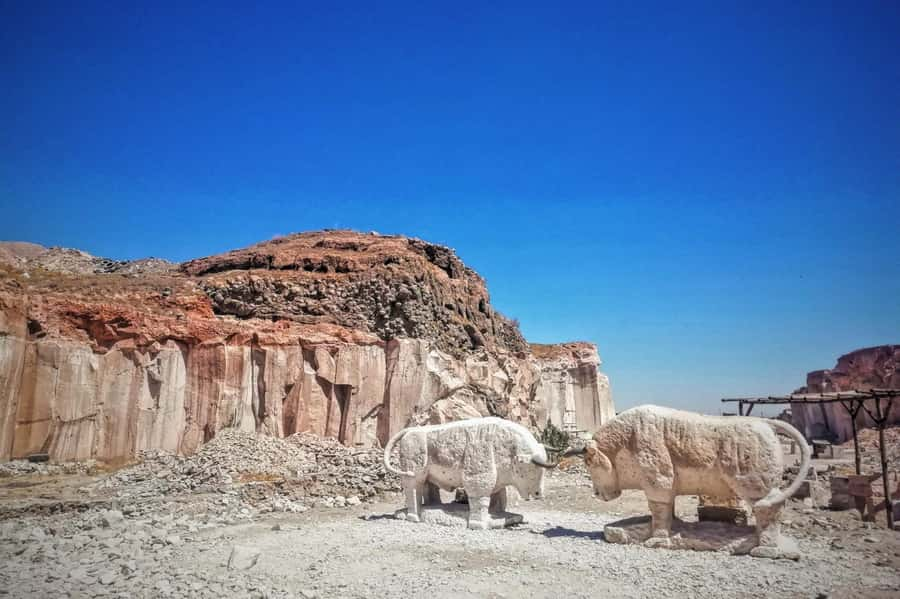
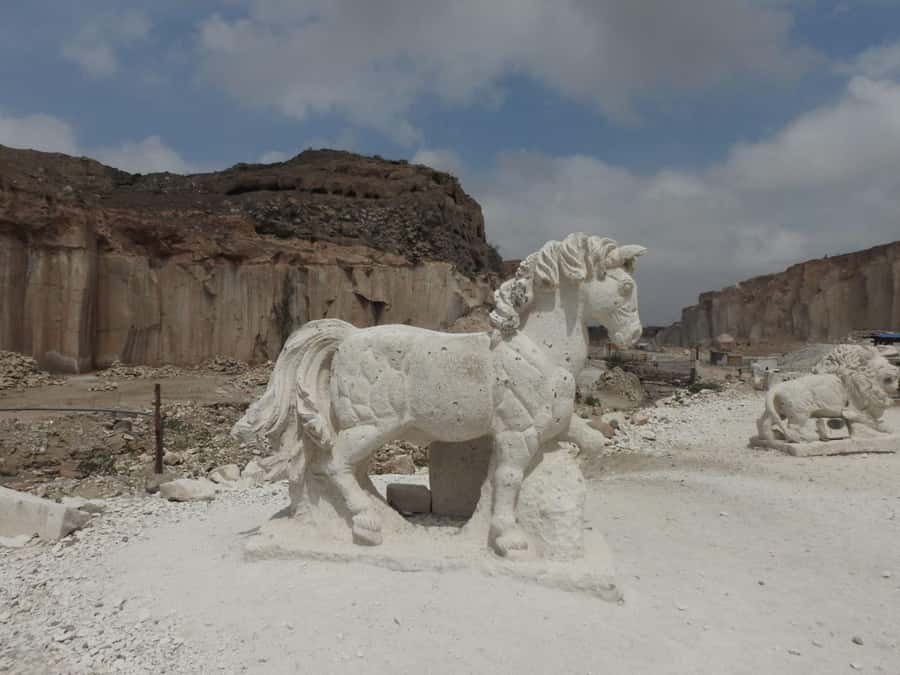
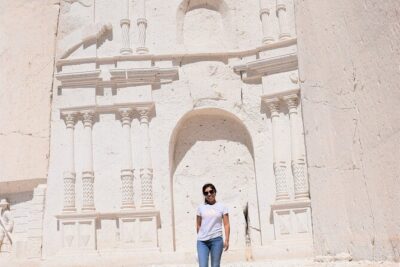
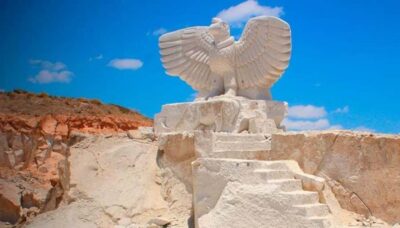
The quarry also contains a large carving of the Church of the Company of Jesus. It is an unusual photo stop, part cultural display and part demonstration of what the local stone can do. Other carved figures and modern stone shapes may be placed around the site. Some people enjoy posing with them, while others find this part more staged than the canyon walk.
Allow about 45 minutes here. That is enough for the explanation, photographs, and a look at the working area, but the stop can feel short if several people are waiting for the same photo. One practical point: the quarry is more interesting when you listen to the explanation about production and labor rather than treating it only as a backdrop.
More Sillar Route half-days in Arequipa:
- Sillar Route and Culebrillas Petroglyphs
★ 4.5 · 89 reviews - Sillar Route in Arequipa and viewpoint of the Volcanoes
★ 4.0 · 71 reviews - Route of the Sillar | Quarries of Añashuaycos | Half day
★ 4.2 · 35 reviews - Sillar Stone Tour from Arequipa
★ 4.0 · 22 reviews
Culebrillas Canyon and the Wari petroglyphs
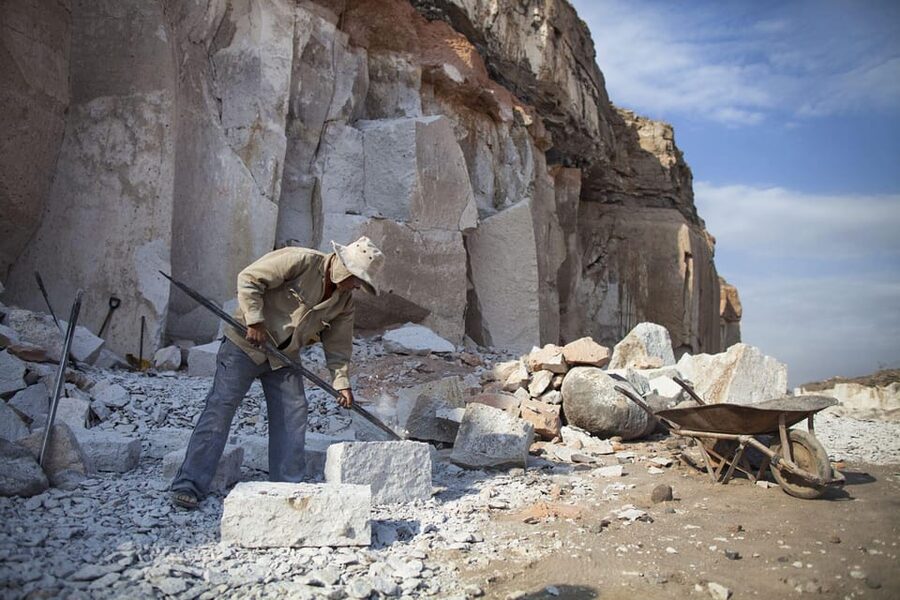
After the quarry, the vehicle continues for about 20 to 30 minutes to Quebrada de Culebrillas. This is where the tour becomes more of a walk.
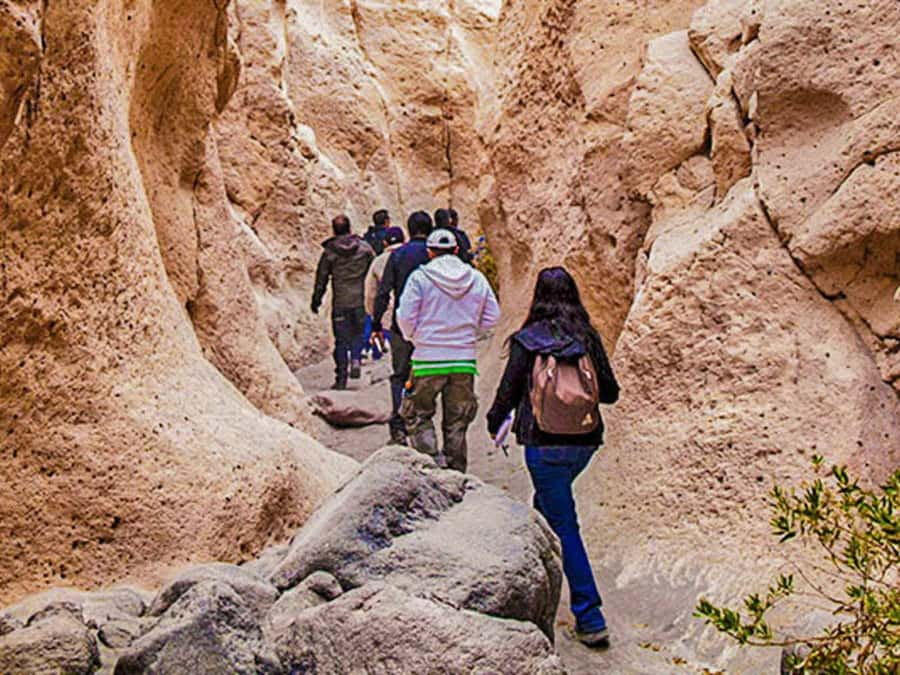
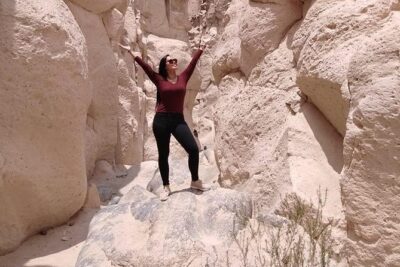
The canyon was formed by flowing water. Its walls begin at around 15 to 20 meters and rise higher as you continue inside. The route is short, usually about 20 to 25 minutes, but the uneven ground calls for closed shoes and steady footing.
The narrow walls create a cooler, more sheltered setting than the open quarry. You walk between bands of volcanic rock, following the canyon as it bends away from the road. The scale changes as you move deeper inside, which makes the walk more rewarding than its short length suggests.
Near the end, you can see petroglyphs associated with the Wari culture, made more than a thousand years ago. They are not a substitute for a major archaeological site, but their setting gives them force. You see old markings on canyon walls rather than in a museum case, and the guide provides the cultural context.
The canyon is also the part most likely to expose a mobility issue. The walk is not described as strenuous, but the surface is uneven and the route is not ideal for anyone who has trouble walking. If you need a smooth, paved path, this may not be the right excursion.
Groups can meet here, especially later in the day. Starting at the canyon first can reduce crowding, and some guides adjust the order when conditions allow. If you have a choice, an earlier visit to Culebrillas generally gives you a calmer walk.
Apachetas and the meaning of stacked stones
At the end of the canyon route, you see apachetas, small piles of stones placed one on top of another. They are connected with gratitude toward nature and are also treated as signs of good luck.
Your guide may explain why three stones are sometimes stacked and what these formations mean in local practice. It is a brief detail, but it adds a human layer to the geology. The canyon is not only a natural formation and the petroglyphs are not only old marks. People continue to give meaning to the place.
Treat the apachetas with care. Do not dismantle existing piles or add stones simply for a photograph. The point is to understand the custom, not to turn it into a prop.
Morning or afternoon departure?
The morning outing begins around 9:15 AM and returns near the center of Arequipa at about 1:30 PM. This timing works well if you want lunch in the city and still have the afternoon free for museums, churches, or a second neighborhood walk.
There is also a 2:00 PM departure. The return time will be later, and traffic can slow the journey back into the city. The reward is softer light near the rocks, with the possibility of sunset colors during the return route or at the later stops.
I would choose the morning if you want predictable timing and cooler conditions for walking. Choose the afternoon if photography matters more and you like warmer light on the stone. The afternoon option has been especially appealing for the canyon and quarry views, but you should allow extra time for the ride back.
What the 12 dollar price really covers
At about $12 per person, this is a low-cost way to reach sites outside Arequipa that would be awkward to visit independently. Transportation and a live guide are included, which is the main value. You receive explanations in English or Spanish, though the guide may speak mostly Spanish when most of the group is Spanish-speaking.
Entrance fees are extra and total 18 soles. Carry small bills or coins in Peruvian soles because there is no cash machine during the outing, and the quarries or other stops may not accept large notes. If you want to buy anything, cash is also the safe choice.
The price is best understood as organized transport plus interpretation at three different settings: a viewpoint, a working quarry, and a canyon. It is not a private archaeology tour, and the quarry displays may not satisfy you if you want an extensive technical lesson in stone masonry.
Still, the combination is strong for the cost. You get outside the city, see the source of Arequipa’s signature building stone, walk through a canyon, and return within half a day.
What to pack for the short walks
Keep your packing simple, but do not treat this as a ride-only sightseeing trip.
- Wear closed, sturdy shoes for the canyon and quarry surfaces.
- Bring sunscreen and a hat. The open stone areas offer limited shade.
- Pack insect repellent, especially for the canyon walk.
- Carry water for the walking sections.
- Bring 18 soles per person for entrance fees.
- Keep smaller cash available for any purchases.
- Take a light layer if you choose the afternoon departure and return after sunset.
The most useful item is footwear. Sandals or smooth-soled shoes can make the canyon less comfortable, even though the walk is short.
Who should book this outing?
I would recommend it to you if you have a free morning or afternoon in Arequipa and want more than a city-center walking tour. It suits anyone interested in volcanic geology, local construction, traditional craft, photography, and a manageable outdoor walk.
It is also a good first excursion after arriving in Arequipa because the route stays close enough to the city for a half-day plan. You do not spend the whole day on the road, and the return leaves time for other plans.
Families and older visitors should consider the canyon surface carefully. The walk is short, but uneven ground and narrow sections may be difficult for anyone with walking problems. The quarry also involves standing and moving around on rough ground.
I would be less enthusiastic if your main goal is a long, quiet nature hike or a detailed archaeological visit. The route is organized, the stops are brief, and the quarry includes modern carvings that may feel more like a photo attraction than an untouched cultural site.
Should you book the Sillar Route Trek?
Book it if you want a good-value half-day introduction to the stone, scenery, and working culture around Arequipa. The best part is the contrast between the quarry’s human labor and Culebrillas Canyon’s narrow walls and ancient markings.
Go with realistic expectations. You will not spend hours at each site, and the route may be busy. But with a capable bilingual guide, sensible shoes, cash for the 18-sole entrance fee, and a little patience at the photo stops, this is an efficient and worthwhile way to see a side of Arequipa that the white city center only hints at.
FAQ
How long does the Sillar Route Trek take?
The experience lasts about four hours. The morning schedule begins around 9:15 AM and returns you to central Arequipa at about 1:30 PM. A 2:00 PM departure is also available.
Where is the meeting point?
Meet at the main office at C. Álvarez Thomas 115 in Arequipa. Your name will be checked there before the group receives instructions and leaves.
What languages are available?
Live guides are available in English and Spanish. The guide may speak mostly Spanish if most of the group uses Spanish, but English explanations are provided.
Are entrance fees included?
No. Transportation and the guide are included, but entrance fees total 18 soles per person. Bring cash in Peruvian soles.
How much walking is involved?
You walk for about 20 to 25 minutes inside Culebrillas Canyon, along with walking around the quarry and viewpoints. Closed shoes are recommended because some surfaces are uneven.
Is there an afternoon departure?
Yes. A 2:00 PM departure is available. The afternoon light can be attractive around the rocks, but traffic on the return to Arequipa may make the trip back take longer.
Just added around Arequipa
- Walking tour through the Historic Center of Arequipa★ 4.0 · 3 reviews
- Trek to the Route of the Sillar and Culebrillas in Arequipa★ 4.0 · 9 reviews
- Arequipa, Historic and Colonial City and Santa Catalina Monastery★ 4.5 · 42 reviews
- 8-Hours Tour in Arequipa Laguna de Salinas with Pick-up★ 4.5 · 56 reviews
- Tour to the Sillar Route from Arequipa | Half Day★ 4.2 · 4 reviews
- Tour + Hike to the Sillar Route and Culebrillas in Arequipa★ 4.1 · 5 reviews
- Arequipa: The White City Origins – Sillar Route Half Day★ 5.0 · 4 reviews
- Sillar Stone Tour from Arequipa★ 4.0 · 22 reviews
Sillar Route Tours, compared.
Sillar Route in Arequipa and viewpoint of the Volcanoes
Read our review →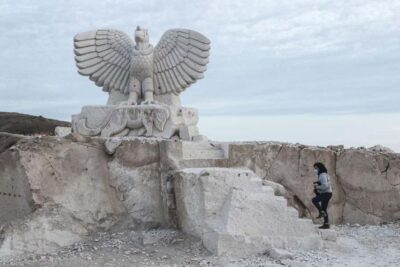
4 hours Tour: Route of Sillar with Trek in Culebrillas
Read our review →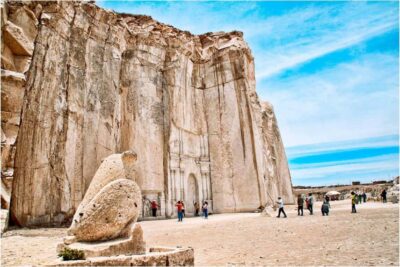
Route of the Sillar | Quarries of Añashuaycos | Half day
Read our review →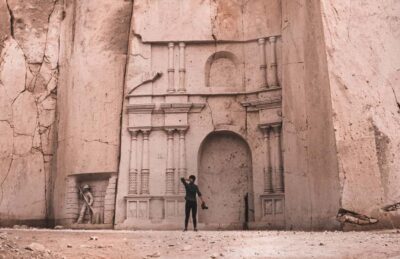
4-hour excursion: Sillar Route with Hiking in Culebrillas
Read our review →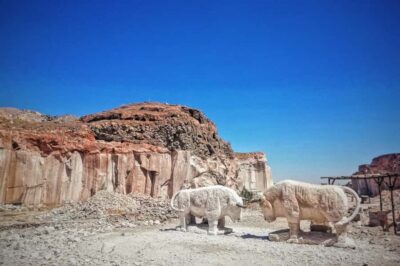
Trek to the Route of the Sillar and Culebrillas in Arequipa
Read our review →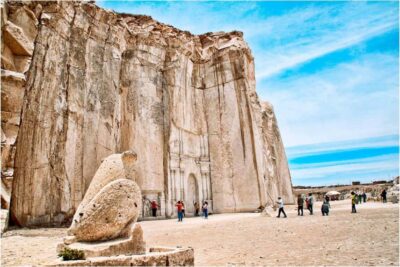
Arequipa | Tour of the Sillar Route + Culebrillas Canyon
Read our review →Browse the lists this tour appears in