
Reviewed · COOKING CLASSES
Arequipa: Peruvian Cooking Class
Arequipa’s best food lesson begins with a purple drink and ends with a plate you cooked yourself. At Casa de Avila Hotel, a professional chef guides you through two Peruvian dishes, from chopping and seasoning to the final meal. The class gives you more than a restaurant taste. You learn how rocoto relleno, causa, lomo saltado, or ceviche comes together.
I like the small-group format, capped at 12 people, and the choice of three menus. I also like the practical setup: ingredients, cookware, apron, chef’s hat, Wi-Fi, and a bilingual instructor are included. The main caution is that your menu must be confirmed ahead of time, and one past class was given a different menu than requested. If allergies matter, contact the provider early and confirm the plan again.
Key points to know before booking
- Three distinct menus: Pick Andean, traditional, or seafood dishes, with vegetarian adaptations available by request.
- Two hours from start to finish: You cook, eat a two-course meal, and taste dessert without giving up a full day of sightseeing.
- A central meeting point: Casa de Avila Hotel sits in Arequipa’s historic center, but hotel transfers are not included.
- Bilingual instruction: The chef teaches in Spanish and English, which helps you follow kitchen terms and preparation steps.
- Small group, but not private: The maximum is 12 people, and at least two participants are needed for the class to run.
- Some menu planning is essential: Dietary restrictions must be reported at booking, and the chosen menu is confirmed after reservation.
Cooking in Arequipa’s historic center
The class meets at Casa de Avila Hotel, a convenient point in the historic center of Arequipa. You make your own way there, so plan for the short walk or local ride from your hotel. Since roundtrip hotel transportation is not included, this experience works best for anyone already staying near central Arequipa or comfortable arranging local transport.
The setting gives the class a useful sense of place. You are not cooking in an anonymous conference room far from the city. You begin in one of Arequipa’s central historic areas, then sit down to food made with your own hands. That connection matters in Peru, where dishes often reflect local ingredients, Spanish influence, Andean traditions, and Chinese-Peruvian cooking.
On arrival, you receive Chicha Morada. This is a sweet, nonalcoholic drink made from purple corn. It is refreshing and gives the lesson an immediate Peruvian flavor before any cooking begins. If you avoid alcohol, you can enjoy the welcome drink without concern.
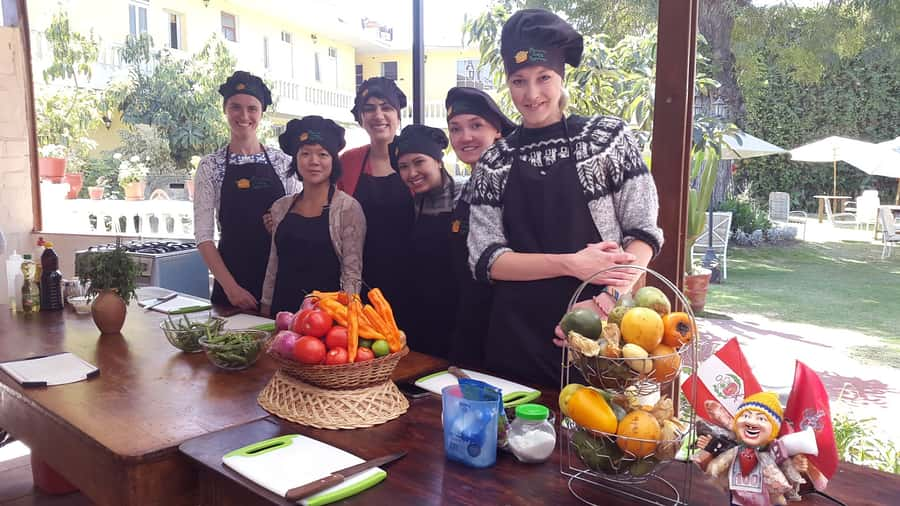
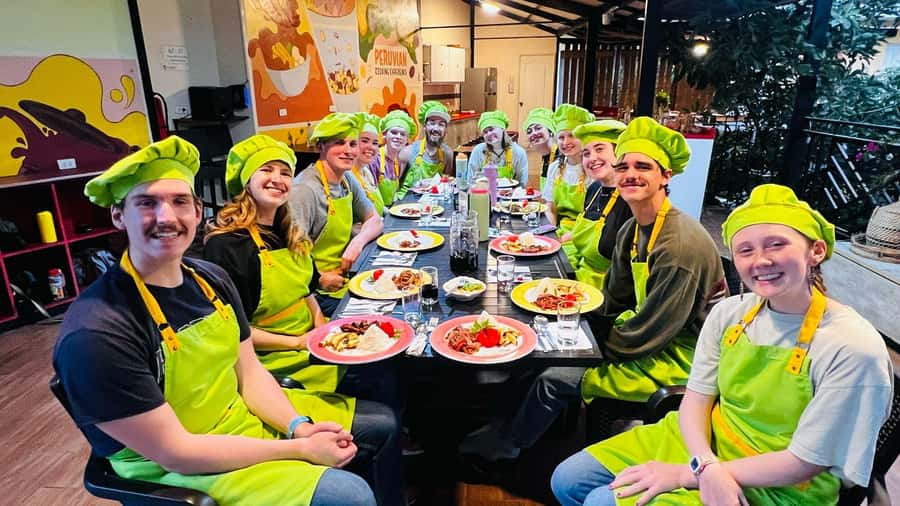
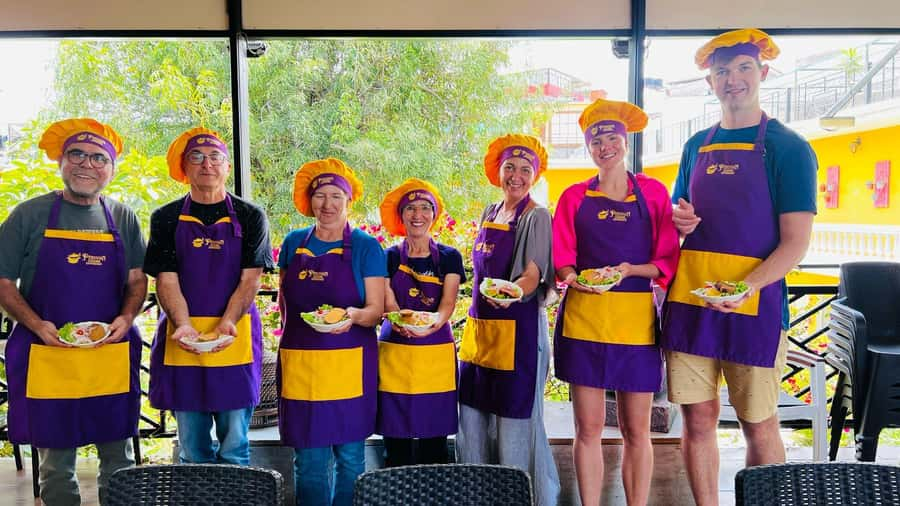
The chef provides an apron and chef’s hat before work starts. That may sound like a small touch, but it helps turn the class into an activity rather than a demonstration where you sit and watch. You are expected to take part, follow the steps, and prepare the food yourself.
More Cooking Classes in Arequipa:
- Cooking Class Typical Food in Arequipa
★ 3.9 · 3 reviews - Cusco: Peruvian Cooking Class, Cocktails & Local Market Tour
★ 4.9 · 512 reviews - Cooking class and market tour with a local chef
★ 5.0 · 186 reviews
Three menus, three views of Peruvian cooking
The biggest decision is the menu. After your reservation is confirmed, the provider contacts you to indicate which menu will be prepared. The choices are quite different, so you should not treat them as minor variations.
The Andean menu: Solterito and Rocoto Relleno
The Andean option starts with Solterito, a fresh salad made with onion, tomato, corn, beans, cheese, and potatoes. It is a good introduction to the balance of fresh vegetables, beans, dairy, and starchy ingredients found in Peruvian cooking.
The main course is Rocoto Relleno, a red rocoto pepper stuffed with ground meat, spices, cheese, and raisins. The pepper has an apple-like shape, but do not assume it tastes like a mild bell pepper. Rocoto is known for its strong heat. The filling adds savory meat, creamy cheese, and a little sweetness from the raisins.
This menu is best for you if you want an Andean-focused meal and enjoy some spice. If you are sensitive to heat, ask about the rocoto before selecting it. The description identifies it as a strongly spicy pepper, so this is not the safest choice for anyone who avoids hot food.
The traditional menu: Causa and Lomo Saltado
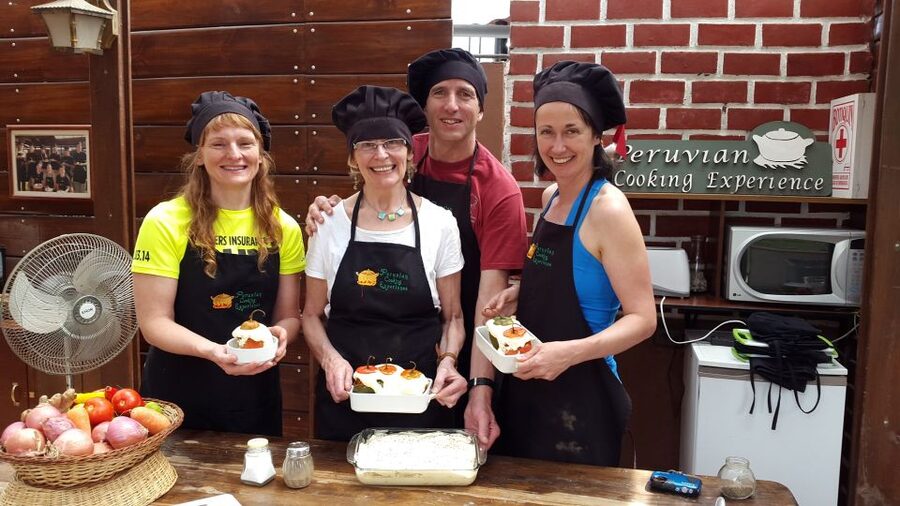
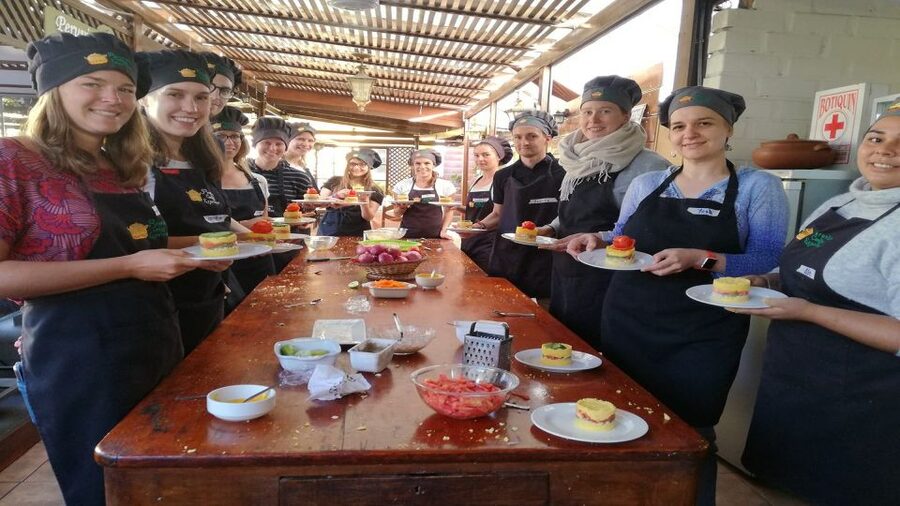
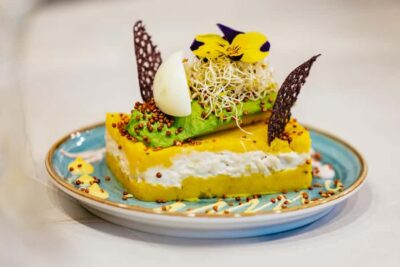
The traditional option offers two of Peru’s most recognizable dishes. Causa is a seasoned mashed-potato preparation mixed with yellow pepper and lemon, then filled with avocado and tuna or chicken. Black olives and vegetables are used as decoration.
Causa is worth learning because it shows how a few familiar ingredients can become something quite different through texture and seasoning. The potato is not simply a side dish. It forms the base of the course, while lemon, yellow pepper, avocado, and the chosen filling give it a cool, layered character.
The main course is Lomo Saltado, a Chinese-Peruvian fusion dish cooked in a wok. You prepare beef with onion, yellow pepper, and tomato, then serve it with French fries and white rice. The combination sounds simple, but the cooking method and mix of ingredients make it a useful example of Peru’s Chinese culinary influence.
Choose this menu if you want a broad introduction to popular Peruvian food. It includes a cold or room-temperature starter and a hot wok dish, so you get two very different cooking tasks in one session.
A few more Arequipa days worth weighing up
- Tour to the Salinas Lagoon and National Reserve in Arequipa
★ 4.5 · 548 reviews - From Arequipa: Sillar Route Trek
★ 4.2 · 461 reviews - Arequipa: Chili River White Water Rafting with Hotel Pickup
★ 4.8 · 329 reviews - Walking tour in the Historic Center of Arequipa
★ 4.4 · 180 reviews
The seafood menu: Ceviche and Pescado a lo Macho
The seafood option begins with ceviche. Fresh fish is marinated in lemon juice and served with onion, sweet potato, and corn. The lesson lets you see how the acidity of the citrus changes the fish, rather than simply ordering a finished plate in a restaurant.
The second course is Pescado a lo Macho, a fried fish fillet topped with a sauce of onions and tomatoes. It comes with white rice. This menu gives you both a fresh, citrus-based preparation and a cooked fish dish with a warm sauce.
Seafood lovers will find this the most focused menu. You should still disclose allergies or dietary restrictions when booking. The class can adapt menus for vegetarians, but the seafood option itself is not designed for a vegetarian diet.
How the two-hour lesson unfolds
The class is designed to move from welcome drink to preparation, cooking, and lunch or dinner in about two hours. You start with Chicha Morada, put on your apron and hat, and meet the chef and other participants.
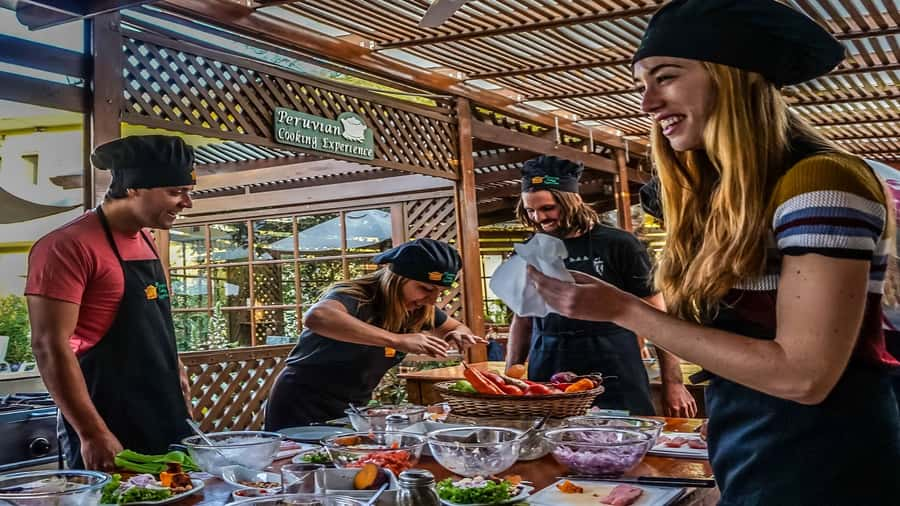
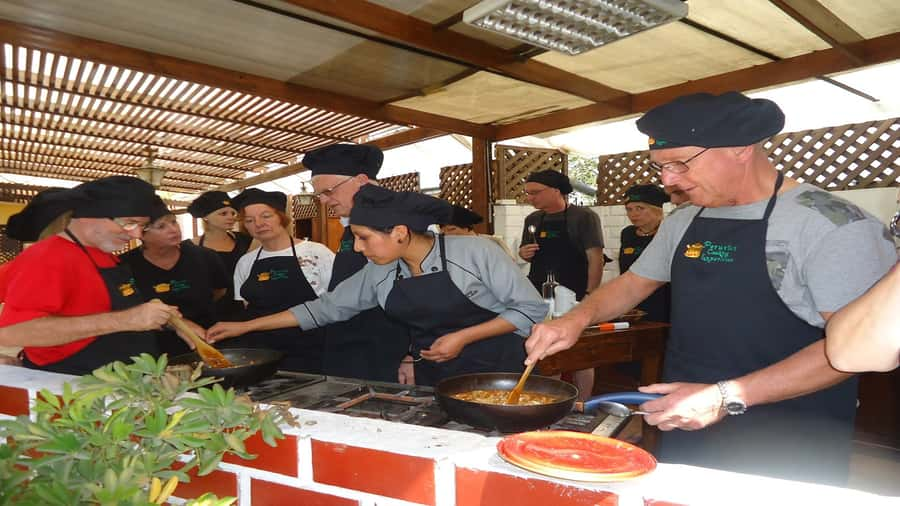
The chef explains each recipe step by step. This is not presented as a professional kitchen examination. You can share travel stories with the group, ask questions, and work at a relaxed social pace, though the timing may vary depending on the group.
The class includes all ingredients and cookware, so you do not need to shop before arriving. That makes the experience easy to fit into a busy Arequipa schedule. It also means you can focus on learning how the dishes are assembled instead of worrying about finding unfamiliar produce or kitchen equipment.
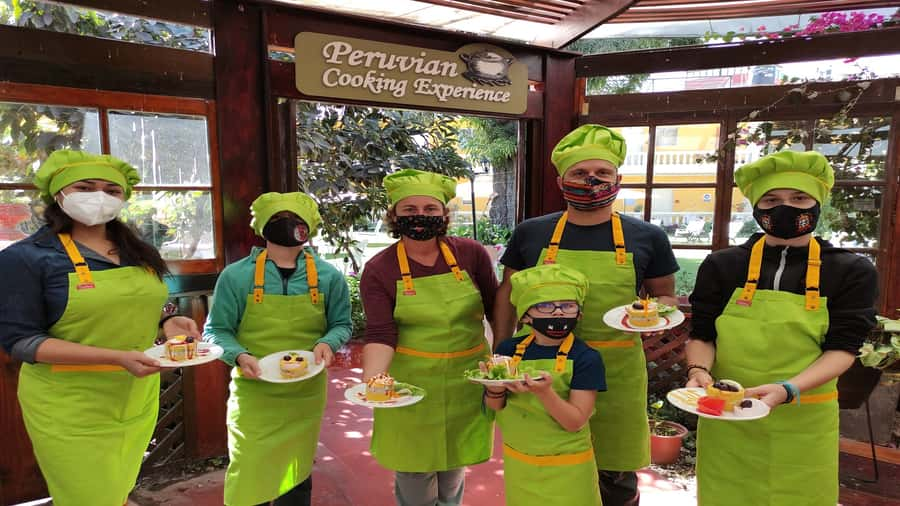
Once the cooking is complete, you eat the food you prepared. The activity includes a two-course lunch or dinner, depending on the selected start time, followed by dessert. The description does not guarantee a particular dessert, so do not book this expecting one exact sweet. One past participant was disappointed when a quinoa dessert was not served, which is a useful reminder to ask what dessert is planned if that matters to you.
The two-hour length is both a strength and a limit. You get a compact food activity that will not consume your afternoon, but you should not expect a long culinary workshop covering many recipes. The focus is on preparing two dishes well enough to cook and eat them during the same visit.
The chef and teaching style
Instruction is available in Spanish and English. That is important in a hands-on class, where a small misunderstanding about heat, timing, or seasoning can change the result. A bilingual chef can explain the steps, answer questions, and help you follow the process even if your Spanish is limited.
Diana has been specifically praised as a fun and effective teacher. The strongest comments about the class focus on clear instruction, a pleasant atmosphere, and the sense that you take useful ideas home with you. Those are the qualities I would value most in a cooking lesson.
The group size can reach 12 people. That is still manageable for a chef-led class, but it is not the same as private instruction. If several people need help at once, you may have to wait briefly for the chef’s attention.
There is also a practical note about sound. One class had music loud enough to make conversation at the table difficult. If you want to ask questions or chat with the group, speak up early if the room gets noisy. The social side is part of the appeal, and loud music can get in the way.
Dietary requests and menu certainty
Vegetarians can request an adapted option. Allergies and other dietary restrictions can also be discussed, but you must provide that information when booking. Do not wait until you arrive. The provider confirms the selected menu after the reservation, so this is the right time to state exactly what you cannot eat.
Menu communication deserves extra attention. One participant requested the Andean menu but was served the traditional menu instead. That person also felt rushed and missed the expected quinoa dessert. This does not mean every class will have the same problem, but it does give you a clear practical step: ask for written confirmation of your menu after booking, especially if the choice is tied to an allergy, religious diet, or strong preference.
If you are booking for a family or mixed group, make sure everyone agrees on the menu. The class requires at least two participants to operate, and the maximum group size is 12.
Children under eight are not suitable for this activity. Older children may enjoy the apron, chef’s hat, and hands-on work, but the supplied information does not give a separate child menu or child price. Keep that in mind when planning a family outing.
Is $63 a fair price?
At $63 per person, this is not a budget meal. You are paying for the chef-led lesson, ingredients, cookware, Chicha Morada, a two-course lunch or dinner, dessert, and a central location. Wi-Fi is included as well, though it is not likely to be the reason you book.
The value depends on what you want. If you only want to eat two Peruvian dishes, you can likely spend less at a local restaurant. If you want to understand how the dishes are made, participate in the preparation, and share the meal with a small group, the price becomes easier to justify.
I see the best value in the variety of the traditional menu and the chance to make rather than merely taste the food. The seafood menu is also useful if ceviche is high on your list and you want to learn the method. The value drops if your menu request is not honored or if the class is rushed, so confirm the details before arrival.
The class has an overall rating of 4.4 out of 5 from nine ratings. The strongest praise centers on tasty food, clear teaching, friendly organization, and a good atmosphere. The weaker experiences point to menu confusion, price concerns, rushed timing, and music that was too loud. That mix gives you a fair picture: the core idea works well, but communication matters.
Who will enjoy this Arequipa cooking class?
You should consider booking if you enjoy food, like practical activities, and want a short cultural experience in central Arequipa. It is also a good choice for solo adults, couples, and small groups who enjoy meeting other people during a meal.
The experience suits you especially well if:
- You want to prepare classic Peruvian dishes instead of only ordering them.
- You are interested in the mix of Andean, Spanish, and Chinese-Peruvian influences.
- You have a two-hour opening in your sightseeing schedule.
- You are comfortable sharing the class with up to 11 other participants.
- You want English or Spanish instruction.
- You can confirm your menu and dietary needs before arrival.
You may want another activity if you need a private class, dislike group cooking, have serious food allergies that require complete control over ingredients, or expect an advanced culinary course. The menu is selected in advance, the class is compact, and the provider does not promise a particular dessert.
Should you book it?
Book this class if you want an easy, social way to learn several well-known Peruvian dishes in Arequipa’s historic center. The Andean menu is the most distinctive, the traditional menu offers the broadest introduction, and the seafood menu is the natural pick for fish and ceviche fans.
Before paying, confirm the menu in writing, report allergies or dietary restrictions, and ask about the planned dessert if that detail matters. Arrive ready to participate rather than simply watch. With those expectations in place, the class offers a tasty meal, useful cooking ideas, and a pleasant two-hour break from sightseeing.
FAQ
Where does the cooking class meet?
The meeting point is Casa de Avila Hotel in the historic center of Arequipa.
How long does the class last?
The cooking class lasts two hours.
What is included in the price?
The experience includes a guided cooking class, all ingredients and cookware, Chicha Morada, a two-course lunch or dinner, dessert, Wi-Fi, and instruction from a professional chef in Spanish and English.
Is hotel transportation included?
No. Roundtrip transfers to and from your hotel are not included.
Which menus can I choose from?
You can choose an Andean menu with Solterito and Rocoto Relleno, a traditional menu with Causa and Lomo Saltado, or a seafood menu with Ceviche and Pescado a lo Macho.
Are vegetarian options available?
Yes. Vegetarian options are available, but you need to request one when booking.
Can the class accommodate food allergies?
Allergies and dietary restrictions can be accommodated if you provide the information when booking. Confirm the adapted menu before the class.
How many people are needed for the class to run?
At least two people are required for the class to start, and the maximum group size is 12 people.
Just added around Arequipa
- Walking tour through the Historic Center of Arequipa★ 4.0 · 3 reviews
- Trek to the Route of the Sillar and Culebrillas in Arequipa★ 4.0 · 9 reviews
- Arequipa, Historic and Colonial City and Santa Catalina Monastery★ 4.5 · 42 reviews
- 8-Hours Tour in Arequipa Laguna de Salinas with Pick-up★ 4.5 · 56 reviews
- Tour to the Sillar Route from Arequipa | Half Day★ 4.2 · 4 reviews
- Tour + Hike to the Sillar Route and Culebrillas in Arequipa★ 4.1 · 5 reviews
- Arequipa: The White City Origins – Sillar Route Half Day★ 5.0 · 4 reviews
- Sillar Stone Tour from Arequipa★ 4.0 · 22 reviews
Cooking Classes, compared.
Peruvian Cooking Class, Cocktails & Local Market Tour
Read our review →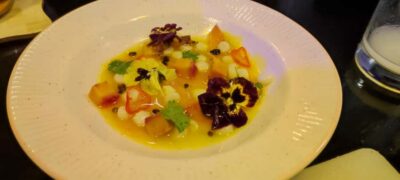
Cooking class and market tour with a local chef
Read our review →
Market Tour, Tasting of 35 Fruits, and 4-Course Peruvian Cooking Class in Lima
Read our review →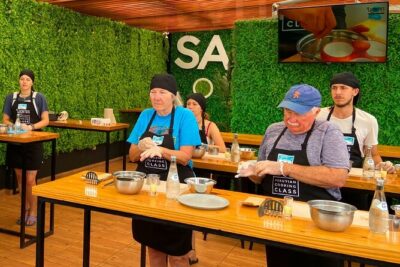
#1 Rated Cooking Classes with Local Market Tour & Pickup
Read our review →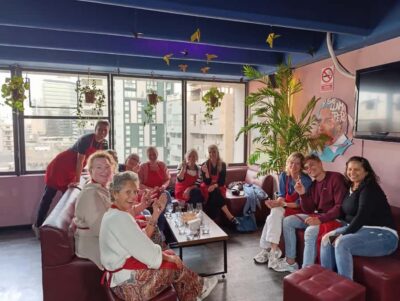
Amazing Peruvian Cooking Class Ceviche Seafood and Pisco Sour
Read our review →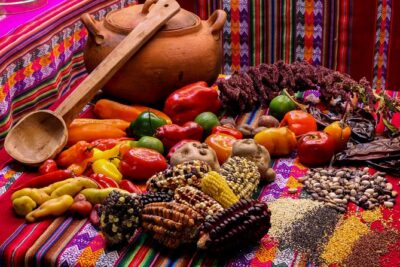
Private Cooking + Market with Maido’s Former Creative Chef (+trasportation)
Read our review →
Vegan Peruvian Cooking Class Cocktails and Local Market in Cusco
Read our review →Browse the lists this tour appears in