
Reviewed · CITY TOURS
Arequipa, Historic and Colonial City and Santa Catalina Monastery
Arequipa’s best sights are spread beyond its handsome central square, and this half-day tour connects them by air-conditioned vehicle. You’ll see farmland below the volcanoes, flower-lined streets in the old quarters, and the remarkable Santa Catalina Monastery, a city-sized convent hidden behind red and blue walls.
I like the way the tour mixes viewpoints with major monuments, and I like that the monastery admission is included in the $61 price. The guide also adds useful context, with several guides praised for clear English and strong local knowledge. The main drawback is its heavy religious focus: much of the walking time goes to the monastery and churches, so this is not the best match if you want markets, food, or museums.
Key points to know before booking
- Carmen Alto gives you the big Arequipa view: Farmland and terraces spread below Misti, Chachani, and Pichu Pichu volcanoes.
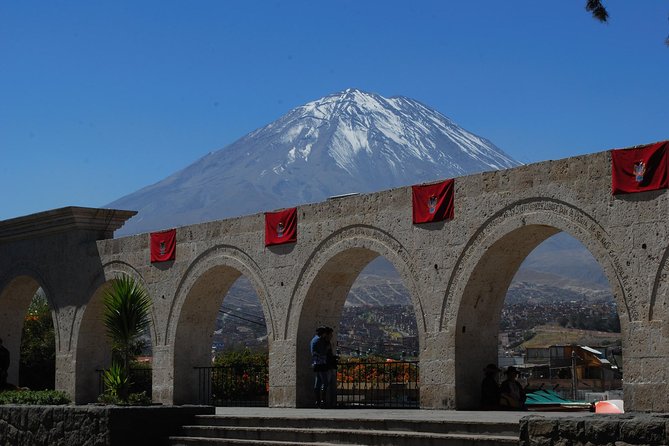
- Yanahuara brings the sillar story to life: Its church, arches, and white volcanic-stone buildings explain the White City nickname.
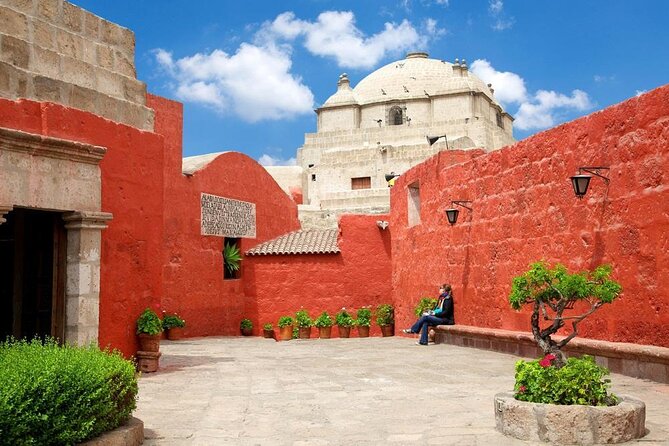
- Santa Catalina is the tour’s main prize: Expect narrow lanes, quiet plazas, gardens, and a long look at convent life.
- A vehicle saves time: You can reach outer viewpoints without arranging taxis or spending much of the afternoon walking between districts.
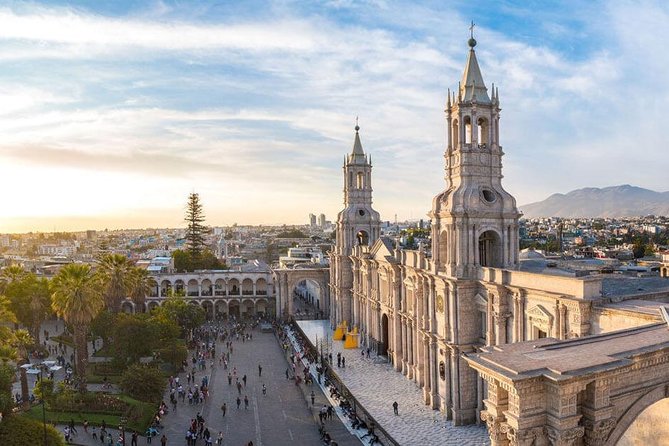
- The tour ends in the historic core: You visit the Cathedral and the Church of the Society of Jesus near the Plaza de Armas.
- Plan your clothing and timing: Religious sites do not allow shorts, and the 2:00 pm departure can put the Cathedral visit late in the afternoon.
Why this Arequipa tour works well in three and a half hours
Arequipa is easy to admire but not always easy to cover efficiently. The central area is walkable, yet Carmen Alto and Yanahuara sit beyond the main tourist streets. This tour uses a small-group vehicle, capped at 15 people, to link those outer stops with the old center.
That matters if you have only one afternoon in town. You get the broad city view first, then spend the rest of the visit on foot among the colonial buildings and religious sites. The plan is fairly full, but it avoids wasting time finding taxis or working out the order yourself.
The tour begins at 2:00 pm with hotel pickup in Arequipa. The exact pace can vary, especially if the guide adjusts a stop for group interests. Several guides have been praised for being warm, flexible, and willing to answer questions. Guides named in past departures include Jeymi, Charo, Sline, Kaitlin, and Victor.
Guide quality matters here because the monuments can blur together if you only look at facades. A strong guide explains how Arequipa grew around its volcanoes, why sillar became the city’s signature building material, and how religious institutions shaped daily life.
More City Tours in Arequipa
- Arequipa Walking Tour city center and drinks experience
★ 5.0 · 72 reviews - Arequipa: City and Country Tour
★ 3.7 · 27 reviews - AREQUIPA BIKING CITY TOUR
★ 5.0 · 16 reviews
Carmen Alto and the three volcanoes
The first major stop is the Carmen Alto viewpoint. From here, you look over cultivated fields and farming terraces toward the three volcanoes associated with Arequipa: Misti, Chachani, and Pichu Pichu.
This is the tour’s best place to understand the setting. Arequipa is not simply a colonial city with attractive white buildings. It is a city framed by dramatic volcanic peaks and supported by irrigated farmland. The view helps explain why the surrounding countryside matters so much to local identity.
You’ll have time for photographs, but conditions matter. February falls in the rainy season, and cloud can hide the volcanoes. If mountain views are important to you, a clear day will make a noticeable difference. The tour still works in poor weather, but the first stop loses some of its impact.
The viewpoint also gives you a break from the close streets of the center. You can see how quickly the built-up city gives way to fields and open ground. That contrast is one reason the vehicle portion earns its place in the itinerary.
Yanahuara, sillar arches, and the White City
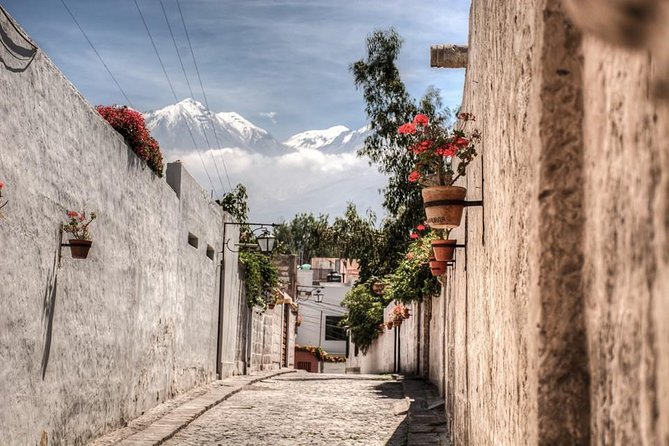
The next stop is Yanahuara, a colonial district known for its church and viewpoint. The buildings and arches use sillar, a pale volcanic rock that gives Arequipa its Ciudad Blanca nickname.
At El Mirador de Yanahuara, the arches frame the volcanoes and the city. It is a popular photo stop, but it is not only a place for pictures. The stonework shows how local builders turned material from the region into churches, homes, arcades, and public buildings.
The area has an Andalusian flavor, especially around the church and the arched viewpoint. Your guide can help separate what you are seeing from a generic colonial style. Details about the stone, the architecture, and the district’s place in Arequipa’s development make the stop more useful than a quick photo break.
I like that the tour reaches Yanahuara by vehicle. You can visit independently, but the ride removes one practical problem, especially if you are trying to fit the viewpoint, monastery, Cathedral, and Jesuit church into one afternoon.
Santa Catalina, a city inside the city
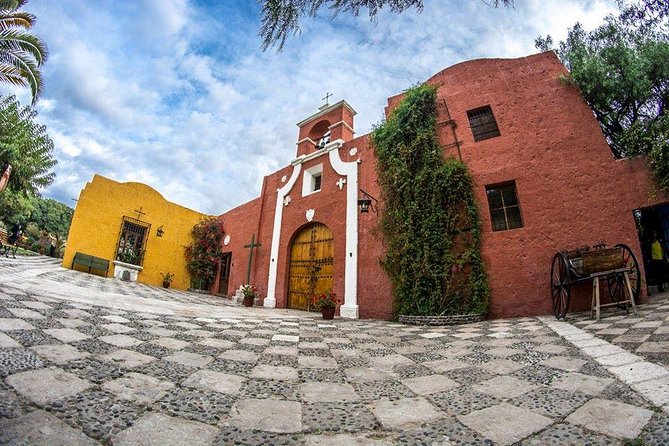
Santa Catalina Monastery is the centerpiece. The Dominican religious complex was closed to the public for nearly four centuries, and its scale makes the name monastery feel too small. Inside, you walk through plazas, narrow lanes, cloisters, and gardens that form a separate little world within central Arequipa.
The colors and layout are part of the appeal. The route takes you through spaces that feel more like old residential streets than a single church compound. The comparison with districts of Seville or Granada is easy to understand once you pass through the lanes and courtyards.
Your guide’s role is especially useful here. Without context, you may notice walls, doors, and painted rooms without understanding how the convent operated. With a good explanation, the complex becomes a record of religious life, hierarchy, work, and daily routine.
The monastery visit can also be the slowest section of the tour. One visitor found the repeated courtyards and passages a little long, while others considered the convent worth the price of the entire outing. Both reactions make sense. If you enjoy architecture, religious history, and atmospheric old buildings, allow yourself to look closely. If you prefer a quick city overview, this portion may feel extended.
Admission to Santa Catalina is included, which is important when comparing the $61 price with arranging the same stops alone. The entry fee is one of the more expensive parts of a typical Arequipa sightseeing day, and adding a guide gives you more than a simple ticket.
Some departures have included a separate guide or language assistance inside Santa Catalina. This is useful if the main city guide is working in several languages or if the monastery portion needs more detailed explanation. Language arrangements can vary, so check the booking details for your departure.
More Historical Tours in Arequipa:
- Walking tour in the Historic Center of Arequipa
★ 4.4 · 180 reviews - Arequipa: Walk through the Historic Center of the City
★ 4.9 · 87 reviews - Walking tour through the Historic Center of Arequipa
★ 4.0 · 3 reviews - Lima’s Vibrant Heritage: Exploring the City’s Landmarks Half-day
★ 4.5 · 581 reviews
The Plaza de Armas and Arequipa Cathedral
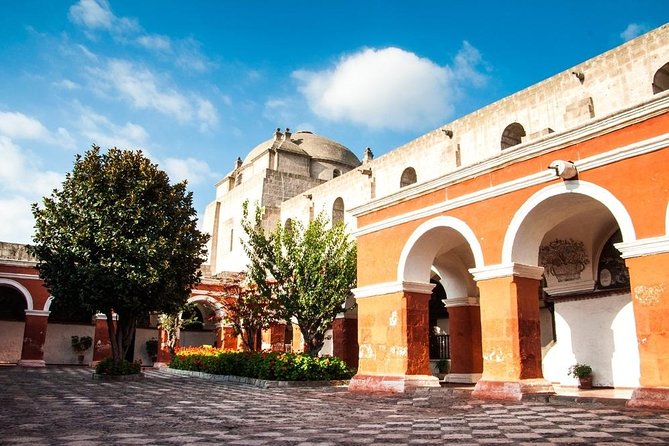
After Santa Catalina, the tour returns to the central Plaza de Armas. This is Arequipa’s grand public room, framed by arcades and dominated by the Basilica Cathedral.
The Cathedral dates from the 16th century, though the building has undergone changes over time. Your guide explains its place in the city and points out the architectural features around the square. The visit provides a useful contrast with Santa Catalina: the monastery feels inward-looking, while the Plaza de Armas is open, formal, and civic.
Pay attention to the schedule here. One past departure reached the Cathedral around 5:00 pm, after access to the tower and its city views had closed at 4:00 pm. If climbing the tower is important to you, ask the guide or operator at the start of the tour if the order can be adjusted. The supplied itinerary does not promise tower access, so you should not book this tour solely for that view.
Still, the square itself is worth seeing even without the tower. It is the clearest place to understand the scale of central Arequipa and how the white volcanic stone gives the city a unified appearance.
The Church of the Society of Jesus and San Ignacio Chapel
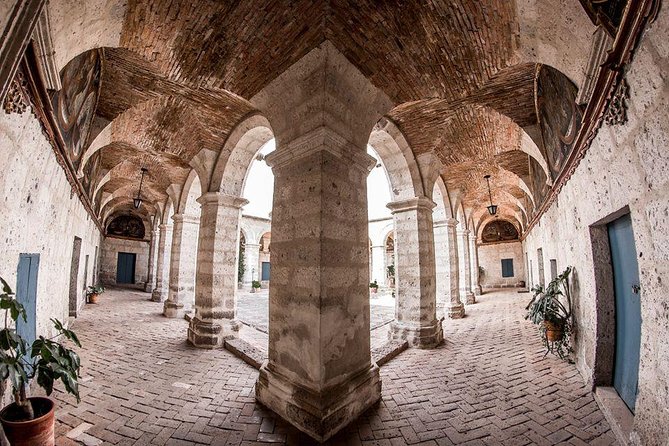
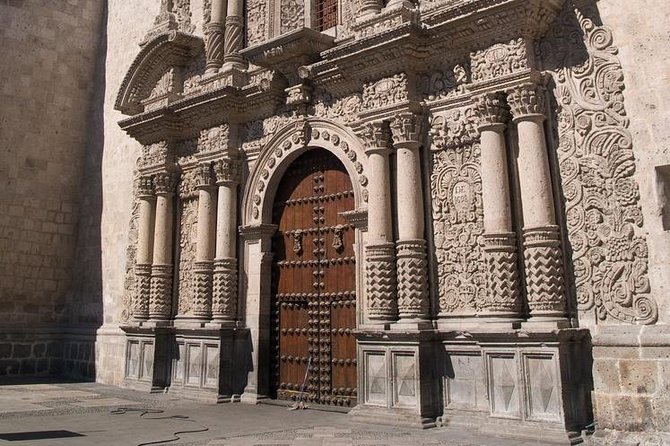
The final major sight is the Church of the Society of Jesus, also called the Jesuit church. It sits near the Plaza de Armas and is especially noted for its cloisters and the San Ignacio Chapel.
The chapel’s decoration includes brightly colored jungle birds and plant forms. This interior detail is easy to miss if you rush through, but it gives the church a distinctly Peruvian character. The cloisters offer another view of sillar craftsmanship, with carved stone and enclosed open-air spaces.
This stop adds variety to the religious architecture. Santa Catalina is a large complex with lanes and gardens. The Jesuit church is more concentrated, with its richly decorated chapel and cloistered spaces. Together, they show two different sides of Arequipa’s Catholic heritage.
Still, this is a religiously focused itinerary. Roughly two-thirds of the tour can feel connected to a convent, church, or Cathedral. I would choose it gladly if you want architecture and religious history. If you are not interested in those subjects, the itinerary may feel out of balance.
Guide quality and language
The strongest part of this experience is often the guide. Good guides have been praised for clear English, lively explanations, humor, and a genuine affection for Arequipa. Charo, Sline, Kaitlin, Jeymi, and Victor have all been singled out in past departures for helpful or engaging service.
Language handling deserves a little care. Some groups have included English and Spanish speakers, and at least one multilingual guide also worked in Portuguese. One English-speaking visitor found the guide easy to understand, while another found the English difficult and felt that long explanations slowed the tour.
That mixed result is a reminder to confirm your language when booking. If the group is multilingual, explanations may take longer because the guide repeats information. One useful suggestion is to ask for shorter sections of explanation, especially inside Santa Catalina, where there is plenty to see even between talks.
The maximum group size is 15. That is small enough for questions and easier movement through narrow monastery passages, though the actual feel depends on the number of people booked on your date.
Is $61 a fair price?
At $61 per person, this is not the cheapest way to see Arequipa. You can walk around the Plaza de Armas and Yanahuara independently, and taxis can reach the viewpoints. The calculation changes once you include Santa Catalina admission, hotel pickup and drop-off, an air-conditioned vehicle, and a professional guide.
I consider the price reasonable for a first afternoon in Arequipa, especially if you want the outer viewpoints without arranging transport. The tour also gives you a clear sequence, so you are less likely to spend your limited time backtracking.
The value is strongest for first-time visitors, couples, and families who want a guided introduction rather than a day spent reading plaques. It is less attractive if you already know the city, dislike group pacing, or plan to spend your time on food, shopping, museums, or nearby countryside.
Food and drinks are not included. Since the tour lasts about three hours and 30 minutes, you may want to eat before pickup or plan dinner afterward.
Timing, clothing, and practical advice
Wear long pants or a long skirt. Shorts are not allowed in the religious sites, and this rule applies even if the day is warm.
Bring a phone or camera for Carmen Alto and Yanahuara, but keep some attention for the guide’s explanation of the views. The volcanoes are not guaranteed to be visible, particularly during the rainy season.
The tour ends with drop-off at your Arequipa hotel. Confirmation is provided when you book, and free cancellation is available if you cancel at least 24 hours before the 2:00 pm start. Changes or cancellations inside that period are not accepted for a refund.
This is not a strenuous hike, but you will walk through the monastery, churches, and central streets. Expect uneven historic surfaces and periods of standing. Most people can participate, but anyone who needs special arrangements should confirm them before booking.
Who should book this tour?
Book it if you have one afternoon in Arequipa and want the main sights organized for you. The combination of volcano viewpoints, sillar architecture, Santa Catalina, the Plaza de Armas, and the Jesuit church gives you a solid introduction in a short window.
I especially recommend it to first-time visitors, families, solo visitors who prefer a guide, and anyone who wants Santa Catalina explained rather than visited as a silent series of rooms. The included monastery admission helps justify the cost.
Skip it if you want a food-focused walk, a market tour, or a relaxed day with long stops. Also think twice if church interiors and convent history do not interest you. For everyone else, this is a practical way to see why Arequipa is more than a pretty square and a backdrop of volcanoes.
FAQ
How long does the Arequipa tour last?
The tour lasts approximately three hours and 30 minutes, including the visits and transportation between stops.
What time does the tour begin?
The scheduled start time is 2:00 pm.
Does the tour include hotel pickup and drop-off?
Yes. Hotel pickup and drop-off in Arequipa are included.
Is admission to Santa Catalina Monastery included?
Yes. Admission to the Monastery of Saint Catherine is included in the tour price.
Are food and drinks included?
No. Food and drinks are not included.
What should I wear to the religious sites?
Wear long pants or a long skirt. Admission to the religious sites is not allowed in shorts.
Can I cancel for a full refund?
Yes. You can cancel at least 24 hours before the local start time for a full refund. Cancellations or changes made less than 24 hours before the start are not accepted for a refund.
Just added around Arequipa
- Walking tour through the Historic Center of Arequipa★ 4.0 · 3 reviews
- Trek to the Route of the Sillar and Culebrillas in Arequipa★ 4.0 · 9 reviews
- 8-Hours Tour in Arequipa Laguna de Salinas with Pick-up★ 4.5 · 56 reviews
- Tour to the Sillar Route from Arequipa | Half Day★ 4.2 · 4 reviews
- Tour + Hike to the Sillar Route and Culebrillas in Arequipa★ 4.1 · 5 reviews
- Arequipa: The White City Origins – Sillar Route Half Day★ 5.0 · 4 reviews
- Sillar Stone Tour from Arequipa★ 4.0 · 22 reviews
- Rock Climbing in Arequipa, Perú★ 5.0 · 28 reviews
City Tours, compared.
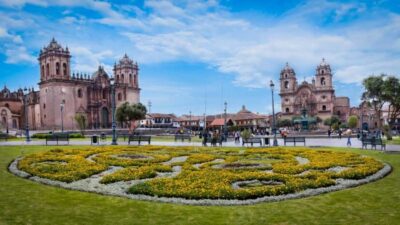
Half-Day City Tour with Sacsayhuaman and Q’enco
Read our review →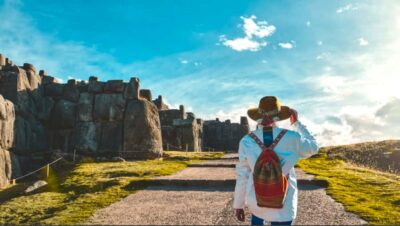
City Tour Cusco Qoricancha Sacsayhuaman y Tambomachay
Read our review →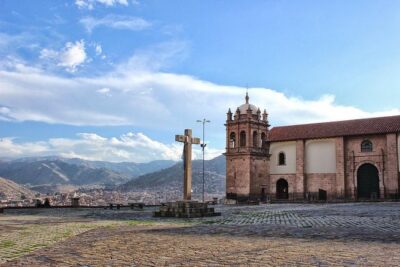
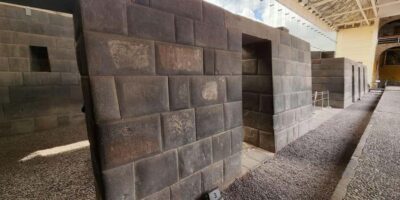
City Tour | Half-Day Tour to 4 Archaeological Sites
Read our review →
City Tour in Cusco & visit Museum South American Camelid Private.
Read our review →
Cusco City Sightseeing, San Pedro Market, Cathedral and Qorikancha Temple
Read our review →
Browse the lists this tour appears in