
Reviewed · WALKING TOURS
Arequipa: Walking Tour and Santa Catalina Monastery
Arequipa’s best sights are close together, but they make more sense when you walk from the old San Lazaro neighborhood toward the Plaza de Armas. This tour links white sillar streets, working colonial housing, old merchant lodgings, and Santa Catalina Monastery in one tidy three-hour outing. I especially like the visits to Tambo El Matadero and Tambo La Cabezona, which show everyday city life beyond the postcard square.
I also like that the tour ends at Santa Catalina Monastery, giving you a full hour inside its streets, courtyards, bell tower, and church. The main trade-off is pace: three hours is enough for an introduction, but not enough for long stops or a slow look at every room. The tour is also not suitable for wheelchair users, and the entrance fee may be an extra cost depending on the option you choose.
Key points to know before you book
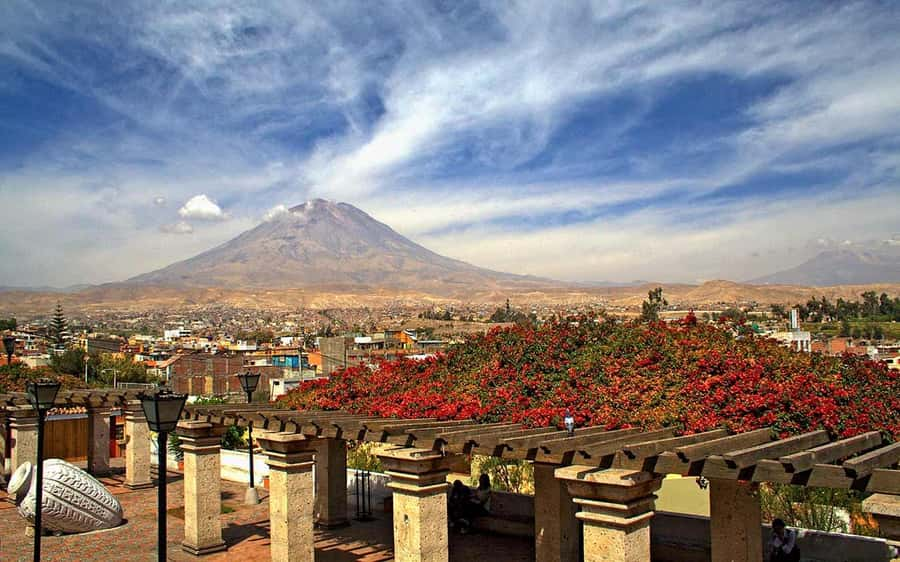
- San Lazaro gives you an atmospheric start: Walk narrow lanes and small squares framed by Arequipa’s pale volcanic sillar stone.
- The tambos add local texture: Tambo El Matadero and Tambo La Cabezona reveal how colonial buildings have continued as lived-in spaces.
- Santa Catalina is the main event: Allow a full hour for its 20,000 square meters of cloisters, patios, streets, and red-painted walls.
- A bilingual guide fills in the gaps: Tours run in Spanish or English, with guides such as Gisela, Milei, and Sline receiving especially warm praise for clear, friendly explanations.
- The price depends on what you select: The $35 rate is attractive for a guided city walk, but check if monastery admission is included before comparing costs.
- The route is central and manageable: Hotel pickup is available within Arequipa’s historic center, while other hotels use the meeting point on Calle Zela.
Why this three-hour walk works well in Arequipa
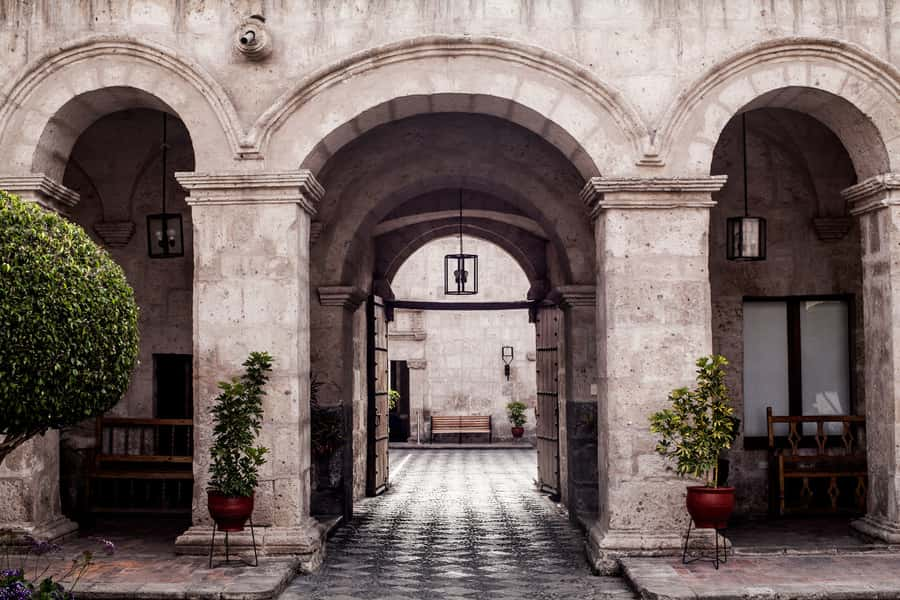
Arequipa can look simple at first glance: a grand plaza, a cathedral, and lots of pale stone buildings. The city becomes more interesting when you learn how its volcanic material shaped local architecture and how old religious and commercial buildings still fit into daily life.
This tour begins in San Lazaro, about five blocks from the Plaza de Armas. That choice is smart. You start away from the city’s most formal square and work toward it, seeing the historic center develop from small neighborhood lanes into grand colonial public spaces.
The route includes walking sections of about 10 to 15 minutes between stops, plus a short van ride at the beginning and end. You should wear comfortable clothing and shoes, bring a hat, sunglasses, and sunscreen, and carry insect repellent as advised. Food and drinks are not included, so have water with you.
More Walking Tours in Arequipa:
- Walking tour in the Historic Center of Arequipa
★ 4.4 · 180 reviews - Arequipa: Walk through the Historic Center of the City
★ 4.9 · 87 reviews - Arequipa Walking Tour city center and drinks experience
★ 5.0 · 72 reviews
San Lazaro and the beauty of sillar
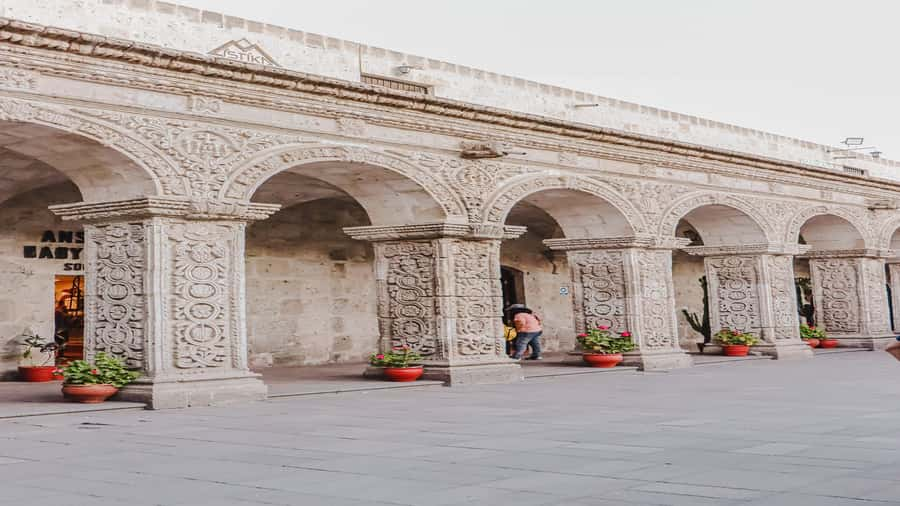
San Lazaro is one of the tour’s strongest opening stops. Its narrow streets, small squares, and low white walls show off sillar, the light volcanic stone used across Arequipa. The stone gives the city its nickname, the White City, though the real pleasure is seeing how the material works in doorways, walls, and colonial details.
The guide also places the neighborhood in a longer timeline. The area was occupied by pre-Inca and Inca cultures before the Spanish conquest and the foundation of Arequipa. Later, some of the first Spanish houses were built here.
You will spend about 20 minutes walking and taking photos. That is enough to get a feel for the neighborhood, though not enough to explore every lane at leisure. If you like architecture and old urban districts, this opening section may be more rewarding than a quick rush to the better-known sights.
San Lazaro belongs to Arequipa’s Historic Center, a UNESCO World Heritage Site. That designation matters here because the value is not limited to one church or palace. The neighborhood, streets, materials, and surviving buildings form one connected historic area.
Barrio del Solar and the old tambos
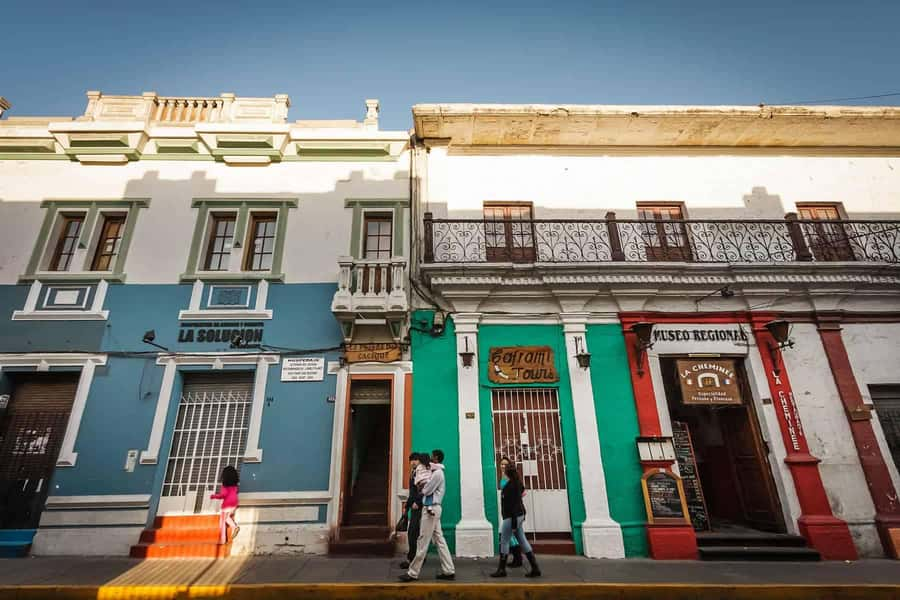
From San Lazaro, you walk toward Barrio del Solar near the Chili River. This part of the route shifts from residential lanes to traditional and colonial buildings linked to trade and movement through the city.
The word tambo refers to a lodging or resting place. During the colonial era, merchants used these buildings while passing through Arequipa. Seeing several of them helps you understand the city as a trading stop, not just a collection of beautiful façades.
The first is Tambo El Matadero, a 17th-century building once used for slaughtering animals. Its past is blunt and practical, which makes it a useful counterpoint to the city’s churches and elegant courtyards. The site is also still lived in by about 30 families. That detail gives the stop real weight: this is not simply a preserved monument emptied of ordinary life.
You have about 20 minutes here for a guided visit and photographs. The likely drawback is that the stop is compact. The value comes from the explanation and the contrast with more polished colonial sights, not from a long list of rooms to enter.
Tambo La Cabezona and living colonial architecture
The walk continues to Tambo La Cabezona, a group of colonial houses with a shared entrance. It dates to the 16th century and is linked to one of the first mills in the city.
A communal entrance tells you something about how the buildings were organized. Rather than picturing colonial Arequipa as a series of grand private mansions, you see housing and work spaces arranged for shared use. That makes this stop especially useful if you want more than pretty streets and church interiors.
The scheduled visit lasts about 20 minutes. Your guide can connect the building’s layout to the city’s commercial past, while the walk itself gives you another chance to study sillar construction close up.
I would not choose this tour only for the tambos if you want a detailed architectural study. The time is short, and the exact order of visits can change. Still, these stops are among the most distinctive parts of the outing because they show old buildings as places tied to trade, housing, and work.
A few more Arequipa days worth weighing up
- Tour to the Salinas Lagoon and National Reserve in Arequipa
★ 4.5 · 548 reviews - From Arequipa: Sillar Route Trek
★ 4.2 · 461 reviews - Arequipa: Chili River White Water Rafting with Hotel Pickup
★ 4.8 · 329 reviews - Adventure Day in Arequipa: Pillones Waterfall + Rock Forest
★ 4.7 · 120 reviews
Plaza de Armas and Arequipa’s grand center
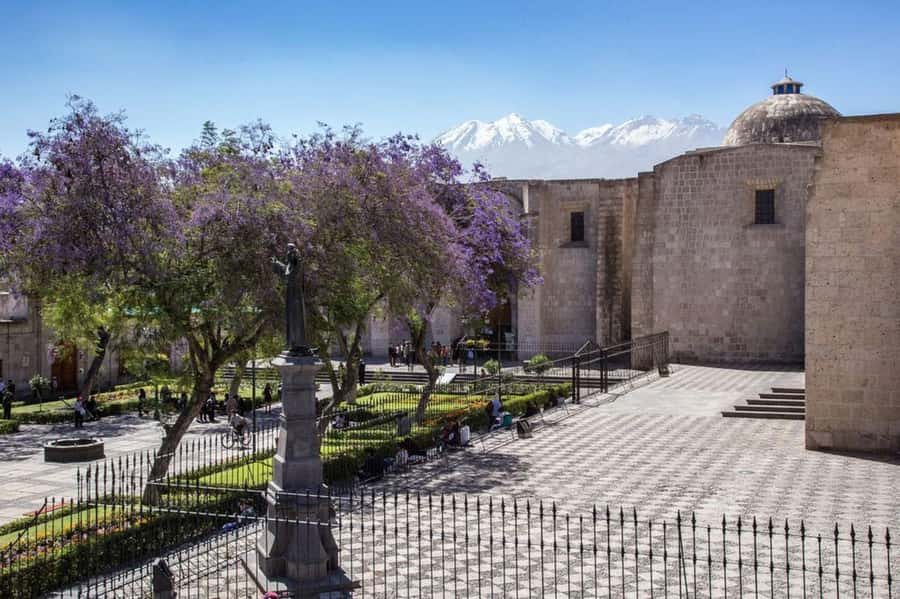
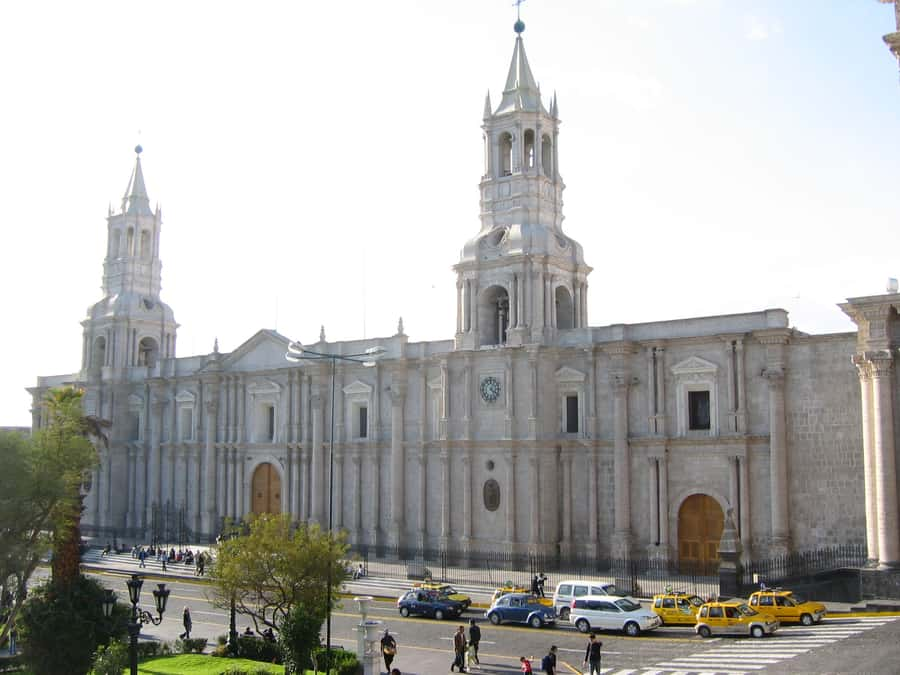
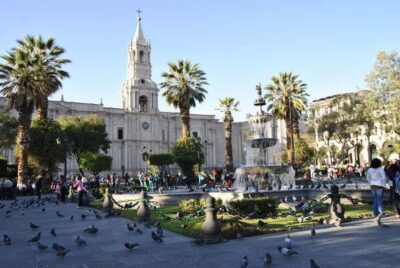
After the smaller neighborhoods and working colonial buildings, the Plaza de Armas feels deliberately grand. You get about 30 minutes here for a guided visit, photographs, and a panoramic look at the city’s main meeting place.
The square is framed by elegant portals, with the Cathedral of Arequipa on one side and a bronze fountain at its center. It is the point where the city’s historic streets gather, and it remains a central meeting place for locals.
This stop gives you the visual payoff that many people expect from Arequipa, but the earlier walk helps you read it better. You have already seen how sillar appears in ordinary lanes and old tambos. Now you can see the same material used in a formal public setting.
The tour does not suggest a long interior visit to the cathedral, so treat this as an exterior and square-focused stop. That is useful if you want a broad introduction rather than a church-heavy itinerary. The guide’s explanation is important here, especially if you want to understand how the plaza relates to the wider historic center.
Entering Santa Catalina Monastery
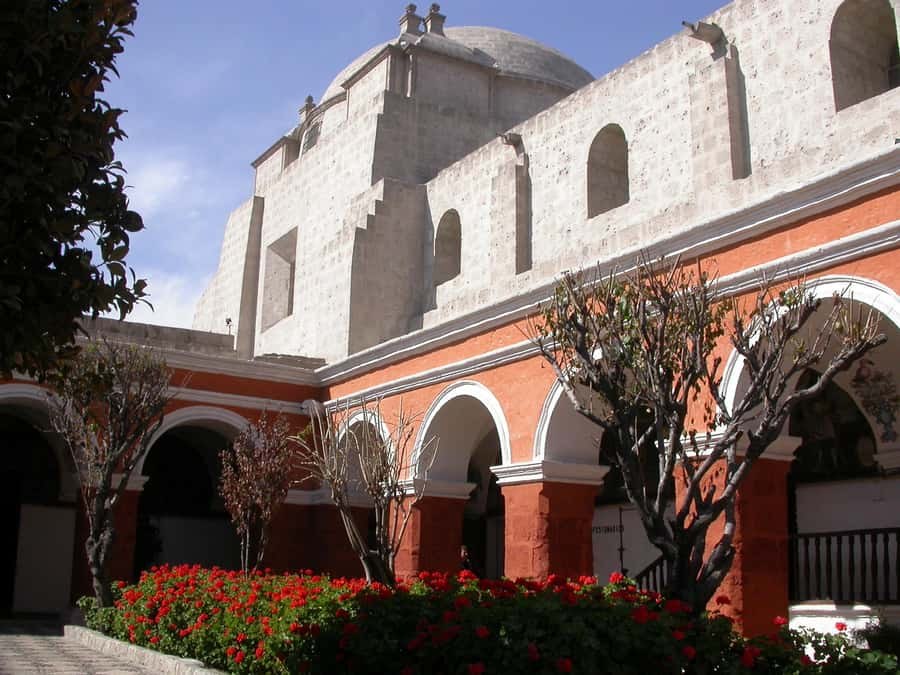
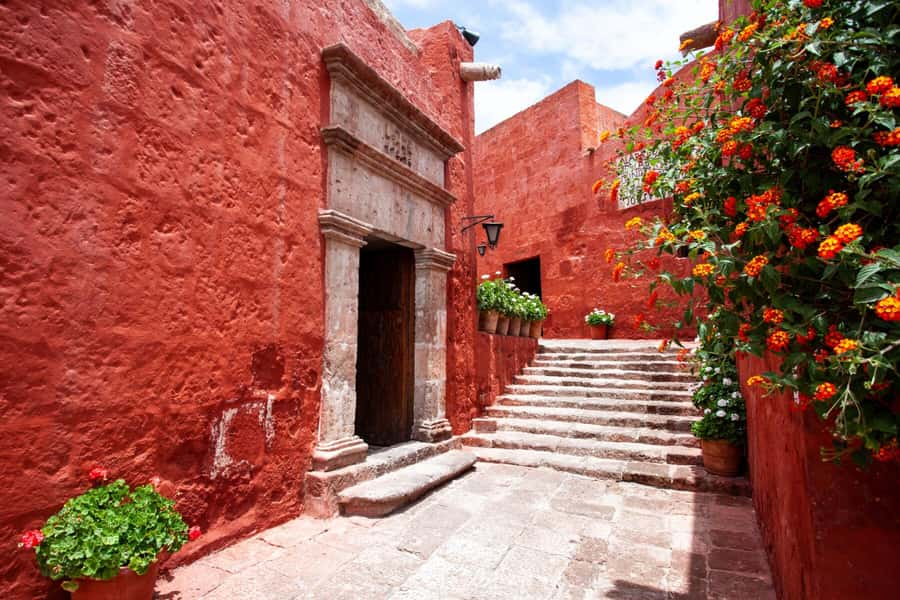
Santa Catalina Monastery is the tour’s main attraction, and you spend roughly one hour inside. Founded in 1579, the monastery covers about 20,000 square meters, with cloisters, patios, small squares, streets, a bell tower, and a church.
Calling it a monastery can undersell the experience. You walk through an enclosed complex that feels like a small city, with its own lanes and distinct sections. Some walls remain the natural red and orange color of the volcanic material, while other passages are built from pale ashlar stone.
The story of Doña Maria de Guzman gives the site a personal starting point. She was a wealthy woman who donated her property and began life as a cloistered nun. During the viceroyalty, many women who entered the convent came from wealthy families. Cloistered nuns still live there today.
Your guide should help you understand the difference between the public spaces you visit and the private religious life that continues within the complex. One particularly memorable area is the Patio del Silencio, where nuns met to pray and read the Bible in silence.
You will have time for photographs, but remember that this is a guided visit rather than an unlimited wandering session. The one-hour allocation is enough to see the main areas and appreciate the colors, walls, and layout. If you are fascinated by religious architecture, you may wish the visit were longer.
How much value do you get for $35?
At $35 per person, the tour can be good value if your priority is context and efficient sightseeing. You get a guide, transport at the start and end, a route through several historic areas, and a visit to Santa Catalina. For a first day in Arequipa, that combination saves you from piecing the sights together on your own.
Check the exact booking option carefully. Hotel pickup and drop-off are optional, and admission to Santa Catalina is also listed as optional. If entrance is not included, the local fee is 45 PEN for adults and 25 PEN for people aged 7 to 21. Children aged 4 and younger are complimentary.
That extra admission can change the final price comparison. The tour becomes more appealing when the fee is included, since Santa Catalina is the largest single stop and the place most visitors are likely to value. If it is not included, add the local charge before deciding.
Food and drinks are not included. Since the tour lasts three hours, that is not a major problem, but you should eat beforehand or plan a meal afterward in the historic center.
Guides, language, and the feel of the tour
The experience is offered in English and Spanish. A live guide makes a real difference on this route because the buildings do not explain themselves. A white stone wall tells you little until you learn where the material came from, who used the building, and how the site fits into Arequipa’s past.
Past guide feedback has been especially warm toward Gisela, Milei, and Sline. Gisela was praised for being precise and courteous, while Milei was described as empathetic, kind, and ready with answers. Sline also received strong praise for friendly explanations and broad command of the subject.
Those details suggest the best part of the tour is likely to be the human interpretation, not simply the number of stops. Guide assignments can vary, so you should not book on the assumption that one particular person will lead your departure. Still, the repeated praise for clear and friendly guiding is a useful sign.
The route has a moderate amount of walking, with short transfers between districts and a van ride of about 10 minutes at the start and end. It is not suitable for wheelchair users. Pickup is available only for hotels in the historic center, and the vehicle may leave you near your hotel if direct access is difficult.
Who should book this Arequipa experience?
I would recommend it to first-time visitors who want a guided introduction to the historic center without spending a full day on a city tour. It suits you especially well if you care about old neighborhoods, architecture, colonial history, and Santa Catalina.
It is also a good fit if you are staying in the historic center and want a simple morning or afternoon plan. The tour begins from central pickup points such as Calle Zela 301, next to the Hotel Mirador del Monasterio, and returns to the historic center.
You may want a different plan if you prefer to move slowly, stop often for food, or spend several hours inside Santa Catalina alone. The schedule is organized and fairly tight. The order of the stops can change, and the one-hour monastery visit leaves little room for lingering.
Book it if you want the city’s main historic sights tied together by a guide who can explain what you are seeing. Skip it if you already know Arequipa well and would rather explore the monastery and old quarters at your own pace. For most first visits, the mix of San Lazaro, living tambos, Plaza de Armas, and Santa Catalina makes the $35 starting price a sensible use of three hours, provided you confirm the entrance-fee option before paying.
FAQ
How long does the Arequipa walking tour last?
The experience lasts three hours, including the guided walking route, the Santa Catalina Monastery visit, and short van transfers at the beginning and end.
Is hotel pickup included?
Pickup and drop-off are available as an optional choice for hotels located within Arequipa’s historic center. If your hotel is outside the center, use the meeting point at Calle Zela 301, next to the Hotel Mirador del Monasterio.
Which languages are available?
The tour is offered with a live guide in English or Spanish.
Is the Santa Catalina Monastery entrance fee included?
It depends on the option selected. If entrance is not included, the local fee is 45 PEN for adults and 25 PEN for people aged 7 to 21.
How much walking is involved?
You walk through San Lazaro, Barrio del Solar, Tambo La Cabezona, Plaza de Armas, and Santa Catalina. The itinerary includes walking sections of about 10 to 15 minutes between several stops.
Is the tour suitable for wheelchair users?
No. The experience is listed as unsuitable for wheelchair users.
What happens if I need to cancel?
You can cancel up to 24 hours in advance for a full refund. A reserve-now, pay-later option is also available.
Just added around Arequipa
- Walking tour through the Historic Center of Arequipa★ 4.0 · 3 reviews
- Trek to the Route of the Sillar and Culebrillas in Arequipa★ 4.0 · 9 reviews
- Arequipa, Historic and Colonial City and Santa Catalina Monastery★ 4.5 · 42 reviews
- 8-Hours Tour in Arequipa Laguna de Salinas with Pick-up★ 4.5 · 56 reviews
- Tour to the Sillar Route from Arequipa | Half Day★ 4.2 · 4 reviews
- Tour + Hike to the Sillar Route and Culebrillas in Arequipa★ 4.1 · 5 reviews
- Arequipa: The White City Origins – Sillar Route Half Day★ 5.0 · 4 reviews
- Sillar Stone Tour from Arequipa★ 4.0 · 22 reviews
Walking Tours, compared.
Walking tour in the Historic Center of Arequipa
Read our review →
Miraflores Trending Flavors Half-Day Walking Tour
Read our review →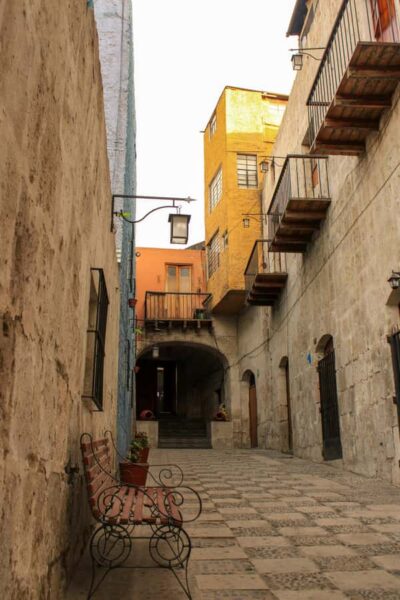
Arequipa Walking Tour city center and drinks experience
Read our review →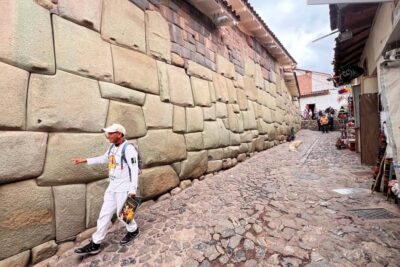
Historic Walking Tour with Pisco Sour and Music Show
Read our review →

Trending Flavors: Miraflores Walking Tour Including Food and Drinks Tasting
Read our review →
City Tour by Panoramic Bus – Walking & Catacombs
Read our review →Browse the lists this tour appears in