
Reviewed · HIKING & TREKKING
5-Day Salkantay Trek to Machupicchu Sky Lodge Dome
The most memorable part of this five-day Salkantay Trek is the change in scenery: icy mountain air at the 4,650-meter pass, warm forest trails near coffee farms, then the train tracks into Aguas Calientes. I like the private domes with bathrooms and hot showers, and I like that meals, a cook, mules, transport, the train, and Machu Picchu admission are bundled into the $700 price. The main caution is altitude, cold, and a long fourth day on foot.
I also like the small group size, capped at 10 people, and the chance to meet the people who grow and prepare your coffee at the plantation camp. Communication needs attention, though. Confirm your Machu Picchu entry time, train, and bus arrangements before departure, since one booking had confusion over tickets and lost part of the planned trek while sorting it out.
Key points at a glance
- 4,650-meter Salkantay Pass: The trek reaches its highest point between the snow-covered Salkantay and Tucarhuay mountains.
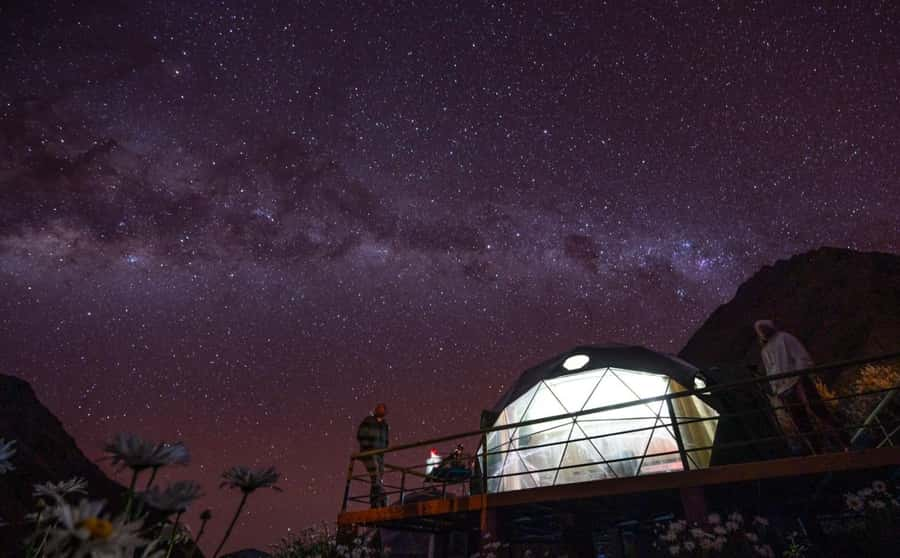
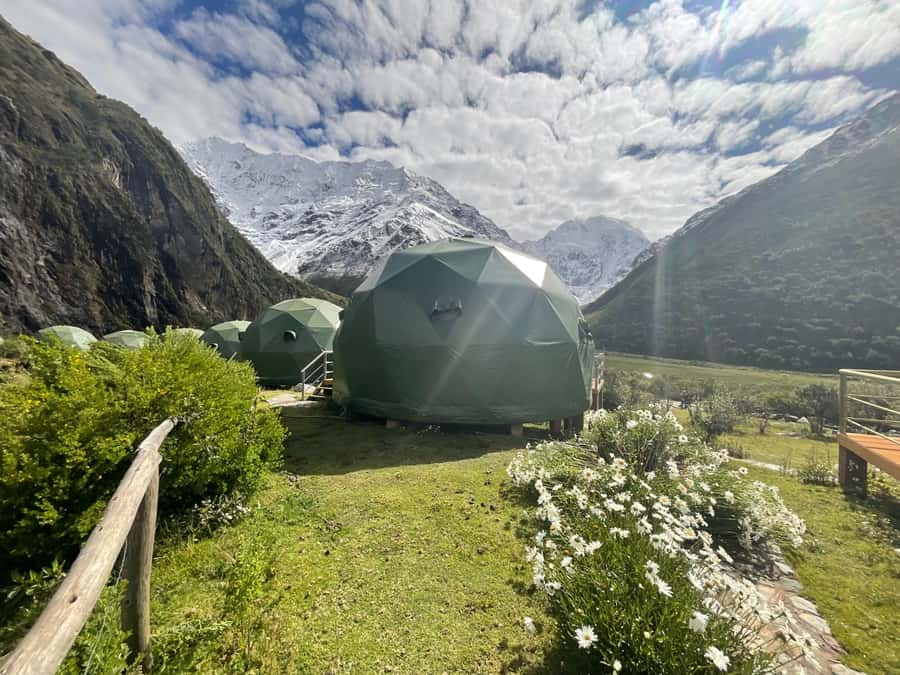
- Private dome camping: Each dome includes a private bathroom and hot shower, though the first night can be very cold.
- Coffee plantation stay: At La Playa, you help harvest, roast, and grind coffee.
- A changing route: The trail moves from high mountain terrain to forest, farms, rail tracks, and Machu Picchu.
- Small groups: The maximum group size is 10, with a bilingual guide and cook.
- Machu Picchu access included: The package covers admission and the uphill bus, with an optional Huayna Picchu or Machu Picchu Mountain climb if reserved ahead.
What $700 buys you on the Salkantay route
At $700 per person, this is not a bare-bones hike. The price covers four breakfasts, lunches, dinners, and snacks, as well as a cook, kitchen equipment, transport from Cusco to the trailhead, a train from Aguas Calientes to Ollantaytambo, and private transport back to Cusco.
You also receive four nights of accommodation: three nights in geodesic domes and one night in a hotel in Aguas Calientes. The domes have private toilets and hot showers, which is a useful comfort after long days on steep or uneven trails. The first dome night can still feel cold, so do not confuse a private bathroom with a heated room.
The package includes a guide, mules and horsemen for food and equipment, and transport for up to 7 kilograms of your personal luggage. That removes much of the usual work from a multi-day trek. From day four, however, you need to carry your own bags unless you pay about 20 soles to send them by car from La Playa to Hydroelectric and then by train to Aguas Calientes.
The cost is strongest for someone who wants a supported trek without giving up basic comfort. You are not paying only for trail access. You are also paying for meals, a cook, mountain transport, lodging, the final train, and the Machu Picchu visit. Still, budget for a sleeping bag, trekking poles, the first breakfast, and the last dinner.
More Hiking Tours in Machu Picchu
- Machu Picchu: 5-Day Salkantay Trek with Panoramic Train
★ 5.0 · 79 reviews - Ancascocha Trek To Machu Picchu 4 Days And 3 Nights
★ 5.0 · 77 reviews - 4 Day Inca Trail Trek to Machu Picchu Multi day tour
★ 5.0 · 70 reviews
Day one: Challacancha, Humantay Lagoon, and a cold night in the domes
Your day starts early, with hotel pickup in Cusco around 4:30 to 5:00 a.m. The first van ride takes about two hours to Mollepata, where breakfast is served. You then continue by private transport for about 40 minutes to Challacancha, the trailhead.
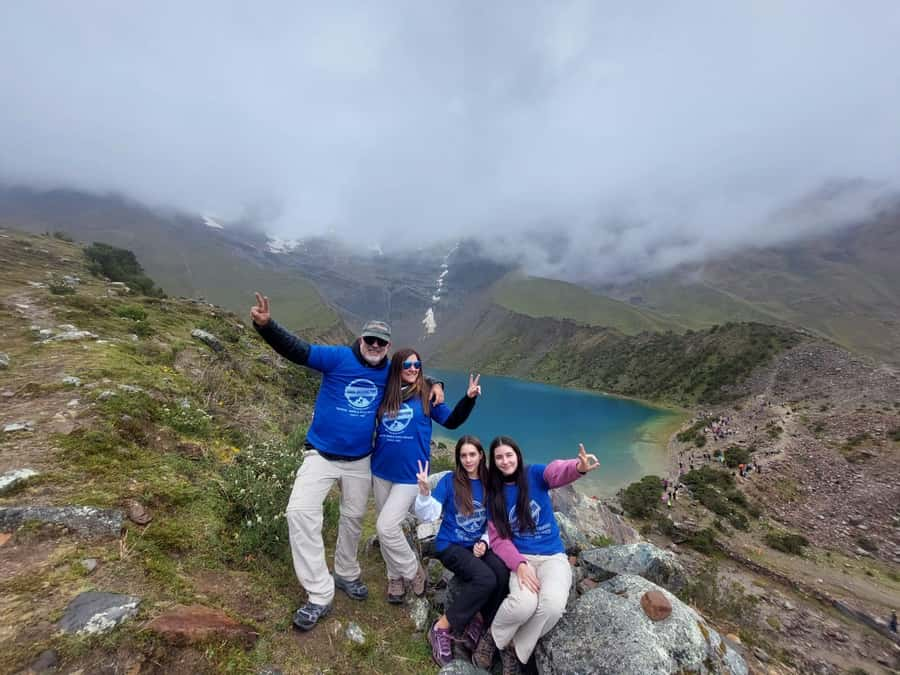
The first major outing is Humantay Lagoon. The water and surrounding mountain views make this a strong opening to the trek, but the altitude makes the climb demanding. You should arrive in Cusco at least two days before the trek, giving your body time to adjust before tackling high ground.
After visiting the lagoon, you continue to Soraypampa and spend the night in a dome. An Andean ceremony offering to Mother Earth is also part of the first day, giving the route a local cultural element beyond scenery and exercise.
The dome setup is a real selling point. You have your own bathroom and hot shower rather than a basic shared camp facility. Pack warm clothing anyway. One of the most useful pieces of feedback about this stay is also the simplest: the first night can be very cold.
Day two: Salkantay Pass at 4,650 meters
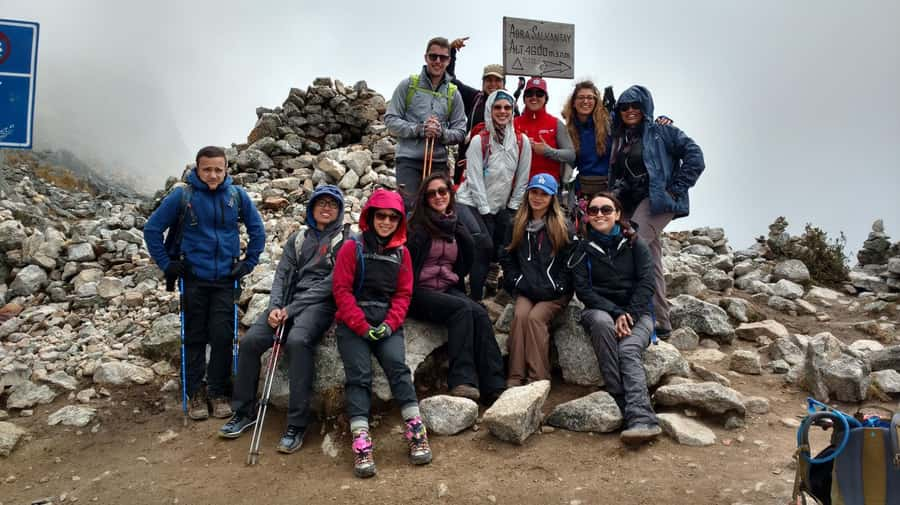
Breakfast is scheduled for about 5:30 a.m., followed by the hardest and highest section of the trek. The trail climbs to the Salkantay Pass, at 4,650 meters, or about 15,200 feet.
At the pass, Salkantay Mountain rises on one side and Tucarhuay on the other. The views of the snow-capped peaks are the day’s main reward, and you might see snow near the top. This is the kind of setting that explains why people choose the Salkantay route instead of a simpler approach to Machu Picchu.
It is also the point where altitude preparation matters most. Even fit hikers can feel the thin air at this height. Walk at the guide’s pace, keep water and warm layers close, and treat headache, nausea, or unusual shortness of breath seriously.
After the high pass, the route continues to Chaullay, where you spend another night in a dome. You will likely appreciate the hot shower more on this evening. The day combines a high-altitude climb with a descent, so it demands steady effort rather than a quick burst of strength.
Day three: From mountain trail to coffee plantation
Day three begins around 6:30 a.m. The route heads through the high jungle, crossing the Lluskamayo River and several streams before reaching La Playa after about four hours of walking.
This is a welcome change from the open, cold mountain sections. You move through warmer forest and agricultural areas, with water crossings and a closer view of rural life. The route is not just a march toward Machu Picchu. It also shows how quickly the climate changes as you lose altitude.
The night’s camp is at a coffee plantation in geodesic domes. Here, you learn how coffee is harvested, roasted, and ground. You also take part in those steps, which gives the stop a hands-on purpose rather than making it just another overnight camp.
The food is another strong part of the trip. A cook prepares the meals, and vegetarian or vegan food is available at no extra cost if requested in advance. Four lunches, dinners, breakfasts, and snacks are included across the trek, so you do not need to plan daily meals along the route.
More Salkantay trek options:
- Small Group 5 Days Salkantay and Machu Picchu by Llactapata Tour
★ 5.0 · 88 reviews - Salkantay Trek 4 Days to Machu Picchu by Glamping Sky Lodge Dome
★ 5.0 · 68 reviews - Salkantay Trek to Machu Picchu in 4 days
★ 4.5 · 50 reviews - Salkantay Trek To Machu Picchu 5 Days And 4 Nights
★ 5.0 · 44 reviews
Day four: Llactapata, Hydroelectric, and the rail walk
Day four starts early, at about 6:30 a.m., because there is a lot to fit in. The route reaches Llactapata and follows part of an original Inca trail. Along the way, you have the chance to see local farming areas and harvest various fruits.
One of the day’s highlights is the view toward the Urubamba Valley, with Salkantay Mountain in the distance and your first glimpse of Machu Picchu. That first sight comes before the main visit, which makes the approach feel gradual rather than rushed.
Lunch is at Hydroelectric. From there, you walk for about two and a half hours beside the railway tracks to Aguas Calientes. The path passes crop plantations, including coca and bananas. This section is less dramatic than the high pass, but it gives you time to watch the valley change and understand the practical route used to reach the town without taking an earlier train.
You spend the night in a hotel in Aguas Calientes. The accommodation is described as adequate rather than luxurious, so set your expectations accordingly. After four days of hiking, the town’s hot springs are a useful extra. Admission costs 10 soles, paid separately.
Day four is also the point when luggage planning matters. You need to carry your own bag from this stage, unless you arrange the optional luggage transfer for about 20 soles. If you want to visit the springs or walk around town, carrying less will make the evening easier.
Day five: Machu Picchu before the crowds build
You get up at about 5:00 a.m., eat breakfast, and take the first bus from Aguas Calientes around 5:30 a.m. The ride to Machu Picchu takes about 25 minutes.
The early start is worth considering carefully. It means another short night, but it gives you a better chance to see the citadel in the morning light. The included guided visit lasts about two hours. Afterward, you can explore on your own within the limits of your entry time and ticket.
Huayna Picchu is an optional add-on. The climb to its summit at about 2,720 meters takes around 1 hour and 45 minutes. Machu Picchu Mountain is another possible option, but either must be booked in advance and depends on availability. Do not assume you can decide at the gate.
Your return train leaves around 2:00, 4:00, or 6:20 p.m., depending on the assigned schedule. The ride to Ollantaytambo takes about two hours, followed by private transport back to Cusco. The final arrival time can vary widely, so avoid booking an early flight or other fixed evening plans.
Guides, meals, and group size
The tour provides a professional bilingual guide in English and Spanish, with groups limited to 10 people. That size is small enough for questions and easier pacing than a large hiking convoy.
Guide quality can make a big difference on a trek with this many moving parts. Roberto received especially strong praise for helping sort out a ticket problem and advising hikers on how to secure the right Machu Picchu entry. Abel was also singled out for professional guiding, while chef Exaltación and cook Mario were praised for their work.
Those names are useful, but you should still confirm your assigned guide during the pre-trek briefing. The cooking is not an afterthought here. Meals are prepared on the route, and the food is an important part of the value, especially when you are hiking several hours a day.
The group limit does not mean the trek is private. You will still share transport, meals, camps, and trail time with other people. It does mean the guide should have a manageable number of hikers to watch at high altitude.
The practical drawbacks you should plan for
The trek is physically demanding. It is not suitable for people with back problems, heart problems, mobility impairments, or for pregnant women. The route includes steep high-altitude walking, river crossings, a long approach to the pass, and the extended rail-track walk on day four.
The schedule is also relentless. The first pickup is before sunrise, the second day reaches a very high pass, and the last day starts early after four nights on the move. You need good hiking shoes, warm clothes, sun protection, a daypack, sunglasses, a sun hat, and cash.
Communication deserves special care. Before setting out, ask for written confirmation of:
- Your Machu Picchu entry ticket and time
- Your train departure from Aguas Calientes
- The bus arrangement to Machu Picchu
- Your return transport to Cusco
- Any optional Huayna Picchu or Machu Picchu Mountain reservation
This is not needless paperwork. One group had to shorten the trek after discovering late that Machu Picchu tickets were not yet settled. The guide helped find a solution, but it is much better to resolve these details before the first early-morning pickup.
The activity is advertised as wheelchair accessible, but the trek itself is not suitable for people with mobility impairments. If accessibility is important for your party, confirm exactly which transport and accommodation elements are accessible before paying.
Who should book this Salkantay trek?
I would choose this trip if you want a demanding route with strong scenery, practical support, and more comfort than ordinary camping. It suits hikers who like variety: Humantay Lagoon, snow-covered peaks, forest, coffee production, fruit farms, rail tracks, and Machu Picchu all appear within five days.
It is also a good fit if you want to avoid arranging every separate piece yourself. The guide, cook, meals, luggage support, domes, hotel, train, bus, and entrance ticket are handled as one package.
I would hesitate if you dislike early mornings, cold nights, high altitude, or fixed schedules. I would also look elsewhere if your priority is a quiet, slow visit to Machu Picchu, since this route packs a lot into five days and includes long travel days at both ends.
The tour allows free cancellation up to 24 hours before departure and lets you reserve now and pay later. Those terms add flexibility, but they do not replace the need to confirm your tickets and train schedule.
Should you book it?
Book this Salkantay trek if you want the full physical challenge and like the idea of sleeping in private domes instead of basic tents. The best features are the changing scenery, the coffee plantation activity, the included logistics, and the small group size.
Before booking, make sure you have at least two acclimatization days in Cusco, the right equipment, and enough fitness for the 4,650-meter pass. Then get every Machu Picchu and train detail in writing. If those points work for you, $700 is a fair price for a supported five-day route that combines demanding hiking with useful comforts.
FAQ
How long is the Salkantay Trek to Machu Picchu?
The trek lasts five days and four nights. You spend three nights in domes and one night in a hotel in Aguas Calientes.
What is the highest point of the trek?
The highest point is Salkantay Pass, at 4,650 meters, or about 15,200 feet.
Is Machu Picchu admission included?
Yes. The package includes the Machu Picchu entrance ticket and the uphill bus from Aguas Calientes to Machu Picchu.
Is the train back to Cusco included?
The package includes a train from Aguas Calientes to Ollantaytambo, followed by private transport from Ollantaytambo to Cusco.
Are meals included?
Yes. The package includes four breakfasts, four lunches, four dinners, and four snacks. Vegetarian and vegan meals are available at no extra charge if requested.
Can I climb Huayna Picchu?
You can optionally climb Huayna Picchu or Machu Picchu Mountain, but the extra entry must be booked in advance and depends on availability.
How much luggage can the mule service carry?
Mules and horsemen carry equipment, food, and up to 7 kilograms of personal luggage per person until the third day. From day four, you carry your own bags unless you arrange the optional transfer.
What should I bring?
Bring warm clothing, sunglasses, a sun hat, cash, a daypack, trekking gear, hiking shoes, and your passport or ID card. A sleeping bag and trekking poles are not included.
More 5-Day Experiences in Machu Picchu
- Ultimate Lares Trek & Inca Trail 5 days
★ 5.0 · 47 reviews - Wonderful Cusco 5-Day Tour with Entrance to Machupicchu
★ 5.0 · 46 reviews - 5-Day: Salkantay Trek to Machupicchu and Humantay Lake
★ 5.0 · 42 reviews - Salkantay 5-Day Trek To Machu Picchu
★ 5.0 · 39 reviews
Just added around Machu Picchu
- Private Tour Guide in Machupicchu from Aguas Calientes.★ 5.0 · 40 reviews
- Machupicchu Guide Service★ 5.0 · 42 reviews
- Inca Trail Machu Picchu 4 Days★ 5.0 · 39 reviews
- Machu Picchu, Cusco & Lima 7-Day Tour★ 5.0 · 30 reviews
- 7 Days: Lima, Ica, Cusco & Machupicchu with local flights★ 5.0 · 52 reviews
- Machu picchu one day by train all included★ 4.5 · 53 reviews
- Exclusive Huayna Picchu Tour in 1 Day from Cusco★ 5.0 · 31 reviews
- Wonderful Cusco 5-Day Tour with Entrance to Machupicchu★ 5.0 · 46 reviews
Hiking & Trekking, compared.
7 Lakes Ausangate Trek with Breakfast and Lunch
Read our review →
Rainbow Mountain Tour and Red Valley Hike (Optional)
Read our review →
Full-Day Rainbow Mountain & Red Valley Trekking Tour
Read our review →
Browse the lists this tour appears in