
Reviewed · INCA TRAIL TREKS
4 Day Inca Trail Trek to Machu Picchu Multi day tour
The best part of this four-day Inca Trail trek is the way Machu Picchu arrives at the end of a real journey. You do not simply arrive by train, take a few photos, and leave. You walk an ancient road through Andean grasslands, cloud forest, stone ruins, and high mountain passes before entering through the Sun Gate.
I like the strong support system: porters carry the camp and up to 7 kilograms of your belongings, while a trekking chef prepares three breakfasts, lunches, and dinners. I also like the small maximum group of 16 and the guides, including Nico, César, Josias, and Plinio, who are praised for pacing, history, encouragement, and personal care.
The catch is simple: this is a serious high-altitude hike, not a gentle sightseeing tour. Dead Woman’s Pass reaches 4,215 meters, the trail has steep climbs and descents, and the experience is non-refundable after booking. You need solid fitness, careful preparation, and a willingness to camp for three nights.
Key points to know before booking
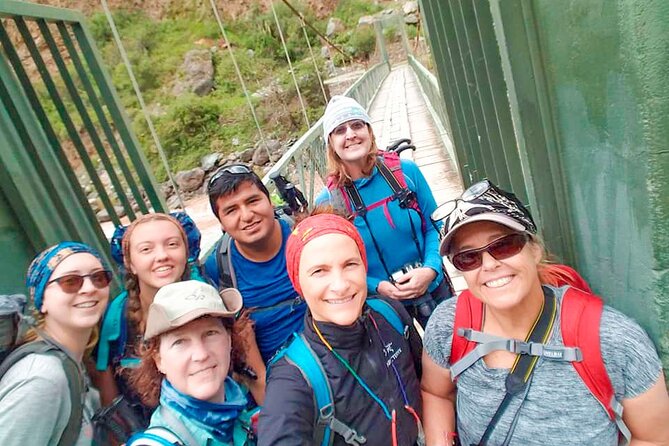
- Dead Woman’s Pass reaches 4,215 meters: Day two is the physical test of the trek, followed by a long descent into Pacaymayo Valley.
- The route covers about 42 kilometers: You move from riverbanks and farmland into high grasslands, cloud forest, and subtropical vegetation.
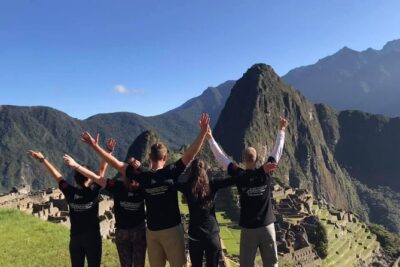
- You enter Machu Picchu through the Sun Gate: Day four gives you a dramatic first view before the guided visit to the citadel.
- Porters carry the heavy camp gear: Your personal duffel can weigh up to 7 kilograms, though sleeping bags and hiking poles cost extra.
- The cooking is a major part of the value: A professional chef prepares three meals a day, and the food has been praised repeatedly, including freshly baked cake.
- The group is limited to 16 people: That gives the guide a better chance to watch the pace and help when the trail gets tough.
Four days from Km 82 to Machu Picchu

The route begins with a 4:30 a.m. pickup in Cusco. You ride through the Urubamba Valley to Km 82, the usual starting point, then cross the Vilcanota River and begin walking on the old Inca road.
The full route is about 42 kilometers, or 26 miles. That number does not tell the whole story. The climbs, altitude, stone steps, changing weather, and descents make the trek harder than the distance alone suggests.
You will have a guide, chef, porters, tents, meals, and transport at both ends. That matters because the trail is demanding enough without carrying a full camp on your back. Your personal duffel is limited to 7 kilograms, and the porters handle food, cooking equipment, and camping supplies.
The group size of up to 16 is another practical advantage. A guide can adjust the walking pace and keep an eye on the group more easily than on a large departure. Several guides, including César, Nico, and Plinio, receive particular praise for doing just that.
More Hiking Tours in Machu Picchu
- Machu Picchu: 5-Day Salkantay Trek with Panoramic Train
★ 5.0 · 79 reviews - Ancascocha Trek To Machu Picchu 4 Days And 3 Nights
★ 5.0 · 77 reviews - Salkantay Trek 4 Days to Machu Picchu by Glamping Sky Lodge Dome
★ 5.0 · 68 reviews
Day one: the Vilcanota River and Huayllabamba
The first day covers about 12 kilometers, or 7.5 miles, in roughly eight hours. It is described as moderate, though you should not mistake the opening day for a warm-up stroll. You are already walking at altitude, and the long day gives you a clear idea of the effort ahead.
The trail follows the Vilcanota River and passes through Huayllabamba. You will see mountain valleys and have a chance to interact with local people. This first section is useful because it lets you settle into the group rhythm before the steepest sections arrive.
The views begin immediately, with Andean peaks and river scenery providing plenty of reasons to pause. Your guide can also give context about the old road and the places you pass. Guides such as Nico, César, and Plinio are praised for mixing practical help with explanations of Inca history.
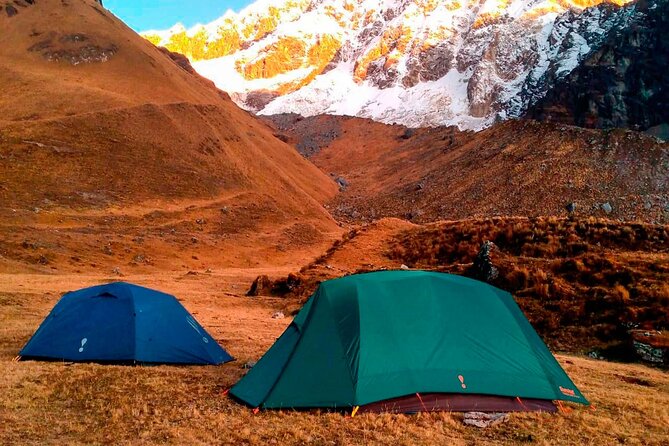
You camp at the end of the day. The camping setup includes two people in each four-person Eureka tent, which gives you more room than filling every available space. A kitchen tent, dining tent, tables, chairs, cooking equipment, and a toilet tent are also provided.
Day two: facing Dead Woman’s Pass
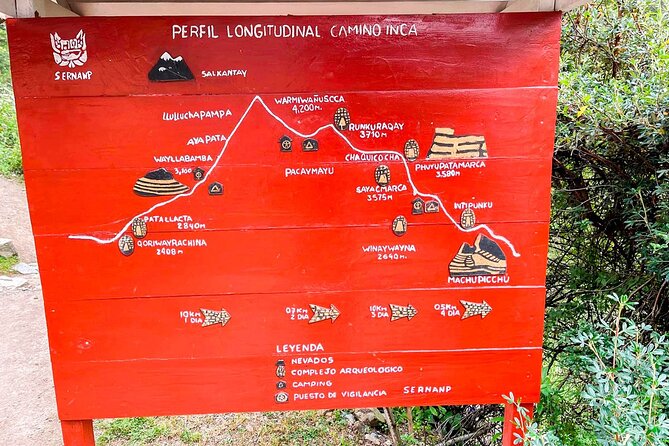
Day two is the hardest day for most people. You start with breakfast, then climb toward Warmiwañusca, better known as Dead Woman’s Pass, at 4,215 meters, or 13,828 feet.
The climb moves through high-altitude grasslands. The air can feel thin, and the trail rises steadily toward the pass. You should expect to walk slowly, take breaks, and let your guide set a sensible pace. The summit is not the end of the day, since the route then drops into Pacaymayo Valley.
This is where good preparation pays off. Strong legs help, but patience matters just as much. Do not try to race the group uphill. Drink the water provided at camp, keep your day bag light, and use trekking poles if you find steep descents hard on your knees.
After the pass, the setting changes as you descend toward cloud forest. Orchids and bromeliads appear along the trail, and the scenery becomes greener and more enclosed. The campsite at Pacaymayo gives you a place to rest after a demanding day.
The tour includes water at each campsite, supplied by the chef. A sleeping mat is included, but a sleeping bag costs an additional $25, and an inflatable rest mattress costs $20. Check what you already own before booking so these add-ons do not surprise you.
Day three: three passes and Wiñay Wayna
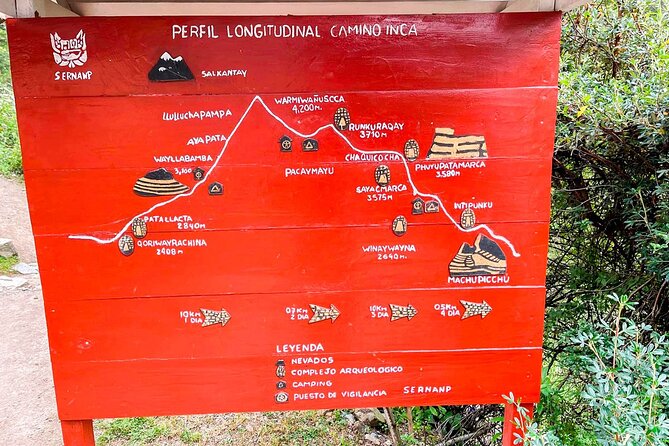
Day three is shorter at about six hours, but it remains an active day with repeated climbs and descents. You head toward Runkurakay Pass at 3,970 meters, then descend toward the ruins of Sayacmarca at about 3,624 meters.
Sayacmarca is one of the memorable stops because of its high position and stone construction. The route continues through cloud forest, passing smaller ruins before climbing to Phuyupatamarca at 3,670 meters.
From there, you descend toward Wiñay Wayna, one of the most impressive archaeological sites on the trek. Its agricultural terraces and ritual baths show how carefully the Incas shaped and used this steep terrain. The site sits at about 2,650 meters, noticeably lower than the high passes.
Wiñay Wayna is also the final campsite listed for the trek. Reaching it after the day’s climbs feels significant because the next major stop is Machu Picchu. You are close, but day four still begins early and includes the final walk to the Sun Gate.
The third day is a good example of why this trek offers more than a hike to one famous ruin. You see changing elevations, different plant life, and a series of Inca sites that are part of the journey rather than an afterthought.
More Inca Trail departures:
- Cusco: 4-Day Inca Trail to Machu Picchu with Accommodation
★ 4.8 · 432 reviews - Cusco: Machu Picchu 2-Day Inca Trail with Panoramic Train
★ 4.9 · 260 reviews - From Cusco: 2-Day Inca Trail to Machu Picchu
★ 4.2 · 244 reviews - Machu Picchu: Inca Trail 2-Day Overnight Guided Tour
★ 4.9 · 203 reviews
Day four: entering through the Sun Gate
The final morning starts with breakfast and an early walk to the checkpoint. The exact departure time is not stated, but you should expect an early start as you make your way toward Inti Punku, the Sun Gate.
The first view of Machu Picchu from the Sun Gate is the reward for the previous three days. From here, you continue to the citadel for a guided visit. The tour includes the Machu Picchu entrance fee and a guide, so you are not left to wander among the ruins without context.
The site was brought to international attention by Hiram Bingham in 1911. Your visit is more than a photo stop because the guide can explain the purpose and setting of the structures you see.
After the visit, you take a shuttle bus down to Aguas Calientes. Lunch there is not included, so plan to pay for your own final lunch. You then take the tourist train to Ollantaytambo and a tourist bus back to Cusco.
This return journey is long, but it is organized as part of the package. You do not have to arrange a separate train ticket, bus connection, or transfer from Ollantaytambo.
Camping, food, and porter support
Camping is the largest difference between this trek and a standard Machu Picchu day trip. You sleep in tents for three nights, with a dining tent, kitchen tent, toilet tent, chairs, tables, and a comfort sleeping-roll mattress supplied.
Two people use each four-person tent. That arrangement gives you extra space for changing clothes and storing your gear. It also provides more privacy than putting four people into one tent.
The porters carry the shared equipment and food, plus your personal duffel up to the stated 7-kilogram limit. You still carry a daypack with items you need while walking, such as water, rain protection, and warm layers.
The chef is a major strength of the package. Meals include three breakfasts, three lunches, and three dinners. The cooking has been praised as unusually good for a camping trip, with plentiful portions, nutritious meals, and even cake prepared along the trail.
That support has real value. After a day like Dead Woman’s Pass, a hot meal and an organized camp are not minor comforts. They help you recover for the next section.
The package also includes a first-aid kit with emergency oxygen, a plastic rain poncho, and water at each campsite. You should still bring personal medication and travel insurance, since Peru travel insurance is not included.
Guides who shape the experience
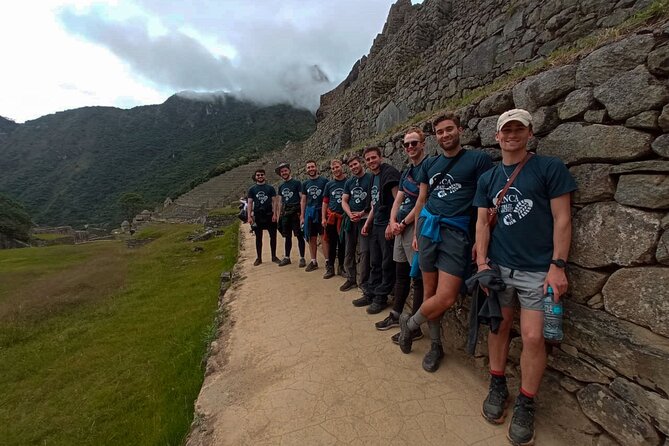
The company assigns an experienced guide, but the exact person depends on the departure. Names connected with this trek include Nico Raul, César Pérez, César Coavoy, Josias, and Plinio, also called Pepe or Pinyo in some feedback.
Their roles go beyond pointing out the route. A good guide manages the pace, explains the ruins, watches how people are coping, and helps the group deal with changing weather. César Pérez is praised for quickly judging the abilities of the group and adjusting the walking plan. Plinio is praised for encouragement and steady pacing.
Nico Raul receives especially warm praise for his care, history explanations, and attention to individual needs. Josias is also described as informative and supportive. These details matter because a guide can change the feel of a difficult trek.
The porters and chef are just as important. The staff has been praised for organization, hard work, friendly service, and strong cooking. One account even describes a porter carrying day bags during difficult moments, though you should not count on that as a standard service.
What the $930 price includes
At $930 per person, this is not a budget hike. It is also more than a simple guide fee. The price includes the Inca Trail permit, Machu Picchu entrance, transport from Cusco to Km 82, three nights of camping, guides, a chef, porters, camping equipment, meals, water at campsites, the bus to Aguas Calientes, the train to Ollantaytambo, and the bus back to Cusco.
The permit and entrance fees are important because access to the Inca Trail is controlled. The return transport also saves you from piecing together separate tickets after a tiring morning at Machu Picchu.
You still need to budget for a sleeping bag at $25, hiking poles at $20, and an inflatable rest mattress at $20 if you want one. The first breakfast and final lunch in Aguas Calientes are not included, nor are tips, souvenirs, or travel insurance.
For me, the price makes the most sense if you value a supported camping trip with meals and porters. If you want only to see Machu Picchu, a train-based visit will be simpler and less physically demanding. If you want the old road, the ruins, and the arrival through the Sun Gate, the package covers the central costs in one booking.
Who should book this trek
You should book this if you enjoy long mountain walks, accept basic camping, and want Machu Picchu to be the end of a physical journey. It suits people who want archaeological sites along the way rather than a direct route to the citadel.
You should also be comfortable with early mornings, changing weather, steep steps, and high altitude. The operator requires a strong fitness level, and that is fair. The trek includes several demanding days, especially the climb to Dead Woman’s Pass and the descent afterward.
Older hikers have completed the route, including people in their 60s and 70s, but age is less important than conditioning and honest pacing. Your guide can help manage the group, but you still need to arrive prepared.
This is less suitable if you dislike camping, have limited hiking fitness, or want a flexible booking. The tour is non-refundable and cannot be changed for any reason after payment.
Should you book the four-day Inca Trail?
I would choose this trek if you want the full approach to Machu Picchu: river valleys, high passes, cloud forest, ruins, porters, camp meals, and the first view from the Sun Gate. The combination of experienced guides, strong food, organized transport, and a small group gives the $930 price solid value for an active trip.
I would not choose it simply because Machu Picchu is on your must-see list. The hike is the point, not just the means of getting there. Train-based options are better for anyone who wants comfort, a shorter day, or an easier schedule.
Book it when you can commit to the fitness demands, extra gear costs, and strict cancellation terms. If you can, you get one of South America’s great walks, with the ruins and the final view making the effort worthwhile.
FAQ
How long is the four-day Inca Trail trek?
The route covers approximately 42 kilometers, or 26 miles, over four days. Daily walking times are listed as about eight hours on days one and two, and six hours on days three and four.
What is the highest point on the trail?
The highest point is Warmiwañusca, known as Dead Woman’s Pass. It reaches 4,215 meters, or 13,828 feet.
Is accommodation included?
Yes. The tour includes three nights of camping, Eureka tents, kitchen and dining tents, a toilet tent, camping equipment, and a sleeping-roll mattress.
Are meals included?
Three breakfasts, three lunches, and three dinners are included. Your first breakfast and final lunch in Aguas Calientes are not included.
How much luggage can the personal porter carry?
The personal porter can carry a duffel bag with up to 7 kilograms, or about 11 pounds, of personal belongings.
What is the group size?
The group can include a maximum of 16 people. The tour also includes pickup, with the stated start time at 4:30 a.m.
More 4-Day Experiences in Machu Picchu
- Cusco Sacred Valley and Machupicchu 4 Days
★ 5.0 · 80 reviews - Classic Inca Trail 4 Days to Machu Picchu
★ 5.0 · 69 reviews - 4 Day Inca Trail To Machu Picchu – Private Service
★ 5.0 · 68 reviews - Classic Inca Trail 4 days to Machu Picchu
★ 5.0 · 65 reviews
Just added around Machu Picchu
- Private Tour Guide in Machupicchu from Aguas Calientes.★ 5.0 · 40 reviews
- Machupicchu Guide Service★ 5.0 · 42 reviews
- Inca Trail Machu Picchu 4 Days★ 5.0 · 39 reviews
- Machu Picchu, Cusco & Lima 7-Day Tour★ 5.0 · 30 reviews
- 7 Days: Lima, Ica, Cusco & Machupicchu with local flights★ 5.0 · 52 reviews
- Machu picchu one day by train all included★ 4.5 · 53 reviews
- Exclusive Huayna Picchu Tour in 1 Day from Cusco★ 5.0 · 31 reviews
- Wonderful Cusco 5-Day Tour with Entrance to Machupicchu★ 5.0 · 46 reviews
Inca Trail Treks, compared.
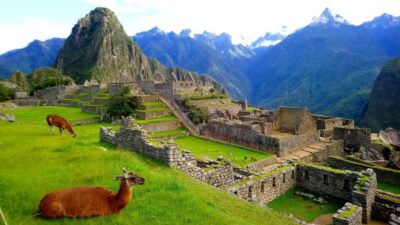
4-Day Inca Trail to Machu Picchu with Accommodation
Read our review →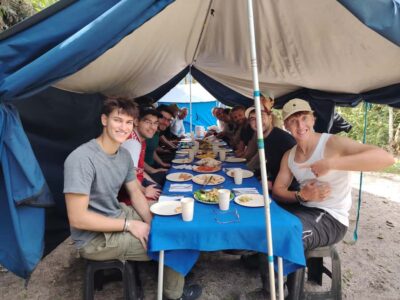
Machu Picchu 2-Day Inca Trail with Panoramic Train
Read our review →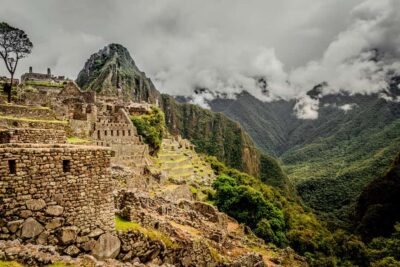
Short Inca trail to MachuPicchu || 2days – 1nigth ||
Read our review →
Browse the lists this tour appears in