
Reviewed · HIKING & TREKKING
Salkantay Trek To Machu Picchu 5 Days And 4 Nights
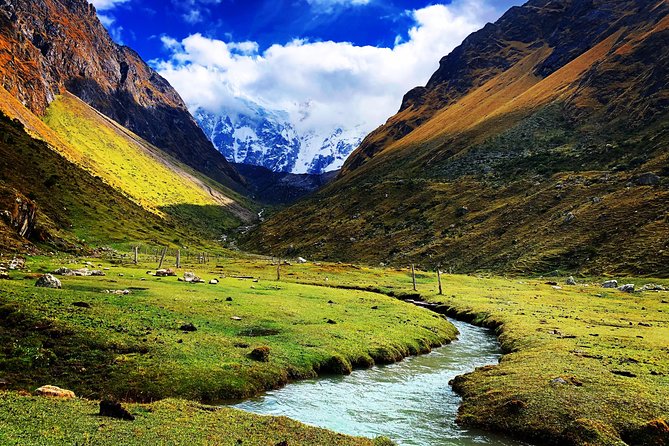
The best part of this trip is the sharp change in scenery. You start among icy Andean peaks at Humantay Lake and Salkantay Pass, then walk down through warmer forest, waterfalls, coffee farms, and the ruins at Llactapata before reaching Machu Picchu. It feels like several trips in one.
I like the strong practical support: cooks prepare multi-course meals, horses carry equipment and up to 8 kilograms of your belongings, and a medical kit, oxygen, hot washing water, and an emergency horse are provided. I also like the small maximum group of 16, which gives guides more room to help on the hard climbs. The catch is simple: this is a serious high-altitude hike, especially on the first two days, and the included sleeping setup does not include a sleeping bag.
Key points to know before booking
- 15,252-foot Salkantay Pass: The highest point comes on day two, after an uphill hour from camp.
- Humantay Lake and Llactapata: You see two memorable viewpoints before reaching Machu Picchu.
- Full camp support: Tents, mattresses, pillows, meals, cooks, horses, hot washing water, and a toilet tent are supplied.
- A real change of climate: The route moves from cold mountain air into rainforest and coffee-growing country.
- Train and hotel included: Your fourth night is in Aguas Calientes, followed by the Machu Picchu visit on day five.
- Budget carefully: The $690 price excludes a sleeping bag, hiking poles, Machu Picchu bus tickets, tips, and day-five lunch.
What this Salkantay trek is really like
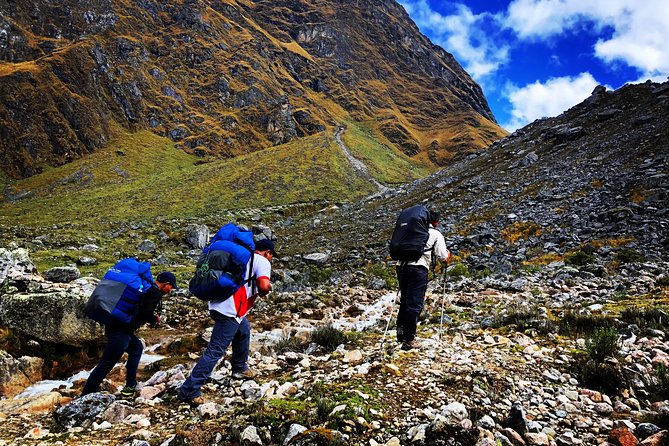
This is not a casual walk with a famous ruin added at the end. You spend four nights on the move, with long hiking days, steep climbs, steep descents, and a dawn start from Cusco. The payoff is variety: high snow-covered mountains, a glacial lake, a mountain pass, rainforest, waterfalls, a coffee plantation, Inca ruins, and Machu Picchu.
The route is a good choice if you want the physical challenge of the Andes but do not want to organize food, pack animals, camps, trains, and hotel rooms yourself. At $690 per person, the price covers a large amount of equipment and labor. You are paying not only for a guide, but also for cooks, assistant cooks, wranglers, horses, tents, transport, meals, and the final train connection.
The support is especially useful because the hard parts come early, when altitude can make ordinary uphill walking feel much tougher. You need a moderate level of fitness, and acclimatizing in Cusco before the trek is sensible. The itinerary gives no easy way to skip the Salkantay Pass on foot, so treat the first two days as the test of the trip.
The company limits departures to 16 people. That is still a group, but it is small enough for a guide to keep an eye on different walking speeds. Guide names associated with this operation include Christian, Edy, Hipo, and Dario. Christian is often praised for his explanations of Inca culture, plants, wildlife, and the region’s natural setting. Edy is also associated with group leadership and a ceremony at the pass. Your actual guide depends on the departure.
More Hiking Tours in Machu Picchu
- Machu Picchu: 5-Day Salkantay Trek with Panoramic Train
★ 5.0 · 79 reviews - Ancascocha Trek To Machu Picchu 4 Days And 3 Nights
★ 5.0 · 77 reviews - 4 Day Inca Trail Trek to Machu Picchu Multi day tour
★ 5.0 · 70 reviews
Day one: Humantay Lake and the cold start at Soraypampa
Your day begins with a 4:30 am pickup from your hotel. The drive to Mollepata takes about three hours, followed by breakfast at a local house. That stop matters because it gives you food before the trail begins and offers a small connection with the communities along the route, rather than starting the day with only a packaged snack.
From Mollepata, you continue for about one hour and 45 minutes to Soraypampa. During the drive, your first views of the Salkantay and Humantay mountains appear. Soraypampa sits at about 12,467 feet, so you are already at an altitude that can affect breathing, balance, and appetite before you take your first steps.
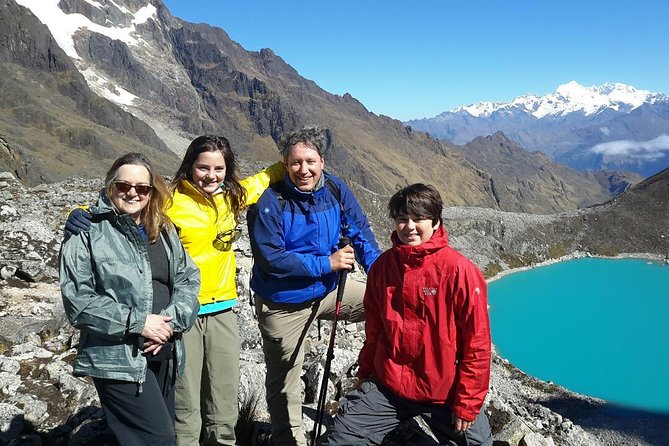
At the trailhead, support staff load the group equipment onto horses. You then hike to Humantay Lake, a roughly two-hour excursion. The lake is the day’s main prize, set below the Humantay mountain and reached by a route that climbs from the starting point.
Allow time for the altitude here. The distance may not sound extreme, but the thin air makes the climb harder than a similar walk at home. Trekking poles are useful, especially if the ground is uneven or you are already feeling the effects of the elevation.
After visiting the lake, you return to the trailhead and continue toward camp. The supplied schedule gives about six hours for the day, including the lake excursion and the onward hike. Your sleeping arrangements are in a four-person tent shared by two people, with a mattress and pillow provided. You still need your own sleeping bag or must arrange a rental.
Day two: The 15,252-foot Salkantay Pass
Day two is the hardest and most dramatic part of the trek for many people. After breakfast, you hike uphill for about one hour to the Salkantay Pass, the route’s highest point at 15,252 feet.
This is where preparation pays off. Walk slowly, drink the boiled or cold water supplied by the crew, and follow the guide’s pace rather than trying to race ahead. The group makes an offering to Salkantay at the pass, and the guide explains why the place matters in Inca culture. That ceremony gives the climb a cultural purpose, not just a physical one.
The pass is followed by a two-hour descent to Huayrac, at about 12,464 feet, for lunch. The downhill section may sound easier, but it can be hard on knees and toes. Hiking poles are not included, though they can be rented and are especially useful on this descent.
After lunch, you continue downhill for about four hours to Colpapampa, at approximately 10,170 feet. The total hiking time is around eight hours. You move from cold, high mountain conditions toward warmer air, and the change is one of the defining features of the route.
The meal service is a real advantage here. The kitchen and dining tents let you eat at a proper table instead of relying on trail food. The chefs are credited with serving multi-course meals, and the package includes breakfast, lunch, and dinner for the first four days. If you have dietary needs, discuss them before departure rather than waiting until the trail.
Day three: Rainforest, waterfalls, and a working coffee farm
Day three eases the physical pressure. The route follows the Santa Teresa River through rainforest, with about six hours of gentle ups and downs. After the steep work of the pass, this is a welcome change, though it is still a full day of walking.
The route includes a waterfall described as the most beautiful along the trek. The exact conditions will depend on weather and water flow, but this section gives you a very different view of the Andes from the bare high-altitude slopes of the first two days.
You reach Lucmabamba, your camp for the evening, around midday according to the schedule. After lunch, you visit the coffee plantation beside the campsite. This is one of the more distinctive stops because it connects the scenery with local agriculture. You can learn how coffee is grown in the warmer forest zone and see how quickly the environment changes after the pass.
The lower altitude can make breathing easier, but the warmer, wetter conditions bring different packing needs. Keep insect repellent, sunscreen, and a rain jacket handy. A headlamp is also important around camp, since early starts and evening routines do not always line up with daylight.
More Salkantay trek options:
- Small Group 5 Days Salkantay and Machu Picchu by Llactapata Tour
★ 5.0 · 88 reviews - Salkantay Trek 4 Days to Machu Picchu by Glamping Sky Lodge Dome
★ 5.0 · 68 reviews - Salkantay Trek to Machu Picchu in 4 days
★ 4.5 · 50 reviews - 5-Day: Salkantay Trek to Machupicchu and Humantay Lake
★ 5.0 · 42 reviews
Day four: Llactapata, your first view of Machu Picchu, and Aguas Calientes
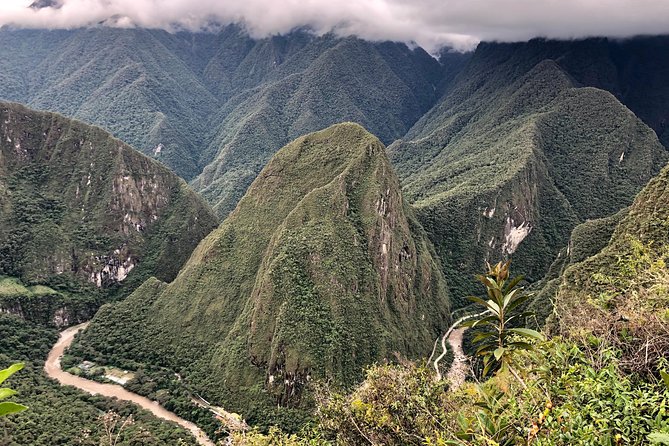
You wake early for the climb to Llactapata. The ascent takes about three and a half hours through rainforest and reaches the ruins at approximately 8,856 feet. This is a moderate climb rather than the high-altitude grind of day two, but tired legs make it count.
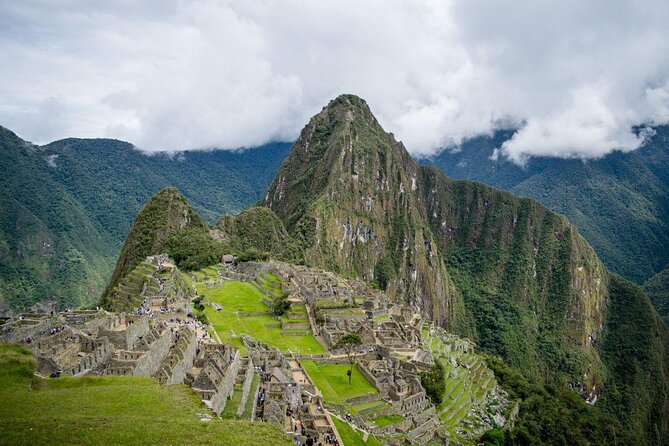
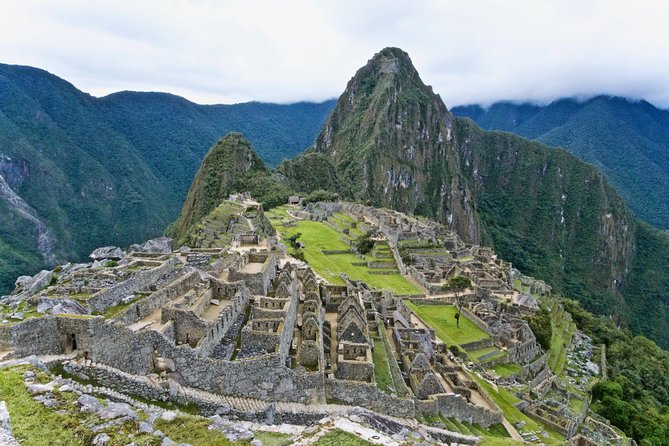
At Llactapata, the guide gives a thorough tour of the ruins. The special moment comes when Machu Picchu appears in the far distance for the first time. It is not yet the close-up visit, and the site will look small from here, but that separation makes the final approach more meaningful.
From Llactapata, you descend for about two and a half hours to Hidro, where you have lunch. The route then shifts from hiking to rail travel. At 3 pm, you board the train to Aguas Calientes, also known as Machu Picchu Pueblo.
Your hotel in Aguas Calientes is included, based on double occupancy. Dinner is served at a restaurant, so this is your first night without a tent. It is a useful reset before the final site visit, though you should not expect a leisurely day. Five hours of hiking, an early wake-up, and the train make this another busy day.
The package includes the expedition train from Aguas Calientes to either Ollantaytambo or Poroy, followed by private transport to Cusco. Check the exact return point for your departure, since the transfer arrangement affects your arrival time.
Day five: Machu Picchu and the return to Cusco
After breakfast at the hotel, you take a bus up to Machu Picchu. The round-trip bus ticket is not included, so budget for that separately. You then receive a two-hour guided tour of the site.
The guide-led visit is useful because Machu Picchu can feel overwhelming at first. A good explanation helps you understand the terraces, buildings, setting, and purpose of the site instead of simply walking from one viewpoint to the next. Guides connected with this company are praised for explaining Inca culture as well as local plants and wildlife, so ask questions while you have them nearby.
Huayna Picchu is optional and costs extra. If you have arranged that climb, the schedule places its start at 10 am. If not, you have some free time at Machu Picchu before returning to Aguas Calientes.
The final return combines train travel with a private van from Ollantaytambo or Poroy to Cusco. Day five includes breakfast but not lunch in Aguas Calientes, so carry money or plan to buy food before the return journey. The listed activity time is about three hours, not counting the complete transfer back to Cusco.
What the $690 price covers well
The price is strong for a supported five-day route. You receive bilingual guiding, hotel pickup, transport to Soraypampa, four nights of the organized trek and hotel stay, meals, camping equipment, horses, a duffle bag, train travel, and private transport toward Cusco.
The camping equipment is more than a basic tent. The package includes a four-person tent for every two people, mattress, pillow, kitchen tent, dining tent with tables and chairs, and a toilet tent with a portable toilet. The support staff also provide hot water for washing and morning boiled and cold water for bottles.
An emergency horse, oxygen bottle, and medical kit are included. These items do not make the trek risk-free, but they show that the operator has planned for the practical problems that can arise on a high-altitude route.
You also get a horse to carry up to 8 kilograms of personal belongings, packed in a provided duffle bag. You still need a small daypack for water, layers, rain gear, sunscreen, and personal items during each hike.
The main extra costs are easy to overlook:
- Sleeping bag, unless rented from the operator
- Hiking poles, unless rented
- Round-trip bus ticket to Machu Picchu
- Day-five lunch in Aguas Calientes
- Tips for the guide, chef, muleteers, and other crew
- Optional Huayna Picchu climb
At $690, this is not an all-inclusive holiday, but the major logistics are covered. The tips and equipment rentals are normal additions for this kind of trek. Read the inclusions carefully so the final cost does not surprise you.
Comfort, food, and the small-group setup
You should expect basic camping with unusually good support, not hotel comfort in the mountains. The dining tent, tables, chairs, and cooks make a big difference after a long day. Several trip accounts praise the food, with three-course meals and attention to dietary needs highlighted as particular strengths.
The horses carry the shared equipment, including food, tents, chairs, and tables. Wranglers manage that support, allowing you to hike with a lighter load. The 8-kilogram personal allowance is helpful for clothing and toiletries, but it is not a reason to pack heavily.
The group cap of 16 is worth noting. A smaller group can make it easier to ask questions, get help on a steep section, and keep track of the pace. It does not mean you will have a private trek, and walking speeds may still vary.
Guide quality matters greatly on this route. Christian is associated with strong explanations of flora, fauna, and Andean history, while Edy and other guides are praised for care and encouragement. Do not assume one named guide is guaranteed, but the operator has several guides with strong feedback attached to their work.
Who should book this trek?
Book this trek if you want Machu Picchu reached on foot and you value scenery over the quickest possible route. It suits people who enjoy long walking days, changing climates, simple camps, and a mix of nature and culture.
It is also a good fit if you want the Salkantay route without arranging every moving part yourself. The staff handle food, camp, pack animals, trains, and the Aguas Calientes hotel, leaving you to focus on walking.
Think twice if you dislike early mornings, steep descents, shared tents, or high altitude. The first two days are demanding, and a moderate fitness level is the minimum stated by the operator. Spend time acclimatizing in Cusco, bring warm layers and rain protection, and do not underestimate the sleeping bag requirement.
Cancellation is free if you cancel at least 24 hours before the local start time. Cancellations or changes within 24 hours are not refunded or accepted.
Final call: a strong choice for an active Machu Picchu trip
I would choose this trek for the route variety and the level of practical support. Humantay Lake, the Salkantay Pass, rainforest, coffee, Llactapata, and Machu Picchu create a fuller Andean experience than a direct visit by train.
The best reason to book is the balance between effort and organization. You still do the hard walking, but you are not hauling camp equipment or cooking dinner afterward. The main warning is equally clear: this is not a soft adventure. If you arrive fit, acclimatized, and properly equipped, the $690 package offers a well-supported way to reach Machu Picchu by a memorable route.
FAQ
How long is the Salkantay trek to Machu Picchu?
The experience lasts five days and four nights.
What time does the tour start?
Hotel pickup begins at 4:30 am on day one.
What is the highest point of the trek?
The highest point is Salkantay Pass, at 15,252 feet.
Is camping equipment included?
Yes. The package includes tents, mattresses, pillows, a kitchen tent, a dining tent, tables, chairs, and a toilet tent with a portable toilet.
Is a sleeping bag included?
No. You need to bring or rent a down or synthetic sleeping bag.
Are meals included?
Breakfast is included for five days, lunch for four days, and dinner for four days. Day-five lunch in Aguas Calientes is not included.
Is the Machu Picchu bus ticket included?
No. The round-trip bus ticket to Machu Picchu is an extra cost.
Is Huayna Picchu included?
No. The Huayna Picchu climb is optional and is not included in the package.
More 5-Day Experiences in Machu Picchu
- Ultimate Lares Trek & Inca Trail 5 days
★ 5.0 · 47 reviews - Wonderful Cusco 5-Day Tour with Entrance to Machupicchu
★ 5.0 · 46 reviews - Salkantay 5-Day Trek To Machu Picchu
★ 5.0 · 39 reviews - Salkantay Trek: 5 Days to Machu Picchu
★ 5.0 · 33 reviews
Just added around Machu Picchu
- Private Tour Guide in Machupicchu from Aguas Calientes.★ 5.0 · 40 reviews
- Machupicchu Guide Service★ 5.0 · 42 reviews
- Inca Trail Machu Picchu 4 Days★ 5.0 · 39 reviews
- Machu Picchu, Cusco & Lima 7-Day Tour★ 5.0 · 30 reviews
- 7 Days: Lima, Ica, Cusco & Machupicchu with local flights★ 5.0 · 52 reviews
- Machu picchu one day by train all included★ 4.5 · 53 reviews
- Exclusive Huayna Picchu Tour in 1 Day from Cusco★ 5.0 · 31 reviews
- Wonderful Cusco 5-Day Tour with Entrance to Machupicchu★ 5.0 · 46 reviews
Hiking & Trekking, compared.
7 Lakes Ausangate Trek with Breakfast and Lunch
Read our review →

Rainbow Mountain Tour and Red Valley Hike (Optional)
Read our review →
Full-Day Rainbow Mountain & Red Valley Trekking Tour
Read our review →
Browse the lists this tour appears in