
Reviewed · SILLAR ROUTE TOURS
Excursion + Sillar and Culebrillas Route in Arequipa
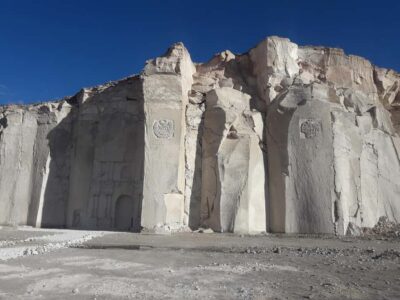
Arequipa’s famous white stone is not just a building material. It is still cut by hand in the Añashuayco quarries, where towering ignimbrite walls show how the city’s stone was taken from the earth. I like the chance to see a working quarry and try cutting a block yourself, rather than simply looking at finished buildings in town. I also like the short walk through Culebrillas canyon, where Wari petroglyphs add an older layer to the outing.
The main drawback is transport timing. One recent booking had delays while the group waited for other members, and the bus did not have air conditioning. That matters in Arequipa’s dry climate, so bring water, expect a basic vehicle, and do not plan a tight connection immediately after the return.
Key points to know before you book
- Añashuayco is a working quarry: You see active stone extraction, tall ignimbrite walls, and the daily craft behind Arequipa’s sillar buildings.
- You can try the stonework: A local quarryman may explain his job and let you make a cut in a sillar block.
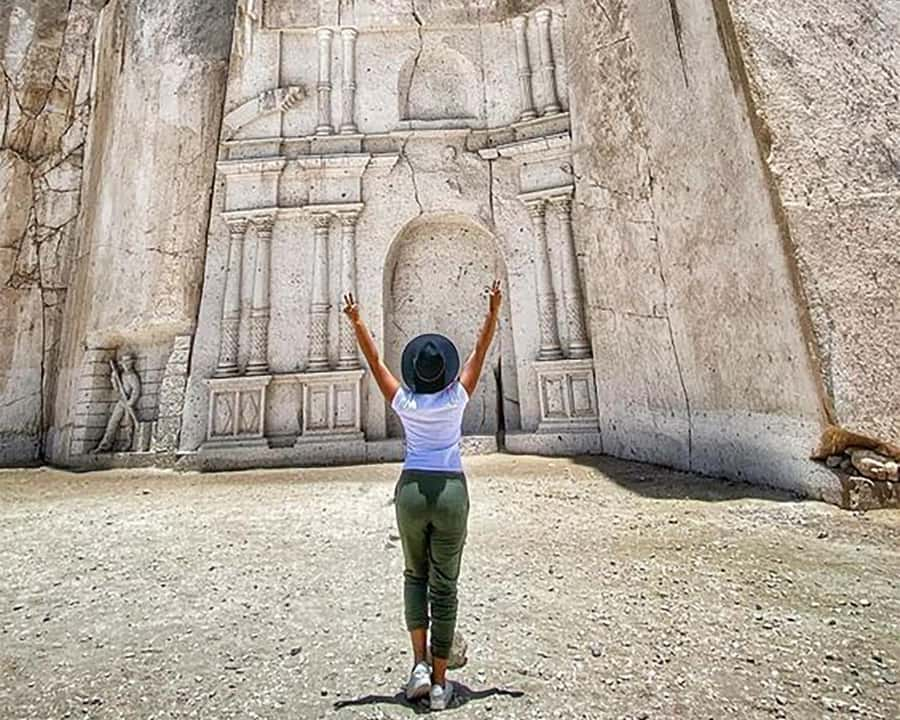
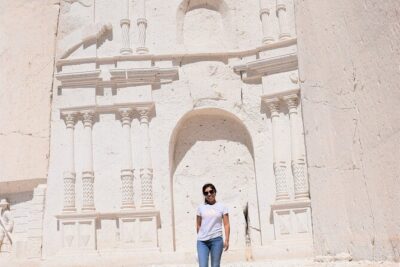
- The mega-carving is a clear photo stop: The quarry contains a large stone reproduction of the Church of the Society of Jesus.
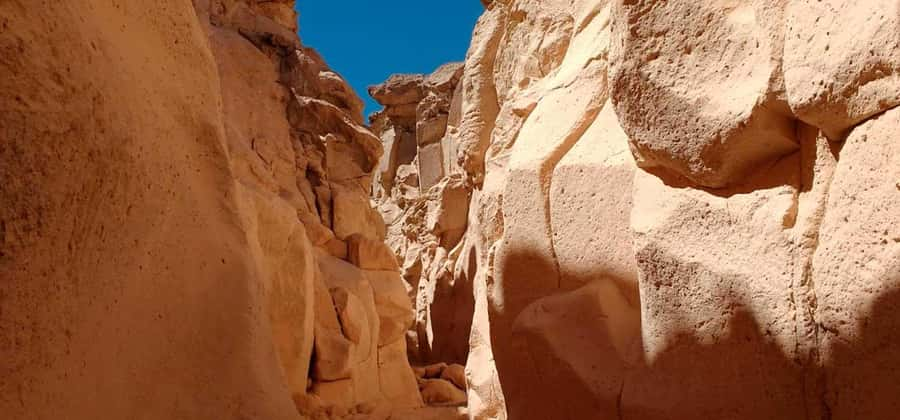
- Culebrillas adds a cultural stop: A roughly 20-minute walk leads through a narrow canyon to Wari petroglyphs more than 1,000 years old.
- The outing is short and affordable: Transport and a professional guide are included for $14 per person, with a separate 10-sol entrance fee.
- The schedule has two departures: The standard shift begins at 9:15 a.m., and a 2 p.m. option is also available.
Why Arequipa’s sillar matters
Arequipa is closely linked with sillar, the pale stone used in much of the city’s historic architecture. On this outing, you do not only see polished walls and carved facades in the center. You go to the source, where quarrymen work the stone and the extraction has shaped entire canyon walls.
That change in setting is the main reason to choose this trip. In the city, sillar can look refined and finished. At Añashuayco, it appears rough, heavy, and practical. The guide explains where it came from, how it is produced, and how it has been used over time.
The quarry is still in operation. Work begins early, so the schedule may not place you there during the busiest part of the day. Even so, you can see the results of the labor in the immense cliffs and cut faces of the quarry.
The guide is an important part of this stop. A professional Spanish or English-speaking guide explains the process and helps connect the quarry to Arequipa’s buildings. The strongest point of the experience is its human side: you may meet a quarryman, hear about his daily work, and handle the material yourself.
More Sillar Route half-days in Arequipa:
- From Arequipa: Sillar Route Trek
★ 4.2 · 461 reviews - Sillar Route and Culebrillas Petroglyphs
★ 4.5 · 89 reviews - Sillar Route in Arequipa and viewpoint of the Volcanoes
★ 4.0 · 71 reviews
The first stop gives you Arequipa’s big view
The route begins with a brief stop at a strategic viewpoint. From here, you can see volcanoes and the Chilina Valley. Depending on the season, the order may change, and the group may visit another traditional viewpoint first.
This is a useful opening stop because it helps you understand the setting before entering the quarries. You get a broad view of the area, then move toward a place where the local stone is extracted. The viewpoint is not the main event, so expect a short pause rather than a long sightseeing session.
Keep your camera ready, but do not count on a fixed view sequence. The company may adjust the first stop according to the time of year. That flexibility is practical, though it means the exact order can vary.
Añashuayco shows the stone behind the city
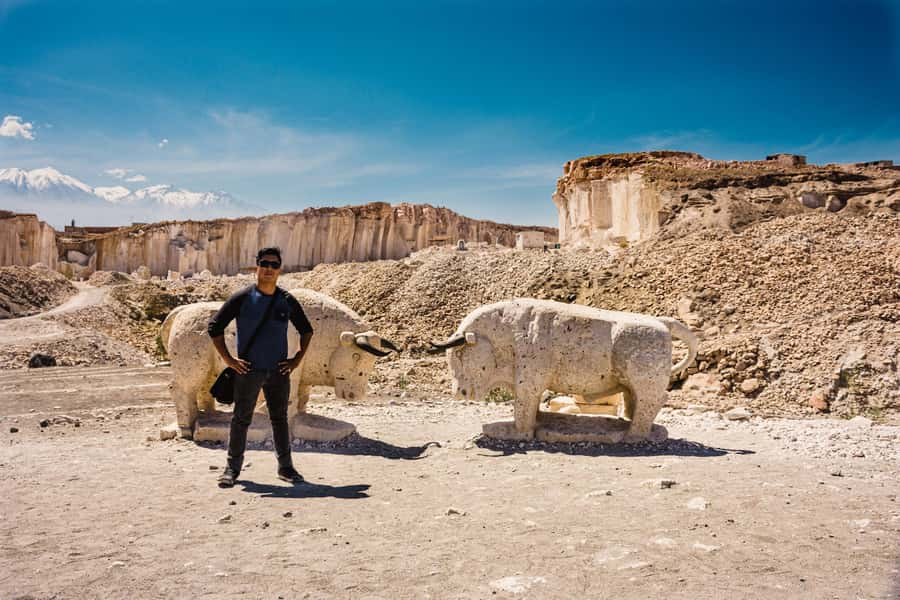
The drive to Añashuayco takes about 45 minutes. Once there, you see an immense canyon with high ignimbrite walls formed by the extraction of sillar. The scale helps explain the work better than a museum display could.
Look closely at the cliff faces. They are not natural canyon walls in the usual sense. They have been shaped by people removing blocks for construction and carving. The guide uses the quarry to explain the stone’s origin, production, and long use in Arequipa.
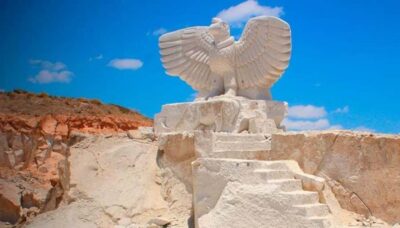
This is the stop where the outing feels most connected to everyday work. Sillar is not presented as an old craft that disappeared. Quarrymen still cut it, prepare it, and shape it. The experience gives you a direct look at the labor behind the city’s pale architecture.
The conditions are simple. The quarry is an outdoor work site, not a polished visitor center. The vehicle may be basic, and one booking reported that it had no air conditioning. If you are sensitive to heat or prefer a more comfortable coach, keep that limitation in mind before paying.
The Society of Jesus carving makes the quarry memorable
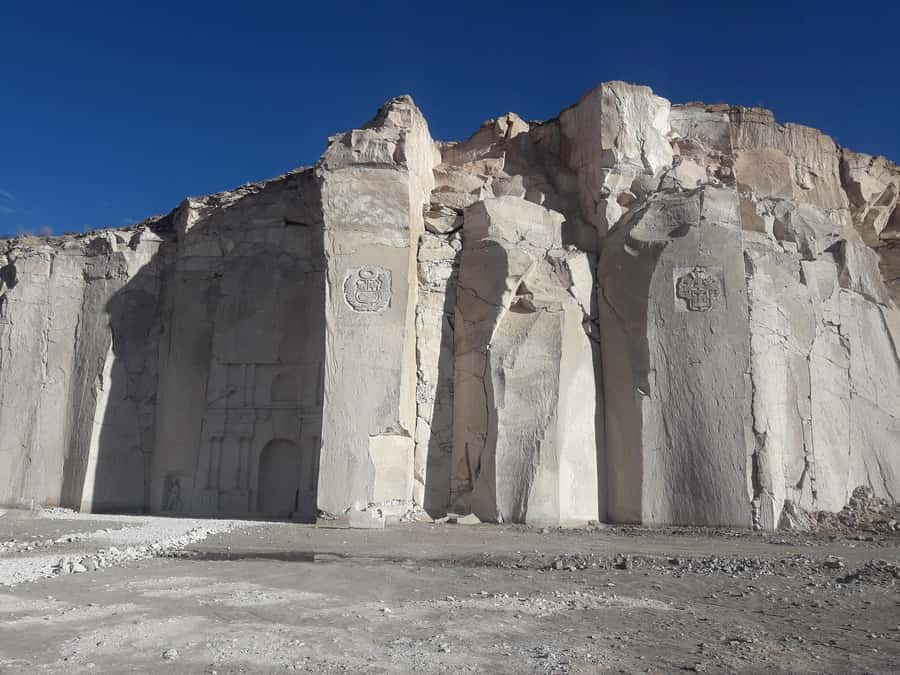
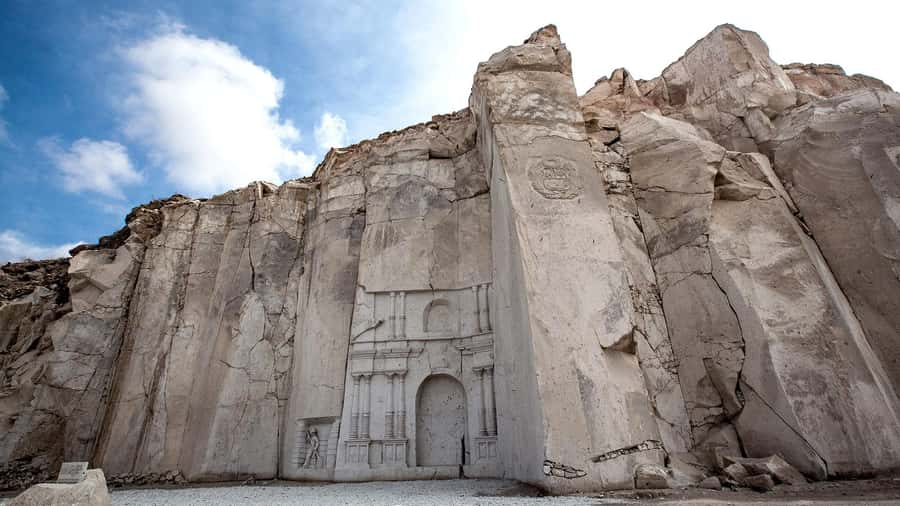
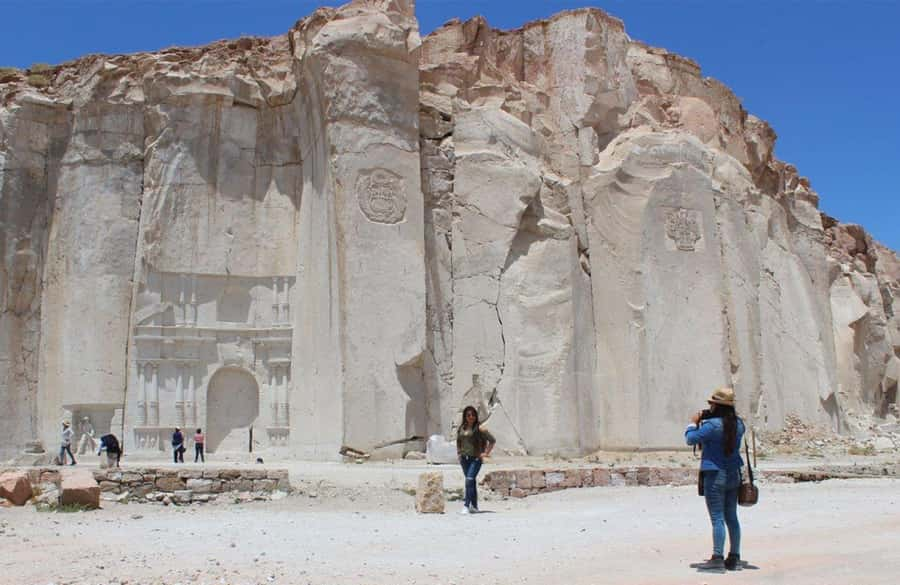
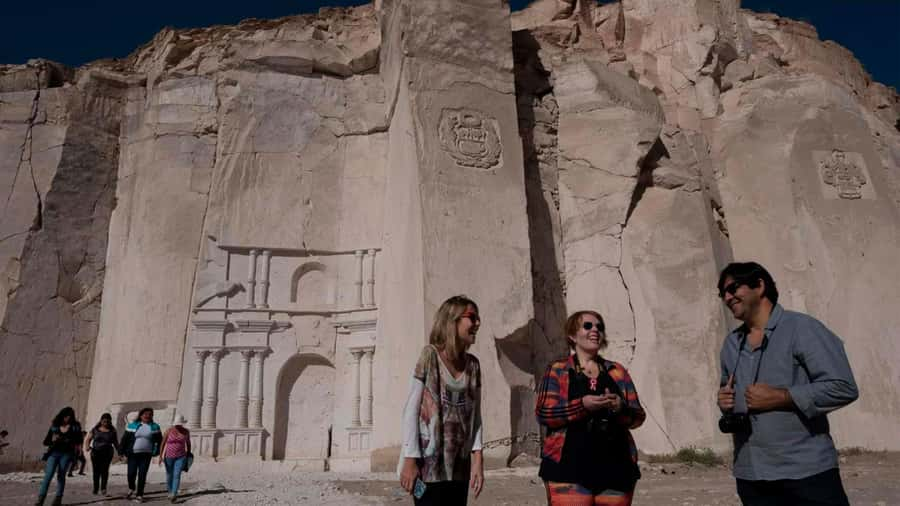
One of the most distinctive sights at Añashuayco is a mega-carving of the Church of the Society of Jesus. Local stonemasons made this large piece in the quarry itself.
It works as more than a photo stop. The carving shows what the stone can become after it leaves the quarry. You first see the cut canyon and rough blocks, then a carefully worked religious facade. The contrast makes the craft easier to understand.
The activity may also include a visit with one of the quarrymen. He can explain his daily work and demonstrate how a stone block is cut. You may get the chance to try making a cut yourself.
That hands-on moment is a real advantage at this price. It does not turn you into a stonemason in 10 minutes, but it gives you a physical sense of the task. Sillar may look soft and elegant in Arequipa’s buildings. Holding and cutting a block shows that every finished detail began with demanding manual work.
The exact amount of time at the quarry is not specified, so do not expect a long workshop. Think of it as a guided demonstration with a short chance to participate.
A few more Arequipa days worth weighing up
- Tour to the Salinas Lagoon and National Reserve in Arequipa
★ 4.5 · 548 reviews - Arequipa: Chili River White Water Rafting with Hotel Pickup
★ 4.8 · 329 reviews - Walking tour in the Historic Center of Arequipa
★ 4.4 · 180 reviews - Adventure Day in Arequipa: Pillones Waterfall + Rock Forest
★ 4.7 · 120 reviews
Culebrillas is smaller, quieter, and more intimate
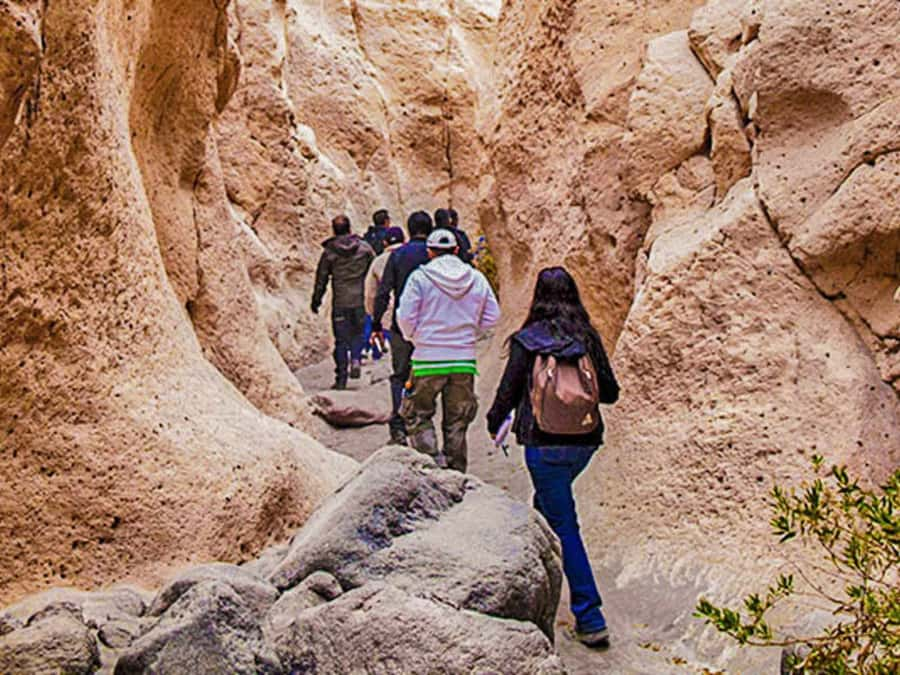
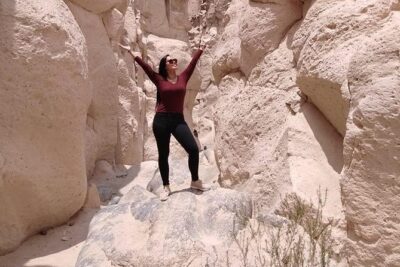
From Añashuayco, the drive to Quebrada de Culebrillas takes about 30 minutes. The group then walks for roughly 20 minutes inside a narrow canyon formed by flowing water.
The walls rise between 15 and 20 meters, becoming taller as you go farther in. This makes the walk feel different from the open quarry. At Añashuayco, the scale comes from broad extraction walls. At Culebrillas, the canyon closes around you.
The walk is short, but it does require some time on foot. Wear shoes that you can use comfortably on an uneven outdoor route. The supplied details do not give a difficulty rating, so you should not assume a fully paved path.
The main reward comes at the end of the walk: Wari petroglyphs made more than 1,000 years ago. These carvings connect the canyon to a much older period than the colonial-era architecture associated with Arequipa.
The petroglyphs are a valuable part of the visit because they broaden the story. This is not only a trip about building stone. You also see evidence of people who used and marked the area centuries before the modern city took shape.
Apachetas add a final local tradition
Before returning to Arequipa, the route stops at apachetas. These are piles of stones placed one on top of another. They are described as symbols of gratitude toward nature and as signs of good luck.
The stop has a different mood from the quarry and the petroglyphs. At Añashuayco, the focus is work and material. At Culebrillas, it is water, rock, and ancient markings. The apachetas bring in a living tradition connected with nature and personal belief.
You may find this stop especially interesting if you like small cultural details that do not fit neatly into a major monument. It is brief, but it gives the return journey a reflective finish.
Do keep expectations reasonable. This is not a long ceremony or a separate guided cultural program. It is a short stop to observe the stone formations and hear what they represent.
The schedule is easy, but allow extra time
The morning departure begins at 9:15 a.m. The route includes the viewpoint, the 45-minute trip to Añashuayco, the quarry visit, the 30-minute transfer to Culebrillas, the canyon walk, the apachetas, and the return to Arequipa.
The scheduled return journey begins at 12:30 p.m., with arrival near the Plaza de Armas around 1:30 p.m. The experience is advertised as four hours, though the stated clock times cover a little more than four hours. I would use 1:30 p.m. as the safer planning point.
There is also a 2 p.m. departure shift. That option may suit you if you have a free afternoon, though the supplied details do not state the exact arrival time for that shift.
The central drop-off is practical. You return near Arequipa’s Plaza de Armas rather than being left far from the historic center. If you have a restaurant booking, bus departure, or another paid activity, leave a generous buffer. A delay while waiting for group members has already occurred on one booking, and shared transport can be less predictable than a private car.
What the $14 price really includes
At $14 per person, this is a low-cost way to reach two sites outside Arequipa. The price includes tourist transport and a professional guide, with live guiding available in Spanish or English.
The separate entrance fee is 10 soles. Add that amount when comparing the total cost with other half-day options. Even with the admission fee, the outing remains inexpensive if you want transport, interpretation, and several stops without arranging them yourself.
The value is strongest for people who would otherwise need to organize a car or negotiate separate transport to the quarries and canyon. You also get context from the guide, which is important at places where the meaning is not obvious from the scenery alone.
The low price also signals what not to expect. This is not a private tour with custom timing or luxury transport. The vehicle may lack air conditioning, and group delays are possible. You are paying for access and explanation, not a high-end ride.
The organization appears to be one of the stronger parts of the experience. The professional guide, clear route, and fixed return to the city make the trip easy to fit into a short Arequipa stay.
Who will enjoy this half-day route
I would choose this outing if you want to see a working craft, not just photograph finished architecture. It suits you especially well if Arequipa’s sillar buildings have caught your eye and you want to understand where the stone came from.
It also works for anyone interested in several kinds of history in one morning: quarry work, colonial religious carving, Wari petroglyphs, and living traditions represented by the apachetas.
The trip is a good fit for budget-minded visitors who want included transport and a guide. The $14 starting price keeps the commitment small, while the four-hour format leaves much of the day open.
I would hesitate if your priority is comfort, privacy, or perfectly controlled timing. The bus may be warm, the group may run late, and the activity includes outdoor walking. You should also avoid booking it immediately before an important departure.
Bring water and wear practical shoes. The information provided does not specify meals, hotel pickup, air conditioning, or special accessibility services, so do not assume those are included.
Should you book the Sillar and Culebrillas Route?
Book it if you want a short, inexpensive trip that explains the working side of Arequipa. The best parts are specific and memorable: the quarry walls, the Society of Jesus mega-carving, the chance to handle a sillar block, and the Wari petroglyphs in Culebrillas.
Skip it if you need a comfortable vehicle, private attention, or a schedule that cannot absorb delays. For most people with a free half-day, the price is hard to argue with, especially because the route combines a living stone industry with an ancient canyon site.
The guide service and organization are the main reasons to choose this option. Just budget for the 10-sol entrance fee, accept basic transport, and keep your afternoon plans flexible.
FAQ
Where does the Sillar and Culebrillas Route take place?
The excursion takes place in the Arequipa Region of Peru. It visits the Añashuayco quarries, Quebrada de Culebrillas, and viewpoint areas with views toward the volcanoes and Chilina Valley.
How long does the excursion last?
The activity is advertised as four hours. The morning schedule begins at 9:15 a.m., returns toward the city at 12:30 p.m., and reaches the area near the Plaza de Armas at about 1:30 p.m.
Is there an afternoon departure?
Yes. A 2 p.m. departure shift is also available. The supplied details do not state the exact return time for that option.
What languages are available for the guide?
Live guiding is available in Spanish and English.
Is the entrance fee included?
No. The entrance ticket costs 10 soles and is paid separately.
What is included in the price?
Tourist transport and a professional guide are included.
What will I see at Añashuayco?
You will see a working quarry with tall ignimbrite walls formed by sillar extraction. The visit also includes an explanation of sillar production and use, a mega-carving of the Church of the Society of Jesus, and possibly a demonstration with a quarryman.
How long is the walk at Culebrillas?
The walk inside the canyon takes approximately 20 minutes. The canyon walls measure about 15 to 20 meters and become taller farther inside.
Can I cancel the booking?
You can cancel up to 24 hours in advance for a full refund. The reserve-now, pay-later option lets you hold a place without paying at the time of booking.
Just added around Arequipa
- Walking tour through the Historic Center of Arequipa★ 4.0 · 3 reviews
- Trek to the Route of the Sillar and Culebrillas in Arequipa★ 4.0 · 9 reviews
- Arequipa, Historic and Colonial City and Santa Catalina Monastery★ 4.5 · 42 reviews
- 8-Hours Tour in Arequipa Laguna de Salinas with Pick-up★ 4.5 · 56 reviews
- Tour to the Sillar Route from Arequipa | Half Day★ 4.2 · 4 reviews
- Tour + Hike to the Sillar Route and Culebrillas in Arequipa★ 4.1 · 5 reviews
- Arequipa: The White City Origins – Sillar Route Half Day★ 5.0 · 4 reviews
- Sillar Stone Tour from Arequipa★ 4.0 · 22 reviews
Sillar Route Tours, compared.
Sillar Route in Arequipa and viewpoint of the Volcanoes
Read our review →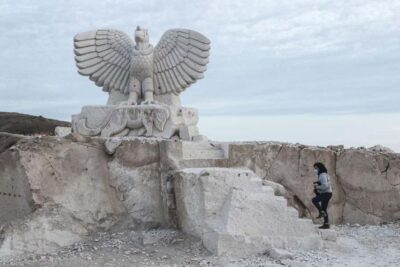
4 hours Tour: Route of Sillar with Trek in Culebrillas
Read our review →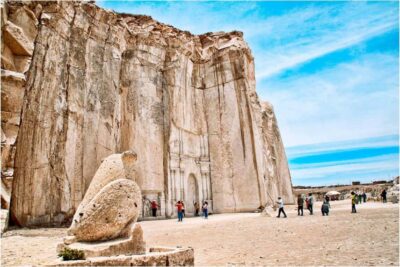
Route of the Sillar | Quarries of Añashuaycos | Half day
Read our review →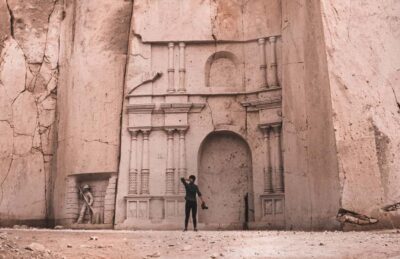
4-hour excursion: Sillar Route with Hiking in Culebrillas
Read our review →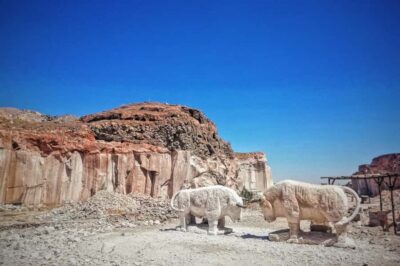
Trek to the Route of the Sillar and Culebrillas in Arequipa
Read our review →Browse the lists this tour appears in