
Reviewed · WALKING TOURS
Walking tour in the Historic Center of Arequipa
Arequipa’s city center is built for walking, but its white-stone churches and courtyards can blur together without someone to explain them. This tour gives you the essential story, then adds a few surprises: alpacas and llamas at Mundo Alpaca and a broad view of Misti, Chachani, and Pichu Pichu from Puente Grau.
I like the easy central meeting point and the way the route mixes major sights with quieter corners, especially the San Lazaro neighborhood. I also like the price, at $10 per person, though you should understand the payment structure: the reservation fee is low, and a voluntary tip is requested at the end. One guest reported being told to tip 30 to 50 soles per person, so ask about the expected amount before you start.
Key points at a glance
- Start beside the Plaza de Armas: Meet at Santa Catalina 204, one block from Arequipa’s main square, where the guide carries an umbrella.
- See more than churches: The route combines colonial portals, Company cloisters, old mansions, city gardens, and neighborhood streets.
- Look for the three volcanoes: Puente Grau provides views toward Misti, Chachani, and Pichu Pichu when conditions are clear.
- Meet Peru’s camelids: Mundo Alpaca includes llamas, alpacas, Suri alpacas, and vicuñas, with fabrics available for purchase.
- Expect a tip-based price model: You pay $10 to reserve, then a voluntary guide tip is requested at the end.
- Plan optional museum visits separately: Santa Catalina Convent and the Juanita mummy museum require extra entrance fees and, according to the tour information, internal guides.
Why this is a useful first walk in Arequipa
I would use this tour early in an Arequipa visit. It covers enough ground to help you understand the center, while the guide points out places you can return to at your own pace. One participant said the walk helped with finding their way around town during the following two days, which is exactly the practical value of a good orientation walk.
The tour lasts about two hours, although one walk took two and a half hours. That difference matters. You are not on a tight museum timetable, but you should not expect long, leisurely photo stops at every corner. One person found the pace rushed and had little time for pictures. If you like taking photographs, tell the guide at the start.
The tour is offered in English or Spanish. Guide quality appears to be one of its strongest features. Edgar is praised for history, humor, local advice, and an excellent view from a hotel. Johan was described as funny and engaging, while Jorge Echeandia was singled out for being helpful and well informed. Beatriz or Beatrice has guided walks that explain religious art and architecture, and Francisco has led tours that include the market.
You may not get one particular guide, but these names give you a sense of the style to expect: conversational, story-driven, and open to questions rather than a dry march from one monument to the next.
More Historical Tours in Arequipa:
- Arequipa: Walk through the Historic Center of the City
★ 4.9 · 87 reviews - Arequipa, Historic and Colonial City and Santa Catalina Monastery
★ 4.5 · 42 reviews - Walking tour through the Historic Center of Arequipa
★ 4.0 · 3 reviews
Meeting at Santa Catalina Street 204
The walk begins at Santa Catalina 204, just one block from the Plaza de Armas. The published coordinates are -16.3967191, -71.5366788. Look for the guide holding an umbrella.
That detail is more useful than it sounds. Central Arequipa has busy pedestrian streets and many similar colonial facades, so a visible marker makes the meeting easier. Still, arrive with enough time to locate number 204. One group had a delayed start because the guide was not at the meeting point and the organizer did not answer immediately. The issue was eventually resolved, but it is a reminder to confirm the meeting details and keep the booking contact handy.
The route returns to Santa Catalina 204 or the nearby center. You walk the entire way, with no bus or taxi included. Wear shoes you can comfortably use on stone and paved streets, and bring water. The activity is short, but it packs several stops into a compact route.
The Plaza de Armas and Arequipa’s white-stone face
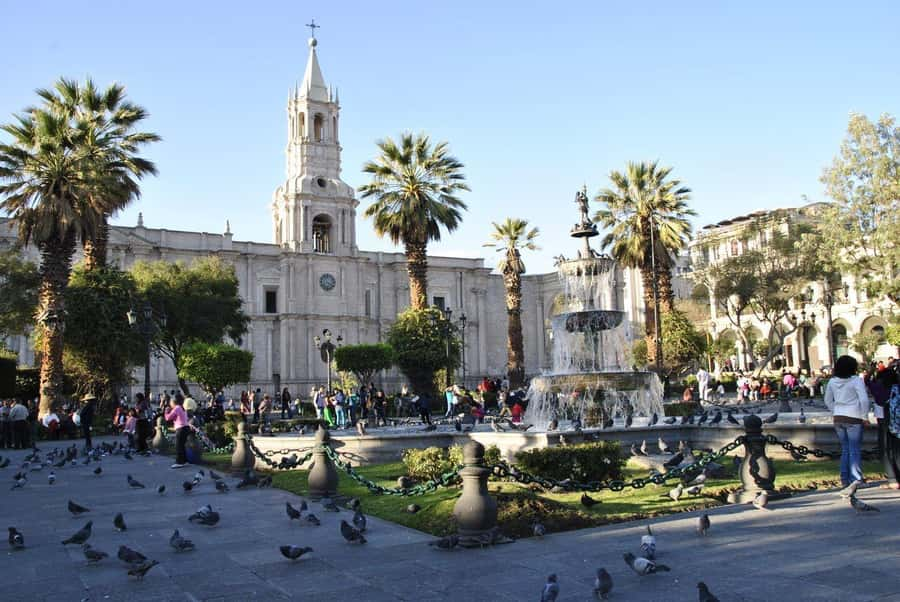
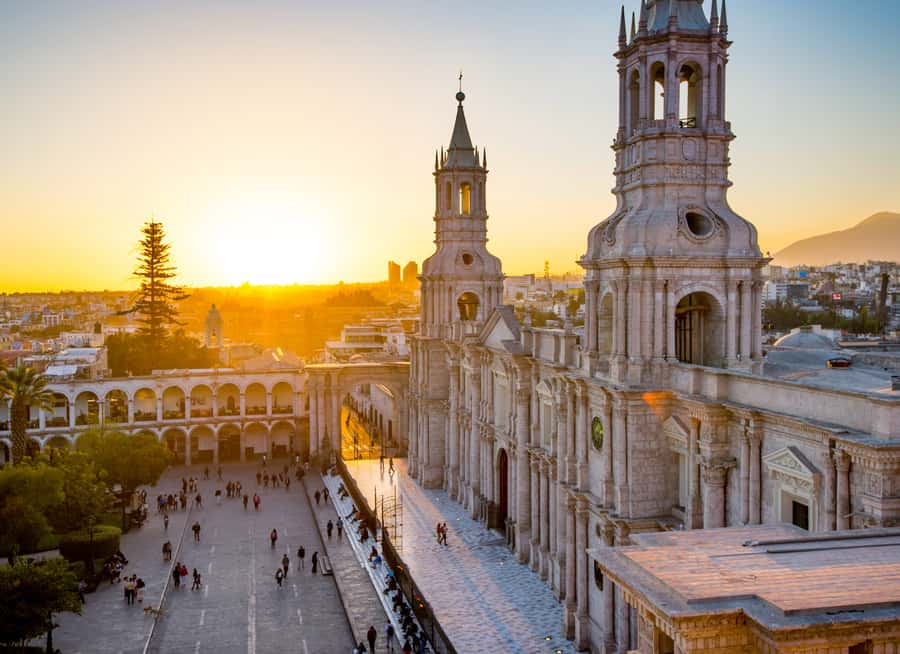
The Plaza de Armas is the natural opening chapter. Your guide explains the square’s history, then points out the arches and portals that frame it. This is not just a place to take the standard Arequipa photograph. The square helps you read the city’s architecture, where pale volcanic stone gives the center its famous appearance.
The surrounding buildings create a strong sense of order, with arcades and portals enclosing the open square. A guide adds the human detail that a quick self-guided look misses, including how the center has changed and how the buildings function today.
The walk can also point out ordinary city life. One participant noticed a long line of people waiting to renew national identity cards, an everyday scene that gave the historic center a present-day feel. I like that kind of detail. It keeps the tour from treating Arequipa as a museum frozen in the past.
The main square is also a practical reference point for the rest of your stay. From here, you can orient yourself toward Santa Catalina Street, the Company church area, San Lazaro, and other central sights.
Company cloisters and colonial courtyards

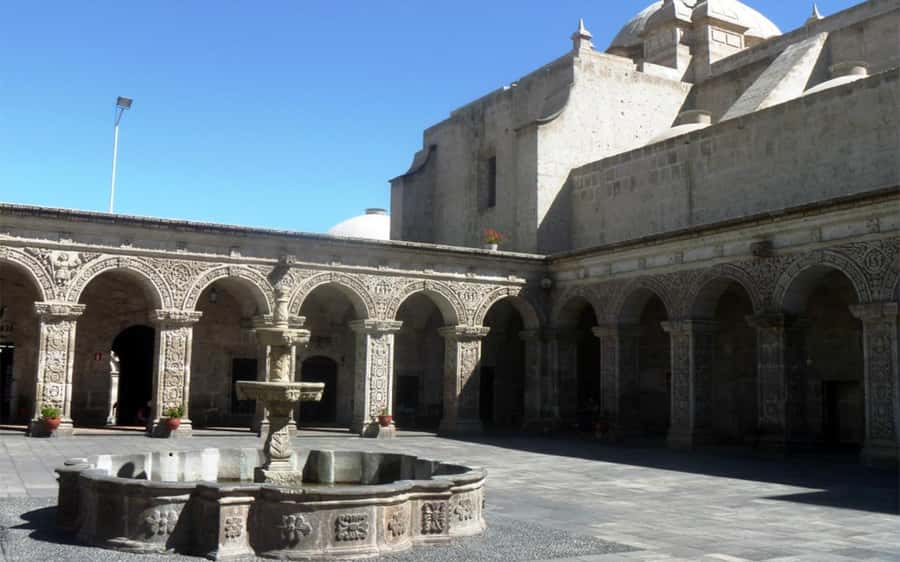
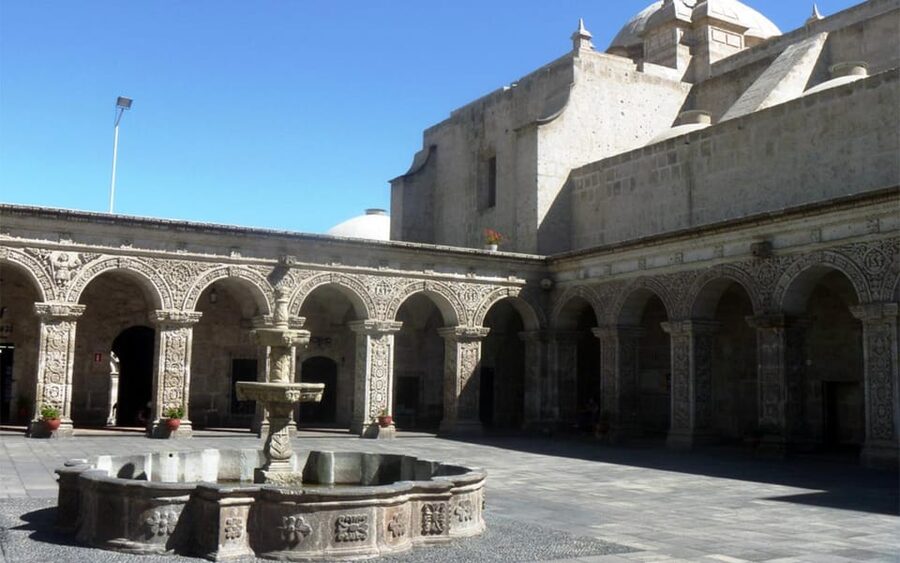
The cloisters of the Company are among the tour’s strongest architectural stops. Their arcades, carved stonework, and proportions offer a close look at the city’s colonial design without requiring a long museum visit.
This is where a guide’s explanation earns its keep. Religious buildings in Arequipa are full of symbols, decorative details, and local adaptations that are easy to miss when you simply walk through. Beatrice has been praised for explaining the meaning behind the religious architecture and art, while other guides have focused on stories about buildings and local customs.
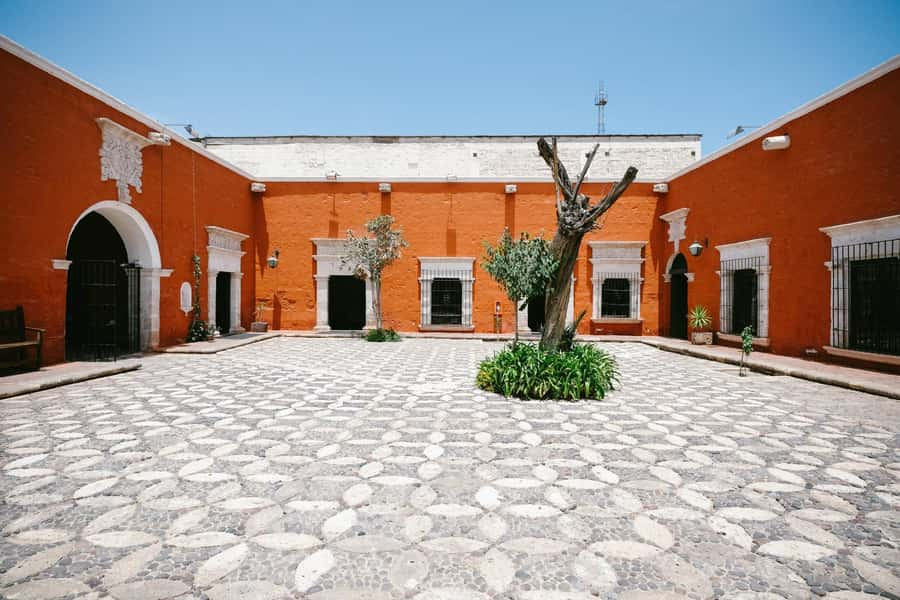
The route continues through old mansions and city gardens. These stops are less famous than the Plaza de Armas, but they give you a better sense of how Arequipa developed beyond its postcard center. You may see attractive courtyards, old walls, and small garden spaces tucked into the urban fabric.
Do not expect every interior to be open as part of the basic walk. The tour information says that Santa Catalina Convent and museums such as the Juanita mummy collection can be added by prior arrangement, with separate admission and internal guides. Treat those as optional extensions, not guaranteed stops on the two-hour route.
More Walking Tours in Arequipa:
- Arequipa Walking Tour city center and drinks experience
★ 5.0 · 72 reviews - Arequipa: Walking Tour and Santa Catalina Monastery
★ 4.4 · 7 reviews - Arequipa Walking Tour and Santa Catalina Monastery
★ 5.0 · 4 reviews - Lima: Miraflores Trending Flavors Half-Day Walking Tour
★ 4.9 · 98 reviews
Puente Grau and the three-volcano view
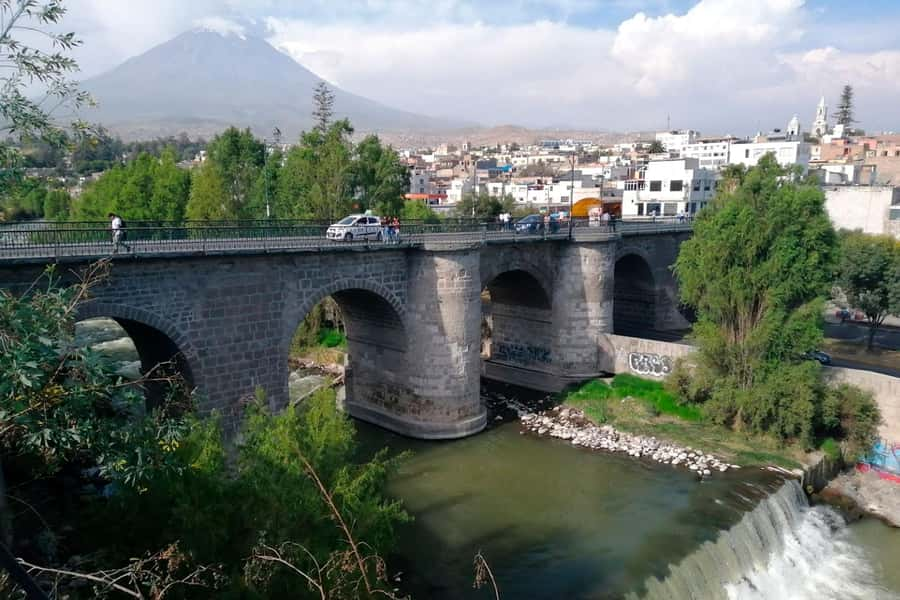
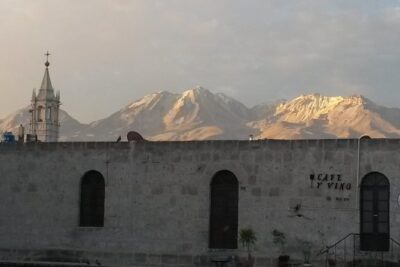
The walk reaches Puente Grau, described as a strategic point for viewing Arequipa’s volcanoes. On a clear day, you may see Misti, Chachani, and Pichu Pichu.
Misti is the most recognizable presence over the city, but the value of this stop is seeing Arequipa in its wider setting. The bridge gives you a break from close walls and narrow streets, with a more open view across the city and toward the mountain skyline.
Weather and visibility will shape this stop. The tour promises the viewpoint, not a perfectly clear panorama. If the sky is hazy, the guide can still explain the volcanoes and their place in Arequipa’s identity, but you may not get the dramatic photograph you hoped for.
Several people specifically praised the volcano views. I would keep your camera ready, but avoid turning this into a long photo session if the group is moving on. If you need more time, ask whether you can pause briefly without holding up the walk.
Mundo Alpaca: an unexpected city stop
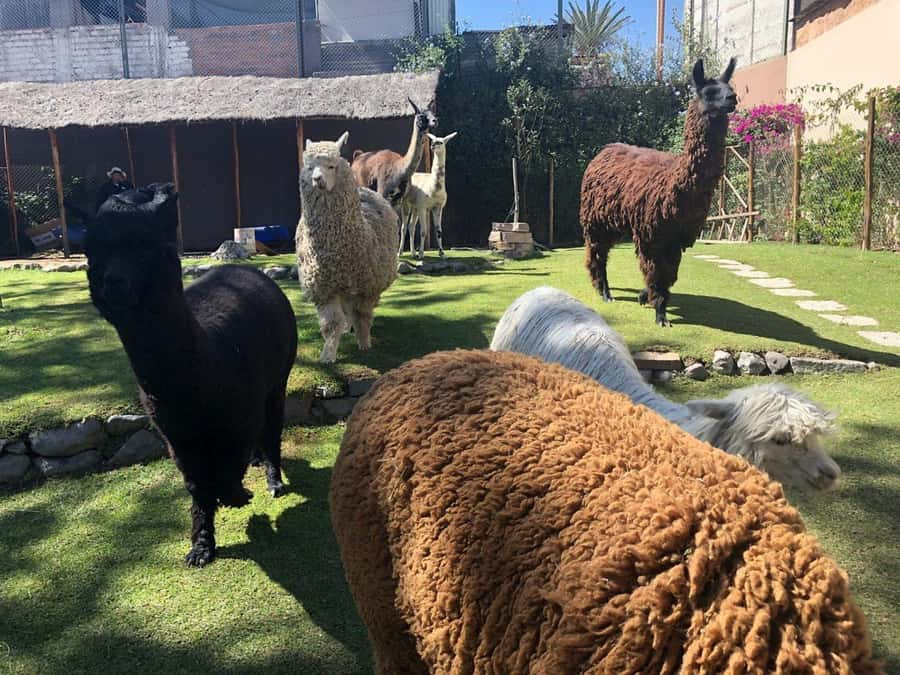
Mundo Alpaca gives this historic-center walk an unusual change of pace. Here you can see camelids including llamas, alpacas, Suri alpacas, and vicuñas. The site includes an old breeding farm, and some visits allow you to feed the animals.
The baby llama and alpaca were a particular highlight for one participant. Another described feeding llamas and alpacas as an unexpected high point of a city tour. That reaction makes sense. After churches, courtyards, and colonial stone, an animal stop feels refreshingly different and helps connect Arequipa with Peru’s highland textile traditions.
You can also browse fabrics made from these fibers. This is an optional shopping opportunity, not a reason to feel pressured to buy. If you are interested in alpaca clothing, compare the fiber labels and prices carefully. The stop is useful even if you purchase nothing because you see the animals and learn how the material connects to local production.
This is also one place where the pace may affect your enjoyment. If you want time to look closely at the animals or browse textiles, ask how long the group will stay. A short visit gives you the basic experience, while a longer stop may reduce time elsewhere.
San Lazaro, the city’s first settlement
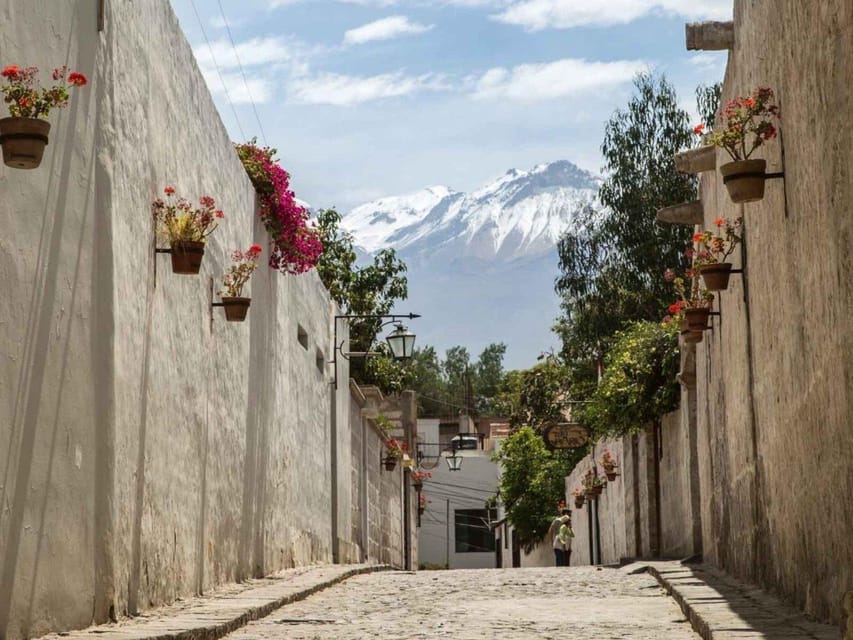
The final neighborhood section visits San Lazaro, described as the first town founded where the White City began. This is a worthwhile counterpoint to the formal Plaza de Armas.
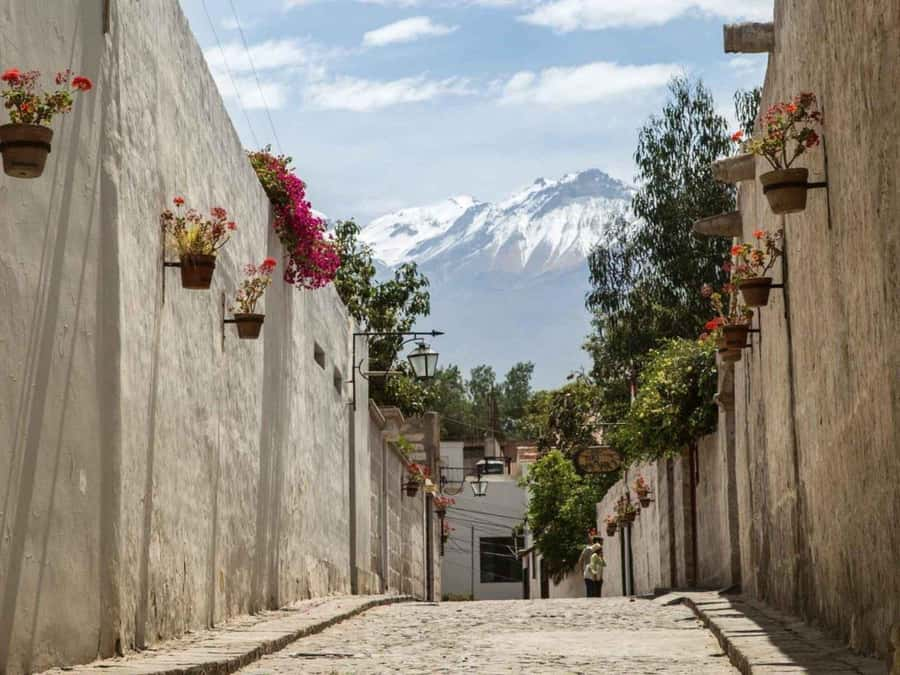
San Lazaro has a more residential feel, with narrow streets and older buildings that show another side of Arequipa’s development. The point is not simply to photograph a pretty lane. Your guide explains why the area matters and places it in the story of the city’s beginnings.
I like this part of the route because it moves you away from the most obvious monuments. You get a better sense of Arequipa as a lived-in place, not only a collection of churches and tourist stops. It also gives the tour a clear ending before you return to the central area.
What the $10 price really covers
The advertised price is $10 per person, but the payment arrangement deserves careful attention. The reservation fee is low because the main income comes from a voluntary tip to the guide at the end. The tour information says this tip helps cover guide service and maintenance payments connected with the places visited.
One participant said the suggested tip was 30 to 50 soles per person and felt that the amount was high. Another noted that a large group had paid for the supposedly free walk while others had not. In practical terms, you should budget for the reservation plus a tip, then decide what feels fair based on the guide, the length of the walk, and the service you received.
Even with that extra payment, the total can still be good value for a two-hour introduction that includes architecture, local history, volcano views, camelids, and a historic neighborhood. But do not book it thinking the $10 is the complete expected cost.
The basic tour includes a professional guide, the walking route, and entrance to the listed places of visit. Optional entry to Santa Catalina Convent or the Juanita mummy museum costs extra, with separate internal guides. Confirm exactly what is included on your date if one of those museums is important to you.
Strengths and small frustrations
The greatest strength is the guide. The strongest experiences come from guides who tell stories, answer questions, and connect the sights to daily life. Edgar, Johan, Jorge Echeandia, Beatriz, Beatrice, and Francisco have all been associated with especially good walks, though guide assignment can vary.
The route also makes excellent use of a short time. You see the principal square, colonial architecture, old residential areas, volcano views, and camelids without needing transport. For a first afternoon in Arequipa, that variety is hard to beat.
The main weakness is pace. A two-hour route with this many stops can feel brisk, especially if you want photographs or detailed time at Mundo Alpaca. Some parts may feel less interesting than others, particularly if your main goal is grand architecture.
There is also the uncertainty around the tip. The word voluntary suggests choice, but the reported 30 to 50 soles expectation may affect your budget. Ask before setting off so there are no awkward surprises at the end.
Who should book this Arequipa walk?
I recommend it most for first-time visitors who want a quick orientation and a local explanation of the center. It suits people who enjoy stories, architecture, casual conversation, and a little variety rather than a single long museum visit.
Families may like the camelids, especially if children need a break from churches and stone courtyards. It also works well for anyone arriving the night before and wanting to understand the city before exploring independently.
You may want a different plan if you dislike group walks, need extensive time for photography, or already have a detailed private guide booked. Serious museum visitors should arrange Santa Catalina or the Juanita mummy collection separately, since those entries are not simply included in the standard walk.
Book this tour if you want a friendly, efficient first look at Arequipa and are comfortable with the tip-based price model. Before joining, confirm the guide meeting details, ask about the expected tip, and mention if you need photo time. For $10 plus a reasonable tip, it offers a useful mix of city history, volcano views, colonial courtyards, San Lazaro streets, and alpacas in one compact outing.
FAQ
Where does the Arequipa walking tour begin?
It begins at Santa Catalina Street 204, about one block from the Plaza de Armas. The guide carries an umbrella and the published coordinates are -16.3967191, -71.5366788.
How long does the walking tour last?
The stated duration is about two hours. One walk lasted two and a half hours, so allow a little extra time if the guide takes questions or the group moves slowly.
Is the tour available in English?
Yes. Live guiding is offered in English and Spanish.
What places are included in the route?
The route includes the Plaza de Armas, the Company cloisters, old mansions and gardens, a volcano viewpoint at Puente Grau, Mundo Alpaca, and the San Lazaro neighborhood.
Are Santa Catalina Convent and the Juanita mummy museum included?
They can be visited by prior arrangement, but they require separate entrance fees and internal guides. They are optional additions rather than guaranteed parts of the standard walk.
Do I need to pay anything besides the $10 reservation?
The tour uses a low reservation fee and requests a voluntary tip at the end. One participant reported an expected tip of 30 to 50 soles per person, so confirm the suggested amount before the walk.
Just added around Arequipa
- Walking tour through the Historic Center of Arequipa★ 4.0 · 3 reviews
- Trek to the Route of the Sillar and Culebrillas in Arequipa★ 4.0 · 9 reviews
- Arequipa, Historic and Colonial City and Santa Catalina Monastery★ 4.5 · 42 reviews
- 8-Hours Tour in Arequipa Laguna de Salinas with Pick-up★ 4.5 · 56 reviews
- Tour to the Sillar Route from Arequipa | Half Day★ 4.2 · 4 reviews
- Tour + Hike to the Sillar Route and Culebrillas in Arequipa★ 4.1 · 5 reviews
- Arequipa: The White City Origins – Sillar Route Half Day★ 5.0 · 4 reviews
- Sillar Stone Tour from Arequipa★ 4.0 · 22 reviews
Walking Tours, compared.

Miraflores Trending Flavors Half-Day Walking Tour
Read our review →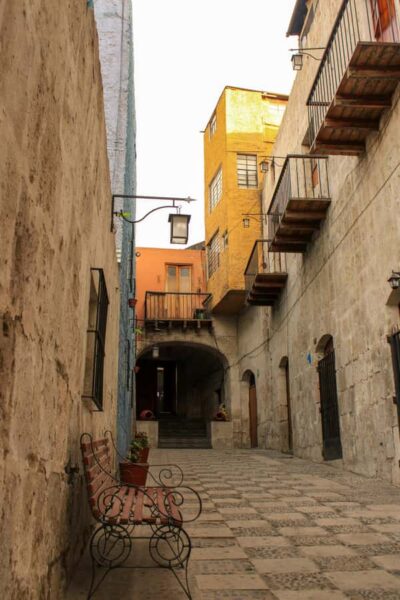
Arequipa Walking Tour city center and drinks experience
Read our review →
Historic Walking Tour with Pisco Sour and Music Show
Read our review →

Trending Flavors: Miraflores Walking Tour Including Food and Drinks Tasting
Read our review →
City Tour by Panoramic Bus – Walking & Catacombs
Read our review →
Browse the lists this tour appears in