
Reviewed · MARAS & MORAY TOURS
From Cusco: Chinchero, Moray, Maras and Ollantaytambo
The clever part of this day trip is its route through several very different corners of the Sacred Valley. You move from Inca ruins and alpaca textiles at Chinchero to Moray’s giant agricultural terraces, the bright salt pools at Maras, and the stone fortress of Ollantaytambo.
I like that the $45 price includes Cusco hotel pickup, transport, a live guide, and buffet lunch. I also like that the tour can work as a practical way to reach Ollantaytambo before continuing to Aguas Calientes by train. The tradeoff is clear: four major sights in one day means short visits, with much of the explanation given on the bus.
Key points to know before you book
- Chinchero combines ruins with living textile work, including a demonstration of how alpaca wool becomes cloth.
- Moray gets only about 30 minutes, enough for the main view but not a slow archaeological visit.
- Maras includes about 3,500 salt pools, with time for photos and an explanation of salt extraction.
- Lunch in Urubamba is a 45-minute Andean buffet stop, included in the tour price.
- The day ends at Ollantaytambo around 3:30 pm, not back at your Cusco hotel.
- Moray and Maras entrance fees are extra, totaling 90 Peruvian soles, and hotel drop-off is not included.
Why this Sacred Valley route works
The Sacred Valley is not one single sight. It is a long stretch of villages, farmland, archaeological centers, mountains, and old Inca roads. This tour gives you a fast introduction to several of its most recognizable places in one day.
That variety is the main selling point. At Chinchero, you see both archaeology and textile production. Moray shows the Inca approach to farming in a striking circular form. Maras is a working salt site rather than a ruined monument. Ollantaytambo finishes the day with massive stonework and broad views over the valley.
You pay $45 per person for the main service. That is a reasonable package when you consider the included vehicle, guide, pickup in Cusco, and buffet lunch. You need to add 70 soles for Moray and 20 soles for the Maras salt mines. Since exchange rates change, check the current dollar value before you go, but those two fees are an important part of your actual budget.
This is a busy sightseeing day, not a slow exploration. The listed stops allow roughly 45 minutes at Chinchero, 30 minutes at Moray, 30 minutes at Maras, and 45 minutes at Ollantaytambo. If you want long walks, quiet photography, or detailed archaeological study, the pace may feel tight.
More Maras salt pan and Moray trips:
- Cusco: Sacred Valley and Salt Mines Ending in Ollantaytambo
★ 4.6 · 5 reviews - From Cusco:Chinchero, Moray, Maras, Ollantaytambo with lunch
★ 5.0 · 3 reviews - From Cusco: Sacred Valley & Moray, Salt Mines with Lunch
★ 4.6 · 3 reviews
Chinchero: Inca stonework and alpaca wool
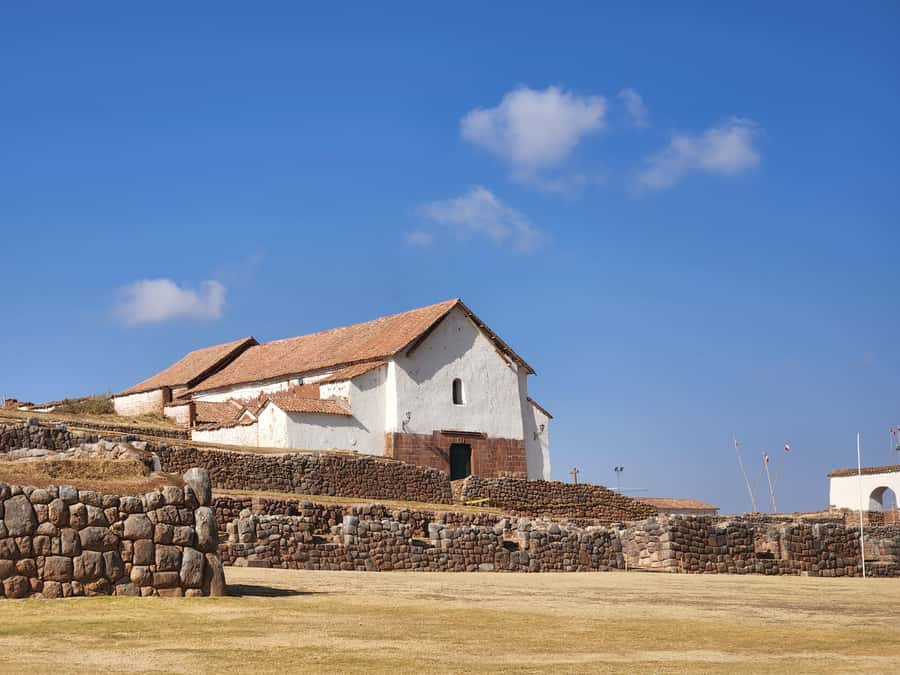
After pickup in Cusco, the vehicle takes about 45 minutes to reach Chinchero. The archaeological center gives you an early look at Inca construction, with a guided visit and time for photographs.
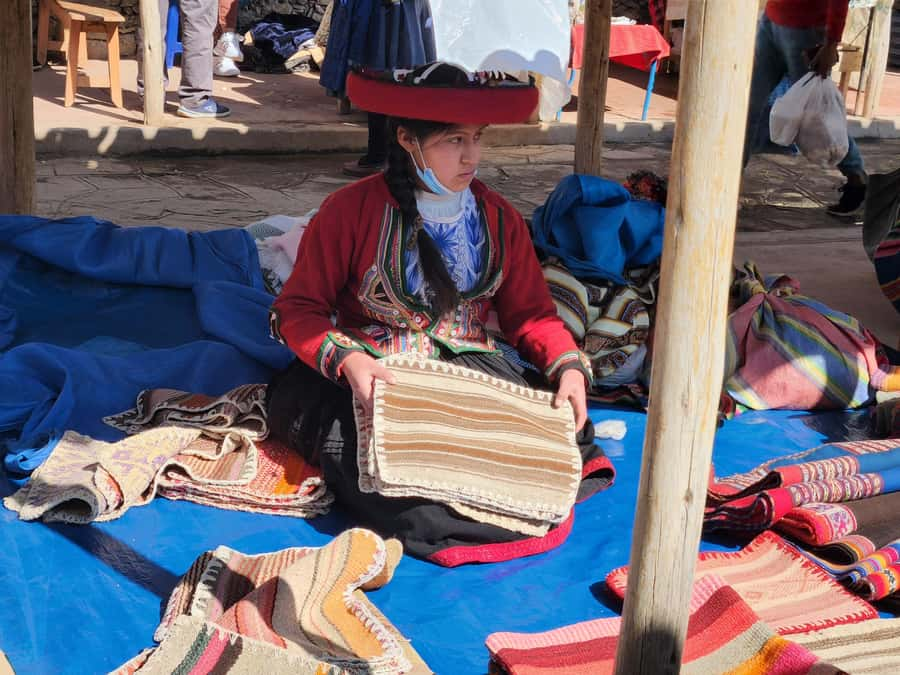
Chinchero is especially useful because the stop is not limited to broken walls. You also visit an Andean textile center and learn how alpaca wool is processed into finished textiles. The demonstration adds a human and practical side to the day. Instead of only looking at old stone, you see a craft tradition connected to the highland communities of the region.
You have about 45 minutes here, so listen closely to the guide and keep an eye on the clock. Guides such as Richard and Miguel have provided clear English explanations on this route, though the guide assigned to your group can vary. The tour operates in English and Spanish.
The textile center can add value when the presentation stays focused on the process. It also gives you a chance to see the materials and techniques behind the colorful goods sold across Cusco and the Sacred Valley. If you plan to buy something, take a moment to check what you are buying and compare prices later. The tour information does not promise that purchases are required, so you can treat the stop as a demonstration rather than a shopping obligation.
Moray: The Inca terraces in a giant bowl
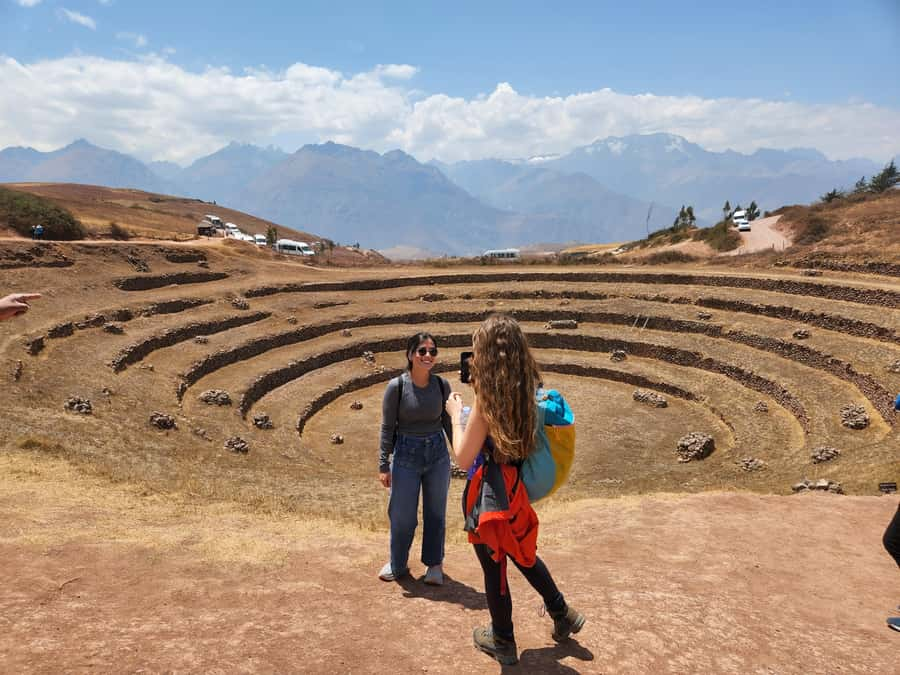
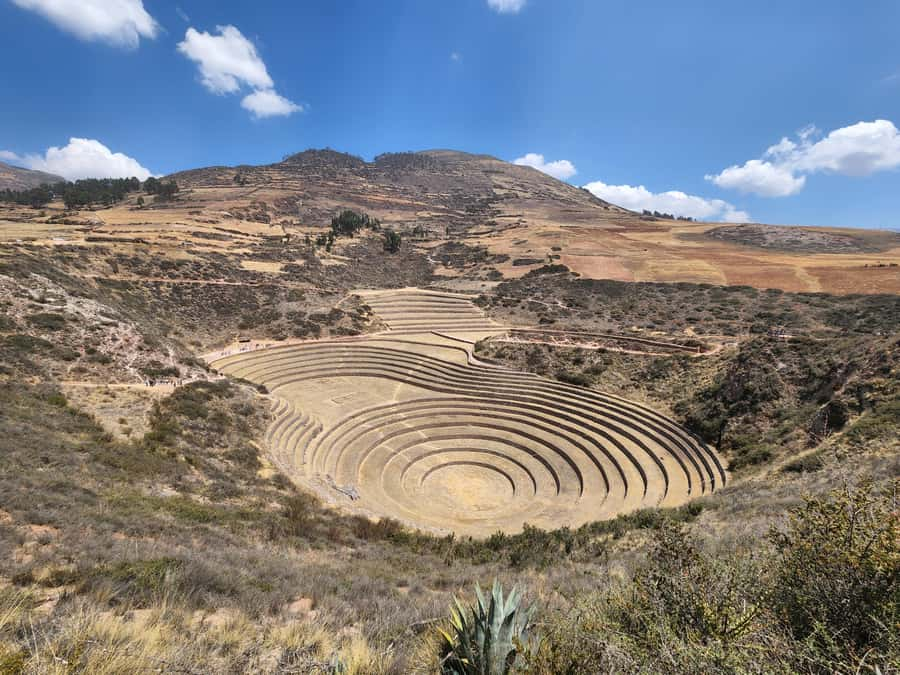
The drive from Chinchero to Moray takes about 30 minutes. At Moray, you see a group of circular terraces cut into the earth. The largest bowl-like formation is the sight most people come to photograph, and the scale becomes easier to understand when you see the rings descending toward the center.
Your guide explains the terraces as agricultural laboratories used by the Inca. The design likely helped create different growing conditions at different levels, though the exact details of ancient use are a subject for interpretation. For you, the important point is that Moray was not simply a decorative structure. It was tied to farming, crops, and the Inca effort to manage highland conditions.
The visit lasts about 30 minutes. That is enough to reach the main viewpoint, hear the basic explanation, and take photographs. It is not enough for a long walk around every section or a quiet period of study.
Moray requires a separate entrance payment of 70 soles. That fee is not included in the advertised $45 price, so add it when comparing this tour with other Sacred Valley options. I think Moray is worth including because it looks unlike the other stops, but the short visit means you should arrive ready to get the main experience quickly.
Maras: Salt pools cut into the mountainside
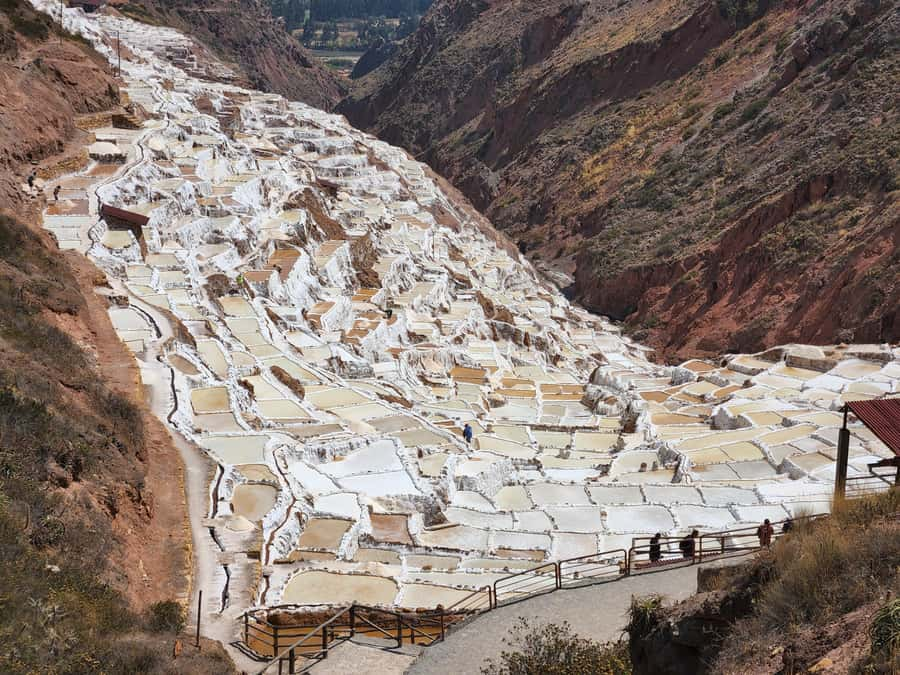
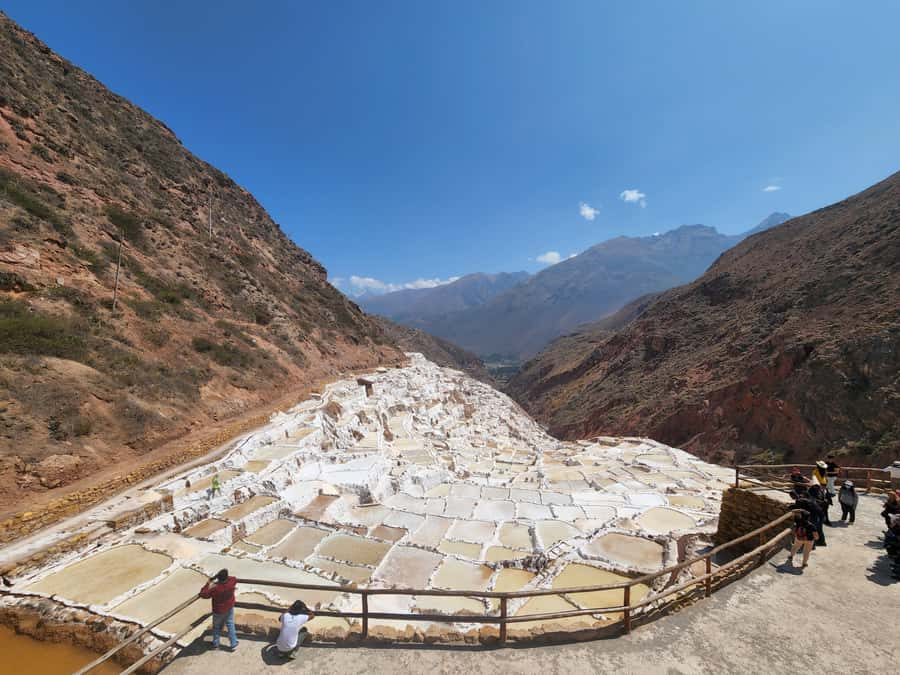
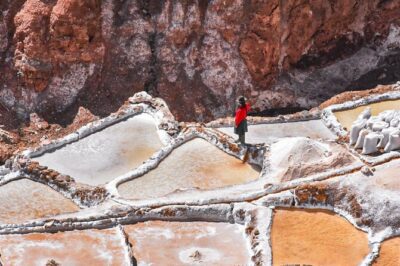
A 20-minute drive brings you to the Maras salt mines. Here, thousands of small pools collect salt water that flows through the site. The water evaporates, leaving salt behind for collection. The tour describes roughly 3,500 extraction sites, making this one of the day’s most unusual stops.
Maras is a working place, not simply an ancient monument. The guide explains how salt is extracted, and you have time for photographs and video. The white and tan pools spread across the slope in a pattern that changes with the light and the amount of salt in each pool.
The visit lasts about 30 minutes, and the entrance fee is 20 soles. As with Moray, this payment is extra. Bring your camera, but remember that drones are not allowed.
I like the contrast between Maras and Moray. Moray is about the shape of the terraces and their agricultural purpose. Maras is about a continuing production method and the small-scale work needed to maintain the pools. Together, the stops show two very different ways people have used the area’s soil, water, and climate.
A few more Urubamba days worth weighing up
- Cusco:Sacred Valley Pisaq,Ollantaytambo,Chinchero with Lunch
★ 4.8 · 183 reviews - from Urubamba & Ollantaytambo:Sacred Valley Full-Day Private
★ 4.9 · 31 reviews - Super Sacred Valley
★ 3.8 · 6 reviews - Sun and Moon Tour
★ 4.5 · 3 reviews
Urubamba: A practical lunch stop
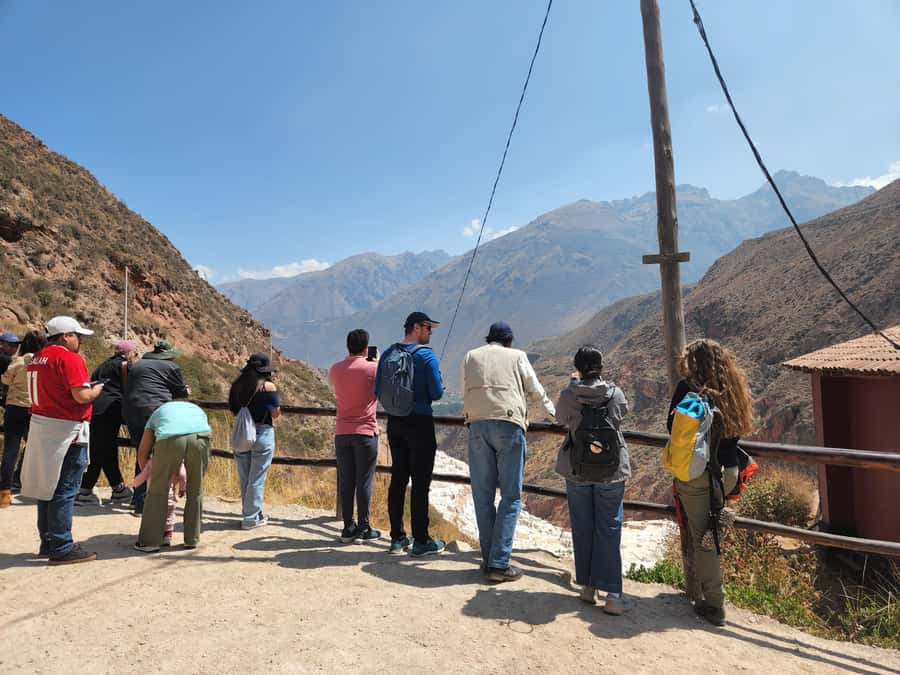
After Maras, the group travels for about 30 minutes to Urubamba, the central lunch stop in the Sacred Valley. You get 45 minutes for an Andean buffet, and lunch is included in the tour price.
The buffet is a useful break in a packed day. You can choose from several options rather than waiting for a single set dish, which helps when the group has different tastes. A previous tour guide, Miguel, was praised for clear explanations, while the meal was also noted for its variety. That combination matters on a day when you are moving often and have limited time at each site.
Do not expect lunch to become a long cultural stop. The purpose is to feed the group efficiently before the final archaeological visit. You will have time to eat, but not necessarily time for a leisurely meal or an independent walk around Urubamba.
Ollantaytambo: The strongest finish of the day
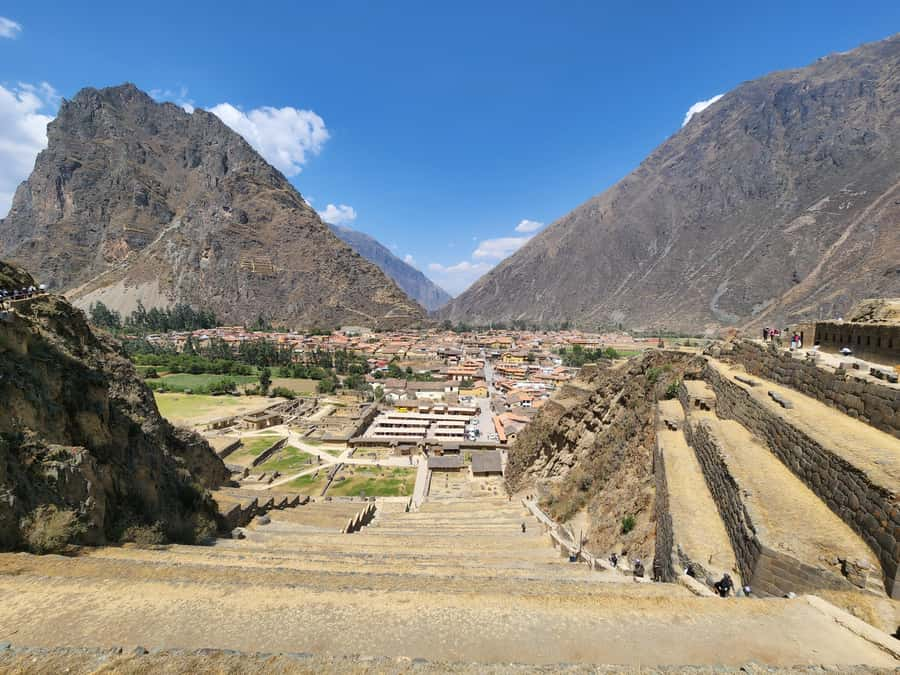
From Urubamba, the vehicle takes about 25 minutes to Ollantaytambo. The fortress is the final guided stop and lasts about 45 minutes.
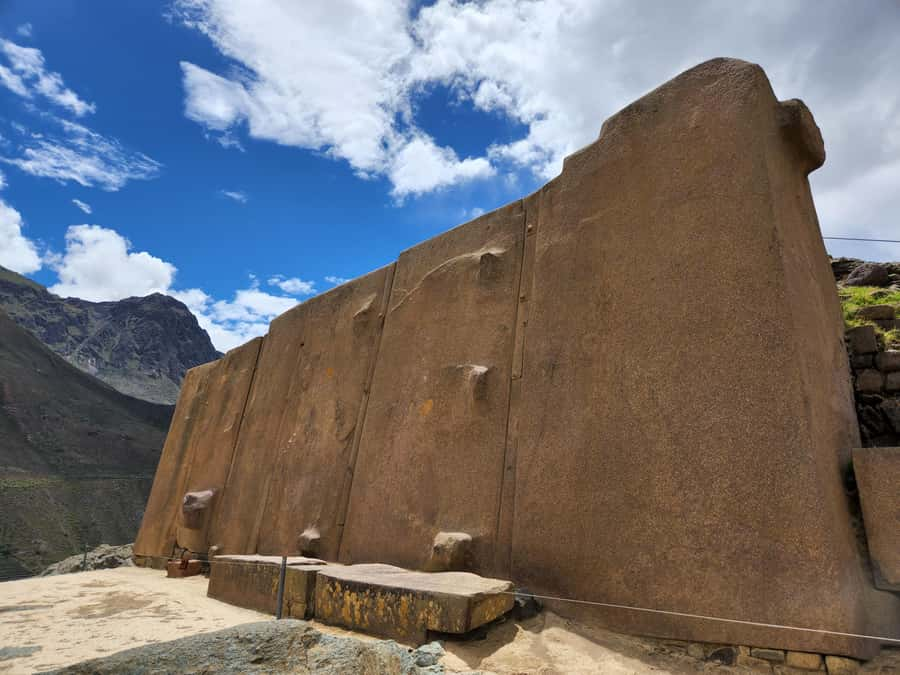
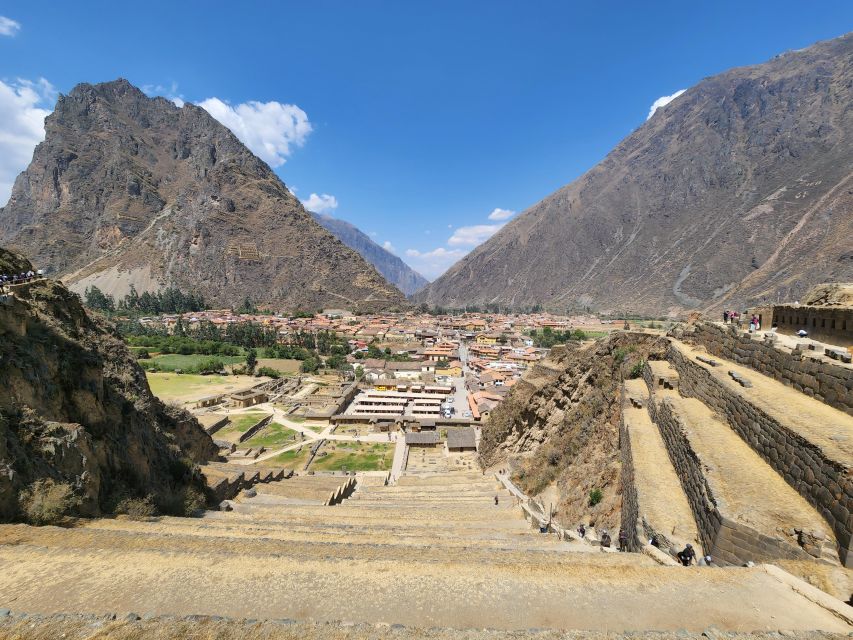
Ollantaytambo is one of the most impressive places on this route because the ruins combine monumental stonework with commanding views across the valley. You can study the Inca design, look up at the terraces and walls, and see why the site had both defensive and ceremonial importance. The guide explains the architecture and layout while you move through the main area.
The 45-minute visit gives you a useful first look, but it is still a quick one. If you have a strong interest in Inca engineering, you may wish you had more time to linger. Still, ending here makes practical sense. Ollantaytambo is an important rail point for people continuing toward Aguas Calientes and Machu Picchu.
The tour ends at Ollantaytambo around 3:30 pm. You can stay in the main square or continue by train to Aguas Calientes. This is one of the tour’s biggest advantages for a multi-day Peru trip because you do not need to return to Cusco after seeing the Sacred Valley.
There is one scheduling point to watch. The broader group may continue later toward Pisac and eventually Cusco, while your portion ends at Ollantaytambo. If you book a train based on the stated 3:30 pm finish, allow room for delays and confirm the day’s exact timing. One traveler had a long wait after booking a train around the advertised ending time, so do not assume that every part of the day will run precisely to the minute.
Transport, timing, and the real pace
The tour lasts about nine hours, though the Ollantaytambo portion ends around 3:30 pm. You spend a fair amount of the day on the bus, with drives of 45, 30, 20, 30, and 25 minutes between major points.
That travel time is not wasted. It lets you see how the Sacred Valley connects Cusco, Chinchero, Moray, Maras, Urubamba, and Ollantaytambo. Still, the short stop lengths shape the experience. You are sampling the region rather than settling into one place.
The guide gives information on the bus as well as at the sites. This is helpful because there is not enough time for long talks at every monument. Pay attention during the drives, then use the stop itself for photos and a few focused questions.
Hotel pickup in Cusco is included, but hotel drop-off is not. You should plan your evening from Ollantaytambo rather than assuming you will return to your Cusco accommodation. The tour is therefore best for people who are already arranging their next move, especially a train toward Aguas Calientes.
Who should book this day trip?
I would choose this tour if you want to cover the main Sacred Valley highlights in one organized day and prefer not to arrange several taxis or separate guides. It also suits you if your Peru plan moves from Cusco toward Machu Picchu and you want to finish near Ollantaytambo.
It is a good match for first-time visitors who want context at each major site. The English or Spanish guide, transport, and included lunch make the day simple to manage. The clear explanations from guides such as Richard and Miguel show how much the guide can add to the experience.
I would hesitate if you want a relaxed pace, extended walks, or a detailed visit at each ruin. Four major stops require discipline. You will need to return to the vehicle promptly, and some of the history will be delivered while you are driving.
The activity is also listed as unsuitable for people over 70. That is a broad restriction rather than a detailed mobility assessment, but it signals that the operator considers the pace and site conditions demanding for older participants. If mobility is a concern, ask the provider before booking.
Free cancellation is available up to 24 hours before departure, and you can reserve now and pay later. Those terms help if your Cusco schedule is still shifting, but they do not change the need to budget for the two extra entrance fees.
Should you book it?
Book this tour if you value coverage, convenience, and a useful route to Ollantaytambo more than a slow pace. For $45, the included transport, guide, pickup, and buffet lunch make it a solid day-trip package, even after adding the 90 soles in entrance fees.
Skip it if you want to spend half a day at one archaeological site or prefer independent travel. For most first visits, though, this is a sensible introduction to the Sacred Valley, with enough variety to show why the region deserves more than a quick stop on the way to Machu Picchu.
FAQ
How long does the tour last?
The activity is scheduled for about nine hours. The portion described here ends at Ollantaytambo around 3:30 pm.
What languages are available?
The live guide service is available in English and Spanish.
Is lunch included?
Yes. A buffet lunch in Urubamba is included in the tour price.
Are the Moray and Maras entrance fees included?
No. Moray costs 70 soles and the Maras salt mines cost 20 soles. These payments are separate from the tour price.
Where does the tour finish?
The tour finishes at Ollantaytambo. You can stay in the main square or take a train to Aguas Calientes.
Is hotel pickup and drop-off included?
Hotel pickup in Cusco is included. Drop-off at your hotel is not included.
Just added around Urubamba
- Sun and Moon Tour★ 4.5 · 3 reviews
- Sacred Valley Tour 1 Day★ 5.0 · 3 reviews
- Super Sacred Valley★ 3.8 · 6 reviews
- Peru in 5 days: Lima, Cusco, Machupicchu & Rainbow Mountain★ 5.0 · 3 reviews
- Machupicchu 2025: The best ticket Circuit 2★ 3.5 · 6 reviews
- Machu Picchu: 1-day tour by Vistadome Panoramic train★ 4.7 · 15 reviews
- Machu Picchu: historical and photographic guided tour★ 4.9 · 27 reviews
- Guided tour of Cusco and its 4 ruins★ 3.8 · 3 reviews
Maras & Moray Tours, compared.
Sacred Valley & Maras Salt Mines Tour with Lunch
Read our review →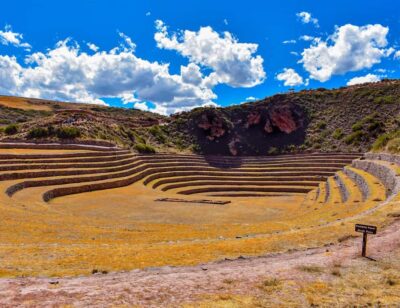
Moray, Maras Salt Mines & Chinchero Weavers Tour
Read our review →
Sacred Valley, Pisac, Ollantaytambo, Salt Mines Moray
Read our review →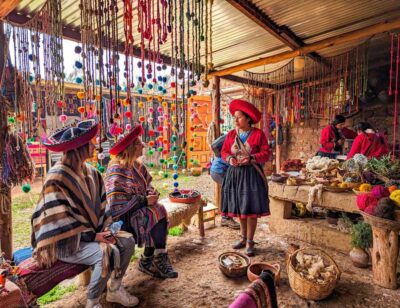
Chinchero,Moray & Salt Mines drop-off in Ollantaytambo
Read our review →

Moray, Maras Salt Mines & Chinchero Weavers Half-Day
Read our review →Browse the lists this tour appears in