
Reviewed · SACRED VALLEY TOURS
Super Sacred Valley
The big draw here is simple: in one long day, you see the Sacred Valley’s main sights, from Moray’s giant circular terraces to the salt ponds of Maras and the stonework of Ollantaytambo and Pisac. It is a lot of Peru packed into one route, with a 7:00 am pickup and an expected return to Cusco around 7:00 pm.
I like the variety, especially the way farming, salt production, Inca engineering, colonial buildings, and local crafts all fit into one day. I also like that buffet lunch, transport, hotel pickup, and an English and Spanish-speaking guide are included. The catch is the pace, plus three scheduled craft or shopping stops can cut into time at the archaeological sites.
Key points at a glance
- Four major archaeological sites: Chinchero, Moray, Ollantaytambo, and Pisac are covered under the main tourist ticket.
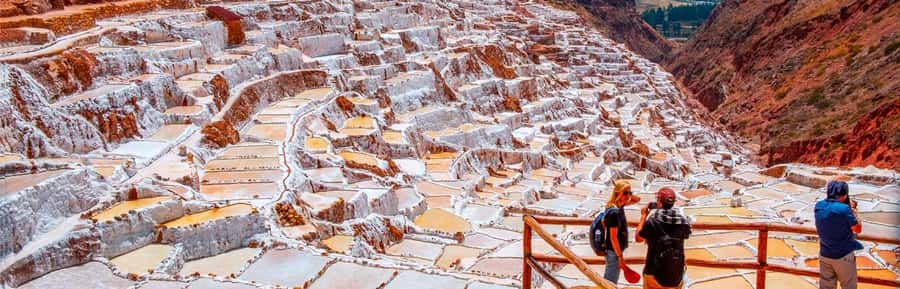
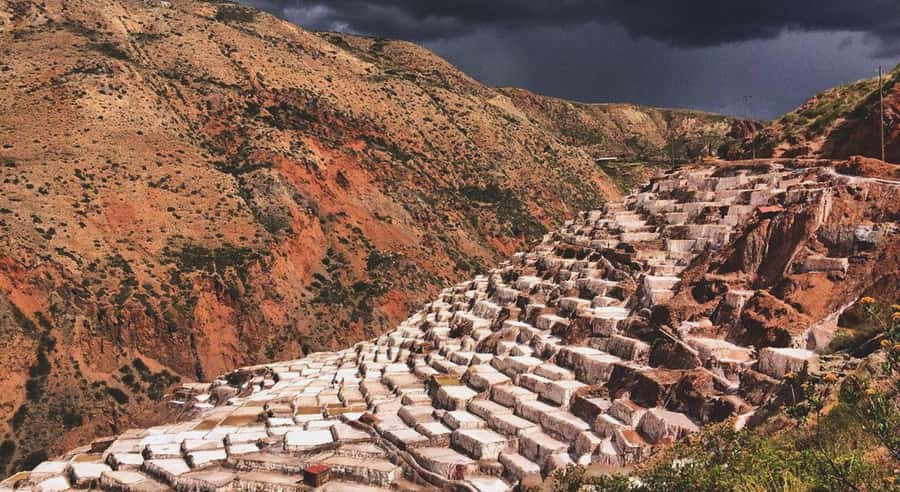
- Maras adds a striking change of scene: More than 3,000 salt ponds spread across the mountainside.
- Ollantaytambo is the day’s historic centerpiece: The living town still follows an old Inca plan.
- A strong one-day choice: You can cover the main Sacred Valley sights without splitting the visit across two days.
- Expect a full schedule: Pickup is about 7:00 am, with return to Cusco around 7:00 pm.
- Budget for entrance fees: PEN 70 for the four main sites and PEN 10 for the Maras Salt Mines, in addition to the $50 tour price.
What the $50 tour really gives you
At $50 per person, this trip offers solid value if your time in Cusco is short. You get a full day of transport, a professional guide, buffet lunch, hotel pickup, and visits to five major stops. That saves you the trouble of arranging separate transport between sites, which are spread across the valley and mountain roads.
The advertised price does not include entrance fees. Plan on PEN 70 for Chinchero, Moray, Ollantaytambo, and Pisac, plus PEN 10 for the Maras Salt Mines. These are not small details. Add them to the tour price before comparing it with cheaper options.
The price also buys convenience rather than a quiet, private day. This is a group excursion with a set route. One booking used a 17-seat bus, and the passenger space was described as tight, especially for legroom. That may vary by departure, but you should not expect a roomy coach or a private vehicle.
The strongest value comes if you would otherwise need two days to see the valley. The route gives you a useful first look at the region. If you want long walks, careful photography, or time to sit in each town, a private tour or a two-day plan will serve you better.
A few more Urubamba days worth weighing up
- Cusco:Sacred Valley Pisaq,Ollantaytambo,Chinchero with Lunch
★ 4.8 · 183 reviews - From Cusco: Chinchero, Moray, Maras and Ollantaytambo
★ 4.5 · 83 reviews - from Urubamba & Ollantaytambo:Sacred Valley Full-Day Private
★ 4.9 · 31 reviews
Chinchero begins the morning with stone and textiles
The first stop is Chinchero, where you see Inca wall construction and a colonial church. The pairing is important. In a short visit, you get a clear look at how Spanish buildings were placed within an older Andean setting.
Chinchero also includes a small participation at a textile center. You can expect an introduction to local textile work, but keep your expectations measured. The stop is not only cultural; it is also part of the commercial side of the route.
This is one of three shopping-oriented stops that can appear during the day. One dissatisfied customer chose this tour hoping to avoid tourist shops and found that the stops took time without adding much. That is the main warning attached to this outing. If you dislike demonstrations or craft stores, ask at the start how much time is planned for each one.
Still, Chinchero is not filler. Its stonework and church give you useful context before the larger archaeological sites. The morning light can also make the surrounding mountain views especially appealing, though the schedule does not allow unlimited time.
Moray shows the Incas thinking in circles
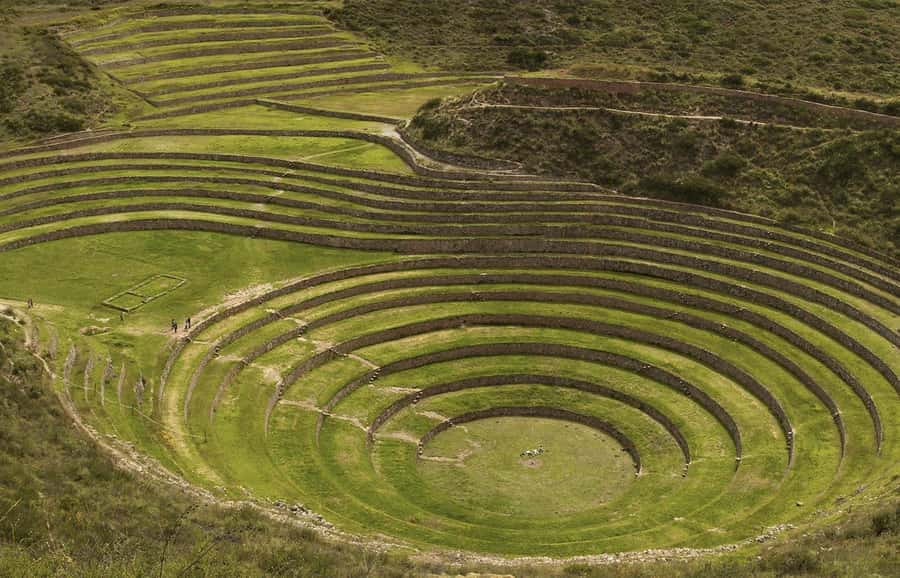
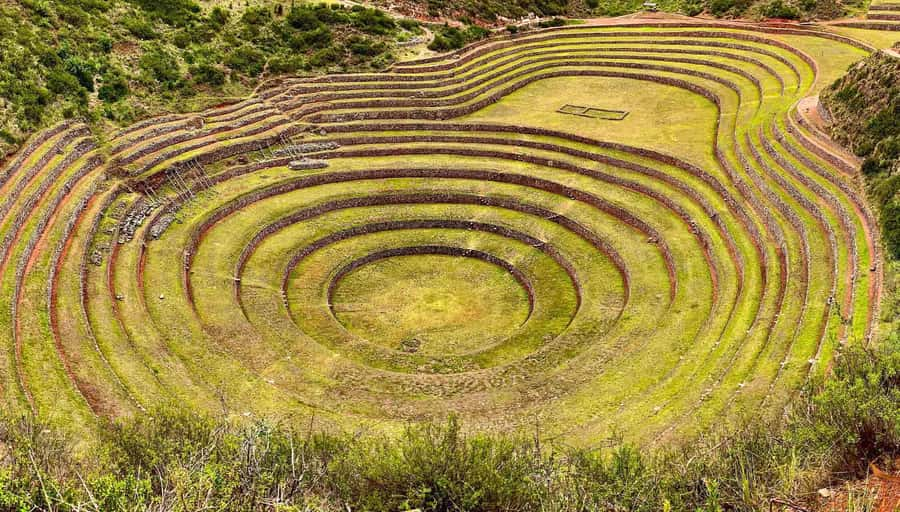
From Chinchero, the group continues to Moray, one of the most unusual sites in the Sacred Valley. Its circular farming terraces sink into the ground in broad rings. The site was important for Inca agriculture, and the shape alone makes it easy to understand why Moray feels different from a standard ruin.
You are not simply looking at walls here. The terraces show how the Incas shaped land for farming and used careful construction on a large scale. Your guide’s explanation matters because the site is more impressive when you understand its agricultural purpose.
Moray is also a good place to notice the scale of the highland setting. The circles sit within open mountain country, so the view is part of the stop. Bring a phone or camera, but do not let photographs replace the guide’s explanation. This is one of the places where a clear talk turns an odd-looking structure into a meaningful visit.
The schedule is tight, so expect a site visit rather than a long hike or a slow morning in the countryside. You will see the main feature, hear about its role, and move on toward Maras.
Maras turns salt into a mountain spectacle
The Maras Salt Mines bring a completely different sight. More than 3,000 salt ponds cover the mountainside, creating a patterned slope that looks almost painted from a distance. The ponds are fed by salty water, and the site has been used for salt production since before modern tourism.
The tour notes that this salt was used for consumption by the Incas. At Maras, the practical side of Andean life becomes visible. Instead of monumental stone buildings, you see many small working ponds arranged across steep ground.
This stop is picturesque, but it also has a separate entrance fee of PEN 10. The fee is modest, yet you should carry local currency or confirm payment arrangements before leaving Cusco. The main tourist ticket does not cover Maras.
Maras is another place where time matters. You will want to look across the full slope, take photographs, and hear how the ponds work. Since the tour must still reach Urubamba, Ollantaytambo, and Pisac, the visit cannot be completely open-ended.
Same base, a completely different kind of day:
- Machu Picchu: Group Guided Tour
★ 4.7 · 102 reviews - Machu Picchu: Tour Guide Service & Entrance Ticket Circuit-2
★ 4.6 · 90 reviews - Cusco: One Day Tour to Machu Picchu with Train Transfers
★ 4.8 · 28 reviews - Machu Picchu: historical and photographic guided tour
★ 4.9 · 27 reviews
Urubamba supplies the midday pause
The group continues to Urubamba for a buffet lunch. After a morning of early pickup, road time, and several stops, this break is welcome. The meal is included, so you do not need to budget separately for lunch.
One especially positive account singled out the restaurant and buffet. That is useful because lunch can make or break a long group day. A sit-down meal gives you time to eat properly before the afternoon sites, rather than relying on snacks between stops.
The buffet format also suits a mixed group. You can choose what you want and control the size of your meal. Keep the schedule in mind, though. This is a tour lunch, not a long restaurant visit. You will need to be ready when the group moves on.
Ollantaytambo is the day’s strongest historic stop
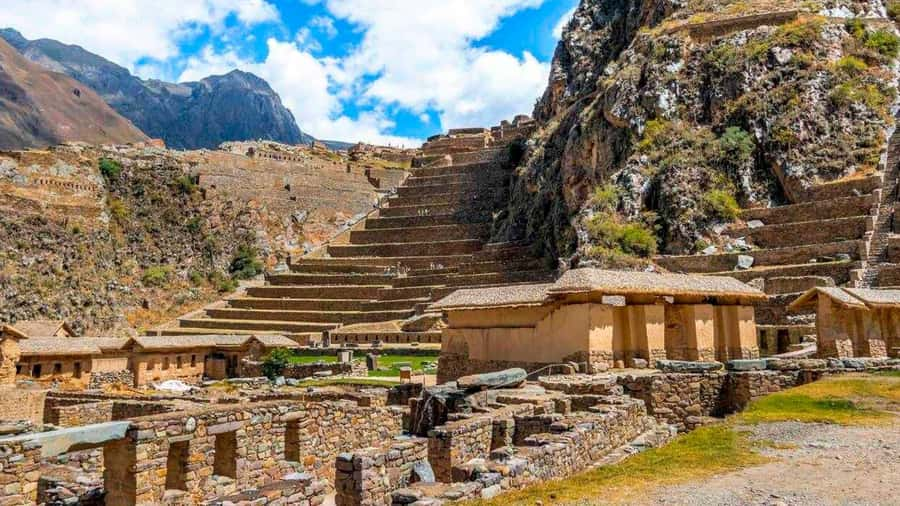
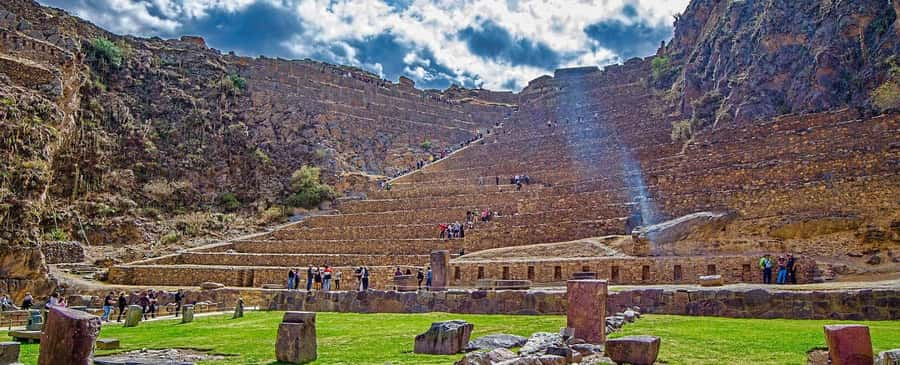
Ollantaytambo is known as the Last Living Inca City, and the nickname points to what makes it special. This is not only an archaeological park viewed from a distance. It is also a town where the old Inca layout remains part of the present-day setting.
The stop combines polished stone construction, steep mountain surroundings, and a town with continuing local life. That combination gives Ollantaytambo more atmosphere than a stand-alone ruin. You can look at the engineering while also seeing how the settlement functions today.
The main tourist ticket includes Ollantaytambo. Your guide should help you make sense of the stonework, terraces, and location. The site is much easier to appreciate when you understand why the Incas built it where they did and how it related to the valley.
This is also where the one-day schedule can begin to feel demanding. By the afternoon, you have already seen Chinchero, Moray, and Maras, plus the road to Urubamba. You will still visit Pisac afterward. I would put Ollantaytambo high on my list of places to focus on if time feels short.
Pisac adds a market and an Inca hilltop
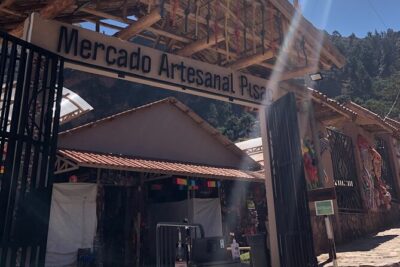
The final major stop is Pisac, a town on the slopes of Intihuatana Hill. Intihuatana is translated here as Place where the Sun is moored. The visit has two parts: the indigenous market and the archaeological park.
The market is presented as the best place on this route to buy crafts. You may find textiles, handmade items, and other souvenirs, but prices and quality require the usual care. Look at several stalls, check the workmanship, and buy only what you genuinely want to carry home.
After the market, the tour visits the Pisac Archaeological Park. The site is known for Inca buildings made from finely assembled, polished stone. This gives the day a strong finish, especially after Moray and Maras have shown you agriculture and salt production.
The order and available time can affect how much you enjoy Pisac. By this point, you may be ready for a quiet look at the ruins, while the market creates another commercial stop. If you prefer archaeology to shopping, stay focused on the guide and protect your time at the park.
The guide can make the packed route work
A full Sacred Valley day depends heavily on the guide. You are moving between several sites, and each one has a different purpose. Good explanations help Chinchero, Moray, Maras, Ollantaytambo, and Pisac feel like parts of one region rather than five disconnected stops.
Emil received particularly strong praise for explaining the sites and Inca civilization. On another outing, the guide repeated the information in Spanish for a group that was mainly English-speaking. That suggests the bilingual format can be handled with care, though the exact guide and language balance may change from one departure to another.
The tour includes an English and Spanish-speaking professional guide. If your language needs are important, confirm the arrangement at booking. The available information supports bilingual guiding, but it does not promise a private guide or a separate language group.
The guide also carries a first aid kit and an oxygen bottle for emergencies. Those supplies are reassuring in a high-altitude region, but they do not replace sensible preparation. The day is long, the route includes mountain roads, and you should pace yourself.
Transport and timing require a realistic attitude
Pickup is scheduled for approximately 7:00 am, with a return to Cusco around 7:00 pm. That makes this a genuine full-day outing, not a relaxed half-day side trip. You will spend a meaningful amount of time on the road, but that road time is what connects the valley’s major sights.
Hotel pickup is included, which simplifies the early start. Exact pickup arrangements can vary, so be ready before the stated time and keep your meeting details close.
One reported vehicle held 17 passengers and had limited legroom compared with other buses. I would treat that as an important practical warning, especially if you are tall or dislike sitting in a compact vehicle. The transport may differ, but this is not a tour to choose for maximum comfort.
The best attitude is to see the bus as the link between a wide range of places. You are paying to cover ground and see the highlights in one day. If you want a slower pace, fewer passengers, or control over how long you stay at each site, pay more for a private arrangement.
The main drawback is the shopping time
The biggest concern is not the sites. It is the schedule around them. The route includes a textile center at Chinchero and the indigenous market at Pisac, and one booking also reported three tourist-oriented shopping stops. These may be useful if you want crafts, but they can feel like sales detours if your priority is archaeology.
That tradeoff should shape your decision. This tour may work well for someone who wants a broad introduction to Sacred Valley culture and has no objection to browsing. It is less suitable for someone who specifically wants to avoid commercial stops or spend extra time at Moray, Ollantaytambo, and Pisac.
Ask the guide at the beginning how the day will be divided. You may not be able to change the route, but you can decide how much energy to give the shopping portions and which archaeological explanations deserve your full attention.
Who should book this one-day route
I would choose this tour if you have one free day in Cusco and want the main Sacred Valley sights handled for you. It is especially useful if you will not have time for a two-day valley visit. The route gives you a broad introduction to Inca engineering, local production, mountain towns, and the modern craft trade.
It also suits you if lunch, transport, and guiding are worth more than privacy. The included buffet and hotel pickup remove several small planning tasks, and the emergency kit and oxygen bottle add a practical safety measure.
I would hesitate if you dislike early starts, long bus days, compact seating, or shopping stops. I would also compare the total price after adding the PEN 80 in entrance fees. The $50 base price is reasonable for the coverage, but it is not the final cost.
The tour has a mixed overall score of 3.8 from six ratings, with especially strong praise for the guides and buffet lunch. That fits my reading of the route: the core sightseeing is excellent, while the pace, vehicle comfort, and shopping stops may decide how much you enjoy it.
Should you book the Super Sacred Valley tour?
Book it if you want five major Sacred Valley sights in one organized day, especially with limited time in Cusco. Focus on Moray, Maras, Ollantaytambo, and Pisac, and treat the craft stops as part of the tradeoff.
Skip it in favor of a private or slower plan if your priority is quiet archaeological visits, extra walking time, or avoiding tourist shops. For the right schedule, this is a practical and wide-ranging introduction to the valley, but it asks you to accept a long day and a brisk pace.
FAQ
How long does the Super Sacred Valley tour last?
The tour lasts one full day. Pickup begins at approximately 7:00 am, and the expected return to Cusco is around 7:00 pm.
Which places are included in the route?
The route includes Chinchero, Moray, the Maras Salt Mines, Urubamba, Ollantaytambo, and Pisac. The archaeological sites are Chinchero, Moray, Ollantaytambo, and Pisac.
Are entrance fees included in the $50 price?
No. The tourist ticket for Chinchero, Moray, Ollantaytambo, and Pisac costs PEN 70. The Maras Salt Mines require a separate PEN 10 ticket.
Is lunch included?
Yes. A buffet lunch in Urubamba is included in the tour price.
Is hotel pickup provided?
Yes. Pickup at your hotel is included, along with round-trip transportation.
What languages does the guide speak?
The tour includes a professional English and Spanish-speaking guide. The exact guide may vary, but Emil guided one departure and provided explanations in both languages.
Just added around Urubamba
- Sun and Moon Tour★ 4.5 · 3 reviews
- Sacred Valley Tour 1 Day★ 5.0 · 3 reviews
- Peru in 5 days: Lima, Cusco, Machupicchu & Rainbow Mountain★ 5.0 · 3 reviews
- Machupicchu 2025: The best ticket Circuit 2★ 3.5 · 6 reviews
- Machu Picchu: 1-day tour by Vistadome Panoramic train★ 4.7 · 15 reviews
- Machu Picchu: historical and photographic guided tour★ 4.9 · 27 reviews
- Guided tour of Cusco and its 4 ruins★ 3.8 · 3 reviews
- Private Guide in Machu Picchu for 3 Hours★ 4.2 · 17 reviews
Sacred Valley Tours, compared.
Sacred Valley & Maras Salt Mines Tour with Lunch
Read our review →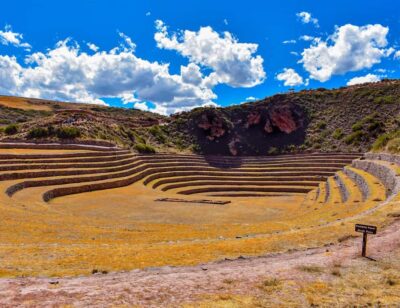
Moray, Maras Salt Mines & Chinchero Weavers Tour
Read our review →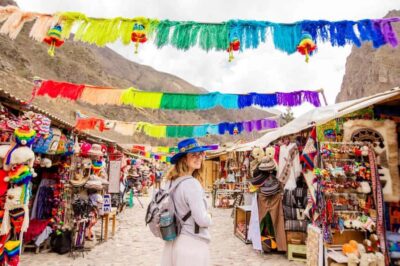
Sacred Valley, Pisac, Ollantaytambo, Salt Mines Moray
Read our review →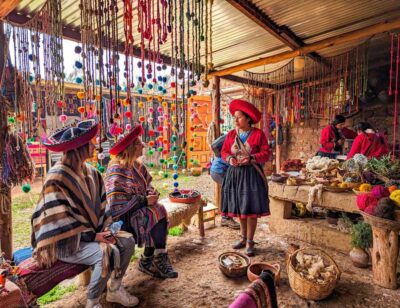
Chinchero,Moray & Salt Mines drop-off in Ollantaytambo
Read our review →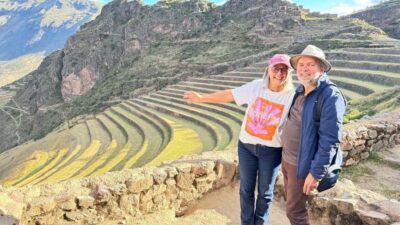
Pisac Indian Market and Ollantaytambo Fortress with Lunch
Read our review →
Browse the lists this tour appears in