
Reviewed · 1-DAY TOURS
Sacred Valley Tour 1 Day
Ollantaytambo and Pisac give this day its real punch. One is an imposing Inca stronghold built into the mountainside; the other pairs hillside ruins with a colorful craft market. I especially like the range of stops and the way the route mixes living Andean culture, unusual engineering, old salt ponds, and major archaeological sites.
I also like the price: $39 per person includes transport, a bilingual guide, and buffet lunch, which is good value for a long day from Cusco. The tradeoff is the pace. You cover about 95 kilometers in roughly 11 hours, and entrance tickets are extra, so this suits you best if you want a broad first look rather than a slow visit at each site.
Key points at a glance
- Six very different stops: Chinchero, Maras, Moray, Urubamba, Ollantaytambo, and Pisac each bring a different side of the Sacred Valley.
- Pisac and Ollantaytambo are the day’s strongest visits: You get both a major Inca site and a chance to browse local handicrafts.
- A full buffet lunch is included: The meal in Urubamba breaks up the long morning and afternoon.
- Guide Auqui earned praise for clear explanations: The tour is designed around commentary in English and Spanish, with audio support also available.
- The altitude is serious but manageable for many people: Chinchero reaches about 3,700 meters, while Urubamba sits lower at about 2,792 meters.
- Bring money for the Boleto Turistico: Site entrance fees are not part of the $39 price.
Why this Sacred Valley day works
The Sacred Valley is too spread out for a quick hop between two ruins. This tour solves that problem by linking several major sights in one loop from Cusco. You get high terraces, salt pools, farm experiments, an Inca fortress, and a market without arranging separate taxis or buses.
That convenience matters. The day begins early and returns to Cusco in the evening, but the route gives you a useful sense of how the valley fits together. Chinchero and Moray sit high above the valley floor, while Urubamba provides a lower stop before the route continues to Ollantaytambo and Pisac.
You should expect a group outing, not a private tour. Transportation is shared, and the schedule needs to keep moving so the group can reach all six stops. The reward is breadth. The cost is that some visits may feel brief, especially if you like to linger with a camera or study every wall.
The tour has a moderate difficulty rating. You will walk at high altitude, climb terraces at Ollantaytambo, and explore uneven archaeological areas. Comfortable shoes, a daypack, water, cash, and clothes that can get dusty are sensible choices.
More Day Trips in Urubamba:
- Cusco: One Day Tour to Machu Picchu with Train Transfers
★ 4.8 · 28 reviews - Machu Picchu: 1-day tour by Vistadome Panoramic train
★ 4.7 · 15 reviews - Machu Picchu Day Trip from Cusco
★ 4.5 · 1,644 reviews
Chinchero begins the day at high altitude
Chinchero is the first stop, and it sets a cultural tone before the ruins take over. The town is known for textile work and terraces, so you get a look at Andean traditions that continue beyond the stones of the Inca era.
The textile demonstration is one of the more useful parts of the visit. You can watch local weavers explain traditional techniques and see how handmade cloth connects present-day community life with older Andean customs. This gives the history a human face instead of treating the valley as one large outdoor museum.
Chinchero is also the highest point listed for the tour, at about 3,700 meters. That altitude may affect you more than the walking itself. Move slowly, keep water close, and do not spend the first stop racing from one viewpoint to the next.
Because Chinchero comes early, it can also be a practical test of how your body handles the day. If you feel winded here, take the rest stops seriously. The tour includes chances to use restrooms and buy snacks, but you are responsible for carrying what you need between stops.
Maras turns mountain water into salt
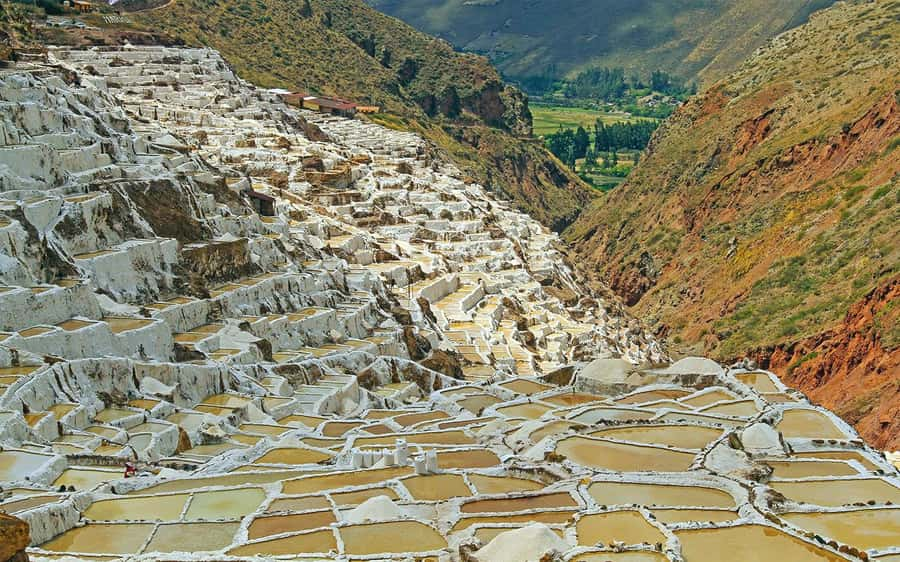
The Maras Salt Mines are among the most unusual sights on the route. Hundreds of small salt pans spread across the mountainside, creating a patchwork of pale pools. The pans have been used since Inca times, and sunlight can make the salt surfaces shimmer against the surrounding hills.
This is a strong photography stop, but it is also a place where scale can surprise you. The salt pans are not one enormous industrial mine. Their appeal comes from the repeated pattern of small pools and the old method of collecting salt from mineral-rich water.
You will want a camera here, but remember that the day continues through several other sites. Take your main photos early, then listen to the guide’s explanation of how the pans function. A guide adds value because the visual pattern alone does not explain why this system could last for centuries.
The tour description lists the Maras visit as included, but entrance fees for historical and cultural sites are separate. Confirm the required Boleto Turistico before you go, and keep cash or a card available for personal purchases and extra drinks.
Moray shows the Incas experimenting with terraces
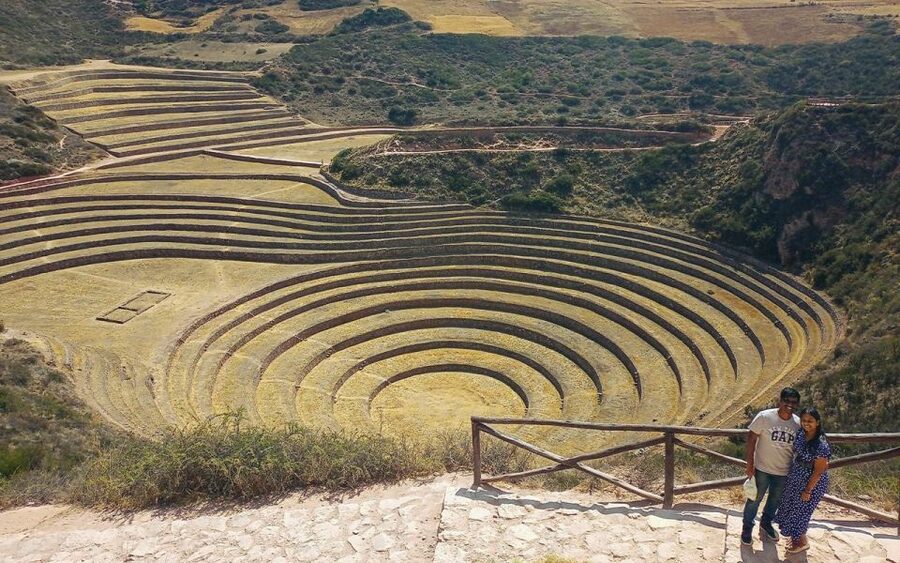
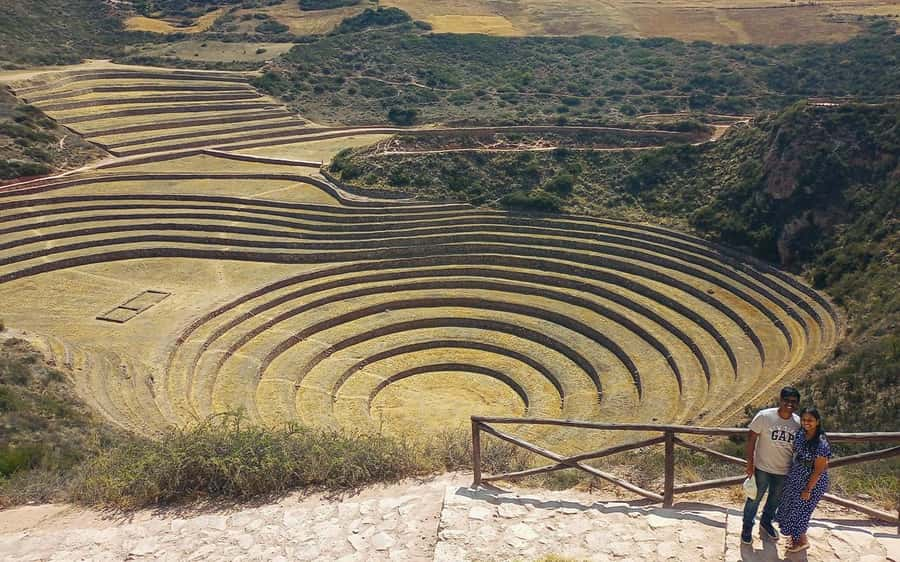
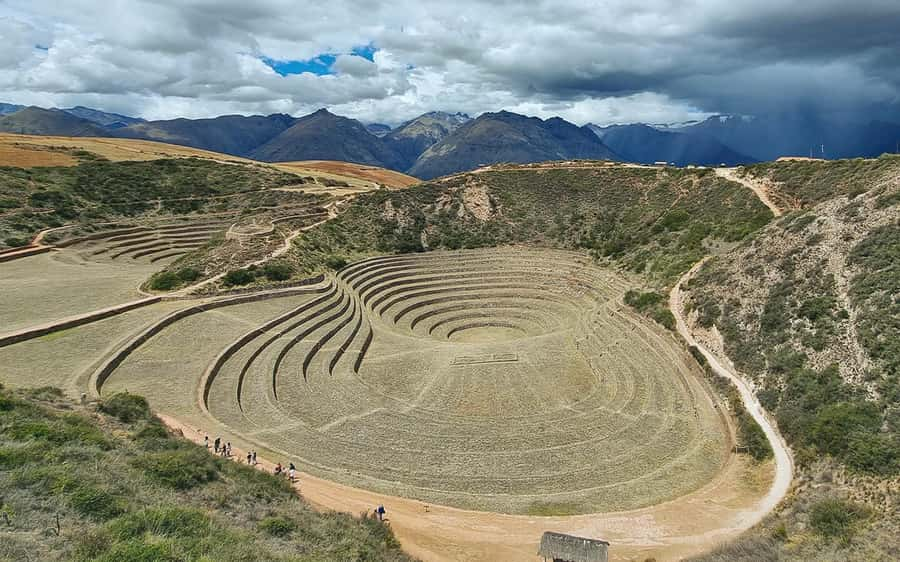
Moray is the day’s most distinctive archaeological stop. Its circular terraces drop into a bowl-like formation, creating a sight unlike the straight agricultural steps at many other Inca sites.
The terraces are often linked with agricultural experimentation. The design suggests that the Incas paid close attention to temperature, altitude, drainage, and growing conditions. Your guide can help connect the shape of the site with the wider Inca approach to farming and the environment.
I like Moray because it makes old engineering feel practical. You are not simply looking at carved stone. You are looking at a carefully shaped place that may have helped test crops or growing conditions at different levels.
The drawback is that Moray can feel less immediately dramatic than Ollantaytambo or Pisac. Its appeal depends on understanding the design, so pay attention to the explanation rather than judging it only from a quick glance. The circular form is the main event, and the best view comes from taking in the entire depression rather than focusing on one terrace.
A few more Urubamba days worth weighing up
- Cusco:Sacred Valley Pisaq,Ollantaytambo,Chinchero with Lunch
★ 4.8 · 183 reviews - From Cusco: Chinchero, Moray, Maras and Ollantaytambo
★ 4.5 · 83 reviews - from Urubamba & Ollantaytambo:Sacred Valley Full-Day Private
★ 4.9 · 31 reviews - Super Sacred Valley
★ 3.8 · 6 reviews
Urubamba provides a needed lunch break
After the morning’s high-altitude stops, the route drops to Urubamba, listed at about 2,792 meters. This is the lowest point on the tour and a welcome change of pace.
The included buffet lunch offers local and international dishes, with options intended for different tastes and dietary needs. Since breakfast and dinner are not included, you should plan around the full schedule. A small snack and your own drink are still useful, even with lunch provided.
The meal is not just a matter of convenience. A long day of walking and driving is easier when you have a fixed break in the middle. It also keeps the group from losing time searching for food, which helps the afternoon sites stay on schedule.
You should not expect Urubamba to be a long independent stop. It functions mainly as the tour’s meal break and lower-altitude pause. Use it to eat properly, refill water, visit the restroom, and prepare for the climbs at Ollantaytambo.
Ollantaytambo brings the Inca scale into focus
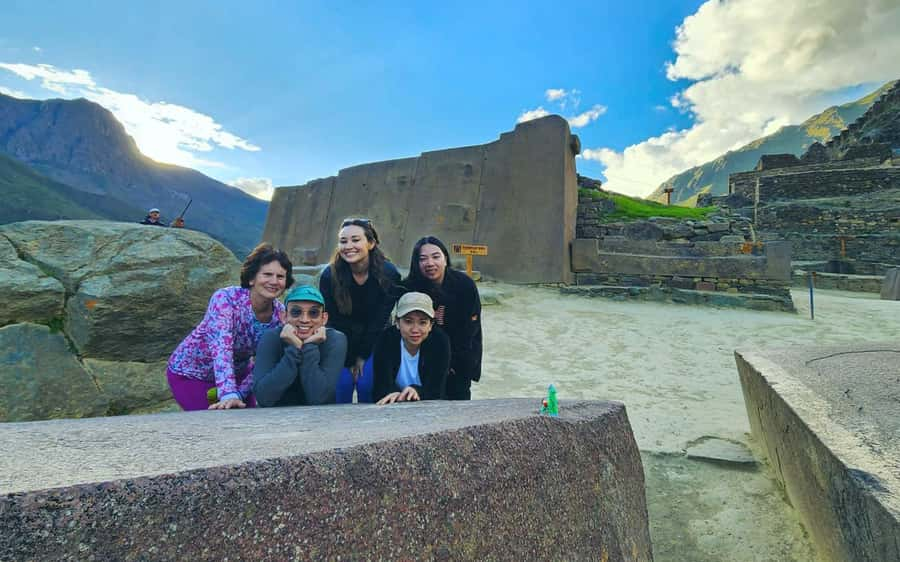
Ollantaytambo is one of the strongest parts of the day. Its massive fortress and steep terraces show how the Incas used the mountain itself as part of their defense and design.
You will climb stone terraces and look across the valley from above. The ascent gives you a direct sense of the work involved in building at this scale, though it also makes the moderate difficulty rating feel real. Take your time on the steps, especially after a full morning.
The site also matters for its strategic position. Your guide can explain how the fortress controlled movement through this part of the valley and why Ollantaytambo was more than a ceremonial place. The broad views help you understand its role better than a map alone.
This is where a clear guide can make a major difference. Auqui received specific praise for explaining the sites well and keeping the day moving through many different locations. If he leads your group, listen closely at Ollantaytambo, where the walls, terraces, and mountain setting all need some context to make sense.
Allow yourself enough energy for this stop. The ruins are not a flat museum visit, and you may want to keep your camera ready for the valley views. Do not spend all your time photographing the first terrace. The higher viewpoints show why this site is often the day’s architectural highlight.
Pisac closes with ruins and a market
Pisac combines two experiences that do not always appear together: a major hillside archaeological site and a market where local artisans sell handmade goods.
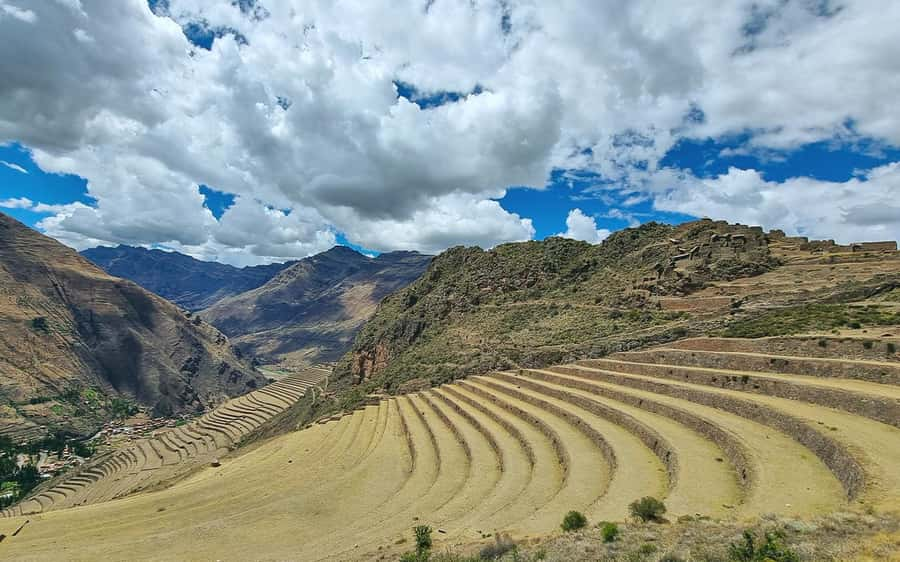
The ruins are spread across the slopes above the town. You will encounter terraces and stonework with wide views over the valley, giving the final archaeological visit a strong visual finish. After a day of varied sites, Pisac helps tie together the relationship between farming, settlement, and mountain terrain.
The market adds a more social and practical side to the stop. You can browse handcrafted items and look for souvenirs without making shopping the whole purpose of the day. It is a good place to compare textiles and other goods after seeing traditional weaving at Chinchero.
Pisac is also where the schedule may feel tight. You are visiting both ruins and market, and the group must still return to Cusco in the evening. If you want time for serious shopping, ask how long the market portion will be and keep your purchases manageable.
For many people, Pisac and Ollantaytambo will be the two most memorable stops. They offer the clearest combination of impressive ruins, mountain views, and a sense of place. The market makes Pisac feel less like a single archaeological appointment and more like part of a living town.
What the $39 price really includes
At $39, this is a strong-value option for a full day, provided you understand what is and is not covered. You receive round-trip transportation from a designated meeting point in Cusco, a professional bilingual guide, the buffet lunch, and visits to the listed sites.
You also avoid the work of coordinating a route that would otherwise require several separate rides. For a first day in the valley, that logistical saving is significant. The tour’s price is especially appealing if you want to see the major sights before deciding where to return for a slower visit.
The main extra cost is the Boleto Turistico, which covers entrance to the historical sites. Entrance fees are not included, and personal purchases, drinks outside the lunch, breakfast, dinner, insurance, and transport to an individual hotel are also your responsibility.
The meeting point matters. The guide will wear a red 69 Explorer jacket, which should help you identify the group. Pickup and drop-off are at designated points rather than individual hotels, so check the meeting instructions before the morning departure.
Who should book this day?
I would choose this tour if you want a broad introduction to the Sacred Valley and have only one full day available. It suits you if you like seeing several kinds of places in one outing, from craft traditions to archaeological sites and unusual agricultural works.
It also fits budget-minded visitors who prefer a group tour with lunch and transport included. The English and Spanish live guide, plus audio support in both languages, gives you more historical context than simply hiring a driver.
This is less suitable if your priority is slow photography, long market browsing, or extended time at one ruin. The 11-hour schedule covers a lot of ground, and the drive between stops is part of the experience.
You should also think about altitude and walking. Chinchero reaches 3,700 meters, and the route includes walking at high elevation. The tour is not suitable for people with claustrophobia, non-swimmers, or people with epilepsy according to the activity restrictions. Bring identification, cash, water, a daypack, a camera, sun protection, and clothing that can get dirty.
Cancellation is flexible up to 24 hours before departure for a full refund, and you can reserve now and pay later. Those terms help if your Cusco plans are still shifting, but they do not remove the need to budget for entrance tickets and personal expenses.
Should you book the Sacred Valley Tour?
Book it if you want the most variety for a low price and can handle a long, active day. The combination of Chinchero, Maras, Moray, Ollantaytambo, and Pisac gives you a strong first look at the valley, while the buffet lunch and shared transport keep the cost under control.
Skip it if you want a relaxed pace or a private, highly flexible itinerary. In that case, fewer stops would give you more time to explore each site.
For most first-time visitors with one open day, I would consider this a sensible choice. Focus your attention on the guide’s explanations, save your energy for Ollantaytambo and Pisac, and arrive ready for the Boleto Turistico fee. The day is busy, but it gives you an unusually broad view of Andean culture and Inca engineering in one trip.
FAQ
How long is the Sacred Valley Tour?
The tour lasts about 11 hours and returns to Cusco in the evening.
What places does the tour visit?
The route includes Chinchero, Maras Salt Mines, Moray, Urubamba, Ollantaytambo, and Pisac, including the Pisac market and ruins.
How much does the tour cost?
The listed price is $39 per person.
Is lunch included?
Yes. A buffet lunch in Urubamba is included.
Are entrance fees included?
No. Entrance fees to the historical and cultural sites are separate, and you need the Boleto Turistico.
Is transportation included?
Yes. Round-trip group transportation from a designated meeting point in Cusco is included.
What languages are available?
The live guide speaks English and Spanish. Audio support is also available in English and Spanish.
Where do I meet the guide?
The guide will wear a red 69 Explorer jacket at the designated meeting point.
How high does the tour go?
The highest listed point is Chinchero, at about 3,700 meters. Urubamba is the lowest listed point, at about 2,792 meters.
Can I cancel the booking?
Yes. You can cancel up to 24 hours in advance for a full refund, and the reserve-now, pay-later option is available.
Just added around Urubamba
- Sun and Moon Tour★ 4.5 · 3 reviews
- Super Sacred Valley★ 3.8 · 6 reviews
- Peru in 5 days: Lima, Cusco, Machupicchu & Rainbow Mountain★ 5.0 · 3 reviews
- Machupicchu 2025: The best ticket Circuit 2★ 3.5 · 6 reviews
- Machu Picchu: 1-day tour by Vistadome Panoramic train★ 4.7 · 15 reviews
- Machu Picchu: historical and photographic guided tour★ 4.9 · 27 reviews
- Guided tour of Cusco and its 4 ruins★ 3.8 · 3 reviews
- Private Guide in Machu Picchu for 3 Hours★ 4.2 · 17 reviews
1-Day Tours, compared.

Paracas & Huacachina Oasis Day Trip with Wine & Dunes
Read our review →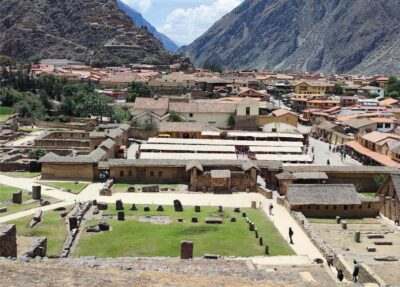
2-Day Trip to the Sacred Valley and Machu Picchu
Read our review →

Ballestas & Huacachina Day Trip w/ Nazca Lines Flight
Read our review →
Ballestas Islands and Huacachina Sunset Day Trip
Read our review →Browse the lists this tour appears in