
Reviewed · WORKSHOPS
Sacred Valley Textile Workshop – Dyeing & Weaving in Cusco
The best part of this Cusco textile workshop is that you do not just watch an artisan work. You gather dye plants, prepare yarn, color it with natural materials, and try weaving on a traditional backstrap loom. The finished item may be small, but the lesson is big: Andean cloth takes patience, practice, and remarkably nimble hands.
I like the hands-on format and the chance to spend real time with the women who keep these methods alive. I also like the food and conversation, which turn the workshop into a shared day rather than a quick demonstration. Guides such as Nayda, Delia, Edwin, and Pedro are praised for their care and translation help.
The main drawback is timing. The listed workshop lasts about eight hours and begins at 8:30 am, but the drive from Cusco to the Sacred Valley area can take roughly an hour and a half each way. Plan on a full day, not a tidy eight-hour outing. At $420 per person, this is a special-interest splurge, best for people who value personal contact and active learning over checking off several sights.
Key points at a glance
- Collect your own dye plants: Walk with the artisans to gather leaves and other natural materials for the dye bath.
- Work with alpaca yarn: Learn traditional preparation, spinning, dyeing, winding, and color selection.
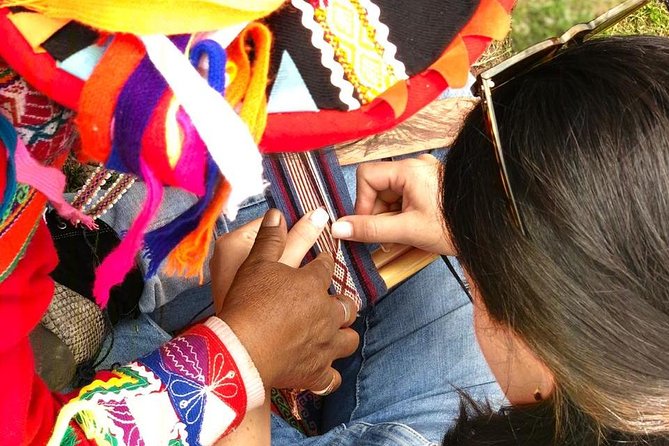
- Use a backstrap loom: Make a bracelet, bookmark, headband, or similar small textile with close guidance.
- Share a home-cooked lunch: Food, coffee or tea, and conversation are part of the day.
- Travel privately from Cusco: Hotel pickup and private transport make the long countryside outing easy.
- Meet skilled Andean weavers: Ruth Pimentel and other master weavers share techniques passed through generations.
The ride from Cusco to the Sacred Valley
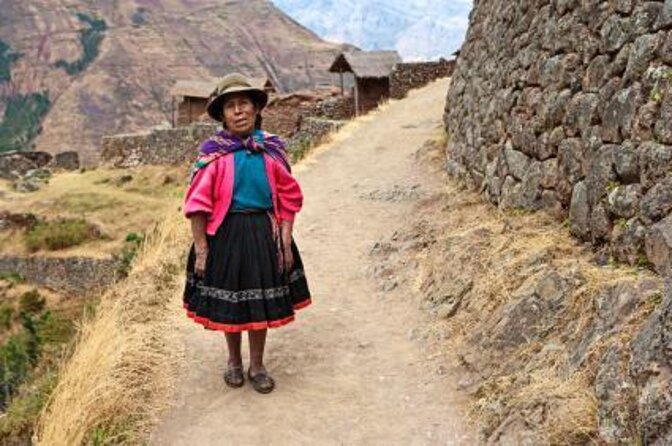
Your day starts with pickup at 8:30 am. Private transport is included, and the drive takes you out of Cusco and into the countryside around Calca and nearby Andean communities. The exact setting and artisan team can vary, but the workshop is associated with communities such as Patabamba and Parobamba.
The drive is not just a transfer. You get views of rural Peru and may stop for photographs along the way. It also gives you time to settle into the slower pace of the day. Still, be realistic about the clock. Several people found the journey longer than expected, with the total outing stretching well beyond the stated eight-hour workshop.
That distance is a drawback if you are trying to fit in ruins, markets, or another tour on the same day. It is an advantage if you want one focused cultural experience with transportation handled for you. You do not need to arrange a taxi, work out a local bus, or find the workshop on your own.
The outing is private, so only your group participates. That gives you room to ask questions and work at your own speed. Solo visitors have also found the setting welcoming, with the guide and artisans making an effort to include them.
More hands-on workshops in Sacred Valley:
- The Textile Workshop Experience in Cusco Region
★ 5.0 · 118 reviews - Chocolate Workshop in Cusco with Premium Organic Cacao
★ 5.0 · 75 reviews - Pisco Sour Secrets: Hands-On Mixology in Historic Cusco
★ 4.5 · 50 reviews
Meeting Ruth Pimentel and the weaving family
At the atelier, Ruth Pimentel welcomes you along with other master weavers. She is presented as Peru’s only UNESCO-awarded Indigenous master weaver, and the introduction explains her family’s connection to Andean textile work and the social purpose behind the workshop.
The important thing here is context. Andean weaving is not simply a decorative craft. It carries knowledge about plants, animals, local dress, community identity, and the work of generations of women. The workshop gives you a practical way to understand that system rather than reducing it to a photo stop or a purchase in a shop.
The people who teach you may include Ruth, Delia, Nayda, Julia, Maria, Dalia, Martina, Marilus, Selena, or other members of the local weaving community. Edwin or another guide may translate between Spanish, English, and Quechua. If meeting Ruth personally is especially important to you, confirm the day’s artisan team when you book.
The atmosphere is informal. You may sit on the floor for portions of the weaving lesson, so this is worth knowing if you have trouble sitting low for several hours. The work requires patience, and the artisans often need to guide your hands through the first steps.
Gathering leaves and learning from local plants
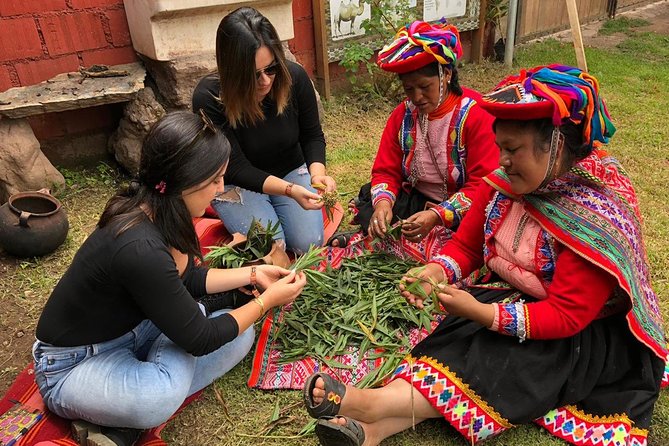
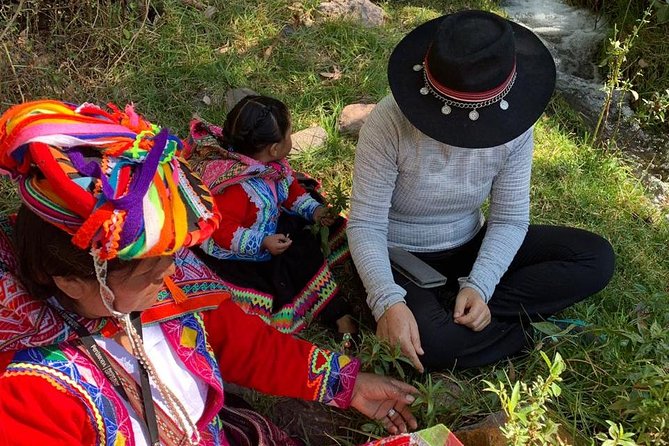
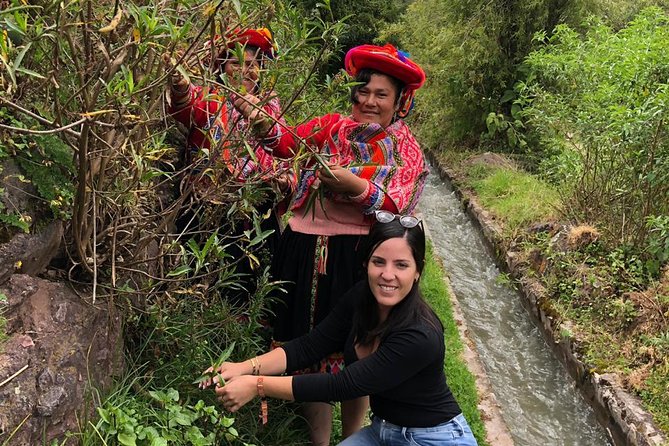
One of the day’s most memorable parts is the walk to collect leaves and other plant materials for dyeing. You may also learn about plants used for drinks or traditional medicine. This short walk connects the finished yarn to the place where it was made.
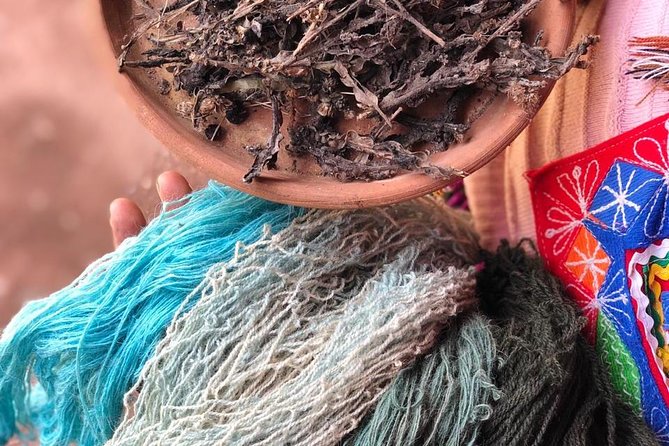
The lesson is practical. You see the raw ingredients, hear how they are prepared, and help create the dye bath. This is far more useful than simply being told that a color is natural. You begin to understand the labor behind every shade and why local plant knowledge matters.
The pace is gentle, though the exact walk depends on weather and conditions. Good walking shoes are sensible, and bring a layer for changing temperatures. The area is in the highlands, so even a relaxed outing can feel tiring if you have just arrived in Cusco and are still adjusting to altitude.
This can be a good first full day after arrival because the schedule is calm and the activity is not built around strenuous hiking. It is not a substitute for medical advice about altitude, though. If you feel unwell, tell your guide and do not push through the workshop just to finish a piece.
From wool to yarn, with plenty of help
The textile process includes more than dyeing. Depending on the day’s rhythm, you may learn how alpaca wool is prepared, spun into yarn, wound into balls, and arranged for weaving. The supplied description emphasizes premium baby-alpaca yarn, while hands-on accounts also describe learning to make yarn from alpaca wool.
This is where the workshop earns its price for textile enthusiasts. You see several stages that are usually hidden behind a finished scarf or hat. The process is slow, repetitive, and exact. A small bracelet can represent a surprising amount of preparation.
Do not expect to master every skill in one morning. Spinning takes practice, and weaving on a backstrap loom can be genuinely difficult at first. That difficulty is useful. It makes the artisans’ speed and precision easier to appreciate, and it keeps the activity from feeling like a quick craft project designed for children.
You choose from prepared colors for your own piece, then work with the weavers as they show you how to control the threads. They provide patient assistance, but you still do enough of the work to feel connected to the finished object.
A few more Sacred Valley days worth weighing up
- From Cusco: Sacred Valley & Maras Salt Mines Tour with Lunch
★ 4.8 · 2,227 reviews - From Cusco: Moray, Maras Salt Mines & Chinchero Weavers Tour
★ 4.8 · 1,925 reviews - Cusco: Sacred Valley, Pisac, Ollantaytambo, Salt Mines Moray
★ 4.6 · 1,058 reviews - Cusco:Chinchero,Moray & Salt Mines drop-off in Ollantaytambo
★ 4.8 · 793 reviews
Natural dyeing with alpaca yarn
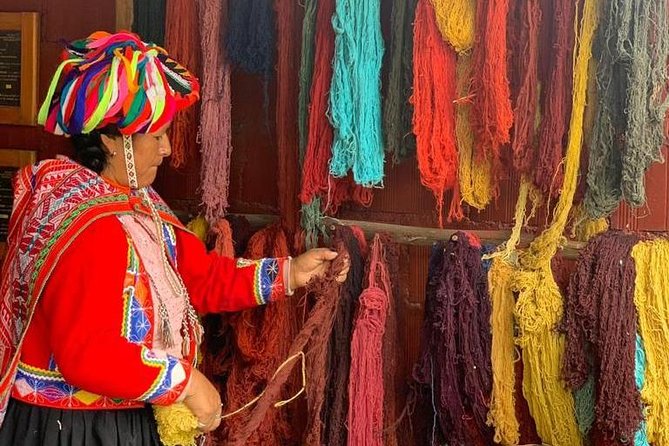
The dyeing session is the heart of the day. You help prepare the plant materials, place the yarn in the dye, and watch the color develop. The process gives you a direct link between the hillside walk and the textile in your hands.
The results are not factory uniform, and that is part of the point. Natural materials produce their own range of tones. You may take home yarn you helped dye, along with the small woven item you make during the workshop.
Coffee or tea and a snack are included, which helps break up the work. The food is not an afterthought. Several parts of the experience involve sitting, talking, and sharing food with the artisans, so the day feels more like a family welcome than a formal classroom.
Some participants have tried local specialties such as guinea pig during the wider day, but that is not presented as a standard part of the workshop. Do not book this experience expecting a particular dish. The dependable inclusion is lunch, along with coffee or tea.
Weaving your own bracelet, bookmark, or headband
After the yarn is prepared, the artisans introduce you to the backstrap loom. This traditional method uses a strap around the weaver’s body and requires careful control of the threads. It is a close, tactile process, often done seated on the floor.
Your project may be a bracelet, bookmark, headband, or similar small textile. The exact choice can depend on the group and what materials are ready that day. One person may finish a bracelet, while another chooses a bookmark or bincha, an Andean-style headband.
The workshop is not about producing a flawless souvenir. You are learning the structure of the pattern and trying to keep the tension even. The weavers may start the item or correct difficult sections, so describe it honestly as something you made with expert help.
That shared effort is what makes the piece meaningful. It is not merely a purchased object with a story attached later. You have handled the yarn, struggled with the loom, and seen how much skill goes into larger textiles.
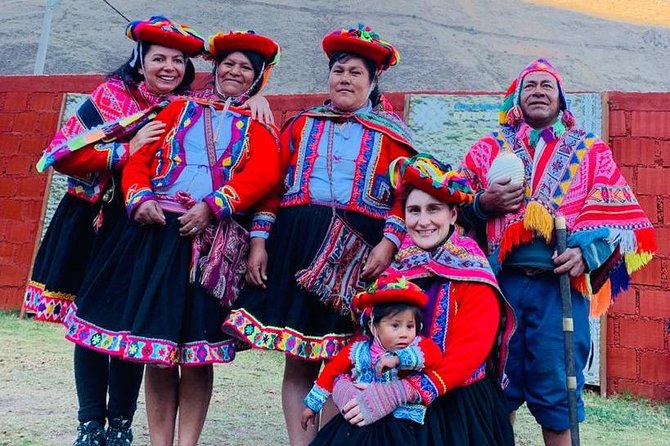
The traditional clothing demonstration adds another cultural layer near the end of the day. You may be dressed in local garments and join a dance. This is a light, social finish, and it helps the workshop end with warmth rather than simply sending you to a shop.
Lunch, conversation, and a look at the community
Lunch is served during the workshop and is described as generous, wholesome, and home-cooked. The meal may include fruit and produce from the household or garden, depending on the day. It is shared with the artisans and guides, creating time for conversation beyond technical instruction.
Translation matters here. Guides such as Nayda and Edwin help you speak with the weavers and learn a little Quechua. That makes the social side of the day much easier, especially if you speak little or no Spanish.
The conversation is one reason this experience feels more personal than a standard demonstration. You can ask about the weaving process, local customs, and the meaning of traditional clothes. You also have time to talk about where you come from and compare everyday skills and customs.
This is a social-impact experience, but you should still approach it with respect. Ask before taking close-up photographs, listen carefully, and remember that you are entering a working community rather than a staged museum exhibit. The most rewarding attitude is curiosity without treating the people as part of the scenery.
The small shop and what you take home
At the end, you may browse handmade goods sold by the women who made them. This gives you a chance to buy directly from the artisans rather than from a distant souvenir chain.
The workshop normally gives you your own woven piece, and some arrangements include the yarn you dyed. Packaging and a signed provenance card are described for the bespoke creation in the private atelier format. Since the exact item can vary, ask what your booking includes if the keepsake matters to you.
The shop is not a pressure-filled finale in the descriptions provided. You can look, ask about prices, and decide. Several people found the work more reasonably priced than expected, especially after seeing how much time it takes to make.
Buying something can be a good way to support the community, but do not feel obliged to purchase beyond the included project. The value of the day should rest on the instruction, contact, and time spent together, not on how much you carry home.
Is $420 per person a fair price?
At $420 per person, this is expensive compared with a short textile demonstration or a group day trip in the Sacred Valley. The price makes more sense when you count the private transport, guide and translation, hands-on instruction, lunch, drinks, and the full day of access to the weaving community.
You are also paying for a small group setting and a level of personal attention that is hard to get on a large coach tour. Textile artists, craft students, photographers, and visitors who care about community-based tourism may find the cost worthwhile.
For a general sightseeing trip, the value is less clear. If your priority is seeing several Inca sites in one day, $420 may be better spent on a private Sacred Valley itinerary. This workshop is best understood as a specialist cultural experience, not a cheap add-on.
The included handmade piece helps, but it should not be the main reason to book. You could buy a finished textile for less. The reason to pay is to learn how it is made and spend time with the people who practice the craft.
Who will enjoy this day most?
You are a good fit if you like working with your hands, asking questions, and allowing one activity to fill a day. Textile hobbyists will have plenty to study, while families and solo visitors can take part with support from the guides.
It also suits people who want cultural contact beyond ruins and Inca architecture. You learn about Quechua customs, local plants, clothing, food, and community life through one connected activity.
You may want to skip it if you dislike sitting on the floor, have a packed sightseeing schedule, or want to leave with a large finished textile. The weaving is challenging, and the countryside drive takes time.
The experience is private, service animals are allowed, and most people can participate. The listing also notes nearby public transportation, though private pickup is the easier choice. Confirm any mobility concerns before booking because the workshop includes walking, low seating, and hands-on loom work.
Should you book the Sacred Valley textile workshop?
Book it if you want to understand Andean textiles from the inside out. The plant gathering, natural dyeing, spinning, lunch, Quechua conversation, and backstrap weaving work together to create a thoughtful day with real human contact.
Before you commit, protect the entire day in your schedule and accept that your piece will be made with help. Ask who will lead your session, especially if you hope to meet Ruth Pimentel or work with a particular guide such as Nayda.
I would choose this over another souvenir stop if you care about craft and community. I would not choose it as a filler between major archaeological sites. At $420, it asks for time and money, but for the right person, it offers something a standard tour cannot: a small piece of Andean textile knowledge carried home in your own hands.
FAQ
How long does the textile workshop last?
The workshop lasts approximately eight hours. With hotel pickup at 8:30 am and the drive from Cusco to the Sacred Valley area, you should plan for a full day.
Where does the workshop take place?
It takes place at a private atelier and community setting in the hills near Cusco, associated with Sacred Valley communities around Calca, Patabamba, and Parobamba.
Is hotel pickup included?
Yes. Hotel pickup by private transport is offered, making the start of the day easier.
What will I make during the workshop?
You may make a bracelet, bookmark, headband, or similar small textile. The exact project can vary, and the artisans provide help as you weave.
Do I get to dye my own yarn?
Yes. You help collect natural materials, prepare the dye, and dye alpaca yarn. Some arrangements also allow you to take home yarn that you colored.
Is lunch included?
Yes. Lunch and coffee or tea are included. The meal is shared with the artisans and guides.
Will Ruth Pimentel lead my workshop?
The experience is presented as being hosted by Ruth Pimentel, but the teaching team can include other master weavers and guides such as Nayda, Delia, Edwin, and others. Confirm the day’s team when booking if this is important to you.
Is this a private experience?
Yes. Only your group participates in the private tour or activity.
What is the cancellation policy?
You can cancel up to 24 hours before the local start time for a full refund. Changes or cancellations made less than 24 hours in advance are not accepted for a refund. If poor weather forces cancellation, you will be offered another date or a full refund.
Just added around Sacred Valley
- Zipline over the Sacred Valley Trip★ 5.0 · 11 reviews
- Visit Pisac from Cusco: Private Transport★ 4.6 · 9 reviews
- Maras and Huaypo lagoon by ATV from Cuzco | Local Operator★ 4.7 · 4 reviews
- Transfer from Cusco to Ollantaytambo★ 5.0 · 30 reviews
- Sacred Valley VIP Tour with Maras and Moray from Cusco★ 4.5 · 35 reviews
- Sacred Valley Private Tour, Moray & Salt Mines Incluided★ 5.0 · 41 reviews
- Salt Mines(Maras),Moray and Chincheros★ 5.0 · 41 reviews
- Excursion to Sacred Valley of the Incas tour – Private service.★ 5.0 · 35 reviews
Workshops, compared.
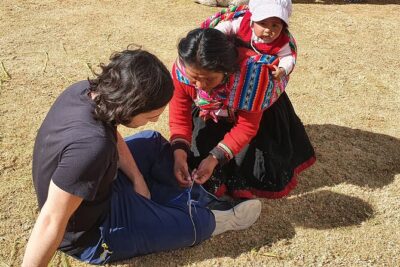
The Textile Workshop Experience in Cusco Region
Read our review →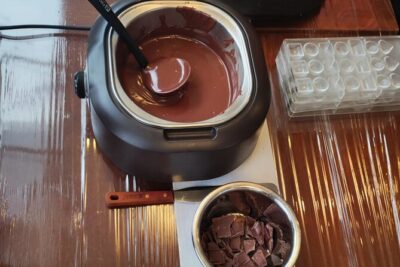
Chocolate Workshop in Cusco with Premium Organic Cacao
Read our review →
Pisco Sour Secrets: Hands-On Mixology in Historic Cusco
Read our review →
Chocolate Workshop with the Best Local Organic Cacao
Read our review →
1.5h Cusco Chocolate Workshop – Truffles & Hot Chocolate
Read our review →Browse the lists this tour appears in