
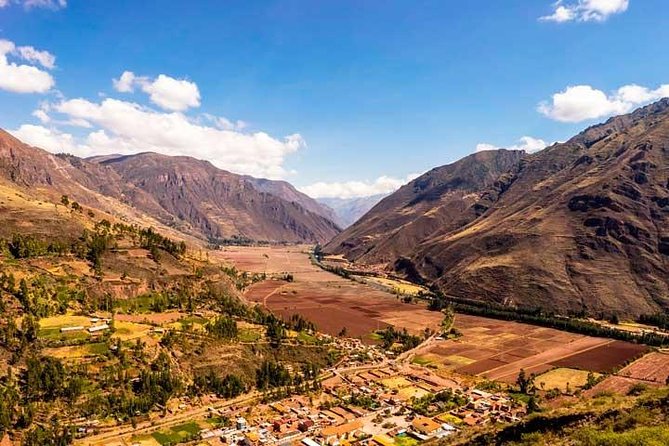
Reviewed · MARAS & MORAY TOURS
Sacred Valley VIP Tour with Maras and Moray from Cusco
Moray’s giant circular terraces are the star of this day, but the real appeal is how much Andean ground you cover before sunset. In one long loop from Cusco, you see Inca ruins, a colonial church, a working salt operation, highland markets, and two major Sacred Valley sites. I like the 11-hour route and the included buffet lunch, which saves you from arranging several separate day trips.
I also like that the tour brings an English and Spanish-speaking guide and keeps the group to a maximum of 18 people. The tradeoff is time: forty minutes here, thirty minutes there, and only fifty minutes at Ollantaytambo. You will see a lot, but this is a first look rather than a slow archaeological visit.
Key points to know before booking

- Moray’s circular terraces are the visual highlight: You get a short visit to one of the Sacred Valley’s most unusual Inca sites.
- Six major stops fit into one day: Chinchero, Moray, Maras, Ollantaytambo, Urubamba, and Pisac all appear on the route.
- Bring extra cash: Entrance fees are not included, and one report places them at 40 soles for the historical sites plus 10 soles for the salt mines, payable in cash.
- Lunch is built into the schedule: Urubamba is the midday stop, with a Peruvian buffet and time to rest.
- Expect a shared minibus, not a private tour: The group can reach 18 people, and some explanations may be longer in Spanish than in English.
- Check the return arrangement carefully: The stated meeting point is Plaza Regocijo in Cusco, and the bus may return there rather than to your hotel.
One day, six Sacred Valley stops
At $45 per person, this tour is priced as an efficient way to connect several places that are awkward to cover independently in one day. You get shared transport, a professional guide in English and Spanish, and lunch. That is good value if your goal is to see the main sights without piecing together taxis, buses, and separate admissions.
The price does not cover the entrance tickets to the archaeological sites or the Maras salt ponds. Budget for those separately. The amount given for the historical sites is 40 soles per person, with another 10 soles for the salt mines. Since cash was needed for those payments, I would carry enough Peruvian currency before leaving Cusco.
The day begins at 7:00 a.m. at Plaza Regocijo, listed at F2M9+5X2 in Cusco. The tour information also presents hotel pickup and drop-off as a convenience, but the stated start and end point is the plaza. One important practical detail is that the bus may bring you back to the meeting point rather than to your hotel. Confirm this before booking if a hotel return matters to you.
The group limit is 18 people. That is not intimate, but it is manageable for a large sightseeing circuit. The guide has to work in two languages, so English explanations may be shorter than Spanish ones. One report specifically found the English understandable but less detailed, with the first stop conducted entirely in Spanish. If you need extensive English commentary at every site, ask the operator to clarify the language plan before you pay.
More Maras salt pan and Moray trips:
- From Cusco: Sacred Valley & Maras Salt Mines Tour with Lunch
★ 4.8 · 2,227 reviews - From Cusco: Moray, Maras Salt Mines & Chinchero Weavers Tour
★ 4.8 · 1,925 reviews - Cusco: Sacred Valley, Pisac, Ollantaytambo, Salt Mines Moray
★ 4.6 · 1,058 reviews
Chinchero, Inca foundations and a busy market
Chinchero lies about 28 kilometers from Cusco on the paved route toward Urubamba. It gives you two different subjects in one stop: the remains of the royal estate linked to Tupac Inca Yupanqui, and a colonial temple built on Inca foundations.
The architecture makes this stop useful for understanding how Spanish buildings were placed over earlier Andean foundations. You can look for the contrast between the colonial church above and the carefully fitted Inca stonework below. The visit is scheduled for about 40 minutes, so you will get an introduction rather than a close study of every wall.
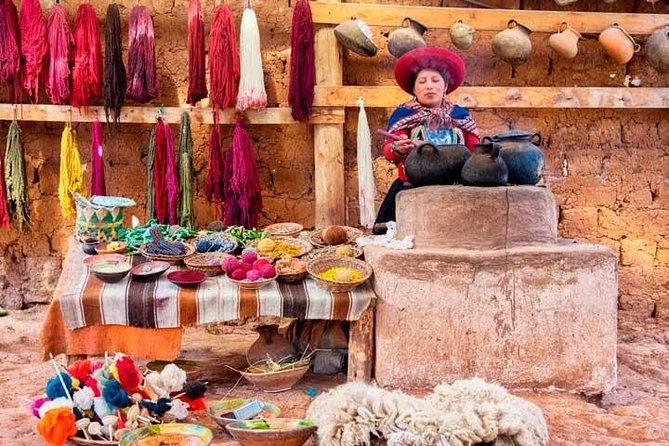
Chinchero’s market is often the liveliest part of the stop. It began as a place where farmers from the valley and people from the higher areas exchanged goods. Today, it is known for crafts and textiles made in styles inspired by pre-Columbian designs.
I would treat the market as both a shopping stop and a cultural scene. You may see colorful woven goods and traditional clothing, but the short schedule can make browsing feel rushed. If you plan to buy textiles, decide early whether shopping is a priority. The guide’s explanation may also be more useful in Spanish than English, based on the language balance reported for this tour.
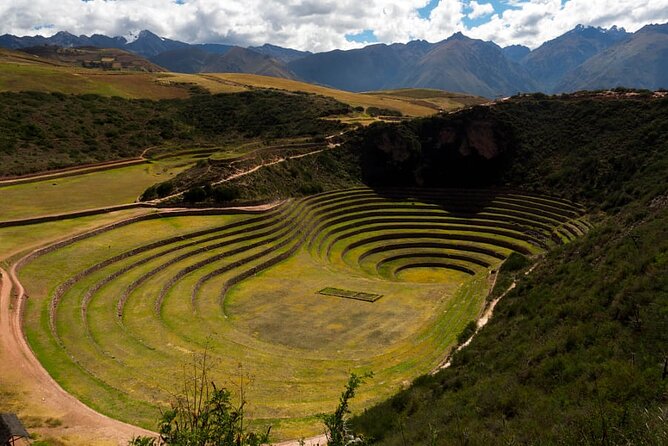
Moray’s circular terraces and the mystery of their purpose
Moray is about 7 kilometers from Maras and roughly an hour from Cusco by the Chinchero route. Its enormous circular terraces drop into the earth in rings of different sizes. From above, the shapes are striking and unlike the straight agricultural terraces found at many other Inca sites.
The terraces are commonly described here as an agricultural experimentation site. Their design suggests that the Incas were testing crops in different conditions, though the supplied tour description also presents Moray as a place connected with female energy and Pachamama. Your guide may frame the site through both practical farming and Andean spiritual ideas.
You have around 30 minutes at Moray. That is enough to see the terraces, hear the main explanation, and take photographs. It is not enough for a long walk around the site or a patient discussion of every interpretation. The ground and altitude can make a short visit feel full, so use the time to listen first and photograph second.
Moray is one of the best reasons to choose this particular route. If you have only one day for the Sacred Valley, its unusual form gives the tour a strong visual centerpiece. The limitation is that the brief stop leaves little room for independent exploration.
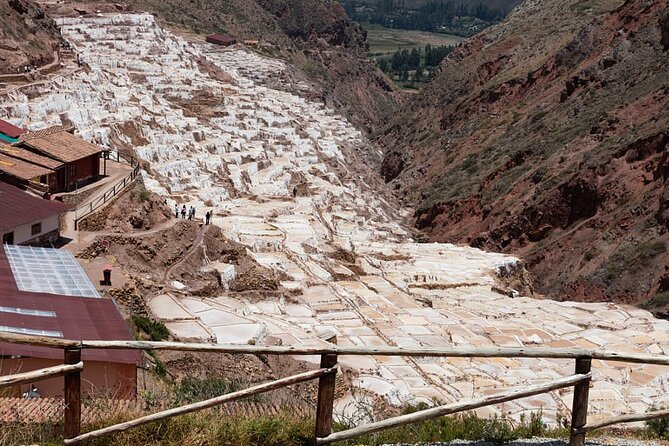
Maras salt ponds, still fed by an underground stream
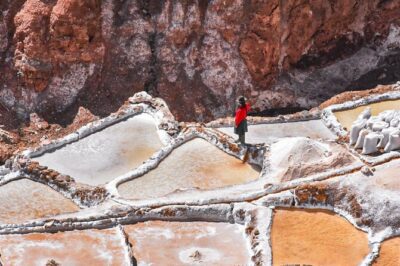
The Maras salt ponds sit northwest of the town of Maras. Around 3,000 small pools spread down the slope, each fed by salty water from an underground stream. Sunlight evaporates the water, leaving salt behind for collection and sale.
This is not simply a ruin to view from a distance. The site shows a working method that has been used since pre-Hispanic times. The small ponds, the pale mineral color, and the way water is guided from pool to pool make the visit different from the stonework at Moray and Ollantaytambo.
The tour allows about 30 minutes here, and the salt mine ticket costs extra. The reported charge is 10 soles, separate from the 40 soles for the historical sites. Carry cash, since card payment should not be assumed.
The stop is short enough that you should not expect a long walk through the entire area. Your guide’s explanation matters because the ponds can look like a simple scenic viewpoint without the story of how they function. I like this part of the route because it links ancient practice with production that remains visible today.
A few more Sacred Valley days worth weighing up
- Cusco:Chinchero,Moray & Salt Mines drop-off in Ollantaytambo
★ 4.8 · 793 reviews - Sacred Valley: Chinchero, Moray, Ollantaytambo & Pisac+Lunch
★ 4.8 · 501 reviews - Sacred Valley: Maras & Moray by Quad Bike from Cusco
★ 4.6 · 418 reviews - Pisac Indian Market and Ollantaytambo Fortress with Lunch
★ 4.5 · 395 reviews
Ollantaytambo, the most substantial ruin stop
Ollantaytambo is a traditional Inca town about 21 kilometers from Urubamba, at roughly 2,800 meters. The village itself retains an old street plan, while the archaeological site rises on the hill above it.
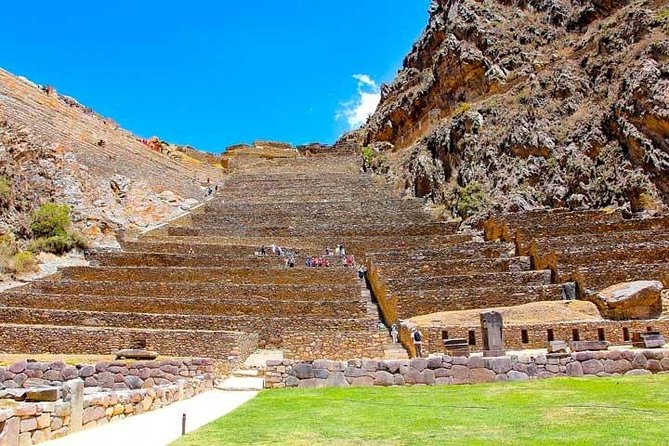
The ruins include the Temple of the Sun, the Intihuatana, and the Baths of the Princess. The area north of Hanan Huacaypata Square contains 15 blocks of houses built on carefully worked stone walls. The site is also tied to the story of Ollanta, a chieftain associated with an Inca princess and the ruler Pachacútec.
You get about 50 minutes here, the longest dedicated ruin visit on the schedule. That still goes quickly. Ollantaytambo rewards you with scale, terraces, and large stone construction, but the uphill setting means you may spend much of the stop moving between viewpoints and listening to the guide.
The wider setting matters, too. A route from Ollantaytambo climbs toward the Málaga road at about 4,200 meters and then continues toward the jungle edge, passing places such as Huilloc, known for its weavers. This tour does not take you along that route, but the guide can help place Ollantaytambo within the wider geography of the Andes.
If you have a strong interest in Inca engineering, this is the stop where the time limit may bother you most. I would not choose a fast group circuit as your only Ollantaytambo visit if you want a quiet, detailed exploration. For a broad first view, it earns its place on the route.
Urubamba lunch, a needed pause in the middle
Urubamba is the lunch and rest stop, scheduled for about 40 minutes. The town gives you views across the Sacred Valley and breaks the day into two more manageable sections.
The included meal is a Peruvian buffet. That is a useful part of the price because it removes the need to search for lunch while the bus waits. It also gives you a chance to sit down after the morning visits to Chinchero, Moray, and Maras.
Forty minutes is enough for a meal and a short pause, but not a leisurely restaurant experience. Keep an eye on the departure time. A group tour cannot wait indefinitely, and the afternoon still includes Ollantaytambo and Pisac.
I value this stop more for its practical role than for sightseeing. A packed day can become tiring, especially when you are moving between highland sites. The lunch break keeps the schedule from feeling like six straight photo stops.
Pisac, market shopping and hilltop ruins
Pisac is about 33 kilometers from Cusco on the paved road through the Sacred Valley. The town has a colonial-era center, a famous artisan market, and a major archaeological site above it.
The market draws sellers and community members from remote villages, many in traditional clothing. It is a good place to look for crafts, and the tour information specifically recommends buying here because prices are often lower than in Cusco.
That advice is useful, but the shopping time is limited. The stop lasts about 40 minutes, and the guide must balance the market with the archaeological area. If you want to compare textiles, negotiate purchases, and explore the ruins at length, you will probably need a separate visit.
Pisac’s archaeological site is considered one of the important Inca sites around Cusco. The combination of the modern market, colonial town, and ancient remains gives you a final chance to connect daily life with the older Andean setting. It also makes the stop feel less like a single monument and more like a town with several layers.
One practical caution: there have been reports of an unscheduled jewelry stop at the end of the day, as well as a drink being offered for sale on the bus. These additions may feel like pressure to spend more, particularly after a long day. You can politely decline and keep your focus on the places included in the route.
Guide style, language and group rhythm
A professional guide is included, and the guide is expected to explain Andean history and culture in English and Spanish. The tone can be friendly and considerate, with one account describing a guide who introduced the trip without bothering people.
Still, bilingual guiding has a real effect on the day. Explanations in Spanish may be longer and more detailed, while English commentary may be more condensed. Spanish speakers are likely to get the fullest version of the talks. English speakers should be prepared to ask for clarification if a key point is passed over quickly.
The maximum group size is 18. That helps keep the price low, but it also means you must follow a fixed schedule. You will not have the flexibility of a private guide who can extend a stop at Moray, shorten the market, or linger at Ollantaytambo.
I would choose this tour for coverage and convenience, not for deep time at one ruin. Its strength is the route design. Its weakness is the amount of ground covered in a single day.
What to bring and how to judge the value
Bring cash in soles for the entrance fees. The extra cost is not hidden in the sense that admissions are excluded, but the exact amounts are important enough to know before departure. Plan on 40 soles for the historical sites and 10 soles for Maras based on the reported charges.
Wear practical footwear for archaeological sites and bring water and sun protection. These suggestions are sensible for a full day outside, though the supplied tour details do not specify a dress code or equipment list. You should also keep valuables and purchases manageable because you will be getting on and off shared transport several times.
At $45, the tour offers solid value if you want one organized day and do not need private transport. The included lunch and guide help justify the cost. Once you add the entrance fees, the total becomes higher than the headline price, but it still buys a large amount of sightseeing in one day.
The main value question is time. If you have several days in Cusco, separate visits would let you spend longer at Ollantaytambo, Pisac, and Chinchero. If you have one free day and want the widest possible overview, this circuit is practical.
Should you book this Sacred Valley tour?
Book it if you want to see Moray, Maras, Ollantaytambo, Pisac, and Chinchero without arranging separate transport. It suits people who enjoy a full schedule, want lunch handled, and are comfortable sharing a vehicle with up to 18 people.
Think twice if you want slow photography, detailed English commentary at every site, or a guaranteed hotel drop-off. Confirm the pickup and return arrangement, carry the extra cash for admissions, and treat any added shopping or drink stops as optional.
For a first day in the Sacred Valley, I find the route worthwhile. Moray and the salt ponds add variety, while Ollantaytambo and Pisac provide the strongest archaeological context. Just understand the bargain: you trade depth for range.
FAQ
How long does the Sacred Valley VIP Tour last?
The tour lasts approximately 11 hours.
What time does the tour begin?
The stated start time is 7:00 a.m.
Where does the tour start?
The listed meeting point is Plaza Regocijo, F2M9+5X2, Cusco 08002, Peru.
Where does the tour end?
The activity ends back at the meeting point. One report also notes that the bus returned to the meeting point rather than directly to a hotel, so confirm the drop-off arrangement before departure.
Which places does the tour visit?
The route includes Chinchero, Moray, the Maras salt ponds, Ollantaytambo, Urubamba, and Pisac.
Is lunch included?
Yes. A buffet lunch is included, with Urubamba serving as the lunch and rest stop.
Are entrance tickets included?
No. Entrance to the archaeological centers is not included. The Maras salt ponds also require a separate ticket.
How much extra money should I bring for admissions?
The stated additional amounts from the tour information are 40 soles per person for the historical sites and 10 soles for the salt mines. The payment was reported as cash only.
Is the tour offered in English?
Yes. A professional guide service in English and Spanish is included. English explanations may be shorter than Spanish explanations during some parts of the day.
How large is the group?
The maximum group size is 18 people.
Can most people participate?
The tour information states that most people can participate.
Can I cancel for a full refund?
Yes. You can cancel at least 24 hours before the experience start time for a full refund. Changes or cancellations made less than 24 hours before the start time are not accepted for a refund.
Just added around Sacred Valley
- Zipline over the Sacred Valley Trip★ 5.0 · 11 reviews
- Visit Pisac from Cusco: Private Transport★ 4.6 · 9 reviews
- Maras and Huaypo lagoon by ATV from Cuzco | Local Operator★ 4.7 · 4 reviews
- Transfer from Cusco to Ollantaytambo★ 5.0 · 30 reviews
- Sacred Valley Private Tour, Moray & Salt Mines Incluided★ 5.0 · 41 reviews
- Salt Mines(Maras),Moray and Chincheros★ 5.0 · 41 reviews
- Excursion to Sacred Valley of the Incas tour – Private service.★ 5.0 · 35 reviews
- Sacred Valley Private Tour: Chinchero, Ollantaytambo and Pisaq★ 5.0 · 33 reviews
Maras & Moray Tours, compared.
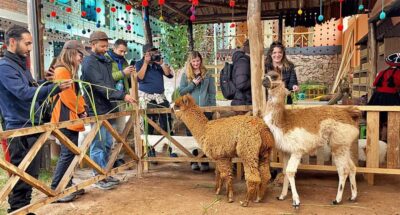
Sacred Valley & Maras Salt Mines Tour with Lunch
Read our review →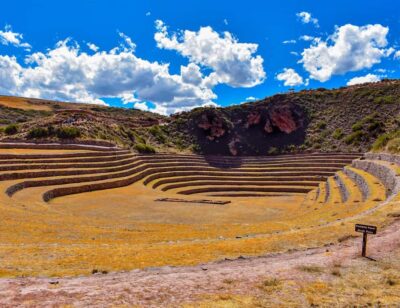
Moray, Maras Salt Mines & Chinchero Weavers Tour
Read our review →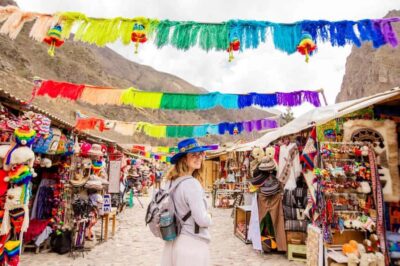
Sacred Valley, Pisac, Ollantaytambo, Salt Mines Moray
Read our review →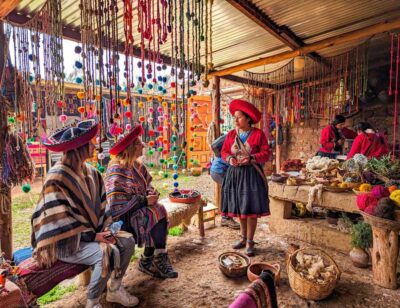
Chinchero,Moray & Salt Mines drop-off in Ollantaytambo
Read our review →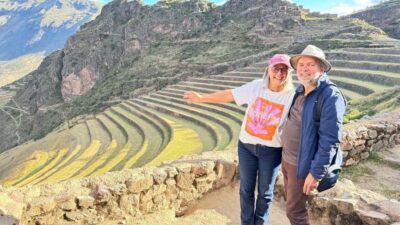

Moray, Maras Salt Mines & Chinchero Weavers Half-Day
Read our review →Browse the lists this tour appears in