
Reviewed · SACSAYHUAMAN & CUSCO RUINS TOURS
Cusco Half Day City Tour: Four Ruins
Cusco’s four major ruins sit just beyond the city, and this tour links them in one useful half-day circuit. You’ll see Sacsayhuaman’s giant zigzag walls, Q’enqo’s carved rock chambers, Puka Pukara’s roadside buildings, and Tambomachay’s flowing springs. I like the small maximum group of 15, which gives a guide room to explain details without turning the visit into a crowd scene. I also like the mix of grand and mysterious sites, from a possible Inca fortress to a ceremonial water shrine.
The main drawback is pace. The advertised duration is about six hours, yet one recent outing lasted closer to four, and another account found that some stops allowed too little time. Add the separate admission fee and the chance of a late pickup, and you should book this for efficient sightseeing, not a slow archaeological study.
Four Inca sites, four different questions
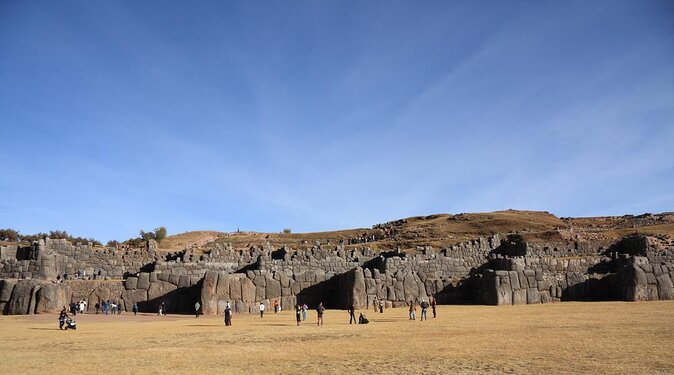
- Sacsayhuaman’s giant stones: See walls made from blocks reaching about 5 meters high and weighing as much as 125 tons.
- Q’enqo’s carved monolith: Follow the puzzling channel cut into rock, possibly linked to water, chicha, blood, or ritual practice.
- Puka Pukara’s practical role: Picture this red earth site as a possible barracks and roadside lodging point for an imperial procession.
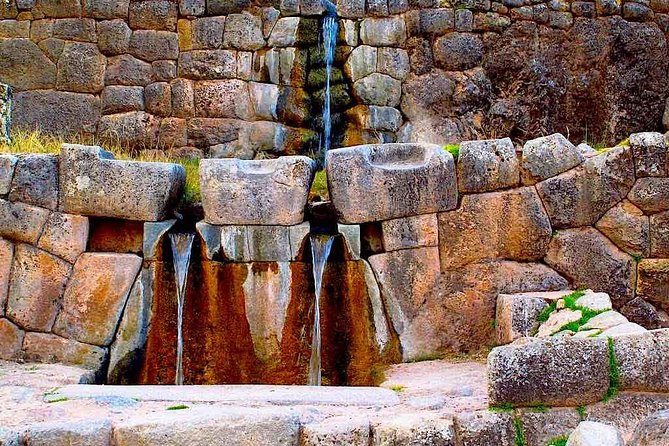
- Tambomachay’s spring water: Watch water run through Inca channels, terraces, and small waterfalls.
- A bilingual small-group format: English and Spanish explanations are provided, with groups capped at 15 people.
- A useful first Cusco outing: The circuit gives you a fast introduction to the city’s Inca sites before a longer visit to places such as Machu Picchu.
Why this half-day circuit works
I see this as a strong orientation tour. Cusco is full of Inca walls, colonial buildings, and competing stories about what each ruin once did. Seeing four sites in one outing helps you understand the range of Inca construction: military-looking walls, ceremonial rock carving, road support, water engineering, and sacred space.
The tour begins at Heidi Travel EIRL on Plateros 324 in central Cusco at 10:00 a.m. Transport then takes you toward the sites outside town. The exact time at each stop can vary, but the planned visits add up to about four hours, with transport and the day’s organization bringing the total to roughly six.
A bilingual English and Spanish guide leads the group. Edith has been praised for clear explanations and a considerate pace, while Freddy received strong marks for communicating clearly in English and offering useful suggestions for other things to see in Cusco. The guide makes a major difference here. These sites do not come with much visible explanation, so a good account of their possible uses adds real value.
The vehicle is included, and the group limit is 15. That is small enough to keep the guide within earshot and much better than a large coach group. Still, one outing had every seat filled, so do not assume you will have spare room. The short drives between the central plaza area and the ruins help keep the ride manageable.
More City Tours in Cusco
- Cusco: Half-Day City Tour with Sacsayhuaman and Q’enco
★ 4.6 · 1,129 reviews - City Tour Cusco Qoricancha Sacsayhuaman y Tambomachay
★ 4.7 · 617 reviews - Cusco: Sightseeing Tour of the City on an Open-Top Bus
★ 4.0 · 481 reviews
Sacsayhuaman and the stones that stop conversation
Sacsayhuaman is the headline stop. The site sits above Cusco and gives you broad views toward the surrounding sacred peaks, including Ausangate, Pachatusán, and Cinca. Even before the guide begins, the scale of the stonework makes the place easy to appreciate.
The name is Quechua for place where the hawk is satiated, a reference to the birds associated with the area. Spanish observers called it a fortress because of its heavy defensive appearance, but the complex included far more than walls. Residential areas, towers, shrines, storehouses, roads, and water channels formed part of the site.
The famous lower walls run in a zigzag pattern. Some blocks reach roughly 5 meters in height and 2.5 meters in width, with estimated weights between 90 and 125 tons. The fit of the stones is the point to watch. You can spend your time photographing the scale, but I recommend looking closely at the joints and the way the wall follows the ground.
The visit lasts about an hour, and admission is not included. You may walk uphill or over uneven ground to reach the most impressive sections. At Cusco’s altitude, even a modest climb can leave you short of breath. One guide was praised for not pushing people to hurry or climb every stair, an approach that matters at about 3,400 meters in the city and higher at the ruins.
Sacsayhuaman may once have served ceremonial as well as military purposes. The guide can help you hold both ideas at once instead of presenting one uncertain theory as settled fact. That is one reason this tour is most useful with live commentary.
Q’enqo and the mystery under the rock
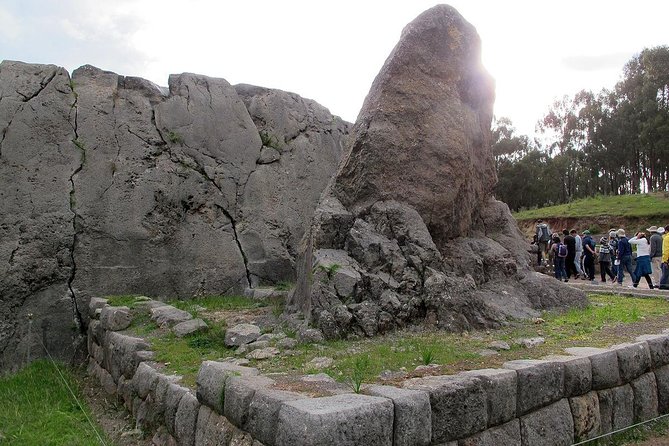
About fifteen minutes from Cusco, Q’enqo offers a sharp contrast. The name means labyrinth or zigzag in Quechua, referring to a crooked channel cut through the stone. Unlike Sacsayhuaman, which impresses through size, Q’enqo asks you to think about purpose.
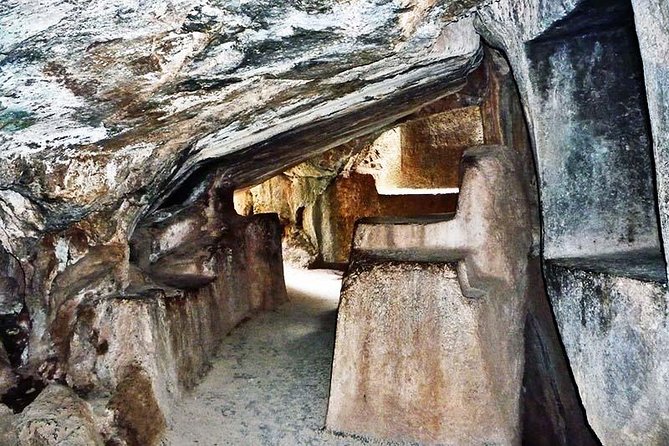
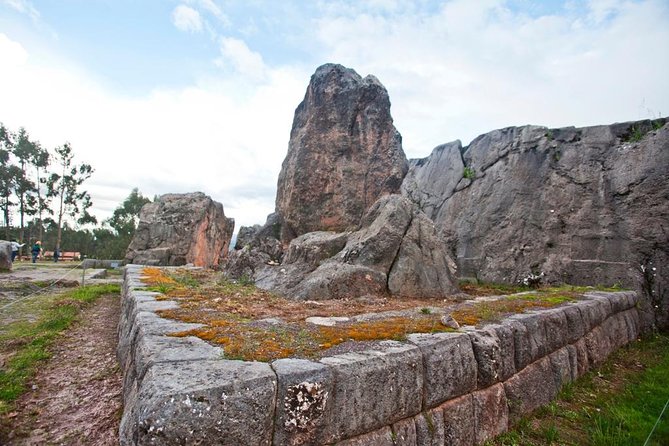
The temple was carved from a huge natural monolith. Man-made passages meet natural chambers, and one chamber contains 19 small niches arranged around an area often described as an amphitheater. The site may have been linked to ceremonies honoring the sun, moon, and stars.
The carved channel is the main puzzle. It carried some kind of liquid, but its exact use is not known. Ideas include holy water, chicha made from corn, or blood. Those possibilities point toward ritual use, perhaps connected with sacrifice, embalming, or judging a person’s conduct after death.
The guide’s explanation is especially helpful here because the physical remains do not tell you one clear story. You will hear possible interpretations, not a neatly proven answer. That uncertainty is part of Q’enqo’s appeal, though the stop can feel brief if you want time to study every carving.
Plan on about an hour, with entry paid separately. The passages and rock surfaces may require careful footing. If you dislike confined spaces or have trouble with uneven ground, tell the guide before entering the most enclosed sections.
Puka Pukara, the red post on the Inca road
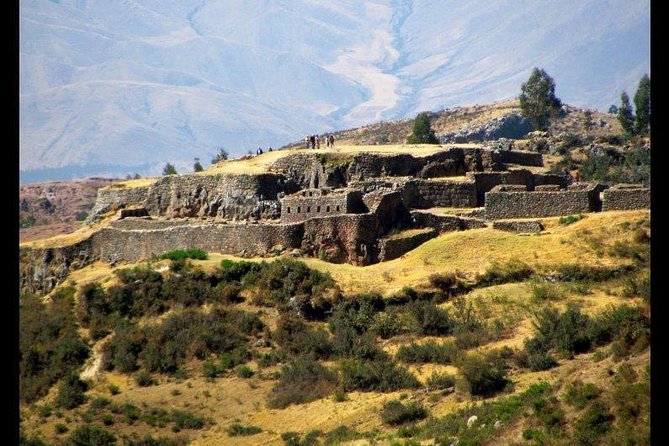
Puka Pukara means red fort, a name linked to the color of the local earth and the site’s position. It is less polished and monumental than Sacsayhuaman, yet it helps explain how the Inca state supported movement across its territory.
The complex includes courtyards, canals, aqueducts, baths, rooms, and an ancient road associated with the Qhapaq Ñan, the Inca road network. Three walls form three levels. The builders worked around protruding rock rather than cutting everything into a regular shape, so the masonry looks more irregular here than at the grander sites.
That rougher appearance is useful. You can see how the Inca adapted buildings to the ground instead of forcing a uniform plan everywhere. Some rooms are rectangular, while others use the trapezoidal forms common in Inca architecture.
Puka Pukara may have served as a military post, a tambo, or roadside lodging point. One account from the colonial period describes soldiers and dancers staying here while the Inca visited the baths at Tambomachay. A rumored tunnel may have linked the two sites, but it remains a rumor rather than a feature you should expect to enter.
The stop is planned for about an hour. It is worth listening for the practical side of the Inca Empire here: roads, water, rest, supervision, and movement of official groups. The site may feel less instantly dramatic than Sacsayhuaman, but it rounds out the picture.
More Inca ruins above Cusco:
- Cusco City Sightseeing, San Pedro Market, Cathedral and Qorikancha Temple
★ 4.5 · 139 reviews - Cusco: 3-Hour Horse Riding Tour to the Temple of the Moon
★ 5.0 · 105 reviews - Cusco City Sightseeing and Sacsayhuaman Archeological Park Tour
★ 4.5 · 101 reviews - Horse Riding Chacan Mountain And Temple Of The Moon
★ 5.0 · 78 reviews
Tambomachay and the sound of running water
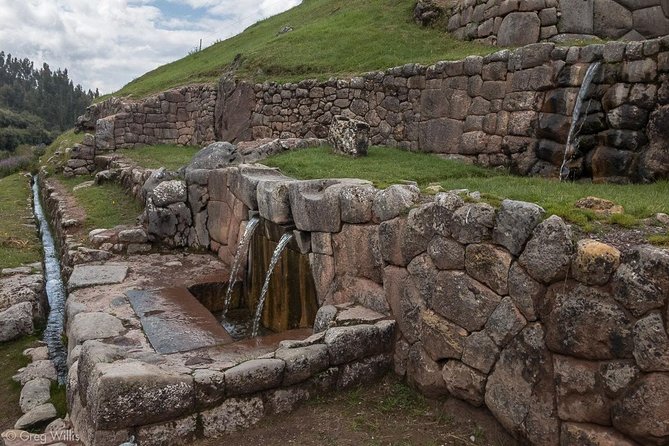
Tambomachay is the quietest stop on the circuit. It sits about four miles north of Cusco at approximately 12,150 feet, or 3,700 meters, above sea level. Its name is closely tied to the idea of an Inca bath, and the site is built around a natural spring.
Water flows through small aqueducts, channels, and falls set into three stepped terraces. The stonework is precise, with trapezoidal niches in some retaining walls. Compared with the heavy defensive impression of Sacsayhuaman, Tambomachay feels controlled and calm.
The exact function is not certain. It may have been a ceremonial site, a bathing place for the Inca or nobility, a military post, or a combination of these roles. The spring gives the place a clear focus, but it does not prove that this was simply a royal spa.
The visit lasts about 45 minutes. That is enough to see the terraces, watch the water, and hear the main theories, but not enough for a long, unhurried examination. The altitude and uphill walking can be more important than the clock. Move slowly, drink water, and do not worry about matching the fastest person in the group.
What the $45 price really covers
At $45 per person, the tour is reasonably priced for transport and a bilingual guide, especially if you want all four sites in one organized outing. You are paying for the route, vehicle, and interpretation rather than a private archaeological visit.
The key extra cost is admission. Entry to the main sites is listed at PEN70 per person. The information also lists Qorikancha at PEN20, although Qorikancha is not one of the four main stops described here. Confirm exactly which entrance charges apply to your departure before paying, since one past booking left the visitor unhappy about learning the entry cost only after purchase.
The value is best for someone with limited time in Cusco. Hiring transport independently could take more planning, and you would lose the guide’s explanations. On the other hand, if you want to linger at each ruin, take extensive photographs, or sketch the stonework, a private arrangement would give you more control.
The tour ends back at the original meeting point. That makes it easy to continue exploring central Cusco afterward, though the actual return time may be earlier or later than the advertised six-hour estimate.
Pace, pickup, and altitude
The practical weak point is organization. One outing began 35 minutes late, and another involved a 30 to 40 minute wait while the operator sorted out group arrangements. The communication at the start was not always clear, especially when language differences were involved.
That does not mean every departure will run late, but you should avoid scheduling a flight, train, meal reservation, or major attraction immediately afterward. The operator confirms the booking at purchase, but the start is still a shared group departure rather than a private car waiting only for you.
Walking is moderate in distance but demanding at altitude. You may climb steps, cross uneven surfaces, and move between terraces. Most people can take part, but someone still adjusting to Cusco should keep the pace gentle. The guide can usually help set a sensible rhythm, and the tour does not require you to climb every stair.
An unlisted stop at an alpaca wool shop has also been included on at least one outing. Some people may enjoy learning about different fibers; others may prefer to spend that time at the ruins. Treat it as a possible addition, not a guaranteed part of the schedule.
Who should book this tour
I would choose this tour for a first full day or second morning in Cusco, especially if you want context before visiting other Inca sites. It suits couples, families, and solo visitors who prefer transport and explanation without paying for a private guide.
It is also a good fit if you want both famous and less obvious remains. Sacsayhuaman gives you the big visual moment, while Q’enqo, Puka Pukara, and Tambomachay show smaller details that a simple city walk cannot provide.
I would hesitate if your main goal is a slow, quiet archaeological visit. The schedule may be shortened, and the time at each ruin can feel tight. I would also think twice if altitude affects you strongly, since every stop involves some walking and Tambomachay sits high above the city.
Book at least a day ahead if possible. The experience averages being booked 18 days in advance, which suggests that popular dates can fill before arrival. Free cancellation is available up to 24 hours before the start time. After that point, the payment is not refunded, and late changes are not accepted.
Should you book the Four Ruins tour?
Book it if you want a practical introduction to Cusco’s nearby Inca sites for $45 plus entrance fees. The strongest reasons are the efficient route, small group cap, bilingual guide, and the chance to compare four very different places in one outing.
Go in with realistic expectations. Confirm the admission charges, allow extra time for a late start, and expect uphill walking at high altitude. If you do that, this is a useful, fairly priced way to get your bearings and understand why Cusco is much more than a gateway to Machu Picchu.
FAQ
How long does the Cusco Four Ruins tour last?
The tour is advertised at approximately six hours, starting at 10:00 a.m. The planned visits total about four hours, but the complete outing includes transport and time between sites.
What ruins are included?
The route includes Sacsayhuaman, Q’enqo, Puka Pukara, and Tambomachay. Each site is outside central Cusco and represents a different aspect of Inca construction or use.
Where does the tour start?
The meeting point is Heidi Travel EIRL at Plateros 324, Cusco 08000, Peru. The tour ends back at the same meeting point.
What time does the tour begin?
The scheduled start time is 10:00 a.m.
Is transportation included?
Yes. Transport between the meeting point and the four archaeological sites is included.
Is a guide included?
Yes. A bilingual English and Spanish guide accompanies the group. Guides named in the available information include Edith and Freddy.
How much does the tour cost?
The listed price is $45 per person. Entrance fees are separate, with site admission listed at PEN70 per person. Qorikancha admission is listed as PEN20, although Qorikancha is not one of the four main ruins described.
How many people can join the tour?
The maximum group size is 15 people.
Can I cancel for a full refund?
Yes, if you cancel at least 24 hours before the local start time. Cancellations or changes made less than 24 hours before the start are not eligible for a refund.
More Half-Day in Cusco
- Cusco: City Tour | Half-Day Tour to 4 Archaeological Sites
★ 4.6 · 206 reviews - Cusco: Half-Day City Tour
★ 4.2 · 129 reviews - Cusco: Half-Day Horseback Riding at Devil’s Balcony
★ 4.9 · 89 reviews - Half-Day City Tour of Cusco Including Tambomachay
★ 4.5 · 59 reviews
Just added around Cusco
- Waqrapukara 1 day trekking + meals★ 3.9 · 3 reviews
- Visit to the Cochahuasi Animal Sanctuary with rescued animal★ 4.1 · 4 reviews
- Vinicunca Mountain Tour – Full Day Tour to Rainbow Mountain★ 3.4 · 4 reviews
- Valle Sur Cusco | half day★ 4.3 · 3 reviews
- Trek to Humantay Lake from Cusco★ 4.9 · 8 reviews
- Trek to Choquequirao 4 days★ 3.8 · 4 reviews
- rainbow mountain full day★ 5.0 · 44 reviews
- Tour to the HUMANTAY LAGOON from CUSCO★ 5.0 · 35 reviews
Sacsayhuaman & Cusco Ruins Tours, compared.
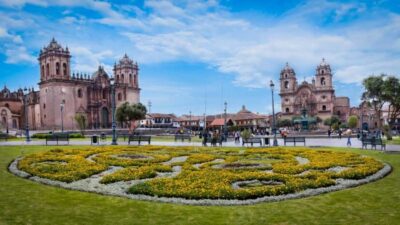
Half-Day City Tour with Sacsayhuaman and Q’enco
Read our review →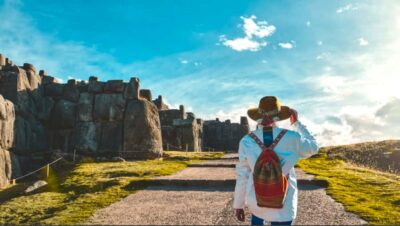
City Tour Cusco Qoricancha Sacsayhuaman y Tambomachay
Read our review →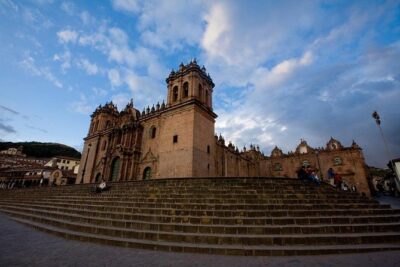
Cusco City Sightseeing, San Pedro Market, Cathedral and Qorikancha Temple
Read our review →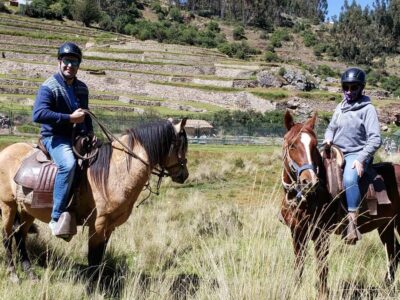
3-Hour Horse Riding Tour to the Temple of the Moon
Read our review →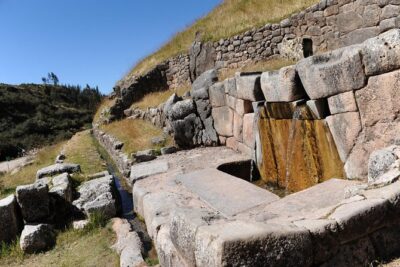
Cusco City Sightseeing and Sacsayhuaman Archeological Park Tour
Read our review →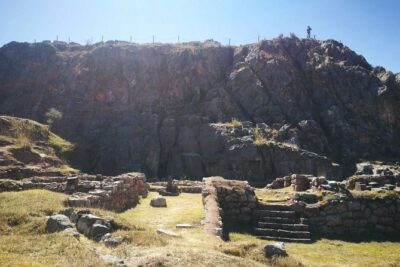
Horse Riding Chacan Mountain And Temple Of The Moon
Read our review →
Cusco 4-Hour Private Tour Including Sacsayhuaman and Qenqo
Read our review →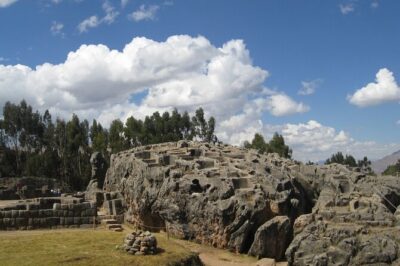
Sacsayhuaman Temple, Tambomachay and Puca Pucara Half-Day Tour
Read our review →Browse the lists this tour appears in