
Reviewed · HALF-DAY
Sillustani: Chullpas de Sillustani Afternoon Half-Day Tour
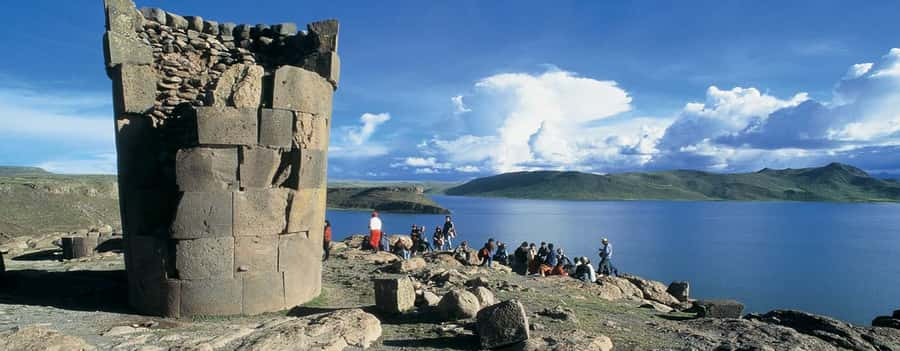
Sillustani’s stone funeral towers rise from a windswept peninsula beside Umayo Lagoon, giving this short trip a strong sense of place. The Chullpa del Lagarto, built from tightly fitted square stones, is the site’s star attraction, while the water and wide highland views make the visit feel far removed from Puno.
I like the clear, focused guiding and the chance to connect ancient Kolla, Tiahuanaco, and Inca customs with living Quechua and Aymara culture. I also like the easy afternoon timing, included entrance fees, and the quiet hour at the site. The main caution is weather: heavy rain can spoil the walk, and the published timing is not fully clear, with the tour described as six hours even though pickup is around 2:00 PM and arrival back in Puno is around 5:00 PM.
Key points at a glance
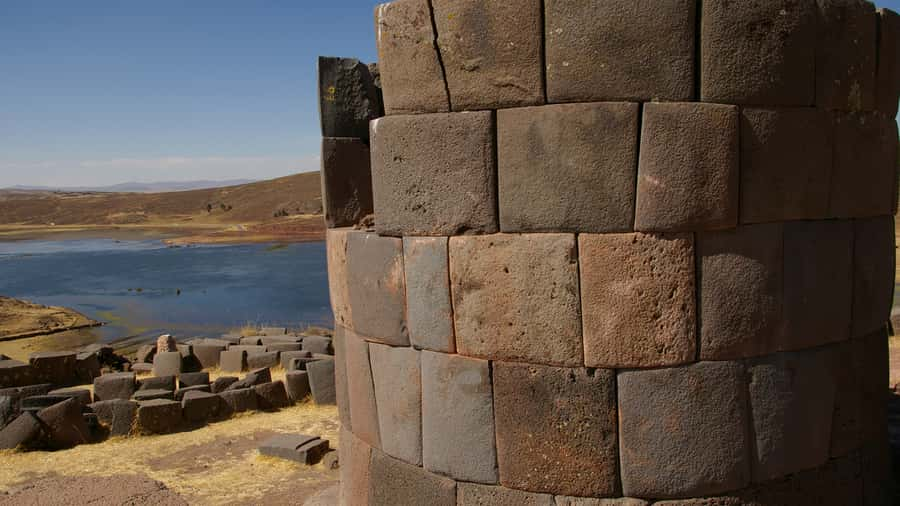
- The Chullpa del Lagarto is Sillustani’s main sight, a tall Inca-era funerary tower built with precisely fitted square stones.
- Umayo Lagoon gives the ruins their setting, with reflections of the sky and an island reserved for local vicuñas.
- The visit to the archaeological complex takes about one hour, leaving a compact but useful introduction to the site.
- A guide keeps the history focused, explains key differences between Quechua and Aymara traditions, and allows time for photographs.
- The $45 price includes hotel pickup, transport, entrance fees, and a professional guide, but no food.
- Rain matters here, since much of the appeal comes from being outdoors on open, uneven ground.
Sillustani’s towers beside Umayo Lagoon
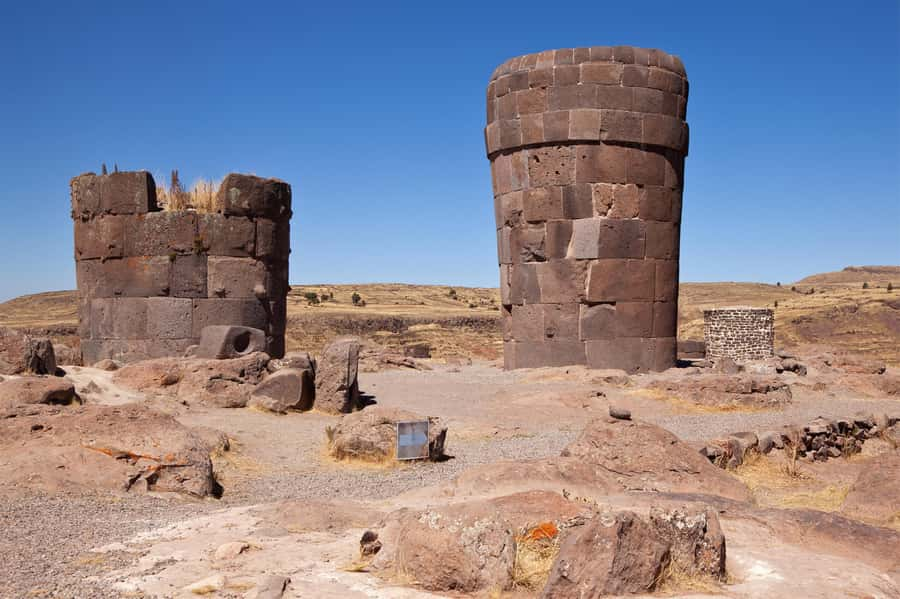
Sillustani is an ancient cemetery, not a city or temple complex. Its tall chullpas are circular stone towers built to hold the remains of important authorities from the Collao region of the Altiplano.
Some towers reach about 12 meters high. Their unusual shape catches your eye at once: the base is narrower than the upper section, so the walls angle slightly outward as they rise. This design is one of the first details your guide will likely point out, since it gives the towers a distinctive profile against the open sky.
The site’s setting is just as important as the masonry. Umayo Lagoon lies beside the archaeological complex, reflecting the blue sky and white clouds often associated with the high plains around Puno. An island in the lagoon serves as a reserve for vicuñas, adding a living element to a place otherwise dominated by stone and burial tradition.
I like this combination because Sillustani does not rely on one big monument alone. You get funerary architecture, a ceremonial setting, open water, and high-altitude scenery in one short stop. The result is more peaceful than dramatic, though that depends heavily on weather and visibility.
A few more Puno & Lake Titicaca days worth weighing up
- From Puno: Floating Islands of the Uros Half-Day Tour
★ 4.4 · 394 reviews - Sacsayhuaman Temple, Tambomachay and Puca Pucara Half-Day Tour
★ 4.5 · 59 reviews - From Puno: Uros floating islands half Day tour
★ 3.9 · 16 reviews
From Puno to the Collao cemetery
Pickup is scheduled from your Puno hotel at about 2:00 PM. Sillustani is roughly 34 kilometers from the city, so this is an easy way to reach the site without arranging separate transport or buying entrance tickets on your own.
For hotels outside Puno’s city center, the operator provides a meeting point instead of door-to-door pickup. Check this before booking if your accommodation is on the edge of town. It is a small detail, but it can affect your afternoon plans.
The transport is included, as are all entrance fees and a professional guide. That makes the $45 price easier to judge. You are not paying only for a ride to the ruins. The fee covers the outward and return journey, site admission, and a guide who gives the stones historical meaning.
The timing deserves a careful look. The experience is advertised as six hours, but the detailed schedule says pickup around 2:00 PM, about one hour at Sillustani, and arrival back in Puno around 5:00 PM. Those details suggest a shorter afternoon outing. I would confirm the exact departure and return time when you check availability, especially if you have a bus, train, or evening meal booked.
Reading the chullpas without rushing
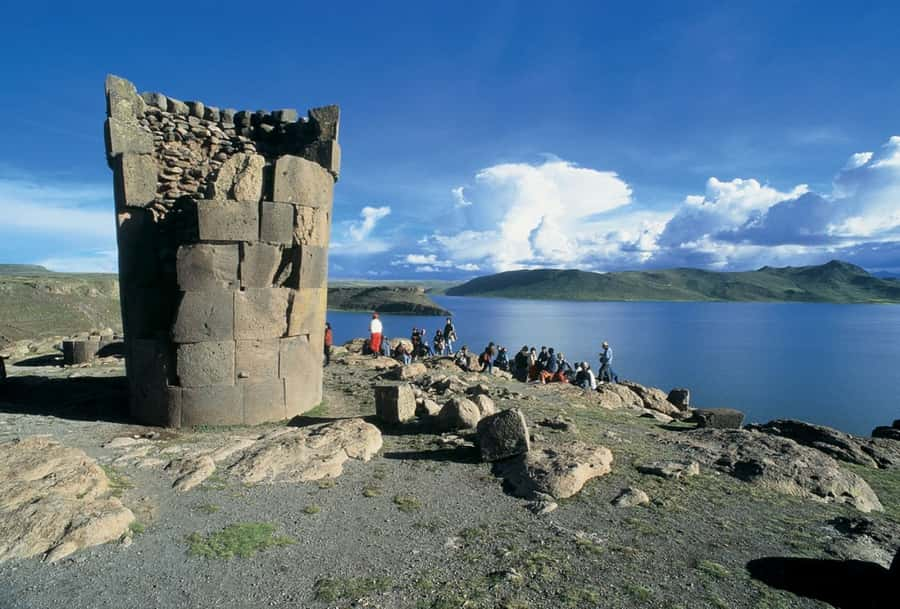
The Sillustani visit itself takes about one hour. That is enough time for a guided explanation, a walk around the principal towers, photographs, and perhaps a look at local goods, but it is not a long archaeological study.
The guide’s role matters here. A good explanation helps you see that the chullpas were not simply large tombs. They were built for principal authorities, giving the cemetery a ceremonial and political meaning as well as a funerary one.
One guide on this outing was praised for being concise, encouraging questions, and keeping the group on track without making the visit feel hurried. That is a useful balance at Sillustani. You need context, but you also need time to look carefully at the stonework and take in the setting.
The guide also explains similarities and differences between Quechua and Aymara languages and ethnic groups still found around Puno. That connection helps prevent the site from feeling like an isolated relic. The ancient cultures belong to a region with living communities and continuing traditions.
You should expect information rather than a staged performance. The attraction is the place itself, and the guide’s job is to help you notice details that would otherwise pass quickly.
The Chullpa del Lagarto and its damaged past
The most famous tower at Sillustani is the Chullpa del Lagarto, also called the lizard chullpa. It is the tallest chullpa in the complex and dates from the Inca period.
Its square stones fit together with striking precision. This is the sort of detail worth seeing in person, since photographs can show the shape but not always the care taken in the masonry. The tower’s slightly unusual form and tight joints offer a clear reminder of the engineering skill used by Andean builders.
The tower was damaged at the start of the 19th century by huaqueros, people who looted archaeological sites in search of valuables. That history adds a less comfortable layer to the visit. Sillustani is not an untouched monument. Some of what you see has been altered or lost because people valued the contents of the tombs more than the site itself.
I find this useful context because it keeps the visit grounded. The chullpas are beautiful, but they also carry evidence of burial practices, power, loss, and later looting. Your guide can help place the damage within the site’s wider story.
Same base, a completely different kind of day:
- From Puno: Uros, Amantaní & Taquile Islands 2-Day Tour
★ 4.5 · 452 reviews - Lake Titicaca 2-Day Tour to Uros, Amantani and Taquile
★ 4.4 · 199 reviews - Puno: Full-Day Tour of Lake Titicaca and Uros & Taquile
★ 4.4 · 178 reviews - Puno: Full-Day Route of the Sun Tour to Cusco with Lunch
★ 4.7 · 131 reviews
Umayo Lagoon and the open Altiplano
After examining the towers, give yourself time to look outward. Umayo Lagoon is not just background scenery. It was part of the setting chosen for the cemetery, and it changes the mood of the visit.
The lagoon can reflect the sky and clouds, creating a calm contrast to the rough stone towers. An island in the water is protected as a reserve for vicuñas, though the information provided does not promise close sightings. Think of the island as part of the ecological setting, not as a guaranteed wildlife stop.
The open views also mean there is little shelter. On a clear afternoon, that makes the site feel spacious and peaceful. In rain, wind, or low visibility, the same openness can make the walk less pleasant.
One visit was badly affected by intense rain. The practical lesson is simple: bring comfortable clothing that can handle changing conditions, and do not treat the weather as a minor detail. The site is outdoors, and a wet hour can reduce both comfort and the quality of your photographs.
A concern was also raised about being dropped closer to the site during severe rain. That is not presented as a standard feature, so you should not count on special weather handling. If the forecast looks poor, use the flexible cancellation policy or ask about changing dates before the 24-hour cutoff.
The small museum near Sillustani
A short distance from the archaeological complex is a site museum. It preserves pieces connected with the Kolla, Tiahuanaco, and Inca cultures.
The museum is useful because it gives you objects to examine after seeing the large towers. At the ruins, the scale and setting can dominate your attention. In the museum, smaller pieces can help connect the cemetery to the people and cultures that shaped the region.
Do not expect a full museum tour to replace the archaeological visit. The main experience remains outdoors at the chullpas and lagoon. Still, the museum adds context, especially if you want more than photographs and a quick explanation of the tower shapes.
The cultural terms can be confusing at first, particularly when several Andean groups and historical periods overlap. This is another reason the guide adds value. A clear explanation of Kolla, Tiahuanaco, Inca, Quechua, and Aymara references can give you a better frame for what you are seeing without requiring prior study.
What the $45 price really covers
At $45 per person, this is a reasonably complete half-day package for someone staying in Puno. Hotel pickup, transport, entrance fees, and a professional guide are included. You do not need to arrange a taxi to the site or handle admission separately.
Meals are not included, but the outing is in the afternoon and the visit is short. Eat before pickup or plan a meal after returning to Puno. Accommodation is also not part of the price, which is obvious but worth noting if you are comparing full-day packages.
The strongest value comes from convenience and explanation. If you only want a taxi ride and a few photographs, the price may feel high. If you want transport, admission, and a guide who explains the ceremonial purpose of the towers and the regional cultures, the package is easier to justify.
The small group details are not provided, so I would not book this expecting a private visit or a guaranteed intimate group. The guide is expected to work in English or Spanish, and the available feedback points to a relaxed but well-organized approach.
Free cancellation up to 24 hours before departure and the option to reserve without paying immediately make the booking less rigid. Those terms are especially useful in Puno, where weather can change the feel of an outdoor site quickly.
Walking, clothing, and weather
Wear comfortable shoes. The site involves walking around an archaeological complex, and the ground may not feel smooth or level. Comfortable clothing is also listed as essential, which makes sense for an exposed highland setting.
Large bags and luggage are not allowed. Bring only what you need for the afternoon, such as a small personal bag, water, a phone or camera, and weather protection. The tour information does not specify special equipment, so keep your packing simple.
The tour is not suitable for wheelchair users. If you have mobility concerns, ask the operator for exact ground conditions before booking, since the available information does not describe a step-free route.
Weather should guide your decision. In dry conditions, you can focus on the towers, lagoon, and photographs. In intense rain, the experience becomes more difficult, and the site may not feel worth the journey. The cancellation terms give you some protection, but you need to act at least 24 hours in advance.
Who will get the most from this outing
I would choose this tour if you have an afternoon in Puno and want a historical site beyond the better-known lake excursions. Sillustani offers a different kind of encounter with the region: no floating islands, no boat ride, and no household visit, but a quiet cemetery with impressive stonework and a striking natural setting.
It suits you if you enjoy archaeology, Andean history, photography, or short guided walks. It also works well if you want an introduction to the region’s Kolla, Tiahuanaco, Inca, Quechua, and Aymara connections without committing to a full-day excursion.
You may prefer another plan if your main goal is spending time with communities on Lake Titicaca, since this outing focuses on an archaeological complex. It is also less suitable if you need wheelchair access, are carrying luggage, or have a tightly fixed evening departure.
The guide’s concise style is a plus for me. You get key facts, room for questions, and free time for photographs rather than a long lecture. The guide also keeps the group moving, which matters when the official site visit is only about an hour.
Should you book the Sillustani afternoon tour?
Book it if you want a compact, well-organized visit to one of the Puno region’s most distinctive archaeological sites. The Chullpa del Lagarto, the unusual tower design, Umayo Lagoon, the nearby museum, and the chance to connect ancient and living Andean cultures give the afternoon real substance.
I would confirm the actual duration before paying, since the published six-hour length does not match the stated 2:00 PM to 5:00 PM schedule. I would also check the forecast and keep your bag small.
For $45, the tour is a sensible choice when you value included transport, admission, and guiding. Skip it only if you want a longer community-based lake experience, need wheelchair access, or cannot tolerate the risk of an outdoor visit in poor weather.
FAQ
Where is Sillustani located?
Sillustani is in Peru’s Puno Region, about 34 kilometers from the city of Puno.
What time does the tour start?
Hotel pickup is scheduled for around 2:00 PM. Starting times should be confirmed when checking availability.
How long does the tour last?
The activity is advertised as six hours, but the detailed schedule says pickup around 2:00 PM, about one hour at Sillustani, and arrival back in Puno around 5:00 PM. Confirm the exact timing before booking.
What languages does the guide speak?
The live guide is available in English or Spanish.
What is included in the price?
The $45 price includes pickup from your hotel in Puno, transport, all entrance fees, and a professional guide.
Are meals included?
No. Meals are not included in the tour.
Can I bring luggage or a large bag?
No. Luggage and large bags are not allowed. Comfortable shoes and comfortable clothing are recommended.
Just added around Puno & Lake Titicaca
- Uros Floating Islands Tour in Puno★ 3.7 · 9 reviews
- TRIP FROM PUNO TO CUSCO WITH THE ROUTE OF THE SUN★ 4.7 · 16 reviews
- Two Day Lake Titicaca Tour With Homestay★ 3.7 · 6 reviews
- Two-Day Tour to Uros with Amantani and Taquile from Puno★ 5.0 · 44 reviews
- Full Day Guided Tour of the Aymara Route from Puno★ 5.0 · 55 reviews
- Full-Day Tour of Uros, Taquile and Sillustani from Puno★ 5.0 · 41 reviews
- Full Day Lake Titicaca Tour to Uros and Taquile Islands★ 4.5 · 56 reviews
- Titicaca Lake 2 Day 1 Night from Cusco to Puno★ 4.5 · 33 reviews
Half-Day, compared.

Half-Day City Tour with Sacsayhuaman and Q’enco
Read our review →
Lima’s Vibrant Heritage: Exploring the City’s Landmarks Half-day
Read our review →
Pachacamac Ruins & Barranco Half-Day Guided Tour
Read our review →
Pre Inca Temple of Pachacamac Half-Day Tour from Lima
Read our review →
City Tour | Half-Day Tour to 4 Archaeological Sites
Read our review →
Essential Lima: Half-Day Tour with Catacombs & Pick-Up
Read our review →
Browse the lists this tour appears in