
Reviewed · MARAS & MORAY TOURS
Sacred Valley: Chinchero, Maras, Moray, Ollantaytambo Private or Small-Group
The best part of this full-day outing is the sharp change in scenery and purpose from stop to stop. You begin with living textile traditions in Chinchero, then see the Inca farming experiment at Moray, ancient salt pools at Maras, and massive stonework at Ollantaytambo. It is a useful introduction to the Sacred Valley because you get both working culture and major archaeological sites in one long day.
I like the small-group or private format, which gives you a better chance to ask questions and get help on uneven paths. I also like the guides’ attention to photography. Noe is praised for his explanations and picture-taking, while Guillermo is noted for adapting the day to the group. The main drawback is the length: you leave around 8 a.m., return around 4 or 5 p.m., and a delay or extra pickup can make the ride back feel long.
Key points to know before booking
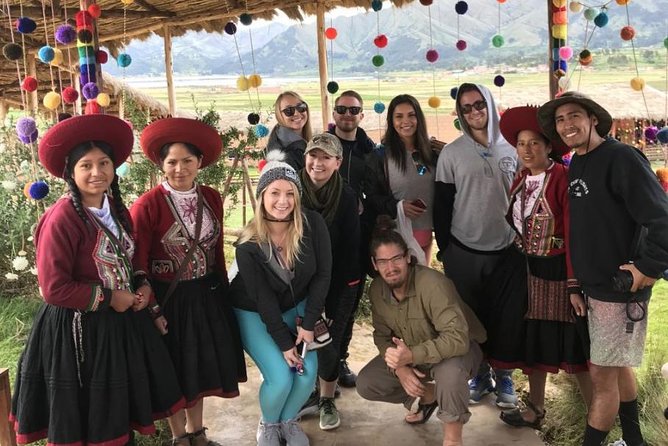
- Chinchero begins the day with living textile traditions, including local dyeing and weaving techniques.
- Moray’s circular terraces show Inca agricultural planning, not a typical fortress or temple.
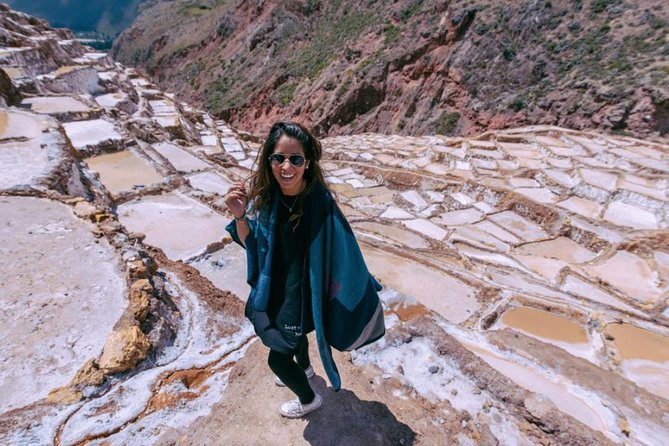
- Maras has about 3,000 salt pools, fed by a mountain stream and dating to pre-Inca times.
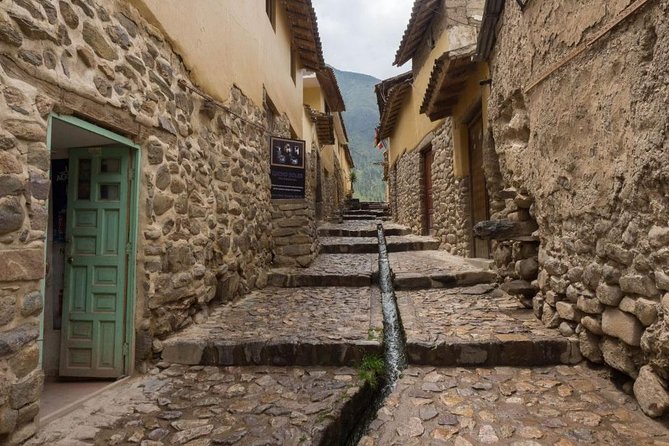
- Ollantaytambo brings the grand stonework, with terraces, steps, and the Temple of the Sun.
- The $148.72 price excludes a $30 entrance fee and lunch, so budget for both.
- A bilingual guide, private transport, first-aid kit, and oxygen are included, with hotel pickup in Cusco or the Sacred Valley.
Why this Sacred Valley route works so well
Many Sacred Valley outings focus on only one theme: ruins, scenery, markets, or food. This route gives you a little of each. It is not a relaxed village day. It is a packed circuit with several short stops, but the variety helps the long drive feel worthwhile.
You will spend around 8 to 9 hours on the road and at the sites. The schedule begins with an 8 a.m. pickup, then usually wraps up in Cusco around 4 or 5 p.m. Round-trip transfers are provided from hotels in Cusco or the Sacred Valley, which matters here because the route covers a wide area.
I see this as a good choice if you have limited time in the region and want a broad first look. You will not study each site at length, but you will leave with a much clearer sense of how the Incas used the mountains for farming, building, travel, and food production.
More Private Tours in the Sacred Valley
- Sacred Valley Full-Day Private Tour from Urubamba & Ollantaytambo
★ 5.0 · 112 reviews - Private Ollantaytambo, Pisac Ruins Tour with Farm Visit, Gourmet Picnic Lunch
★ 5.0 · 52 reviews - Sacred Valley Private Tour, Moray & Salt Mines Incluided
★ 5.0 · 41 reviews
Chinchero: textiles before ruins
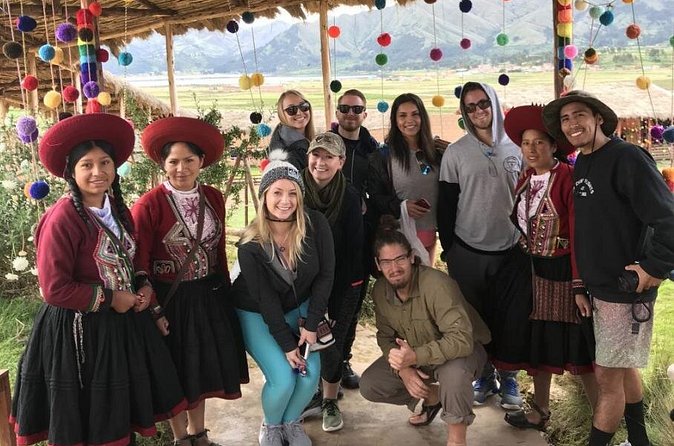
The first stop is the archaeological complex at Chinchero, reached after about 45 minutes of driving from Cusco. The focus here is not only on stone remains. You will learn from local women about traditional textile work, including old methods for coloring and making cloth.
That opening makes sense. Textiles were central to Andean life, and seeing the techniques helps you understand that Inca culture was not just about walls and royal buildings. You get a direct look at skills still practiced in the area.
Plan on about an hour here. The admission ticket is not included, and Chinchero is at high altitude, so take the first part of the morning at an easy pace. The description says most people can participate, but the full day includes walking over uneven ground and climbing steps. If you find climbing difficult, tell your guide early. One guest with mobility trouble received help from the guide and driver throughout the day.
The stop can also become a shopping opportunity. If you want to buy a textile, take a moment to ask about the material, dyes, and work involved. You will make a better choice than simply picking the brightest item on display.
Moray: an Inca farming experiment in the hills
From Chinchero, the drive continues toward Moray through open Sacred Valley scenery, with snow-capped Andean peaks appearing along the way. Moray is one of the most unusual stops because it does not look like a conventional ruin.
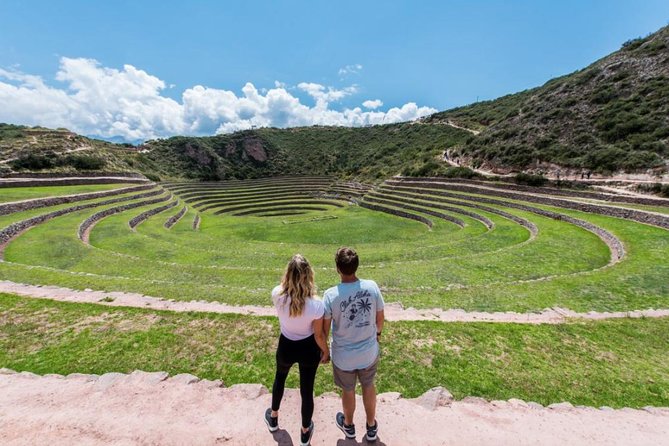
The Incas carved large, circular terraces into the earth, creating a bowl-shaped set of growing levels. The purpose was to test how crops responded to different temperatures and conditions. The terraces are a reminder that Inca engineering was practical as well as grand. Here, the mountain itself became a farming laboratory.
You get about 40 minutes at Moray. That is enough to see the shape of the site, hear the main explanation, and take photographs, but not enough for a slow walk around every viewpoint. Wear shoes that give you a steady footing, and keep your camera ready for the broad views beyond the terraces.
I like this stop because it breaks up the familiar pattern of temple, fortress, and plaza. If you are more interested in how people lived than in royal monuments, Moray may be one of the day’s most useful visits.
Maras: 3,000 salt pools fed by a mountain stream
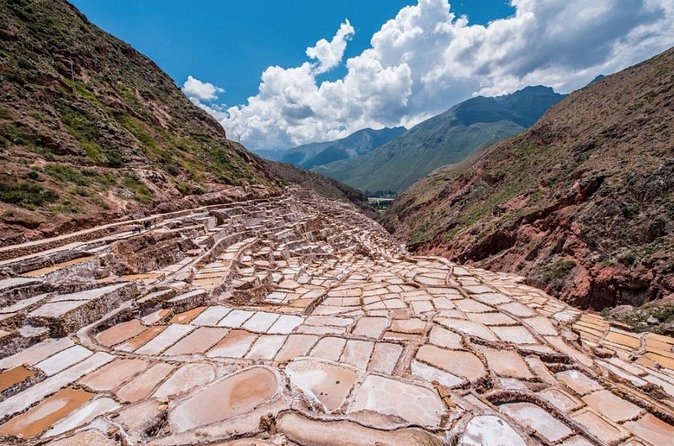
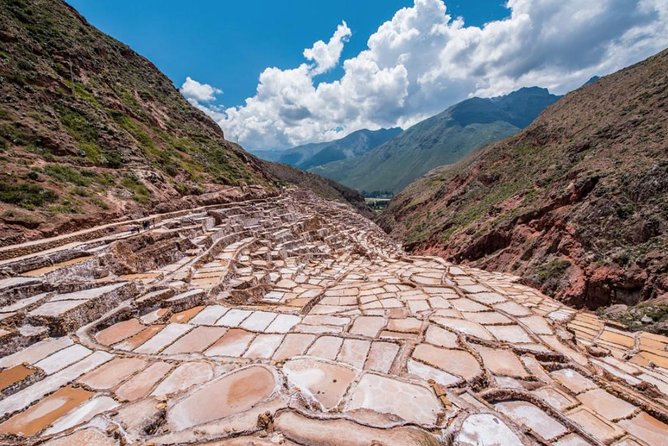
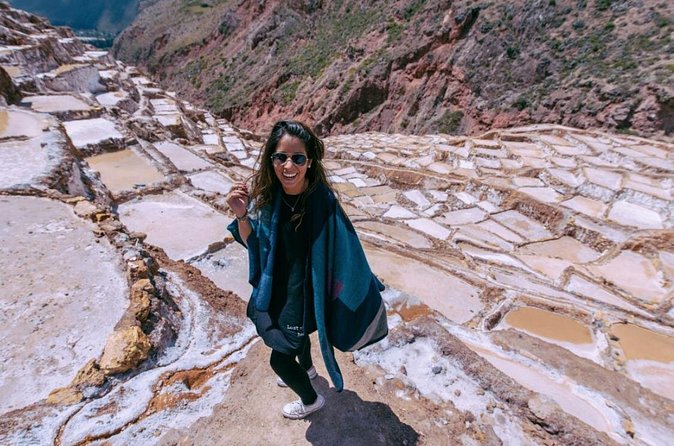
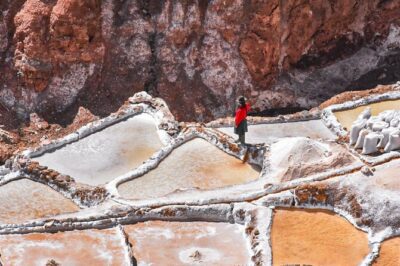
Maras is only about 15 minutes from Moray, so the route moves efficiently here. The salt mines date to pre-Inca times and consist of roughly 3,000 small pools cut into the mountainside. A mountain stream feeds the system, and each pool collects salt as the water evaporates.
The sight is striking because the pools spread across the slope in a tight patchwork of white and earthy tones. It is also a working place, not simply an abandoned archaeological site. The value of the guide is clear here because the physical view alone does not explain how the water moves from pool to pool or why the site mattered long before the Incas.
Expect about 40 minutes at Maras. The entrance fee is extra, as it is at the other sites. You should also expect some walking and uneven surfaces. The day is not designed as a slow photography visit, so use the first few minutes to listen to the explanation, then take your pictures.
Maras and Moray work well together. Moray shows how the Incas tested growing conditions. Maras shows how Andean communities gathered a basic food resource from the mountain. Both sites connect engineering to everyday survival.
More Maras salt pan and Moray trips:
- From Cusco: Sacred Valley & Maras Salt Mines Tour with Lunch
★ 4.8 · 2,227 reviews - From Cusco: Moray, Maras Salt Mines & Chinchero Weavers Tour
★ 4.8 · 1,925 reviews - Cusco: Sacred Valley, Pisac, Ollantaytambo, Salt Mines Moray
★ 4.6 · 1,058 reviews - Cusco:Chinchero,Moray & Salt Mines drop-off in Ollantaytambo
★ 4.8 · 793 reviews
Ollantaytambo: the day’s great stonework
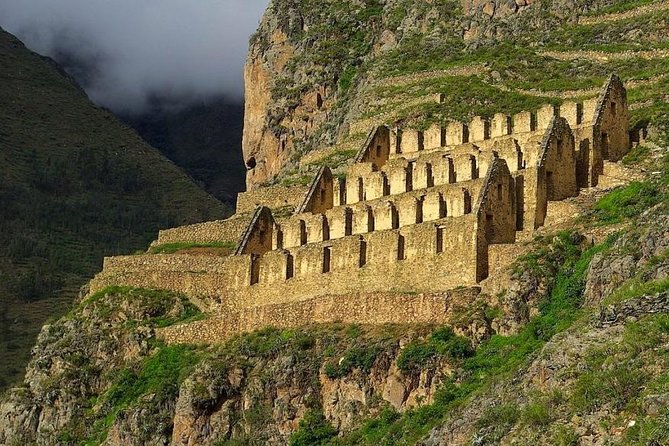
After Maras, the route continues for about 45 minutes to Ollantaytambo, the final major stop before the return to Cusco. Here the scale changes. Ollantaytambo is a massive Inca fortress and ceremonial site built into a hillside, with large terraces, long stairways, and huge stone blocks.
The site includes the Temple of the Sun and Manyaraqui Square. The terraces and steps rise toward the higher part of the complex, giving you a close look at the size and precision of the stonework. This is the stop where the Inca building tradition feels most monumental.
You have about 30 minutes listed for the visit, which is the shortest time at any major archaeological site on the route. That is the chief compromise. You will see the main structures and get a strong overview, but you will not have time to explore every corner or linger at each terrace.
If Ollantaytambo is your main reason for visiting the Sacred Valley, consider a longer dedicated visit on another day. If your goal is to sample several important places in one circuit, the short stop is understandable. The guide can help you focus on the Temple of the Sun, the square, and the most impressive stone features rather than trying to cover everything.
The guide can shape the quality of the day
The guide is one of the most important parts of this experience. You receive an English and Spanish bilingual guide, and the strongest feedback centers on clear explanations, useful help, and good photographs.
Noe is specifically praised for explaining the sites and taking photos. Guillermo is described in Spanish as a wonderful guide who was willing to adjust the day to help create a good experience. Guide assignments can vary, so you should not assume either person will lead your departure, but these names give you a sense of the service level the operator aims for.
The private format should also help. The booking information describes the activity as private, with only your group participating. At least one departure was combined with another person after a last-minute guide change, so absolute privacy may not hold in every situation. That appears to be an exception, but it is worth keeping in mind if the private label is your main reason for booking.
The driver matters too. The route uses mountain roads, and one account praised the driver’s calm handling of rockfalls along the road. That is a useful reminder that conditions in the Andes can change. Your driver and guide also carry a first-aid kit and oxygen.
Lunch, entrance fees, and the real price
The listed price is $148.72 per person. It covers private transportation and the bilingual guide, but not meals or admission. The entrance charge for Chinchero, Maras, Moray, Urubamba, and Ollantaytambo is listed as $30 per person.
That puts the known cost at about $178.72 per person before lunch. The final value depends on your group size and pickup point. For a private vehicle, a full day, a bilingual guide, and several major sites, the price can make sense if you want comfort and a direct route rather than arranging separate taxis and entrance tickets.
Lunch is bought separately at a typical Peruvian restaurant. One account describes a buffet with many choices, but the exact restaurant and menu are not specified. Plan to pay for lunch yourself and do not expect breakfast to be supplied either.
The route is not a budget half-day outing. It is a long, full-day experience with several admission charges. Still, it bundles transport between widely separated sites, which is where much of the practical value lies.
Timing, walking, and what to bring
The 8 a.m. start gives you a full day, but it also means you should be ready at your hotel on time. The return to Cusco is expected around 4 or 5 p.m. A delayed pickup or an extra passenger can extend the day, especially on the drive back.
You should plan for:
- Comfortable shoes for terraces, steps, and uneven surfaces
- Water and sun protection
- Money for the $30 entrance fee and lunch
- A light layer for changing mountain weather
- Space in your schedule for a late return
Most people can take part, but this is not a flat walking tour. Chinchero, Moray, Maras, and Ollantaytambo all involve outdoor walking, and Ollantaytambo includes steep terraces and steps. Tell the guide if you need a slower pace. The presence of oxygen and a first-aid kit is reassuring, but it does not remove the effects of altitude or replace medical preparation.
The scenery changes quickly, so keep your camera accessible. You will pass through open valleys and may see snow-capped Andean peaks between stops. The route itself is part of the experience, though the long drives can feel tiring by late afternoon.
Who should book this full-day outing
I would recommend it most strongly to first-time visitors who want to understand the Sacred Valley in one day. You get culture at Chinchero, agriculture at Moray, salt production at Maras, and monumental construction at Ollantaytambo. That combination gives you more context than a route that visits only ruins.
It also suits people who value a guide and driver over independent transport. The roads and distances make private transportation useful, and a guide can turn a short stop into a meaningful lesson.
You may want another plan if you prefer long visits at one or two sites. Thirty minutes at Ollantaytambo and 40 minutes at Moray or Maras will feel brief if you like detailed archaeology or slow photography. You should also think twice if a late return would cause a problem with another booking.
The route works for couples, families, and small groups who want personal attention. It is less suited to anyone seeking a quiet, unhurried day or a dedicated textile, food, or archaeology tour.
Should you book it?
Book this tour if you want a well-rounded Sacred Valley day with hotel transfers, a bilingual guide, and the convenience of seeing four very different places without arranging transport yourself. The guide service, thoughtful help with climbing, and attention to photographs add real value.
Skip it if you want to spend most of a day at Ollantaytambo or prefer to set your own pace. Also budget carefully: the advertised $148.72 does not include the $30 entrance fee, breakfast, or lunch.
For most first-time visitors with one open day from Cusco, I think the route is a strong choice. Just expect a long day, brief visits, and a possible delay on the road home.
FAQ
How long does the Sacred Valley tour last?
The tour lasts approximately 8 to 9 hours. Pickup is scheduled for about 8 a.m., with return to Cusco expected around 4 or 5 p.m.
Where can pickup and drop-off take place?
Round-trip transfers are provided from hotels in Cusco or the Sacred Valley.
Is the tour private?
The activity is described as private, with only your group participating. A small-group format is also presented, and one departure was combined with another person after a last-minute guide change.
What languages does the guide speak?
The guide is bilingual in English and Spanish.
Are entrance fees included?
No. The entrance fee for Chinchero, Maras, Moray, Urubamba, and Ollantaytambo is listed as $30 per person.
Is lunch included?
No. Lunch is not included. You can purchase lunch at a typical Peruvian restaurant during the day.
Are breakfast and transportation included?
Breakfast is not included. Private transportation is included, along with hotel transfers from Cusco or the Sacred Valley.
Can most people participate?
Most people can participate, but the route includes outdoor walking, uneven ground, terraces, and steps. A first-aid kit and oxygen are carried during the tour.
Just added around Sacred Valley
- Zipline over the Sacred Valley Trip★ 5.0 · 11 reviews
- Visit Pisac from Cusco: Private Transport★ 4.6 · 9 reviews
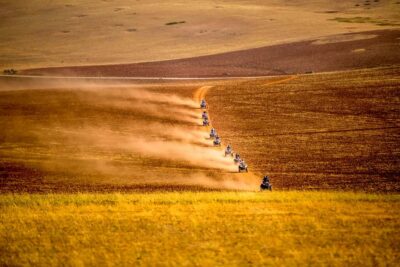
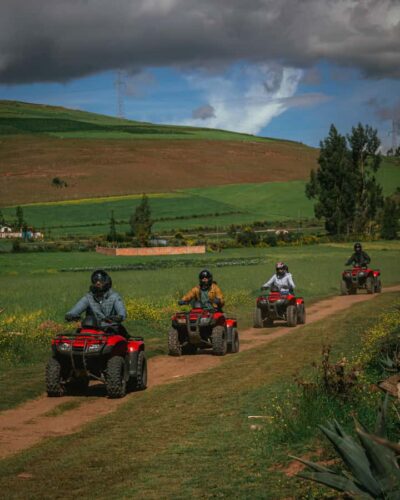
- Maras and Huaypo lagoon by ATV from Cuzco | Local Operator★ 4.7 · 4 reviews
- Transfer from Cusco to Ollantaytambo★ 5.0 · 30 reviews
- Sacred Valley VIP Tour with Maras and Moray from Cusco★ 4.5 · 35 reviews
- Sacred Valley Private Tour, Moray & Salt Mines Incluided★ 5.0 · 41 reviews
- Salt Mines(Maras),Moray and Chincheros★ 5.0 · 41 reviews
- Excursion to Sacred Valley of the Incas tour – Private service.★ 5.0 · 35 reviews
Maras & Moray Tours, compared.
Sacred Valley & Maras Salt Mines Tour with Lunch
Read our review →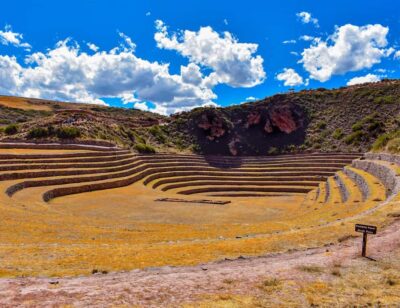
Moray, Maras Salt Mines & Chinchero Weavers Tour
Read our review →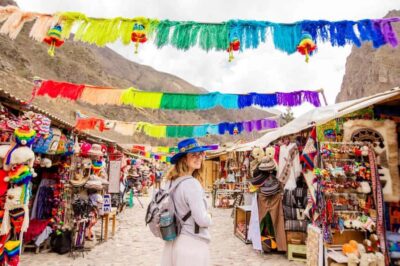
Sacred Valley, Pisac, Ollantaytambo, Salt Mines Moray
Read our review →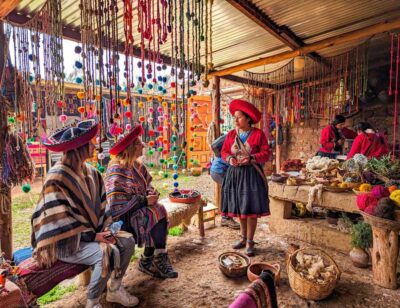
Chinchero,Moray & Salt Mines drop-off in Ollantaytambo
Read our review →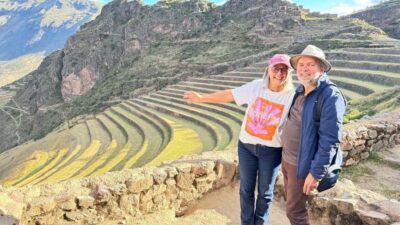
Moray, Maras Salt Mines & Chinchero Weavers Half-Day
Read our review →Browse the lists this tour appears in