
Reviewed · HALF-DAY
Half-Day Local Communities and Social Tour in Lima
Lima’s Cementerio de Nueva Esperanza is the striking first glimpse of this tour. Spread across the hills beside crowded settlements, it is a huge, colorful cemetery shaped by Andean burial customs, Catholic symbols, and local beliefs. I like the chance to see this side of Lima with a guide such as Alfredo, then continue into a neighborhood most visitors would not reach on their own.
I especially like the home-cooked lunch and the direct conversations with local residents. I also like that part of the price supports a social project for children. The main drawback is the traffic: the drive can take much longer than expected, and the visit includes uneven ground, strong sun, and difficult sights that may not suit every family.
Key points to know before you book
- Nueva Esperanza Cemetery: Visit one of the world’s largest cemeteries, set among Lima’s hills and informal settlements.
- A local welcome: Meet a craft worker, a home cook, community leaders, and a neighborhood guide.
- Lunch in a family home: Eat a homemade Peruvian meal prepared by a local resident.
- A social purpose: Your booking includes a contribution to a community project supporting local children.
- Private and personal: Only your own group takes part, with hotel pickup and private transport.
- Allow extra time: The tour lasts about 5 to 6 hours, but Lima traffic can stretch the transfers.
A different first look at Lima
Many visits to Lima stay inside Miraflores, Barranco, and the historic center. Those districts are worth your time, but they show only one part of the city. This tour takes you toward the hills and human settlements around San Juan de Miraflores, where daily life is shaped by limited water, rough roads, homemade buildings, and strong neighborhood networks.
That change of setting is the point. You are not simply looking at poor housing from a vehicle window. You are introduced to people who have built small businesses, organized local activities, and worked to improve life for children and families around them.
The experience is best understood as a guided social visit, not a sightseeing ride with a few quick photo stops. Your bilingual guide handles the wider context and translation, while a local guide leads you through the neighborhood. That second voice matters. It gives you a closer sense of how the community sees its own work and challenges.
The private format also helps. Your group does not have to follow a large busload of people, and you can ask questions as you go. Past groups have been as small as four people, creating a more relaxed setting for conversation.
A few more Lima days worth weighing up
- Lima’s Vibrant Heritage: Exploring the City’s Landmarks Half-day
★ 4.5 · 581 reviews - Lima: Pachacamac Ruins & Barranco Half-Day Guided Tour
★ 4.6 · 296 reviews - Pre Inca Temple of Pachacamac Half-Day Tour from Lima
★ 4.5 · 283 reviews
First stop: Cementerio de Nueva Esperanza
After roughly 50 minutes by car, depending on traffic, you reach Cementerio de Nueva Esperanza. It is described as the second-largest cemetery in the world, with around one million people buried there, and it is far removed from the tidy, landscaped cemeteries many visitors know.
The cemetery climbs through the hills beside homes and dusty paths. Graves and crosses fill the slopes, often marked with bright colors, flowers, personal objects, and religious items. From higher points, you can look across the cemetery and the surrounding settlements. Photographers will find plenty to study, but the place deserves more than a quick picture.
Your guide explains Andean burial customs and the way Catholic practice mixes with older local beliefs. One detail shared during the visit is the importance of November 1, when families visit loved ones, bring food and drink, and spend time together. The day is less about silent separation and more about maintaining a bond with the dead.
You may also hear about herbs and objects associated with local witchcraft traditions. The cemetery offers a useful reminder that religion in Peru is not always divided into neat categories. Catholic crosses can exist alongside older customs and personal rituals.
The stop lasts about 30 minutes. That is enough for an introduction, a short walk, and photographs, but not enough for a full exploration of a place this large. The paths can be uneven, and you should wear sneakers or sturdy walking shoes. Sandals are a poor choice here.
The cemetery can also be emotionally demanding. You are entering a working burial ground, not a theme park. Stay respectful, ask before photographing people, and listen carefully when your guide explains the customs.
Into the hills of San Juan de Miraflores
From the cemetery, the tour continues into a settlement in San Juan de Miraflores. This is where the experience becomes more personal and less formal. You walk through a neighborhood built through years of effort, often with simple materials and limited services.
One early visit is to a local woman who runs a small business and artisan workshop from her home. She explains how she developed her work and sells handmade items. A direct purchase can be a practical way to support her income, though buying is not the main purpose of the stop.
One family visit described a home with a dirt floor and walls made from rock. Another home used boards with gaps between them, allowing daylight and dust inside. These details can be difficult to see, especially if you have come from Lima’s polished hotels and restaurants. The tour does not soften the hardship, but it also does not reduce residents to their poverty.
That balance is important. You meet people who are working, organizing, cooking, teaching, and helping neighbors. The point is not to feel sorry for them for a few hours. It is to understand how communities grow when public services and household resources are limited.
Water is one example of the pressure families face. Lima sits in a desert, and water access can be irregular in settlements on the hills. A family described receiving two large containers of water each week, with access tied to proof of home ownership. Details like this help explain why daily chores can take far more time and effort here than they do in wealthier districts.
Lunch prepared by a local cook
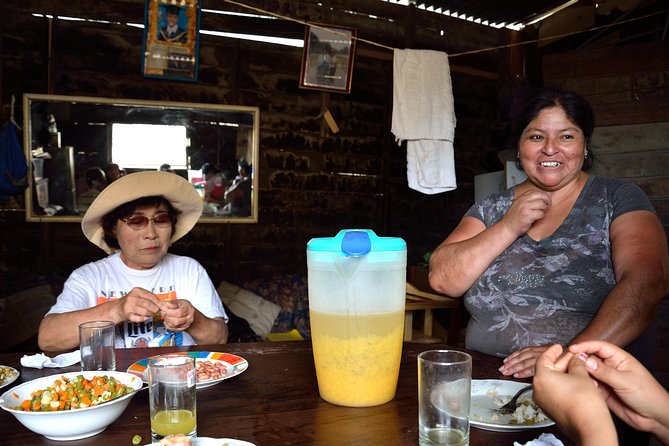
The meal is one of the strongest parts of the tour. A local cook prepares lunch in her home, giving you the chance to eat in a family setting rather than at a restaurant designed for visitors.
A meal may include chicken and rice, along with a sweet red corn drink. Exact dishes can vary, so tell the provider about food allergies, dietary needs, or other restrictions when booking. Lunch is included in the price, but its value goes beyond the food itself. You are supporting the person who prepared it and hearing her story directly.
The cook’s work may also reach beyond your table. One account describes a woman who rises early to prepare breakfast for local children and older people who cannot afford to eat. Her kitchen becomes part of a wider support system, not simply a place where a visitor receives a meal.
You should approach lunch with respect and curiosity. It may not have the polish or privacy of a restaurant. Homes in the settlement can be basic, and flies or dust may be part of the setting. For me, that is not a flaw to hide. It is part of understanding the conditions in which the meal was prepared.
If you want a polished culinary tour, choose a food-focused activity in central Lima. If you want to connect food with the person and place behind it, this lunch offers much more.
Same base, a completely different kind of day:
- Lima: Ultimate Peruvian Food Tour
★ 4.9 · 700 reviews - Private transfers from Lima Airport or to Lima Airport
★ 4.0 · 359 reviews - Lima: The Charm of Barranco & Pre Inca Pyramid in Miraflores
★ 4.9 · 322 reviews - Lima: Magic Water Circuit Light Show Tour with Pickup
★ 4.9 · 251 reviews
Meeting community leaders and local families
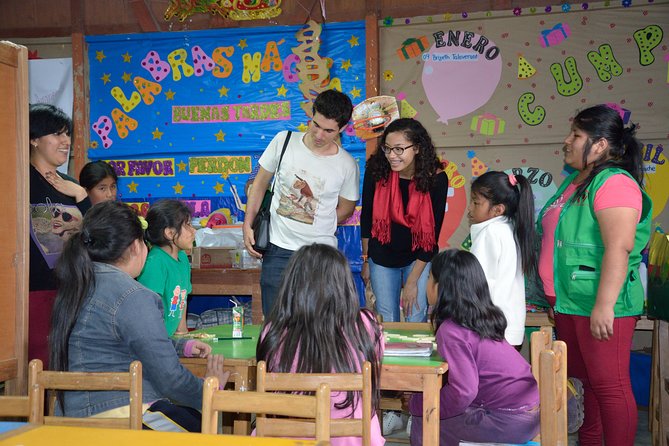
After lunch, the local guide walks you through the neighborhood and explains how residents have organized themselves. You meet community leaders and hear about projects intended to improve conditions for local families.
The tour supports a social initiative connected with children in the area. The supplied details identify work with children between 6 and 12 years old, and some visits may coincide with activities involving participating children. These activities are not guaranteed, so you should not book the tour expecting a school visit or a children’s performance.
One project described during the tour provides a place where children can play, meet adults, and talk about problems. It also connects with educational support. A local tutor named Elizabeth was described as helping children while pursuing her own education, showing how community programs can depend on people who are both participants and leaders.
This section gives the tour its strongest human focus. You hear about the challenges, but also about people who keep creating solutions with limited funds. Your payment includes a contribution to the social project, so the visit has a practical purpose beyond sightseeing.
Still, keep your expectations realistic. This is not a volunteer day, and you are not promised a chance to teach, donate supplies, or work directly with children. You are there to listen, learn, and support the project through the booking fee.
What the price includes at $182
At $182 per person, this is an expensive half-day outing compared with a standard Lima city tour. The value depends on what you want from the visit.
The price includes private transport, hotel pickup and drop-off, a bilingual guide, a local guide, lunch, admission to the cemetery, and a contribution to the social project. You are also paying for a private experience rather than joining a large group. For two people, the cost may feel high, but private transport and personal guiding add real value in an area that can be hard to navigate alone.
You are not paying only for a list of sights. You are paying for access arranged through local relationships, translation during personal conversations, and a visit designed to direct some money back into the community. That does not make the price automatically right for everyone, but it explains why it costs more than a basic half-day city excursion.
I would choose this tour if you have already seen Lima’s main landmarks and want context about how many residents live beyond the tourist districts. I would skip it if you mainly want architecture, food tastings, or a relaxed morning with little driving.
Timing, traffic, and physical effort
The stated duration is about 5 to 6 hours. That includes a drive of roughly 50 minutes to the first stop, but Lima traffic can change the schedule sharply. If you have a flight, train, bus, or fixed reservation afterward, tell the provider when booking and leave a generous buffer.
You will walk on uneven terrain, including hill paths and rough neighborhood surfaces. A moderate level of fitness is recommended. Serious back or neck problems may make the tour unsuitable, and you should raise any physical restrictions before confirming.
The sun can be strong even under Lima’s frequent cloud cover. It is especially intense from December through April. Bring water, sunscreen, and a hat. Comfortable sneakers are better than sandals.
The tour is private, but that does not mean it is fully flexible at every moment. The cemetery visit, local meetings, lunch, and community walk are tied to other people’s schedules. Arrive ready to follow the guide’s pace and show courtesy in private homes.
Is this a good choice for families?
The tour can work for older children and teenagers who are ready to discuss poverty, housing, water access, and community responsibility in a serious way. One family found that children aged 10 and 13 took away strong memories from the visit, especially because the experience showed them a side of Lima far removed from expensive hotels and restaurants.
That said, this is not a light family activity. Children may see very basic housing, working conditions, and difficult social problems. You should prepare them in advance and make clear that residents are not objects for photographs or entertainment.
For adults, the same rule applies. Ask questions, but do not treat homes and personal stories as a display. The best approach is respectful, curious, and aware that you are being welcomed into someone else’s community.
Safety, respect, and responsible photography
The tour is designed to take you into a less familiar part of Lima with a guide and driver. You should follow their instructions, stay with the group, and avoid wandering away for photographs.
Ask before photographing people, homes, workshops, or children. A photo of the cemetery’s colorful details may be appropriate, but a close portrait of a grieving family is not. When you buy a craft item, eat lunch, or listen to a personal story, remember that the exchange should be respectful rather than transactional.
The tour’s social aim is a clear strength, but no short visit can explain every part of life in a large settlement. You will receive an introduction, not a complete picture of Lima’s inequality or community work. The experience is most useful when you treat it as one carefully guided perspective.
Who should book this Lima tour?
Book it if you want:
- A private tour with hotel pickup and personal translation
- A closer look at life beyond Miraflores and Barranco
- A cemetery visit with Andean and Catholic cultural context
- A home-cooked meal connected to a local family
- A way to support a children’s social project while sightseeing
- Direct conversations with residents and community leaders
Think twice if you dislike long vehicle transfers, uneven walking, strong sun, or emotionally serious subjects. You should also skip it if your main goal is a relaxed food tour or a quick checklist of Lima landmarks.
Should you book the Half-Day Local Communities and Social Tour?
I would recommend this tour to you if authentic contact matters more than comfort and polish. The cemetery is memorable, the lunch adds a personal touch, and the local guide helps turn a difficult subject into a human one. Alfredo, who has led the tour for some groups, is praised for clear explanations, patience, and careful translation.
The strongest reason to book is the combination of access and purpose. You see a part of Lima that is hard to reach alone, meet people who are building businesses and community programs, and contribute to work with local children.
At $182, it is not a bargain half-day outing. But for a private tour that includes transport, lunch, two guides, and a social contribution, the price can be fair if you value meaningful contact over standard sightseeing. Leave plenty of time around the tour, bring water and sturdy shoes, and arrive ready to listen.
FAQ
How long does the tour last?
The experience lasts approximately 5 to 6 hours.
Is hotel pickup included?
Yes. Hotel pickup and drop-off are included.
Is this a private tour?
Yes. Only your own group participates.
What is included in the price?
The price includes lunch, a local guide, private transportation, hotel pickup and drop-off, and a contribution to the social project visited during the tour.
Is lunch prepared by a local cook?
Yes. A local resident prepares a homemade Peruvian lunch in her home.
How much walking is involved?
A small amount of walking on uneven terrain is involved. Comfortable shoes or sneakers are recommended, and sandals are not advised.
What should I bring?
Bring water, sunscreen, and a hat. The sun can be strong even when the sky is cloudy.
Can the tour accommodate food or physical restrictions?
You should advise the provider of any food or physical restrictions when booking.
Can I cancel for a full refund?
Yes. You can cancel at least 24 hours before the start time for a full refund. Cancellations or changes made less than 24 hours before the start time are not accepted for a refund.
Just added around Lima
- Guided Tours in Colonial and Modern Lima★ 5.0 · 54 reviews
- Full Day Pilgrims★ 5.0 · 28 reviews
- Tour Miraflores + Fotografía Profesional★ 5.0 · 47 reviews
- Lima Airport Transfers by SUV/Van★ 5.0 · 34 reviews
- Sandboarding and Off Road in Lima (National Park Lomas de Ancón)★ 5.0 · 54 reviews
- Lima City tour and Catacombs Museum (04 hours) Private Tour with guide in Lima★ 5.0 · 32 reviews
- In Lima: Sandboarding Off Road Half Day!!★ 5.0 · 36 reviews
- Peruvian Experience: Interactive, Cultural & Gastronomic Guided Tour★ 5.0 · 42 reviews
Half-Day, compared.
Half-Day City Tour with Sacsayhuaman and Q’enco
Read our review →
Lima’s Vibrant Heritage: Exploring the City’s Landmarks Half-day
Read our review →
Pachacamac Ruins & Barranco Half-Day Guided Tour
Read our review →
Pre Inca Temple of Pachacamac Half-Day Tour from Lima
Read our review →
City Tour | Half-Day Tour to 4 Archaeological Sites
Read our review →
Essential Lima: Half-Day Tour with Catacombs & Pick-Up
Read our review →
Browse the lists this tour appears in