
Reviewed · MARAS & MORAY TOURS
From Cusco: Chinchero, Moray, Maras, Ollantaytambo, Pisaq
The best thing about this day is its range. In one long circuit from Cusco, you see Chinchero textiles, Moray’s strange circular terraces, the Maras salt pans, Ollantaytambo’s massive stonework, and Pisaq’s mountain ruins and cemetery. It gives you a strong first look at the Sacred Valley without having to arrange several separate trips.
I like the small vehicle, limited to 18 people, and the bilingual guide who explains both the Inca sites and Quechua craft traditions. I also like that lunch is included and offers vegetarian choices. The catch is time: five major stops make this a quick tour, with some visits lasting only 30 or 40 minutes.
Key points to know before booking
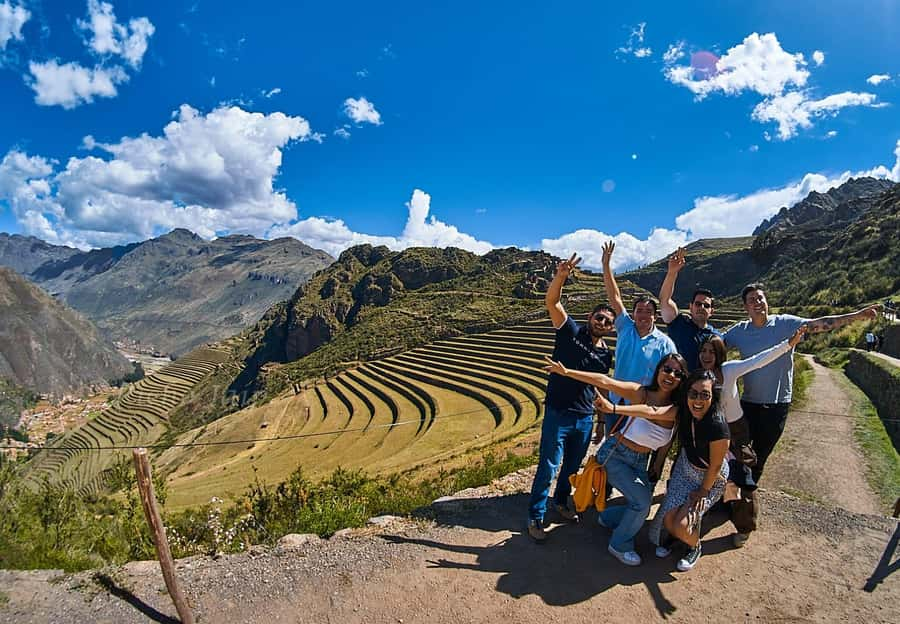
- Five major Sacred Valley stops in one day: Chinchero, Moray, Maras, Ollantaytambo, and Pisaq.
- A practical introduction to Inca sites: You get guided explanations at every archaeological stop rather than simply being dropped off.
- Chinchero includes a textile center: See how alpaca fiber becomes finished cloth and learn about local Quechua craft traditions.
- Lunch is included in Urubamba: The Andean buffet has a vegetarian option, though drinks and snacks cost extra.
- Budget for 90 soles in entrance fees: The tourist ticket is 70 soles, and Maras requires a separate 20-sol ticket.
- Expect a full and fast day: Transport, site visits, and lunch fill roughly 12 hours, with drop-off near Cusco’s main square.
Five Sacred Valley sights in one long day
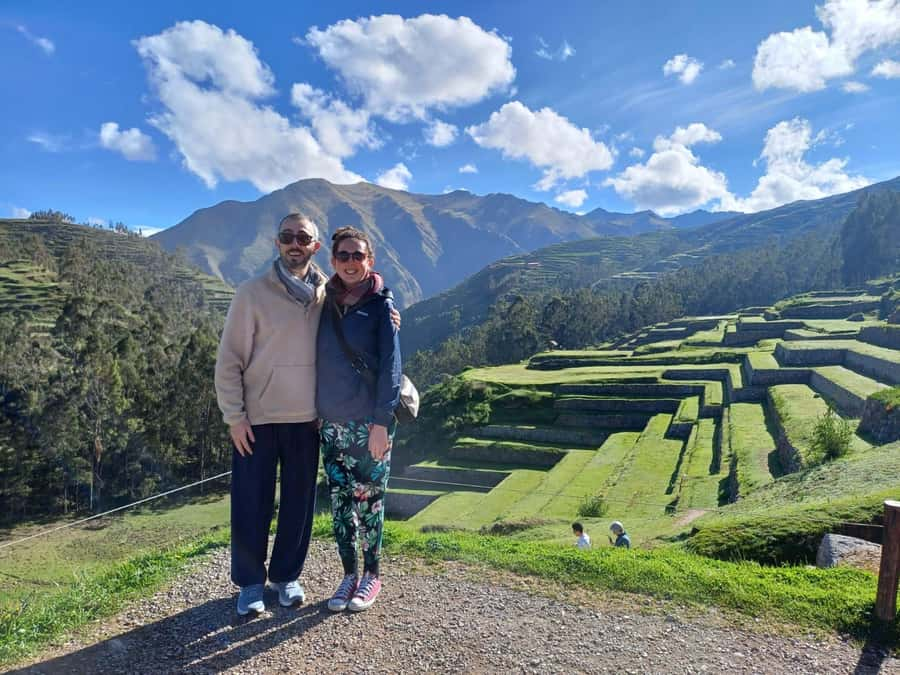
This tour is built for you if you want to see the main sights around Cusco before deciding where to spend more time later. It covers a lot of ground, but the tradeoff is clear: you gain variety and convenience, while giving up the slower pace of a private or single-site outing.
Pickup is offered from hotels and Airbnbs in Cusco’s historic center, along with several listed central meeting points. The exact starting time depends on availability. From there, the vehicle heads toward Chinchero, with the first ride taking about 40 minutes in the route schedule and the general trip description allowing roughly an hour.
The vehicle holds no more than 18 people. That is still a group, but it is more manageable than a large coach. It also matters on a day with many stops, since a smaller group usually makes boarding and meeting up less cumbersome.
The route includes winding roads and several changes in elevation. One guest specifically praised the driver’s handling of the difficult curves, so I would not treat the driving time as wasted time. Still, if you get carsick, sit near the front, carry water, and bring any medication you normally use.
More Maras salt pan and Moray trips:
- From Cusco: Sacred Valley & Maras Salt Mines Tour with Lunch
★ 4.8 · 2,227 reviews - From Cusco: Moray, Maras Salt Mines & Chinchero Weavers Tour
★ 4.8 · 1,925 reviews - Cusco: Sacred Valley, Pisac, Ollantaytambo, Salt Mines Moray
★ 4.6 · 1,058 reviews
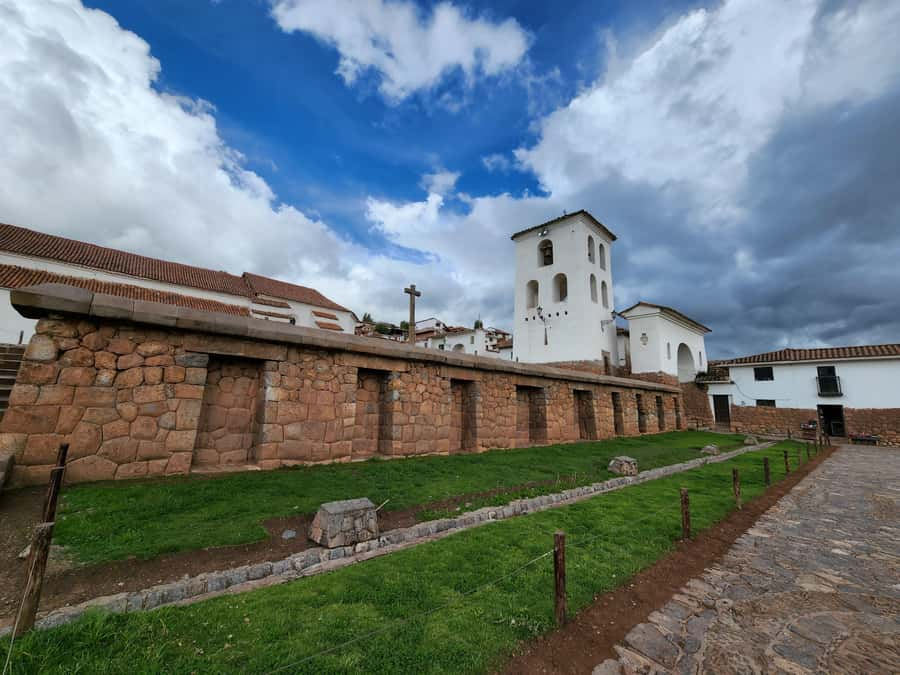
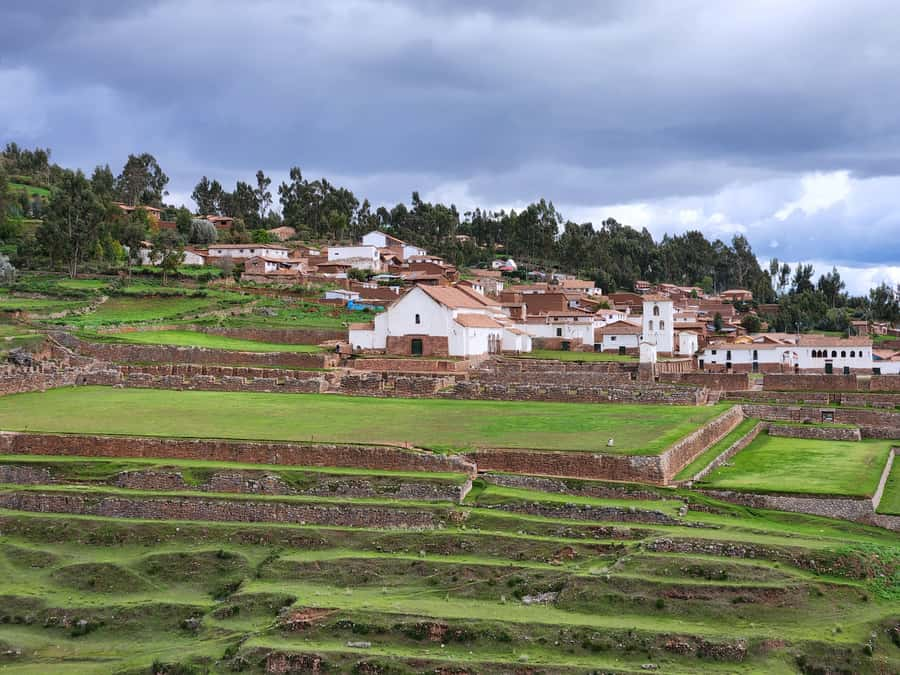
Chinchero textiles and Tupac Yupanqui’s enclosure
Chinchero is your first proper stop, and it combines living craft with Inca remains. At the textile center, you learn how alpaca fiber is turned into textiles. The visit is useful because it gives you a human connection before the day becomes a sequence of stone walls and terraces.
You also get a look at local Quechua craft traditions and the chance to see finished work. This part may include a shop, so keep your expectations sensible: it is both an educational stop and a commercial one. If you are interested in alpaca textiles, this is a good place to ask about the fiber, process, and differences between products before buying anything.
The nearby archaeological site includes the enclosure associated with the Inca Tupac Yupanqui. Your guide gives an explanation of the site, which helps you understand what you are seeing rather than treating Chinchero as a quick photo stop.
The planned visit lasts about an hour. That is one of the more generous time blocks of the day, and it gives you room to listen, look around, and ask questions. Wear shoes with a good grip, since archaeological areas can include uneven ground.
Moray’s circular terraces and agricultural experiment
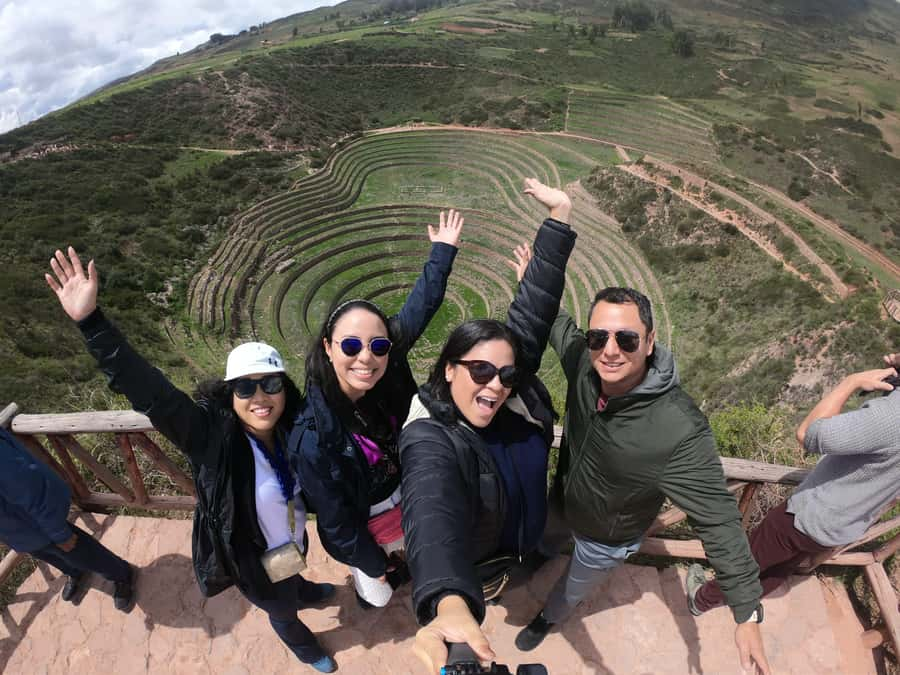
After Chinchero, the vehicle continues for about 30 minutes to Moray. The main sight is a set of enormous circular terraces cut into the earth. From the viewing area, the rings look almost too regular to be natural, and the unusual shape is what makes Moray one of the Sacred Valley’s most memorable stops.
The site is commonly described as an experimental agricultural laboratory connected with Inca farming. Your guide explains how the terraces were used or understood, giving the formation more meaning than a quick photograph can provide.
The scheduled guided visit lasts about 30 minutes. That is enough to see the terraces and hear the main explanation, but not enough for a long, unhurried exploration. I would pay close attention to the guide here, since the value of Moray is tied to how the site’s design is interpreted.
This is also one of the places where the day’s pace becomes obvious. You will see an important site, understand its basic purpose, and move on. If Moray is your main reason for visiting the Sacred Valley, a slower trip would suit you better.
Maras salt pans and a working local tradition
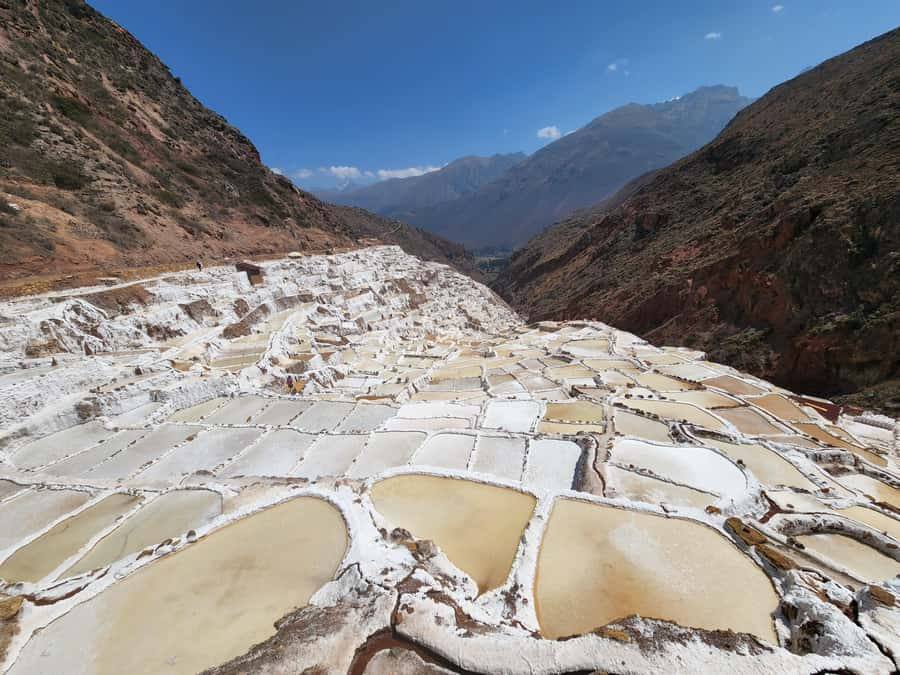
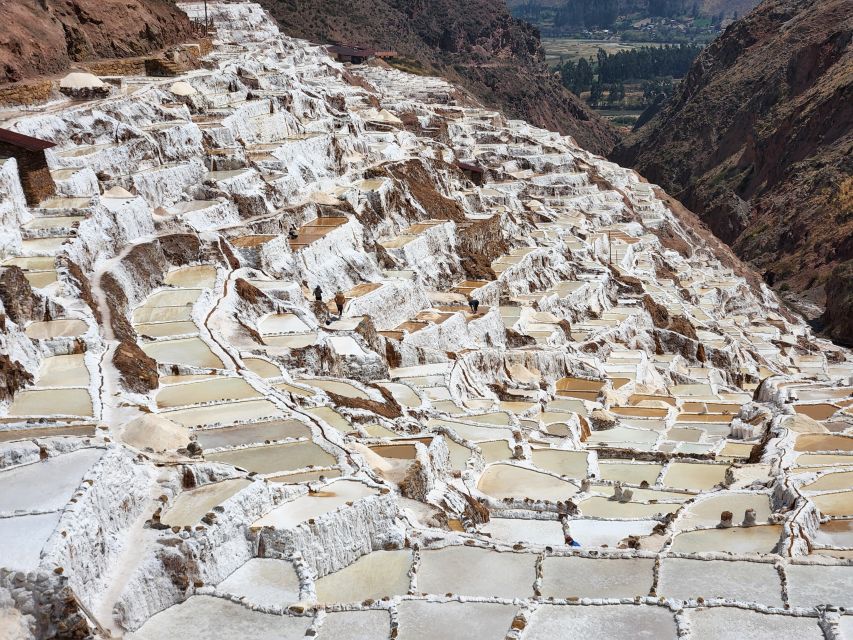
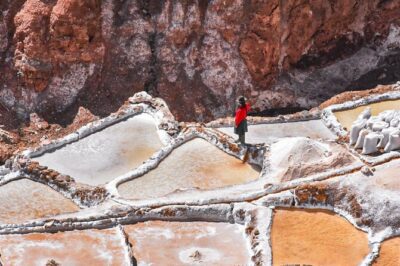
From Moray, it is about 20 minutes to the Maras Salt Mines. The site contains more than 4,000 salt pits, arranged across the slope in a bright, geometric pattern. Local people still use the same basic salt-extraction tradition associated with the area.
Your guide explains how salt is collected, which turns the stop into more than a scenic overlook. The value here is seeing a working tradition connected to the place, not just looking at old construction. The pits are particularly striking when viewed together, since the scale and repetition are difficult to grasp from a single close-up.
The guided visit is scheduled for about 40 minutes. That gives you time to take in the view, learn about the extraction process, and photograph the terraces. Access is not covered by the main 70-sol tourist ticket. You need to pay a separate 20 soles for the Maras Salt Mines.
That extra fee is modest, but it should be part of your budget. Drinks and snacks are also not included, so bring some Peruvian soles for small purchases. Drones are not allowed, so leave yours behind.
A few more Sacred Valley days worth weighing up
- Cusco:Chinchero,Moray & Salt Mines drop-off in Ollantaytambo
★ 4.8 · 793 reviews - Sacred Valley: Chinchero, Moray, Ollantaytambo & Pisac+Lunch
★ 4.8 · 501 reviews - Sacred Valley: Maras & Moray by Quad Bike from Cusco
★ 4.6 · 418 reviews - Pisac Indian Market and Ollantaytambo Fortress with Lunch
★ 4.5 · 395 reviews
Urubamba buffet lunch after the morning sites
The route then reaches Urubamba, where you have about 40 minutes for an Andean buffet lunch. A buffet is a sensible choice on this schedule because it keeps the group moving and gives you more than one food option.
Vegetarian food is available. Drinks are not included, so check the bill or carry cash for anything beyond the meal. After a morning of walking and road time, lunch is less about lingering and more about refueling before the afternoon ruins.
One practical point: 40 minutes is a short lunch break. You should not expect a leisurely restaurant meal. Take what you want early, eat at a comfortable pace, and be ready for the group’s departure time.
Ollantaytambo’s fortress and huge Inca stonework
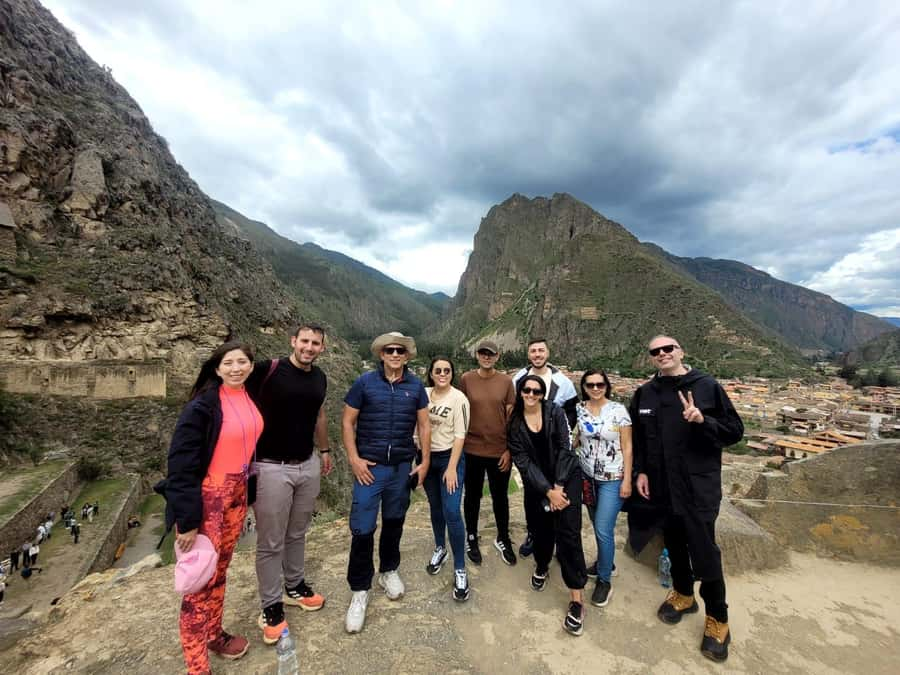
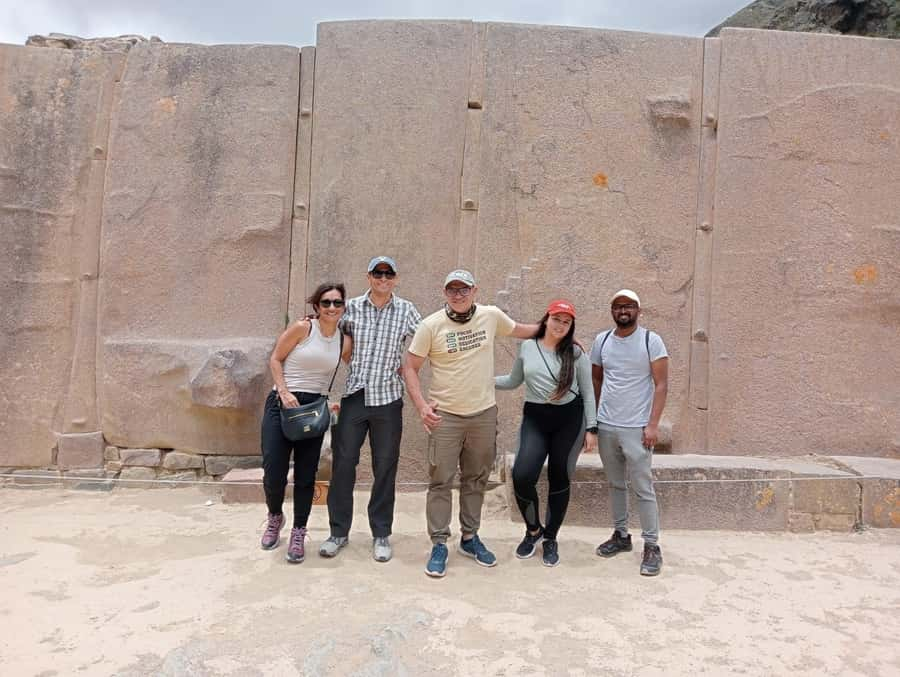
After lunch, the vehicle continues for about 20 minutes to Ollantaytambo. This is one of the day’s major highlights. You walk through the fortress and its main enclosures, where the scale of the Inca construction becomes much clearer.
Ollantaytambo was built as a major defensive position guarding the route toward Machu Picchu. The site’s walls and terraces make that role easy to picture, especially when your guide points out the layout and explains the purpose of the main areas.
The guided visit lasts about 40 minutes. That is enough to cover the essential enclosures, but the climb and stonework deserve your full attention. If you like architecture, this may be the stop that feels most substantial. It offers more than a single unusual feature: you move through a larger complex and begin to understand how the settlement worked as a fortress.
Take care on steps and uneven surfaces. You should also save some energy for Pisaq, which comes later. The tour does not treat Ollantaytambo as the final stop, even though many people could easily spend much longer there.
Pisaq terraces, royal enclosures, and the Inca cemetery
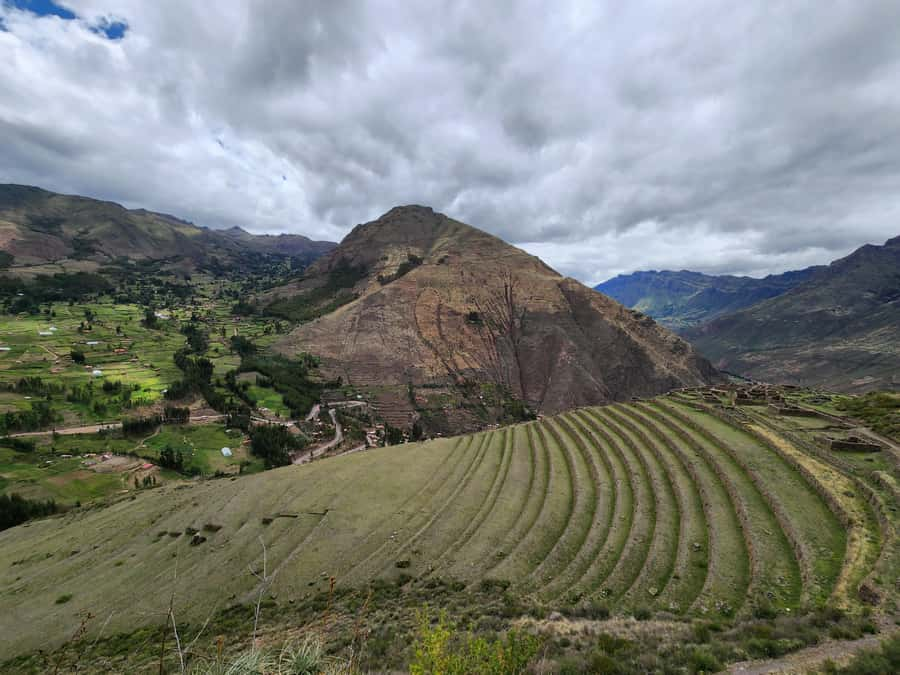
The final archaeological stop is Pisaq, reached after about an hour on the road. The visit covers agricultural terraces, royal Inca enclosures, and an Inca cemetery.
Pisaq is a useful final stop because it brings several parts of Inca planning together. The terraces show how farming was organized on steep ground, while the royal areas and cemetery add social and ceremonial context. Your guide leads you through the main features during a visit scheduled for about 40 minutes.
By this stage, you will have spent most of the day on the move. The short visit means you need to stay close to the guide and focus on the main points. If you are tired, Pisaq can feel rushed. If you still have energy, the combination of terraces and ruins gives you a strong final look at the Sacred Valley.
The return ride takes about 45 minutes in the route schedule. Instead of returning you directly to your hotel, the vehicle finishes at Plaza Regocijo, about one block from Cusco’s main square. That location is central, but you should plan the last part of your evening from there.
What the $45 price really covers
At $45 per person, this is a strong value for a full-day guided circuit, especially if you want transport, five major stops, and lunch without arranging the route yourself. The price includes pickup in central Cusco, transport, a professional bilingual guide, the buffet lunch, and a first aid kit.
The listed vehicle capacity is 18 people, which keeps the cost below a private tour while avoiding a very large coach. You are paying mainly for logistics and access to a packed route. That is useful in the Sacred Valley, where the sites are spread across a wide area and public transport would make this exact combination difficult to manage in one day.
The entrance fees change the real cost. Add 70 soles for the tourist ticket and 20 soles for Maras, plus drinks, snacks, and any purchases at the textile center. The tour remains reasonably priced, but it is not a $45 all-in experience.
The value is highest if you want an overview. You can later decide if you want to return to Ollantaytambo, Pisaq, Moray, or another site for a slower visit. The value is lower if your priority is quiet exploration, long photography stops, or a flexible schedule.
The pace, guide, and group experience
The guide is central to this tour. Each archaeological stop includes a guided explanation in English or Spanish, and the day works best if you listen closely during those brief sessions. The guide also helps connect the sites to Quechua craft traditions and local life, especially at Chinchero and Maras.
The route has many quick transitions. The published schedule gives about 30 minutes at Moray, 40 minutes at Maras, 40 minutes at Ollantaytambo, and 40 minutes at Pisaq. Those times are enough for an introduction, not for every path, enclosure, or viewpoint.
You should expect a clear, organized day rather than free time. Keep your belongings together, be ready when the guide calls the group, and avoid wandering far from the meeting point. One missed departure could disrupt the rest of the route.
The transport team matters as well. The road includes tough curves, and the driver received specific praise for handling them. Even so, this is a long day in a vehicle. Bring water, a light snack, sun protection, and layers you can adjust.
Who should choose this Sacred Valley tour
I would choose this tour if you have limited time in Cusco and want to see the main Sacred Valley sights in a single day. It is also a good fit if you prefer having a bilingual guide explain the sites and want lunch and transport handled for you.
It suits first-time visitors who want context before choosing where to return. It also works for people who value variety over long visits, since the route gives you five different views of Inca planning, farming, defense, textiles, and salt production.
I would look for a slower or private option if one site is especially important to you. Ollantaytambo and Pisaq can each reward more time, while Moray and Maras are likely to feel brief if you want extended walks or photography.
The day is not suitable for people over 95 according to the tour information. The uneven archaeological ground, long duration, road travel, and repeated walking also make it less suitable for anyone who needs a very gentle schedule.
Should you book this tour?
Book it if you want an efficient first look at the Sacred Valley, appreciate a guide who explains what you are seeing, and are comfortable with a 12-hour day. The combination of Chinchero textiles, Moray, Maras, Ollantaytambo, and Pisaq gives you an unusually broad introduction for the price.
Skip it if you dislike fixed schedules or want to linger at ruins. The main weakness is not poor organization, but the amount packed into one day. You will see a lot, learn the basics, and likely leave with one or two places you want to revisit at a slower pace.
Free cancellation up to 24 hours before departure and the option to reserve now and pay later make the booking flexible. Just remember to budget for the 90 soles in entrance fees and bring extra money for drinks, snacks, and the textile center.
FAQ
How long does the tour last?
The tour lasts about 12 hours. It begins with pickup in central Cusco and finishes at Plaza Regocijo, about one block from Cusco’s main square.
What places does the tour visit?
The route includes the archaeological site and textile center at Chinchero, Moray, the Maras Salt Mines, Ollantaytambo Fortress, and the Pisaq archaeological site and cemetery.
Is hotel pickup included?
Pickup is included from hotels and Airbnbs located in the historic center of Cusco. Several central pickup points are also listed.
Are entrance fees included?
No. The tourist ticket costs 70 soles, and the Maras Salt Mines require a separate 20-sol entrance ticket. Drinks and snacks are also not included.
Is lunch included?
Yes. A buffet lunch in Urubamba is included, with a vegetarian option. Drinks are not included.
What languages are available for the guide?
The live guide is available in English or Spanish.
Just added around Sacred Valley
- Zipline over the Sacred Valley Trip★ 5.0 · 11 reviews
- Visit Pisac from Cusco: Private Transport★ 4.6 · 9 reviews
- Maras and Huaypo lagoon by ATV from Cuzco | Local Operator★ 4.7 · 4 reviews
- Transfer from Cusco to Ollantaytambo★ 5.0 · 30 reviews
- Sacred Valley VIP Tour with Maras and Moray from Cusco★ 4.5 · 35 reviews
- Sacred Valley Private Tour, Moray & Salt Mines Incluided★ 5.0 · 41 reviews
- Salt Mines(Maras),Moray and Chincheros★ 5.0 · 41 reviews
- Excursion to Sacred Valley of the Incas tour – Private service.★ 5.0 · 35 reviews
Maras & Moray Tours, compared.
Sacred Valley & Maras Salt Mines Tour with Lunch
Read our review →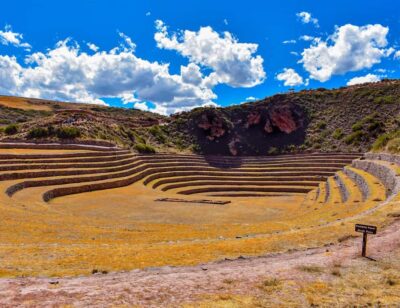
Moray, Maras Salt Mines & Chinchero Weavers Tour
Read our review →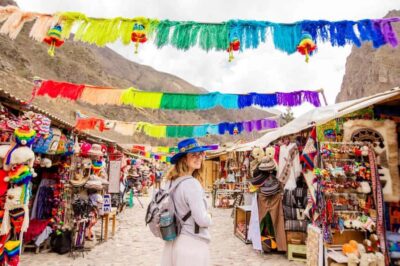
Sacred Valley, Pisac, Ollantaytambo, Salt Mines Moray
Read our review →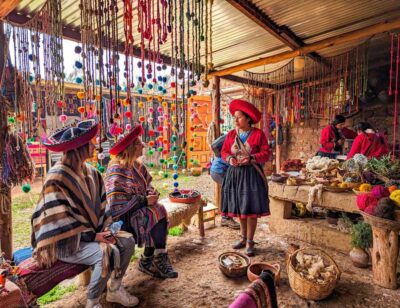
Chinchero,Moray & Salt Mines drop-off in Ollantaytambo
Read our review →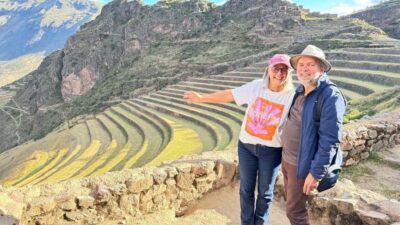

Moray, Maras Salt Mines & Chinchero Weavers Half-Day
Read our review →Browse the lists this tour appears in