
Reviewed · MARAS & MORAY TOURS
From Ollantaytambo:Moray, Salt Mines, Chinchero end in Cusco
The clever part of this private day tour is that it turns a necessary transfer from Ollantaytambo to Cusco into a full day of Andean history. Instead of spending the trip in a taxi or train, you visit Maras, Moray, and Chinchero, eat lunch in Maras, and arrive in Cusco at your hotel or the main square.
I like the door-to-door route, especially for travelers leaving Ollantaytambo after visiting Machu Picchu. I also like the mix of big archaeological sites and living culture: Moray and the salt ponds explain how people worked the mountains, while Chinchero shows that Andean traditions are still practiced today.
The main drawback is that the listed entrance fees add to the $109 price, and the Chinchero textile stop includes shopping. You can look without buying, but the sales setting may feel less relaxed than the archaeological visits.
Why this Ollantaytambo to Cusco route works so well
- You turn a transfer into a sightseeing day, with pickup in Ollantaytambo and drop-off in Cusco.
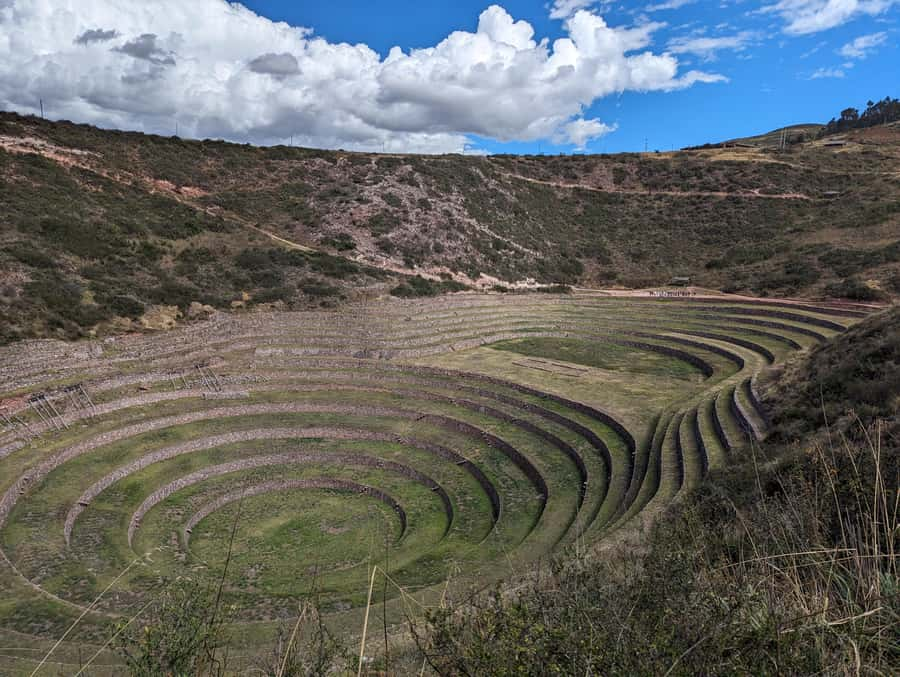
- Moray’s circular terraces show how the Incas used steep mountain ground for agriculture.
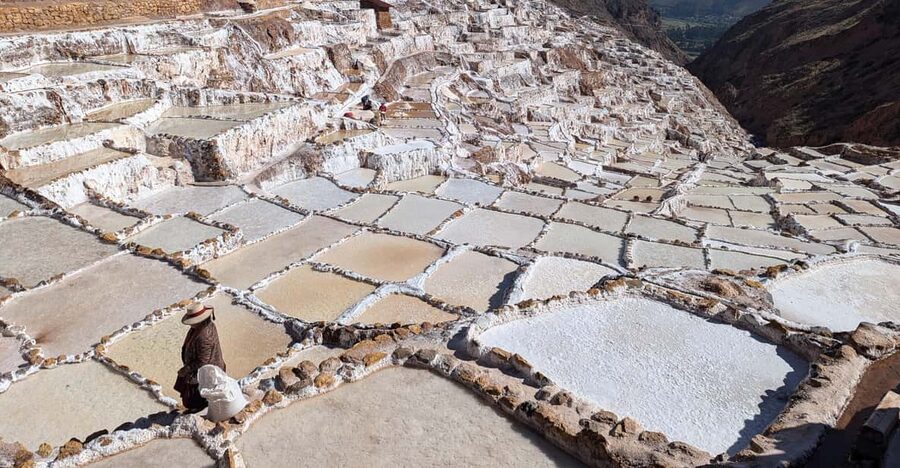
- Maras has more than 4,000 salt ponds, still linked to an old Andean food-preservation tradition.
- Chinchero adds living culture, including textile weaving with traditional techniques.
- Private transport makes the trip flexible, with a comfortable car or van rather than a large group bus.
- Lunch in Maras is included, though drinks and site tickets are not.
Maras Salt Mines: thousands of ponds on a steep hillside
The route begins with pickup at your Ollantaytambo hotel or train station. From there, expect about an hour in the vehicle before reaching the Maras area. The itinerary gives this stop about an hour, enough time for a guided visit and photographs.
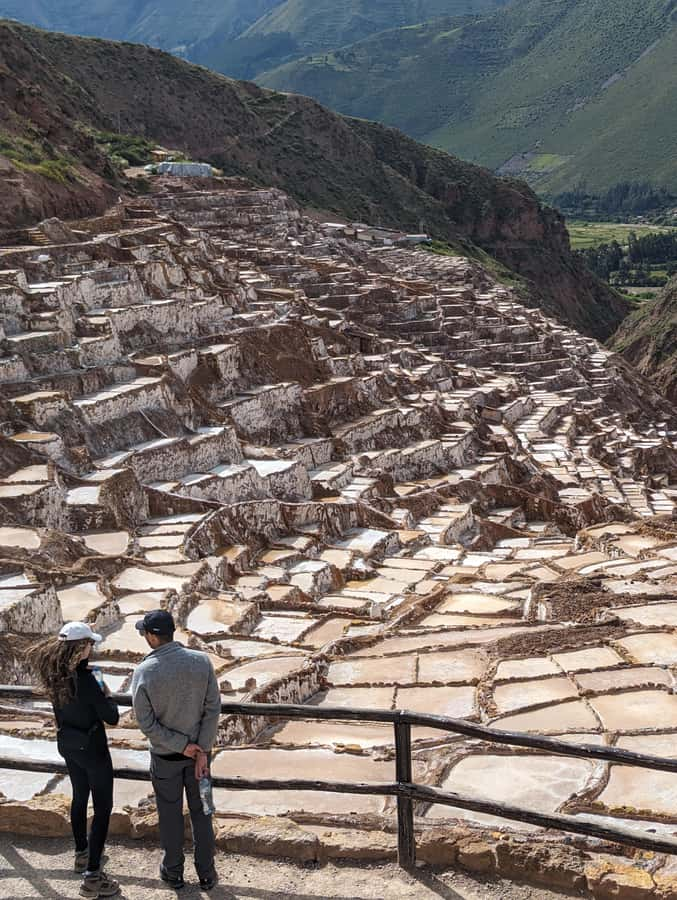
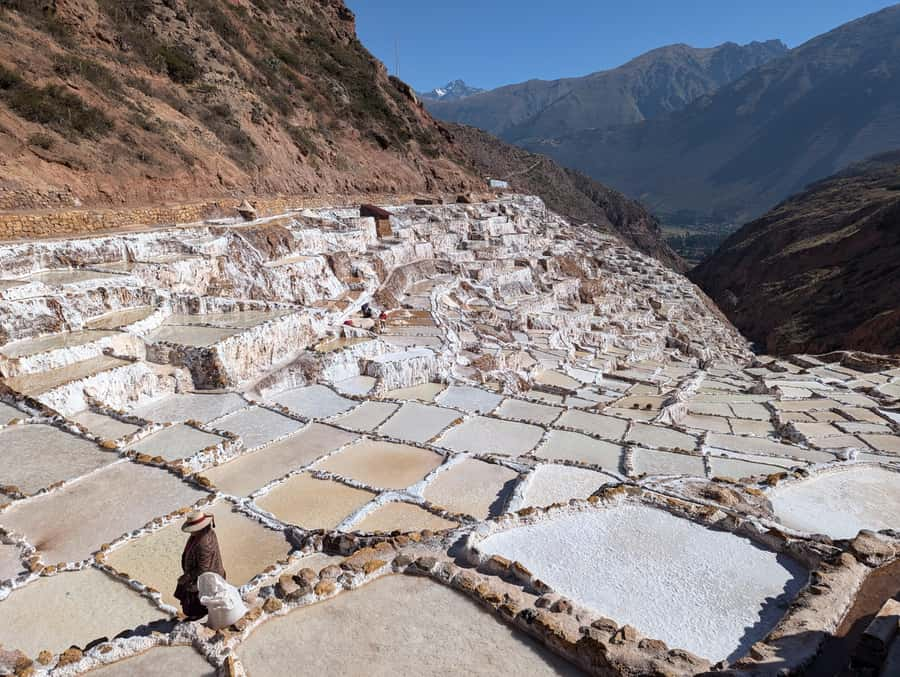
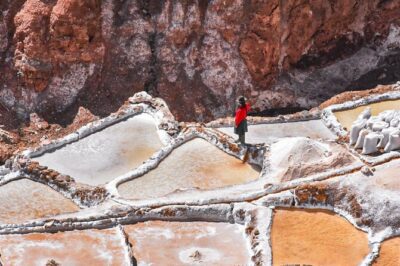
The salt mines are made up of more than 4,000 small ponds spread across the hillside. Water flows through the system, and salt collects in the ponds. For generations, this helped local communities preserve food for long periods. That simple fact gives the site more meaning than a quick photo stop. You are looking at a working answer to a basic mountain problem: how to store food when roads, markets, and refrigeration are limited.
The views are a major part of the visit. The white and brown salt pans cut across the slopes, with the Sacred Valley opening out beyond them. Bring a hat, sunglasses, and sunscreen. The high-altitude sun can feel strong even when the air is cool.
Your ticket to the salt mine is separate from the tour price and costs 20 Peruvian soles at the site. Carry cash in soles. This is one of the costs that can catch you off guard if you budget only for the advertised $109.
More Maras salt pan and Moray trips:
- From Cusco: Sacred Valley & Maras Salt Mines Tour with Lunch
★ 4.8 · 2,227 reviews - From Cusco: Moray, Maras Salt Mines & Chinchero Weavers Tour
★ 4.8 · 1,925 reviews - Cusco: Sacred Valley, Pisac, Ollantaytambo, Salt Mines Moray
★ 4.6 · 1,058 reviews
Moray’s circular terraces and the Inca approach to farming
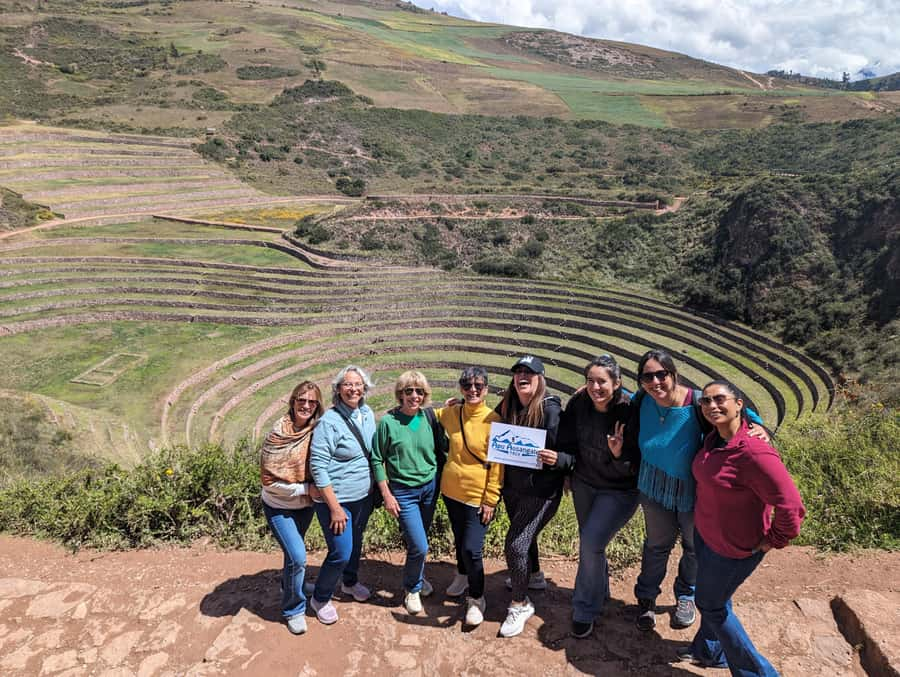
After Maras, you drive for about 40 minutes to Moray. The visit lasts roughly an hour, including a guided explanation and time for photographs. Moray is known for its huge circular terraces cut into the earth, with each level dropping toward a central depression.
The terraces were built by the Incas to grow crops in difficult mountain conditions. Their form is the important point. Instead of treating the highlands as land that could not support farming, Andean builders shaped the slopes into usable planting areas.
I find Moray most valuable when your guide explains the site instead of leaving you to stare at the circles and guess. The archaeological remains do not offer many signs on their own, so a clear explanation adds a great deal. Guides such as Julio, Ricardo, Ipo, Marco, and Felipe have been praised for explaining the history in clear English and for adjusting the conversation to the group.
The route is not rushed. You have time to look, take pictures, and ask questions. One guide even used the visit to point out native plants and explain traditional medicinal uses. Another showed how Andean people made rope from grass, a useful detail that connects the site to daily life rather than presenting the Incas as distant stone builders.
Your partial tourist ticket includes Moray and Chinchero, along with Ollantaytambo if you add that site. The stated cost is 70 soles, payable at the first site. Ask the operator to confirm the current ticket arrangement before setting out, especially if you do not plan to visit Ollantaytambo.
Lunch in Maras gives the day a needed pause
After Moray, the vehicle returns toward Maras for lunch, with about 20 minutes listed for this part of the ride. The meal is included, which helps the value of the tour. You do not have to search for a restaurant during a tightly timed day, and the stop gives you a chance to sit down after several hours of walking and sightseeing.
The lunch stop has earned praise for good food and attentive handling of special needs. One guide arranged different food for a participant who was feeling unwell. That does not mean every request is guaranteed, so tell the company about dietary needs when you book, but the guide’s role can make this pause easier.
Drinks are not included. Keep some soles handy for water, coffee, or other purchases. The tour information does not specify a menu, so I would not book it expecting a particular dish. Think of lunch as a practical included meal, not a separate culinary experience.
Chinchero: weaving, ceremony, and a living Andean tradition
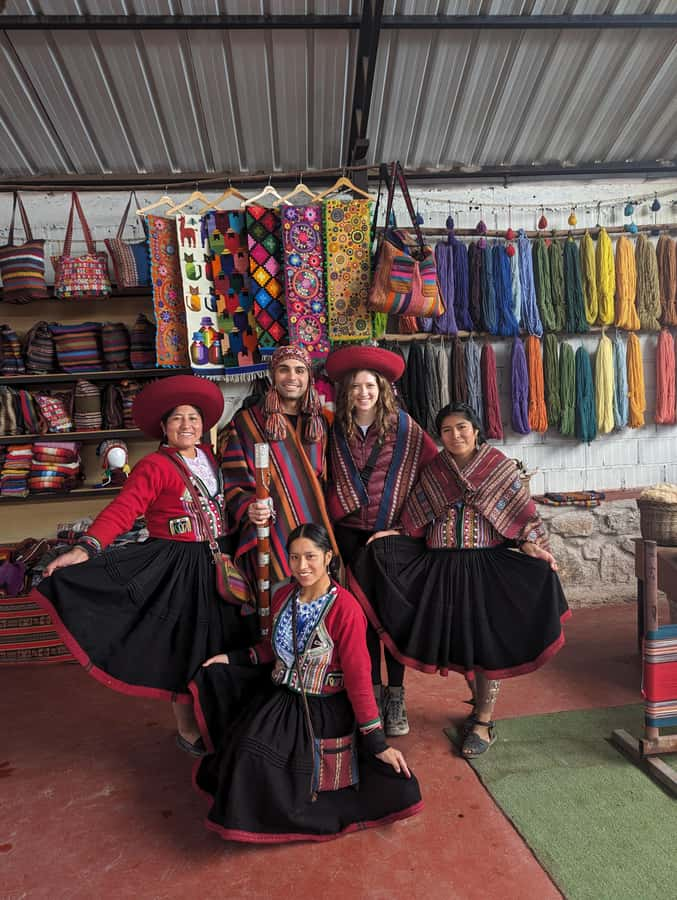
The drive from lunch to Chinchero takes about 40 minutes. The town visit includes a guided walk and photography, followed by about 40 minutes at a textile weaving center.
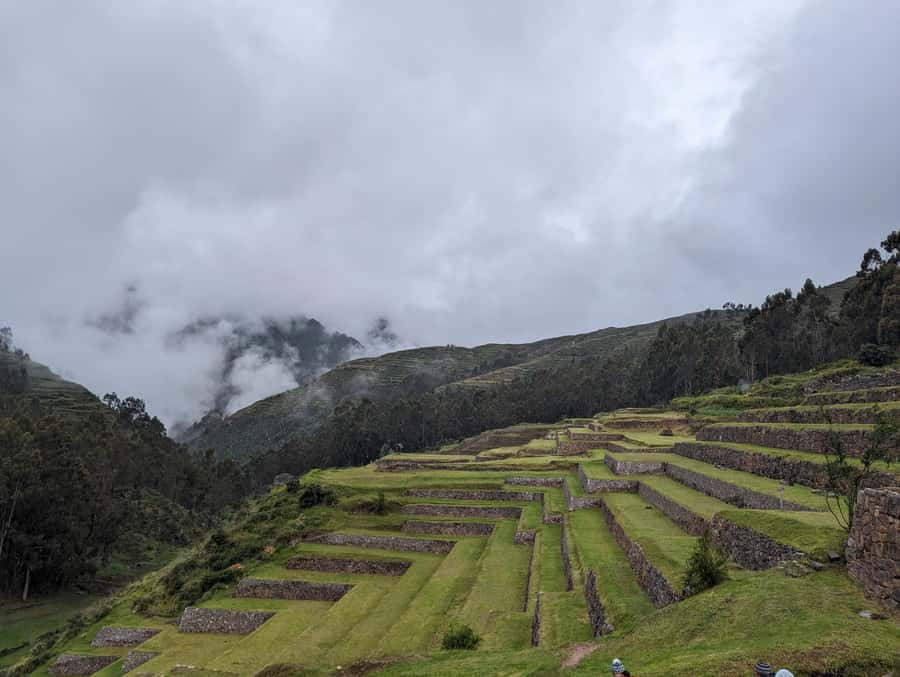
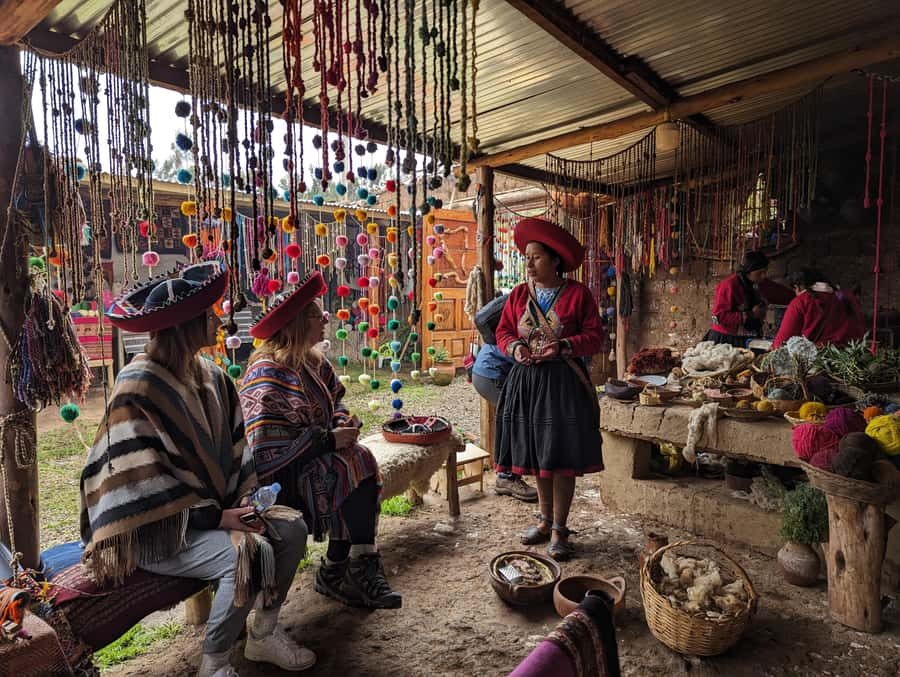
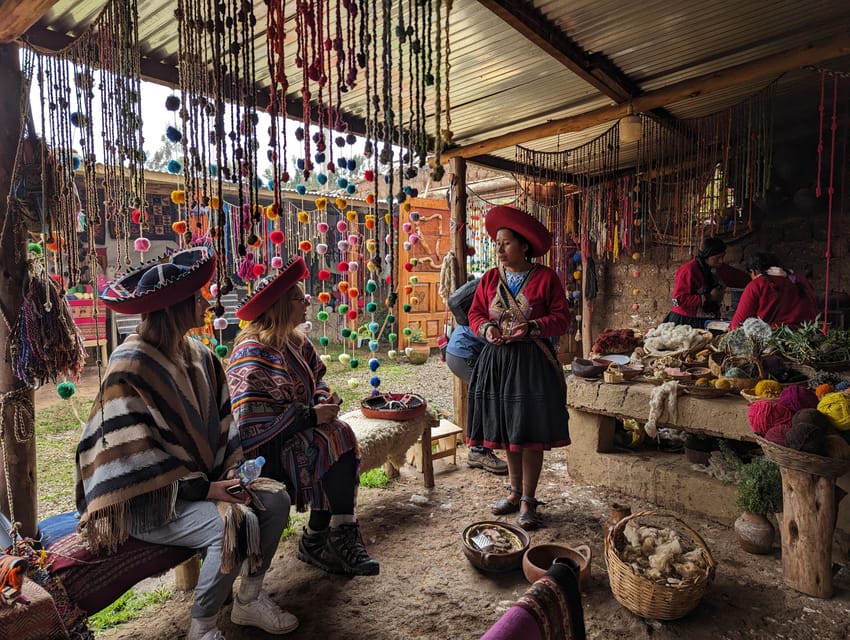
Chinchero is a small, rustic town with strong connections to Andean textile work. At the weaving center, you can see cloth made with traditional techniques associated with Inca-era practice. This is a useful counterpoint to Moray and Maras. The earlier stops show engineered terraces and food production. Chinchero shows skills that continue through local communities.
The textile stop also has a shopping element. You may see woven goods and have a chance to buy them. I would treat this as optional. One part of the experience is learning how the textiles are made; the other is a sales stop. You should not feel obliged to purchase anything.
The Chinchero visit can be especially worthwhile if your guide explains the process, the symbols, and the role of weaving in local life. Guides have also added small cultural moments, such as a coca leaf ceremony, when appropriate. That sort of personal touch depends on the guide and should not be treated as a guaranteed part of the schedule.
The partial tourist ticket includes Chinchero. You pay the 70 soles ticket once the route reaches its first applicable site, according to the tour information. Again, confirm the current ticket rules before departure, since the possible addition of Ollantaytambo changes what you may want to see.
A few more Sacred Valley days worth weighing up
- Cusco:Chinchero,Moray & Salt Mines drop-off in Ollantaytambo
★ 4.8 · 793 reviews - Sacred Valley: Chinchero, Moray, Ollantaytambo & Pisac+Lunch
★ 4.8 · 501 reviews - Sacred Valley: Maras & Moray by Quad Bike from Cusco
★ 4.6 · 418 reviews - Pisac Indian Market and Ollantaytambo Fortress with Lunch
★ 4.5 · 395 reviews
Optional Ollantaytambo ruins: ask before the day begins
Ollantaytambo is the pickup point, but the main route described here focuses on Maras, Moray, lunch, and Chinchero. The operator says you can add the Ollantaytambo Inca site if you request it when the booking is confirmed.
This is important. Several people have used the day to see the ruins before continuing to Cusco, but you should not assume the site is automatically included in the standard plan. Ask about the timing, ticket, and pickup arrangement in advance.
Adding Ollantaytambo can make sense if you have not already visited it. The ruins are one of the major sights in the Sacred Valley, and seeing them before leaving town can save you from arranging a separate visit. The tradeoff is time. A longer archaeological visit may reduce the relaxed pace at another stop or make the final arrival in Cusco later.
The private car is a major part of the value
The tour costs $109 per person and uses a private group rather than a large shared bus. That price includes pickup, transport, a bilingual English or Spanish guide, lunch, and drop-off in Cusco.
For a solo traveler, the price may feel high compared with public transport. For two or more people, the value improves because the car, driver, and guide are serving only your party. You are also paying for time saved. A basic transfer from Ollantaytambo to Cusco would not include three sightseeing stops, explanations, lunch, or door-to-door coordination.
The private vehicle matters if you get motion sickness. One couple specifically valued having a car instead of a bus because the ride felt easier. The mountain roads include repeated vehicle sections, so a smaller private group can make the day more comfortable.
The driver is another important part of the experience. Names praised for safe and helpful service include Fernando, Alfredo, Americo, and others. You are not hiring a driver only to move between points. The driver’s timing affects how calmly the day runs, especially when the road is busy or when you want to arrive in Cusco on time.
How the timing feels across one long day
The listed schedule includes about five hours of driving, plus visits, lunch, and the possible extra time needed for tickets and stops. This is a full day, not a short half-day outing.
The order is useful for people leaving Ollantaytambo. You start from your accommodation or train station, see several Sacred Valley sights, and finish in Cusco instead of returning to your starting point. That saves backtracking and removes the need to arrange separate taxis.
A good guide can also adjust the rhythm. Several guides have been praised for giving people enough time at each stop and avoiding the most crowded periods when possible. Still, you should be ready for a structured day. The vehicle must cover a fixed route, and every stop has a practical time limit.
Pickup and arrival times should be confirmed directly. The activity information says to check availability for the starting time, and pickup is included from your hotel or train station in Ollantaytambo. Drop-off is at the main square or your Cusco accommodation.
Tickets, cash, and what to pack
The tour price does not cover the partial tourist ticket for Ollantaytambo, Moray, and Chinchero. The stated cost is 70 soles, purchased at the first site. The Maras Salt Mines entrance is another 20 soles. Drinks are also extra.
Bring cash in Peruvian soles. A card may not be useful at every stop, and you may want money for drinks or textiles. Pack a camera, sunglasses, a sun hat, and sunscreen. Biodegradable sunscreen is specifically requested.
Wear shoes suitable for walking around archaeological sites and uneven ground. The supplied information does not specify a required shoe type, but the stops involve walks, viewpoints, and outdoor paths. You also need to manage your own comfort at altitude, since the route takes place in the Cusco region.
Alcohol and drugs are not allowed. The experience is not suitable for people over 95 years old.
Free cancellation is available up to 24 hours before the activity for a full refund. You can also reserve now and pay later, which helps if your Sacred Valley plans are still shifting.
Who should book this Sacred Valley transfer
I would choose this tour if I were staying in Ollantaytambo and planning to continue to Cusco on the same day. It is especially useful for first-time visitors who want explanations at Moray, Maras, and Chinchero instead of simply taking photographs and moving on.
It also suits couples, families, and small groups who value privacy. A private car gives you more room than a large bus, and guides have been friendly with children and willing to answer detailed questions. The route is also a good fit for anyone who wants cultural context, not just ruins.
I would think twice if you dislike shopping stops, want a very short transfer, or have already seen all three sites. The textile center is not purely an educational visit, and the extra entrance fees make the final cost higher than the headline price.
Should you book this tour?
Book it if you want the most useful combination of transport and sightseeing between Ollantaytambo and Cusco. The route covers three distinct experiences, includes lunch, uses private transport, and gives you a guide who can connect farming, salt production, archaeology, and weaving.
Before paying, confirm the pickup time, the exact entrance costs, and whether you want to add Ollantaytambo ruins. If you keep enough soles for tickets, drinks, and optional shopping, this is a practical and well-paced way to leave the Sacred Valley with far more than a simple ride to Cusco.
FAQ
Where does the tour begin?
Pickup is available from your hotel or train station in Ollantaytambo.
Where does the tour finish?
The tour finishes in Cusco, either at the main square or at your accommodation.
How long does the experience last?
It is a full-day experience. The listed schedule includes visits, lunch, and several vehicle journeys between Ollantaytambo and Cusco.
What places are included?
The route includes the Maras Salt Mines, Moray’s circular terraces, lunch in Maras, and Chinchero’s town and textile center.
Is Ollantaytambo archaeological site included?
Ollantaytambo ruins can be added if you request them when the booking is confirmed. They are not automatically listed as part of the standard route.
Is lunch included?
Yes. Lunch in Maras is included. Drinks are not included.
Are entrance tickets included?
No. The partial tourist ticket for Ollantaytambo, Moray, and Chinchero costs 70 Peruvian soles, and the Maras Salt Mines ticket costs 20 soles. These prices are paid separately at the sites.
Is the tour private?
Yes. The experience is for a private group and includes private transportation.
What languages are available?
The live guide service is available in English and Spanish.
Just added around Sacred Valley
- Zipline over the Sacred Valley Trip★ 5.0 · 11 reviews
- Visit Pisac from Cusco: Private Transport★ 4.6 · 9 reviews
- Maras and Huaypo lagoon by ATV from Cuzco | Local Operator★ 4.7 · 4 reviews
- Transfer from Cusco to Ollantaytambo★ 5.0 · 30 reviews
- Sacred Valley VIP Tour with Maras and Moray from Cusco★ 4.5 · 35 reviews
- Sacred Valley Private Tour, Moray & Salt Mines Incluided★ 5.0 · 41 reviews
- Salt Mines(Maras),Moray and Chincheros★ 5.0 · 41 reviews
- Excursion to Sacred Valley of the Incas tour – Private service.★ 5.0 · 35 reviews
Maras & Moray Tours, compared.
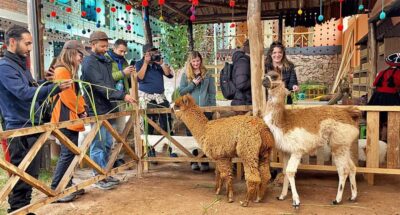
Sacred Valley & Maras Salt Mines Tour with Lunch
Read our review →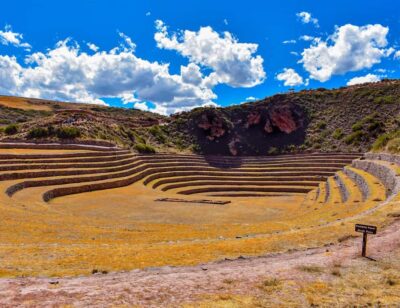
Moray, Maras Salt Mines & Chinchero Weavers Tour
Read our review →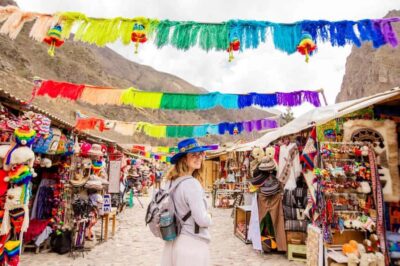
Sacred Valley, Pisac, Ollantaytambo, Salt Mines Moray
Read our review →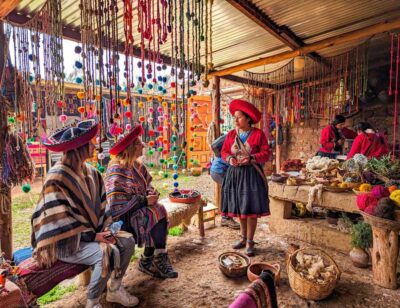
Chinchero,Moray & Salt Mines drop-off in Ollantaytambo
Read our review →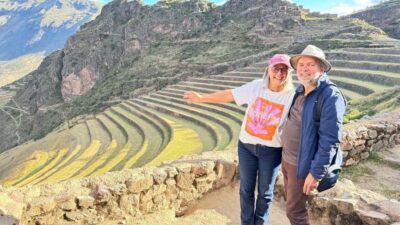
Moray, Maras Salt Mines & Chinchero Weavers Half-Day
Read our review →Browse the lists this tour appears in