
Reviewed · MARAS & MORAY TOURS
From Ollantaytambo: Moray, Maras, and Chinchero Guided Tour
Moray’s great stone circles are the star of this day. The terraces drop into the earth like a giant green amphitheater, and your guide explains how the Incas used changing temperatures and irrigation to test crops. I like that the route then shifts from archaeology to a living trade at Maras’s salt pools, where local families still collect salt.
I also like the practical route from Ollantaytambo, with round-trip transport and a final stop in Chinchero for traditional weaving. The main drawback is uncertain communication before departure. Some bookings had trouble getting meeting details and pickup confirmation, so you should follow up through WhatsApp and arrive early.
Key points at a glance
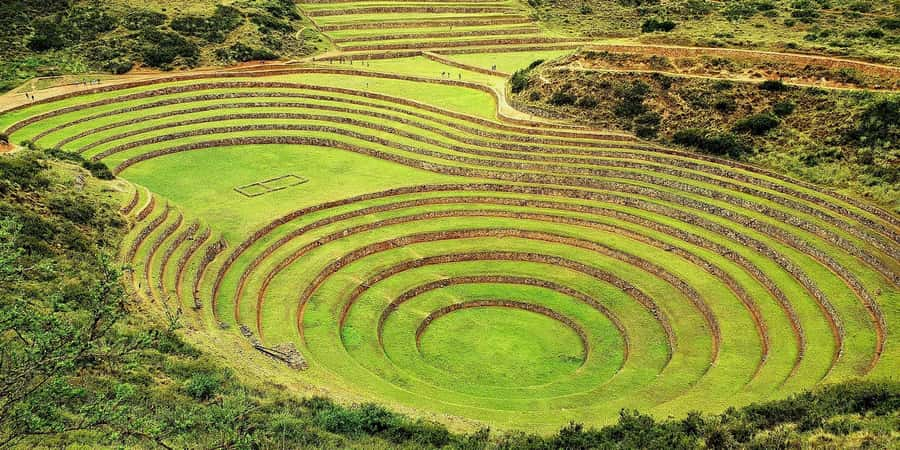
- Moray’s circular terraces show how the Incas worked with different growing conditions.
- Maras has about 2,000 salt pools, many still managed by local families.
- Chinchero’s textile center demonstrates spinning, natural dyeing, and wool and cotton work.
- Juan Carlos and Yasmina are named guides who provided strong English-language or general guiding support.
- The route can beat the large buses, with one reported day reaching the main stops before heavier crowds.
- Budget extra for entrance fees, including 70 soles for foreign visitors, 40 soles for Peruvian nationals, and 20 soles for Salineras.
Why this route works from Ollantaytambo
This is a useful full-day outing if you are based in Ollantaytambo and want more than the town’s famous fortress. Rather than sending you back toward Cusco first, the tour collects you at a meeting point in Ollantaytambo and links three very different places in one circuit.
I like the variety. Moray gives you monumental Inca engineering. Maras shows a working source of salt rather than a silent ruin. Chinchero adds people, craft, and living tradition. The views between stops are another part of the day, with broad Sacred Valley scenery along the road.
The tour lasts one day, but the supplied details do not give a fixed departure or return time. One reported outing returned to town at about 15:30 after lunch around 13:30. Treat that as a useful guide, not a promise. Ask for the exact schedule before you set a train, dinner, or other timed activity.
The price is $80 per person. That includes pickup at the stated meeting point, tourist transport, and a professional guide. It does not include the tourist ticket or entry to Salineras, so the real cost is higher. For foreign visitors, the listed tourist ticket is 70 soles, while Peruvian nationals pay 40 soles. Salineras adds 20 soles.
That can still be fair value if you want transport and explanations without arranging three separate stops yourself. It is less attractive if you already have a car, private driver, or a strong plan for visiting Moray and Maras independently. The guide is an important part of the value, especially at Moray, where a quick look at the terraces will not tell you much without context.
More Maras salt pan and Moray trips:
- From Cusco: Sacred Valley & Maras Salt Mines Tour with Lunch
★ 4.8 · 2,227 reviews - From Cusco: Moray, Maras Salt Mines & Chinchero Weavers Tour
★ 4.8 · 1,925 reviews - Cusco: Sacred Valley, Pisac, Ollantaytambo, Salt Mines Moray
★ 4.6 · 1,058 reviews
Moray and the Inca crop experiment
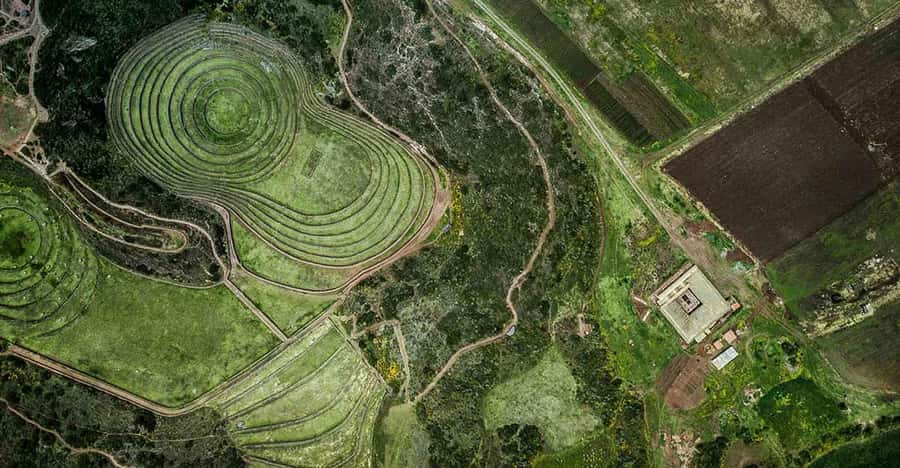
Moray is not just a photogenic set of circles. The terraces form deep, rounded bands that descend into a natural hollow. From above, the shape is easy to grasp. From closer viewpoints, you can see how each level was built into the slope.
Your guide should explain the different microclimates created by the terraces. Temperature and exposure change as you move from one level to another, and the Incas used irrigation to support cultivation. Calling Moray an agricultural laboratory is a helpful shortcut, as long as you remember that the site is best understood through its design rather than through modern laboratory equipment.
I like this stop because it gives you a clear example of Inca thinking. The achievement is not only the stonework. It is the careful use of altitude, sun, water, and soil. You can look at the site and understand that farming here required planning on a large scale.
Wear shoes with a good grip. The tour information recommends comfortable footwear, and that advice matters more here than it might at a town museum. You will be outdoors, standing and walking around archaeological ground. A sun hat, sunscreen, and water are also sensible because shade is not guaranteed.
Moray may be the most visually dramatic part of the route, but it is not the place for a rushed photo stop. Give yourself time to look at the full pattern, then study the walls and terraces. Ask your guide how the water moved and how the temperature changed across the levels. That is where the site becomes more than an unusual shape in the ground.
Maras and its 2,000 working salt pools
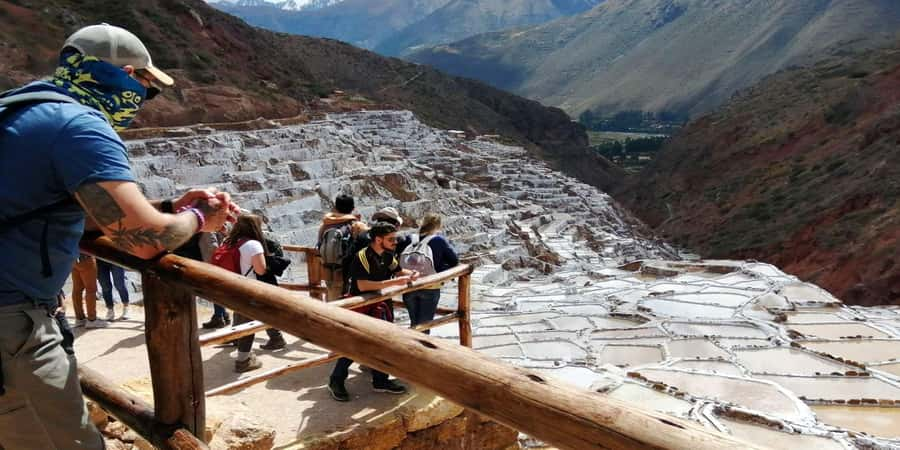
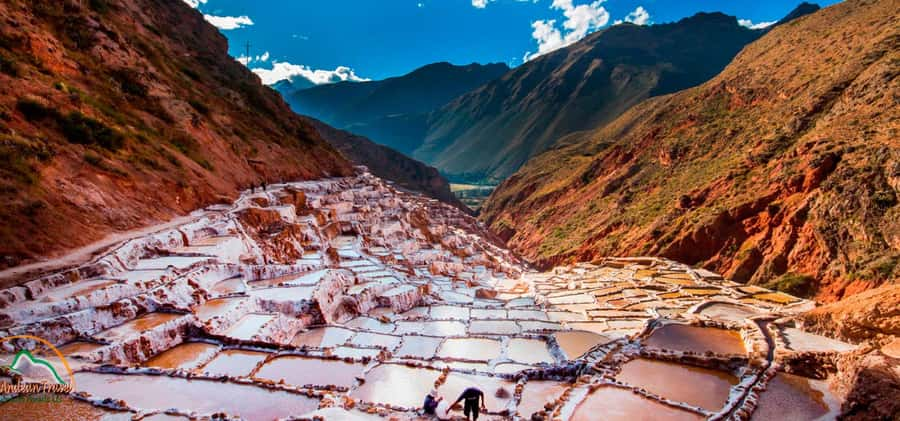
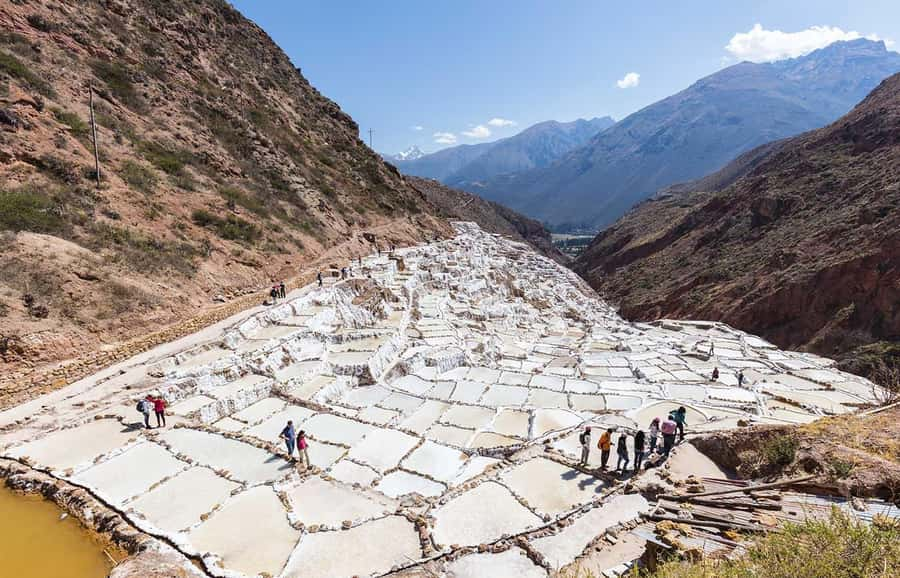
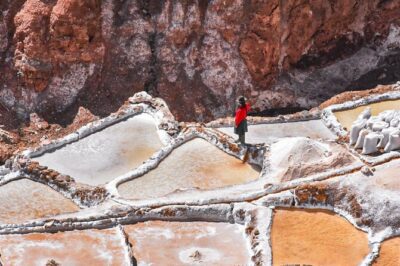
At Maras, the scenery changes from stone terraces to a bright patchwork of salt pools cut into the mountainside. About 2,000 pools are still used by local families to extract salt. This is one of the most valuable parts of the day because the site remains tied to work and income, not only to the past.
Each pool collects salty water, and the salt is produced through traditional methods as the water evaporates. The exact working details are best explained on site by your guide, but you can expect a very different experience from Moray. Moray asks you to imagine how a past society used land. Maras lets you see a local practice still in use.
The entrance to Salineras is separate from the tourist ticket, at 20 soles. Bring cash in soles so this extra cost does not catch you off guard. The tour price alone does not cover every admission.
Maras is also a place where your position matters. The pools are viewed from designated areas, and you should not treat them as a free-for-all photo set. They belong to local families and form part of an active operation. Look closely, take your pictures from the permitted area, and listen when the guide explains how the salt is collected.
The white pools can look especially striking against the surrounding hills, but the stop is more than a postcard view. I value it because it connects scenery with local ownership. You are seeing a production system, not an abandoned relic.
Chinchero’s wool, cotton, and natural dyes
Chinchero brings the human craft side of the trip into focus. At the textile interpretation center, you learn how wool and cotton are turned into yarn, then see how natural pigments are used to color it. The demonstration gives you a better way to understand the woven goods sold across the Cusco region.
This stop is especially useful if you are considering buying textiles during your time in Peru. You can watch the process before deciding what kind of work interests you. Pay attention to the stages: raw fiber, yarn, dye, and finished textile. The point is not simply to see colorful cloth. It is to understand the labor behind it.
I would ask the guide to explain which materials are being used and how the natural colors are produced. The supplied information confirms that natural pigments are part of the demonstration, but it does not specify every plant or mineral used. A good guide can fill in those details without turning the stop into a sales pitch.
Chinchero also prevents the day from becoming a string of ruins. You get archaeology, working salt production, and textile knowledge in one route. That balance suits you if you want cultural context instead of only large stone sites.
The tradeoff is time. A one-day schedule covering three stops cannot provide unlimited time at each one. If your main interest is textiles, you may want a separate visit focused on weaving. If you want a broad introduction to several Sacred Valley traditions, this stop earns its place.
A few more Sacred Valley days worth weighing up
- Cusco:Chinchero,Moray & Salt Mines drop-off in Ollantaytambo
★ 4.8 · 793 reviews - Sacred Valley: Chinchero, Moray, Ollantaytambo & Pisac+Lunch
★ 4.8 · 501 reviews - Sacred Valley: Maras & Moray by Quad Bike from Cusco
★ 4.6 · 418 reviews - Pisac Indian Market and Ollantaytambo Fortress with Lunch
★ 4.5 · 395 reviews
The guide can make or break the day
The tour is offered in Spanish and English, and the guide is central to the experience. Moray and Maras are easy to photograph but harder to understand without explanation. Chinchero’s techniques also benefit from someone who can connect the demonstration to local practice.
Juan Carlos received particularly strong praise for his English, clear explanations, willingness to answer questions, and help taking pictures. That last detail matters if you are traveling without someone to take a full group photo. Yasmina was also singled out as an excellent guide, and one Portuguese-language booking described her guiding warmly.
Guide assignments can change, so you should not assume you will receive a particular person. Still, these names give you a useful standard: a good guide should explain the sites clearly, answer questions, and help you make sense of what you are seeing rather than simply move the group from stop to stop.
The provider is Inspires Viagens. The serious weakness is pre-tour communication. There were cases of missing details, no answer to messages, confusion over a confirmed meeting time, and a delayed pickup. One person waited about 1.5 hours after the operator failed to appear at the confirmed meeting point.
That problem deserves attention because Ollantaytambo is a transport hub, and many visitors have trains or hotel plans to protect. Message the provider the day before and again on the morning of the tour if needed. Save the meeting point, start time, and WhatsApp contact. Arrive about 20 minutes early, as one booking did, but do not leave the area until you have confirmed what is happening.
This is not a complaint about the guiding itself. The guide reports were much stronger than the booking communication. I would book only after receiving a clear confirmation with the exact meeting point and pickup time.
Transport, food, and the shape of the day
Round-trip tourist transport is included from a meeting point in Ollantaytambo. That saves you from arranging separate rides to Moray, Maras, and Chinchero. It also lets you watch the Sacred Valley views along the way instead of concentrating on navigation.
The exact vehicle type and group size are not provided, so do not expect a private car unless that is confirmed separately. The tour is described as guided transport, not a private experience. If you care about group size, ask before paying.
Food is not listed as included. One reported schedule had lunch after the three main stops at about 13:30, followed by a return to Ollantaytambo around 15:30. Bring snacks because you may get hungry before lunch, and carry water throughout the day.
This timing also shows why you should avoid booking a tight afternoon connection. The return can depend on road conditions, group pace, and the time spent at each site. You get a full day of sightseeing, not a precise shuttle service.
The route is not suitable for wheelchair users. Comfortable shoes are required in practical terms, even though the supplied information lists them as an item to bring rather than a formal rule. Add a camera, sun hat, sunscreen, and water to your day bag.
Is $80 a fair price?
At $80, the tour sits in the range where convenience and guidance need to justify the cost. The included transport is useful from Ollantaytambo, where arranging a three-stop circuit can take time and negotiation. A guide also adds real value at Moray, Maras, and Chinchero.
You must add the admissions. Foreign visitors pay the listed 70 soles tourist ticket, and Salineras costs another 20 soles. Peruvian nationals pay 40 soles for the tourist ticket. The description does not state exactly which sites the tourist ticket covers, so confirm that at booking or at the first stop.
I would call the price reasonable for you if you want one organized day, an English or Spanish guide, and transport back to Ollantaytambo. I would be more cautious if you are trying to minimize spending, dislike group schedules, or already have transport arranged.
The value also depends on communication. A good guide can make this route memorable. Poor pickup information can create needless stress before the sightseeing begins. That is why I would not judge the cost only by the number of attractions. I would judge it by whether the provider confirms the basic details promptly.
Who should book this experience?
I would recommend it to you if you are staying in Ollantaytambo and want a broad Sacred Valley day without spending time arranging individual rides. It suits first-time visitors who want historical explanation, working local traditions, and scenic stops in one outing.
It is also a good match if you want to see Moray and Maras but prefer not to rent a vehicle. The route covers different types of attractions, so you are unlikely to spend the entire day looking at similar ruins.
I would hesitate if your schedule is very tight, if you need wheelchair access, or if you require a guaranteed private vehicle. I would also hesitate if you cannot tolerate uncertain communication before pickup. In that case, arrange a confirmed private driver or choose an operator with a clearer contact process.
The cancellation terms are friendly: you can cancel up to 24 hours in advance for a full refund, and you can reserve now and pay later. Those options help if your Cusco Region schedule is still changing, but they do not solve the need to confirm the pickup details.
Should you book the Moray, Maras, and Chinchero tour?
Book it if you want variety in one day: Inca engineering at Moray, active salt production at Maras, and textile traditions in Chinchero. The strongest part of the experience is the mix of places, supported by guides such as Juan Carlos and Yasmina who can add clear explanations and practical help.
Before booking, ask for the exact meeting point, departure time, expected return, and confirmation that your language is available. Bring soles for the 70 or 40 sol tourist ticket and the 20 sol Salineras fee, plus snacks, water, sun protection, and comfortable shoes.
My call is a qualified yes. The sights and route offer good value from Ollantaytambo, but the provider must improve communication. If you receive firm pickup details, this is a sensible way to see three distinctive parts of the Sacred Valley in one day.
FAQ
Where does the tour begin?
The tour includes pickup from a meeting point in Ollantaytambo. The exact meeting point and starting time should be confirmed before departure.
How long does the tour last?
It is a one-day experience. A reported schedule returned to Ollantaytambo at about 15:30, but the exact return time is not fixed in the supplied information.
What languages are available?
The live guide is available in Spanish and English.
What is included in the price?
The $80 price includes pickup at the meeting point in Ollantaytambo, tourist transportation, and a professional guide.
Are entrance fees included?
No. The tourist ticket costs 40 soles for Peruvian nationals and 70 soles for foreign visitors. Entrance to Salineras costs 20 soles.
What should I bring?
Bring comfortable shoes, a sun hat, a camera, sunscreen, and water. Snacks are also a smart choice because lunch timing can come later in the day.
Is the tour suitable for wheelchair users?
No. The experience is not suitable for wheelchair users.
Can I cancel for a full refund?
Yes. You can cancel up to 24 hours in advance for a full refund.
Can I reserve now and pay later?
Yes. The reserve-now, pay-later option lets you hold a place without paying immediately.
Just added around Sacred Valley
- Zipline over the Sacred Valley Trip★ 5.0 · 11 reviews
- Visit Pisac from Cusco: Private Transport★ 4.6 · 9 reviews
- Maras and Huaypo lagoon by ATV from Cuzco | Local Operator★ 4.7 · 4 reviews
- Transfer from Cusco to Ollantaytambo★ 5.0 · 30 reviews
- Sacred Valley VIP Tour with Maras and Moray from Cusco★ 4.5 · 35 reviews
- Sacred Valley Private Tour, Moray & Salt Mines Incluided★ 5.0 · 41 reviews
- Salt Mines(Maras),Moray and Chincheros★ 5.0 · 41 reviews
- Excursion to Sacred Valley of the Incas tour – Private service.★ 5.0 · 35 reviews
Maras & Moray Tours, compared.
Sacred Valley & Maras Salt Mines Tour with Lunch
Read our review →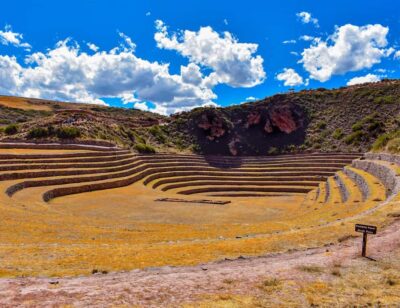
Moray, Maras Salt Mines & Chinchero Weavers Tour
Read our review →
Sacred Valley, Pisac, Ollantaytambo, Salt Mines Moray
Read our review →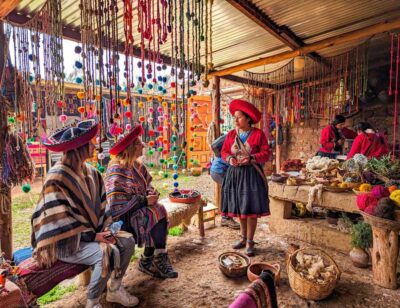
Chinchero,Moray & Salt Mines drop-off in Ollantaytambo
Read our review →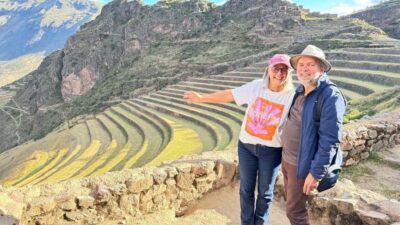

Moray, Maras Salt Mines & Chinchero Weavers Half-Day
Read our review →Browse the lists this tour appears in