
Reviewed · MARAS & MORAY TOURS
Cusco: Moray, Maras Salt Mines, and Chinchero Weavers Tour
The most unusual part of this trip is how much Andean variety fits into one half-day. You go from a Quechua weaving workshop to the circular terraces at Moray, then on to the 3,000 salt pools at Salineras. Between stops, the road opens to wide views of farms and high mountains.
I like the practical route and the small-group limit of 12. I also like that the tour includes Chinchero’s natural dye work, not just ruins and photo stops. You can watch artisans draw colors from plants and see a living craft tradition rather than only stone remains.
The main caution is the add-on cost. The advertised $14 price does not include the archaeological entrance fee of $19, or 70 soles, and the $6, or 20 soles, salt-mine fee. You also finish at Plaza Regocijo instead of returning to your hotel, and the bilingual commentary may feel rushed when the guide switches between languages.
Key points to know before you book
- Three very different stops: Chinchero focuses on weaving, Moray on Inca farming, and Salineras on salt production.
- High-altitude sightseeing: Chinchero sits at 3,762 meters, while Moray reaches 3,450 meters, or 11,318 feet.
- About six hours on the road: The trip includes several bus rides, with the longest return leg lasting about 80 minutes.
- Budget price, extra fees: The $14 tour price excludes both site entrance charges.
- Small-group format: The group is limited to 12 people, with English and Spanish guiding.
- One important shopping warning: Check fiber labels carefully at the weaving stop, especially if you want genuine alpaca.
Why this Cusco half-day route works
I like this outing because it gives you a broad taste of the Sacred Valley without taking a full day away from Cusco. You see farming, local craft, colonial buildings, and salt production in one compact circuit.
It is not a slow, reflective visit to any one place. Each stop lasts about 30 to 40 minutes, and much of the day passes from a coach window. Still, the mix is strong. Moray gives you the dramatic view, Chinchero gives you cultural context, and Salineras gives you a site that still functions today.
The tour carries a 4.4 rating from 15 ratings, and the most consistent praise goes to the organization, punctual pickup, helpful guides, and clear explanations. Guide Victor receives especially warm approval for his broad command of the subjects and his care with the group. The experience is best for you if you want an efficient overview and do not mind a quick pace.
More Maras salt pan and Moray trips:
- From Cusco: Sacred Valley & Maras Salt Mines Tour with Lunch
★ 4.8 · 2,227 reviews - From Cusco: Moray, Maras Salt Mines & Chinchero Weavers Tour
★ 4.8 · 1,925 reviews - Cusco: Sacred Valley, Pisac, Ollantaytambo, Salt Mines Moray
★ 4.6 · 1,058 reviews
Leaving Cusco for Chinchero at 3,762 meters
Pickup begins in Cusco, followed by roughly 50 minutes in the coach. The first stop is Chinchero District, a high Andean town at 3,762 meters. That elevation matters. If you have only just arrived in Cusco, even a short walk and a few steps can feel harder than expected.
Chinchero combines a visit, a short break, photos, shopping, and a walk in about 30 minutes. The town is known here for its preserved colonial architecture and thin-stoned buildings, while the workshop visit centers on Quechua weaving.
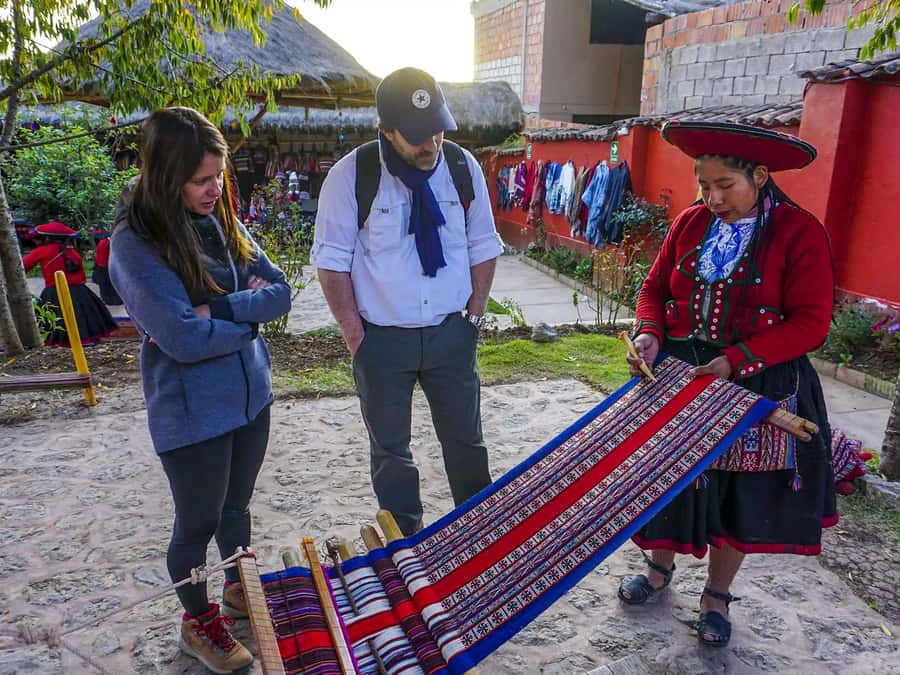
The most useful part of the demonstration is the color-making process. Artisans show how natural plants are used to extract dyes for Andean textiles and artwork. This helps you understand the work behind the bright colors you see in Cusco shops.
You should keep your expectations clear. This is also a shopping stop. One serious complaint described a workshop selling synthetic material as genuine alpaca and said it was not the workshop shown in promotional pictures. I cannot verify every detail of that account, but the warning is practical: ask what a textile is made from, compare labels, and do not feel pressured to buy.
If the workshop is important to you, confirm before departure which location you will visit. The supplied tour details promise a weaving workshop, but they do not name a specific one. That distinction matters if you have a particular Chinchero cooperative in mind.
Moray and the Inca farming terraces
After Chinchero, the coach continues for about 35 minutes to the Moray archaeological complex. You get around 40 minutes here for a guided visit, walking, photographs, and scenic views.
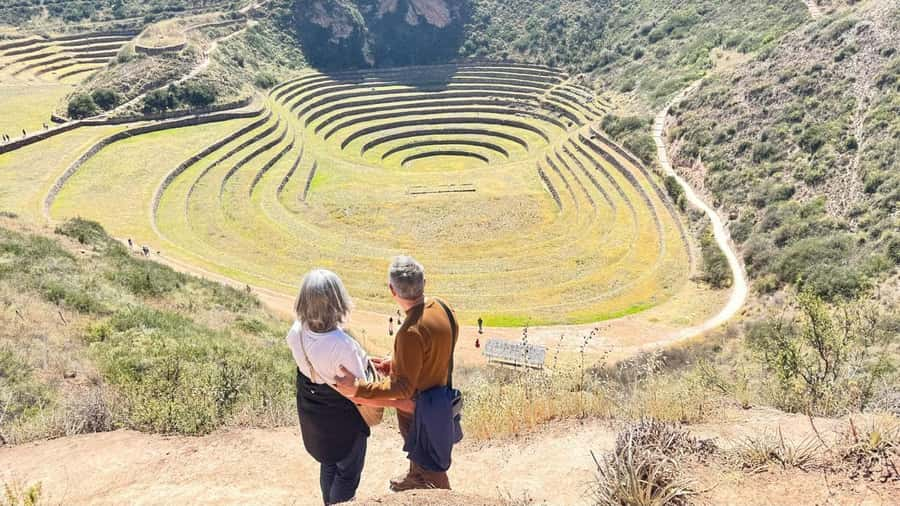
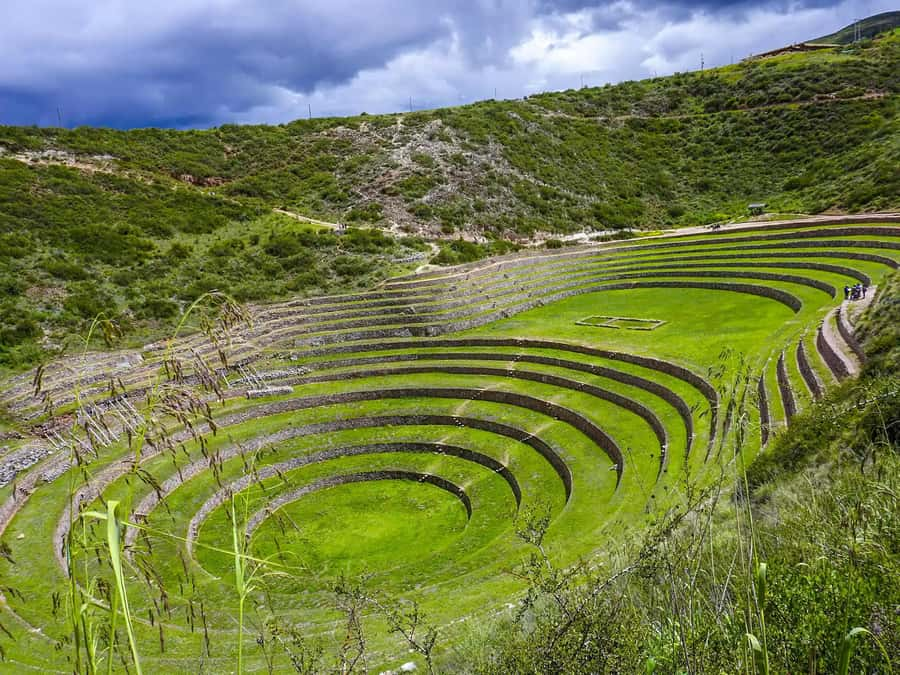
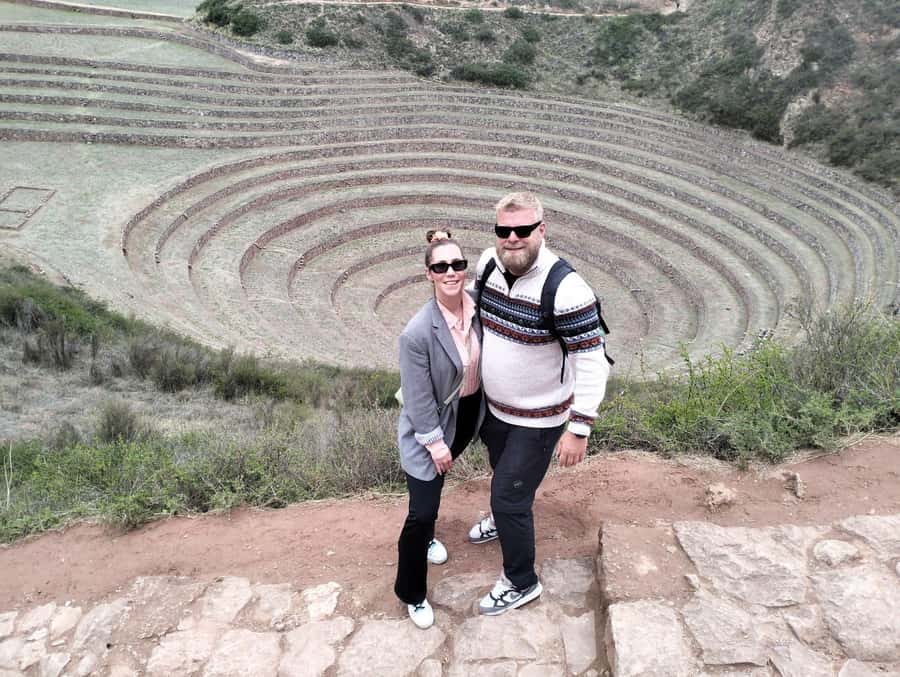
Moray is memorable because of its huge circular terraces cut into the earth. The rings descend toward a central area, creating a pattern that looks almost designed for a giant amphitheater. The site also includes an irrigation system, which points to careful farming rather than simple decoration.
The altitude is 3,450 meters, or 11,318 feet. Take the walk slowly, especially if you are still adjusting to the Andes. Comfortable shoes are important, since this stop involves walking and uneven archaeological ground.
The value of a guide is clear at Moray. Without an explanation, you may see a beautiful set of circles and move on. With context, you can think about how terraces, water, soil, and elevation shaped Inca agriculture. The tour allows only about 40 minutes, so you will get the main view and explanation rather than a long archaeological study.
Bring your camera, but do not let the photo stop take the whole visit. The surrounding mountains and farmland are part of what makes Moray special. I would first listen to the explanation, then use the remaining time for pictures.
Maras village and its thin-stoned buildings
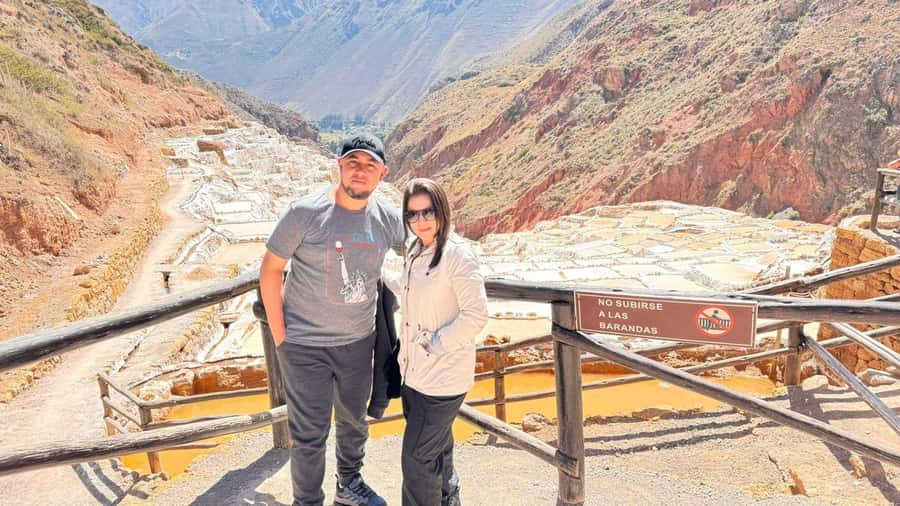
The next coach ride lasts about 40 minutes and brings you toward Maras. The supplied timing groups Maras with the salt mines, but the route includes a look at Maras Village and its colonial architecture.
This is a quieter part of the day. You see thin-stoned buildings and preserved colonial features before continuing to Salineras. The stop gives you a useful reminder that the Sacred Valley is not only about major Inca ruins. Towns, farms, churches, workshops, and working industries all form part of the region’s character.
Do not expect a long independent exploration of Maras. The schedule is tightly arranged, and the main attraction of the outing is the combination of sites rather than extended time in the village. If you enjoy architecture and ordinary town life, pay attention during the drive and listen for the guide’s explanation.
A few more Sacred Valley days worth weighing up
- Cusco:Chinchero,Moray & Salt Mines drop-off in Ollantaytambo
★ 4.8 · 793 reviews - Sacred Valley: Chinchero, Moray, Ollantaytambo & Pisac+Lunch
★ 4.8 · 501 reviews - Sacred Valley: Maras & Moray by Quad Bike from Cusco
★ 4.6 · 418 reviews - Pisac Indian Market and Ollantaytambo Fortress with Lunch
★ 4.5 · 395 reviews
Salineras and the 3,000 salt pools
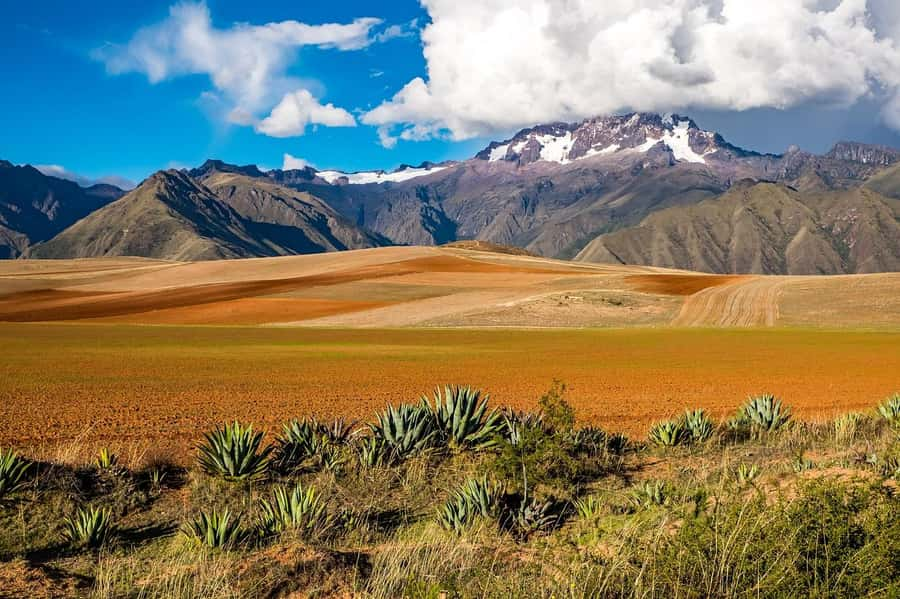
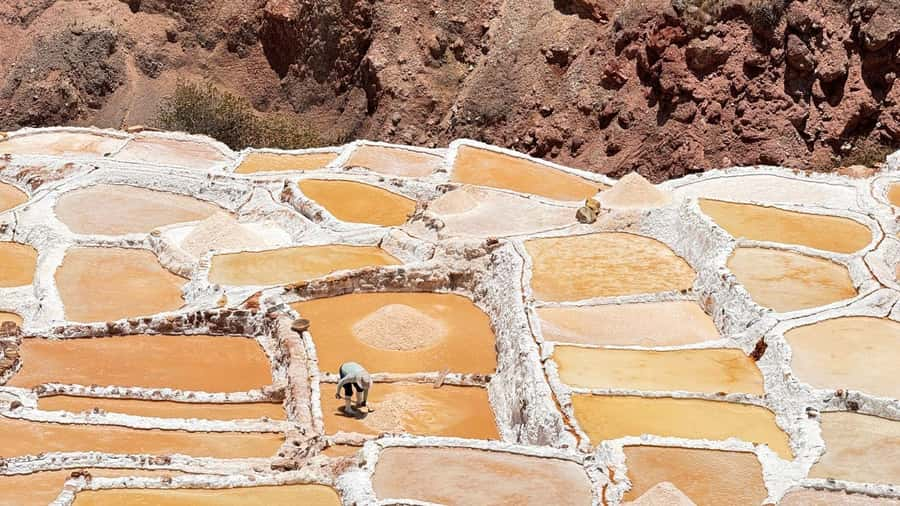
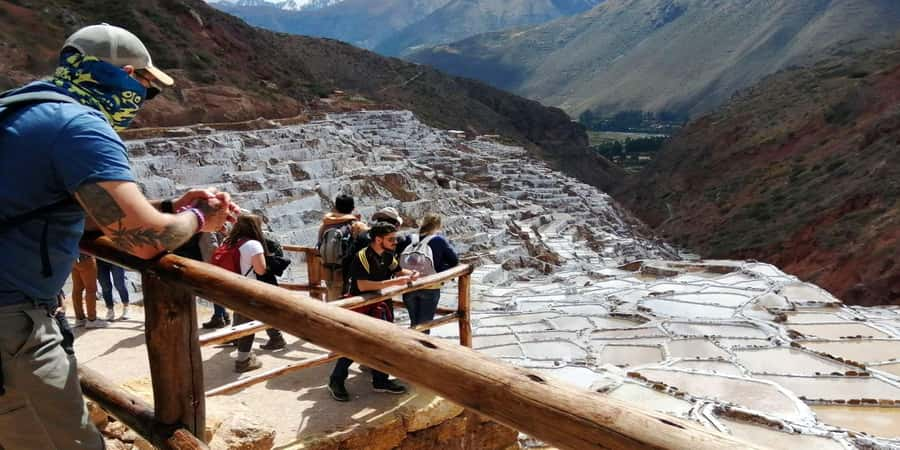
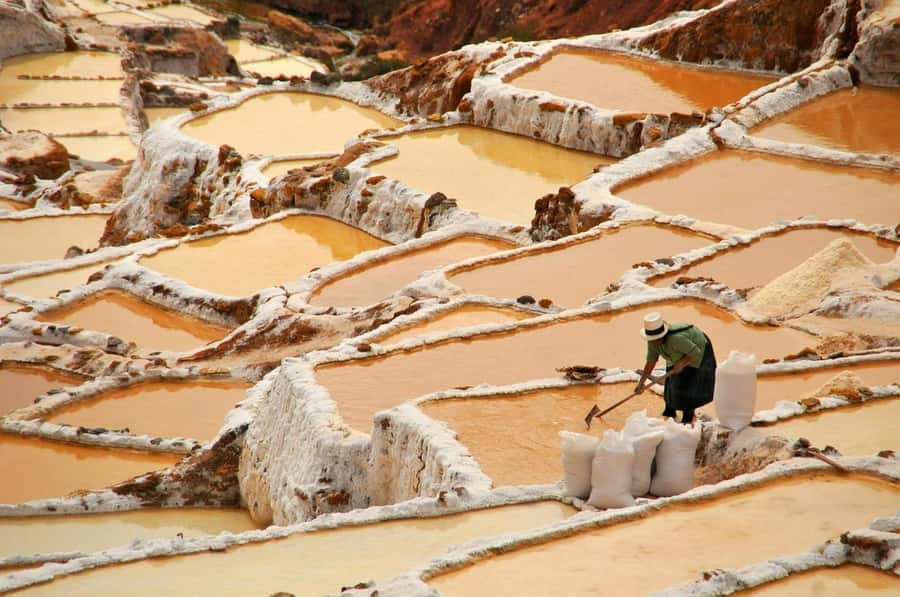
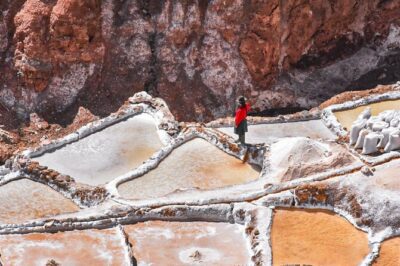
The Salineras salt mines are the visual high point for many people. About 3,000 small pools spread across the mountainside, each one fed by salty water. The pools are shallow and arranged in a dense pattern, so the site looks completely different from Moray.
Salt production here reaches back to pre-Inca times and continues today. The salt is processed and distributed around the region, which gives the visit a useful connection to present-day local work. You are not simply looking at an abandoned site. You are seeing a working tradition tied to the area.
The scheduled visit lasts about 40 minutes and includes a guided walk, sightseeing, and photographs. Wear shoes you can walk in and bring cash. The salt mines have a separate entrance charge of $6, or 20 soles, which is not included in the tour price.
The road back to Cusco takes about 80 minutes, making this the longest bus ride of the day. The tour finishes at Plaza Regocijo rather than at your hotel. Plan your evening around that ending point, especially if you have dinner reservations or another timed activity.
What the $14 price really covers
At first glance, $14 is a strikingly low price for pickup, transport, a bilingual guide, and a six-hour route. It can be good value if you want to see several places without arranging separate taxis or private transfers.
The advertised price does not cover the archaeological sites fee of $19, or 70 soles, or the Salineras fee of $6, or 20 soles. That adds $25 to the stated price, bringing the listed total to about $39 per person before any purchases. Carry soles as well as a card or other payment method, since the instructions specifically recommend cash.
You can choose a private option, if available at booking, but the standard setup is a small group limited to 12 participants. That is a useful middle ground. You avoid the scale of a large bus tour, while still paying much less than a fully private outing.
The price makes the most sense for you if you value transport and coverage over long visits. If you want to linger at Moray, spend serious time shopping in Chinchero, or study the salt works slowly, a private or custom tour may suit you better.
Guides, language, and the pace of the day
The tour operates in English and Spanish. A bilingual guide can make the day accessible, but switching languages naturally takes time. One rating praised the guide’s information but found the constant change between Spanish and English tiring. That is a fair concern on a six-hour schedule.
Several ratings describe the tour as well organized, with punctual pickup and a good driver. Guide Victor receives particular praise for his explanations and his considerate way of handling the group. Another account praised the archaeological information but felt some facts were repeated and that the English was difficult to follow.
My advice is to stand or sit where you can hear clearly, and ask the guide to repeat a point if needed. The tour covers several subjects quickly, so a little patience helps. The quality of the day will depend heavily on how clearly the guide handles the two languages.
What to bring for the high Andes
Pack light, but take the items listed for a reason:
- Passport
- Comfortable walking shoes
- Sun hat
- Sunscreen
- Camera
- Cash
The sun can be strong at high altitude, even when the air feels cool. Chinchero and Moray are both high, and you will spend time outside at every major stop. Walk at an easy pace and drink water, although the tour information does not specify whether water is supplied.
You should also leave room for the possibility of buying textiles or salt products. At the workshop, inspect the material and ask direct questions before paying. The stop is meant to show traditional techniques, but it is still a commercial visit.
Who should book this tour
I would recommend it to first-time visitors who want a quick introduction to several Sacred Valley sights. It also suits you if you have only half a day free, prefer included transportation, and like a guide to explain what you are seeing.
Families and older visitors should think about the altitude and the walking pace. The tour includes breaks, but it is not a no-walking excursion. People sensitive to elevation may find Chinchero and Moray tiring.
You may want a different plan if the Chinchero workshop is your main reason for booking. The workshop location is not specified, and one serious complaint focused on the difference between the advertised images and the actual stop. Confirm that detail first.
Should you book the Moray and Maras tour?
Book it if you want strong variety at a low starting price. Moray’s terraces, Chinchero’s dye demonstration, and Salineras’ working salt pools give you three distinct experiences, while the small group and included pickup keep the day simple.
Book with caution if you expect a named weaving cooperative, a relaxed schedule, or hotel drop-off. Add the entrance fees to your budget, carry cash, and confirm the workshop details before paying. With those limits understood, this is a useful and affordable half-day introduction to the highland side of the Sacred Valley.
FAQ
How long does the tour last?
The advertised duration is six hours. The route includes coach travel, guided visits, photo stops, and short breaks.
Where does pickup take place?
Pickup is from your hotel in Cusco.
Where does the tour finish?
The tour finishes at Plaza Regocijo. Hotel drop-off is not included.
What languages are available?
The live guide operates in English and Spanish.
How large is the group?
The small-group option is limited to 12 participants. A private tour option is also available if selected.
What is the elevation of Chinchero?
Chinchero is situated at 3,762 meters.
What is the elevation of Moray?
Moray is at 3,450 meters, or 11,318 feet.
Are entrance fees included?
No. The archaeological sites fee is $19, or 70 soles, and the salt mines fee is $6, or 20 soles.
What can you see at the weaving workshop?
You can see local artisans using natural plants to extract colors for Andean art and textiles.
What should you bring?
Bring your passport, comfortable shoes, a sun hat, a camera, sunscreen, and cash.
Just added around Sacred Valley
- Zipline over the Sacred Valley Trip★ 5.0 · 11 reviews
- Visit Pisac from Cusco: Private Transport★ 4.6 · 9 reviews
- Maras and Huaypo lagoon by ATV from Cuzco | Local Operator★ 4.7 · 4 reviews
- Transfer from Cusco to Ollantaytambo★ 5.0 · 30 reviews
- Sacred Valley VIP Tour with Maras and Moray from Cusco★ 4.5 · 35 reviews
- Sacred Valley Private Tour, Moray & Salt Mines Incluided★ 5.0 · 41 reviews
- Salt Mines(Maras),Moray and Chincheros★ 5.0 · 41 reviews
- Excursion to Sacred Valley of the Incas tour – Private service.★ 5.0 · 35 reviews
Maras & Moray Tours, compared.
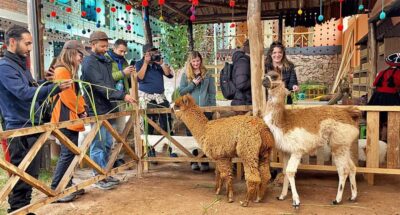
Sacred Valley & Maras Salt Mines Tour with Lunch
Read our review →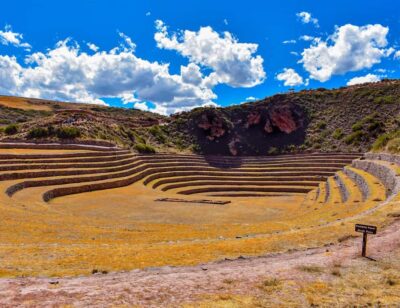
Moray, Maras Salt Mines & Chinchero Weavers Tour
Read our review →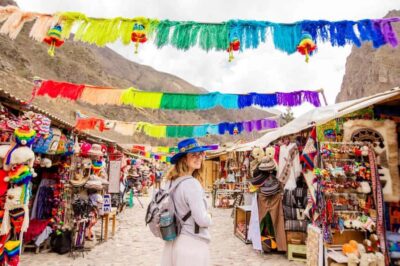
Sacred Valley, Pisac, Ollantaytambo, Salt Mines Moray
Read our review →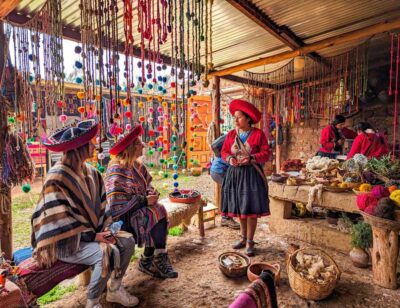
Chinchero,Moray & Salt Mines drop-off in Ollantaytambo
Read our review →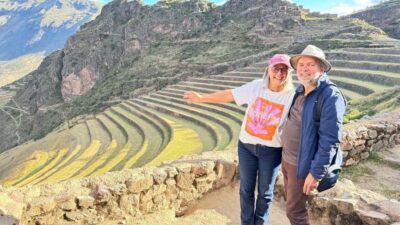

Moray, Maras Salt Mines & Chinchero Weavers Half-Day
Read our review →Browse the lists this tour appears in