
Reviewed · HISTORICAL TOURS
Historic/music Cusco FreeWalkingTour “free drink” Group Tour
Cusco’s best introduction may be on foot, where a single walk links the Cathedral, Inca stonework, Qoricancha, San Blas, and Andean music. I like that this two-hour route gives you both famous sights and smaller cultural stops, including a luthier’s workshop and a performance with traditional instruments.
I also like the small group of about 10 people, which should make it easier to hear the guide and ask questions. The main catch is the price: the booking cost is only $2, but a tip of about 30 soles, or $10, is required for the guide’s service. That makes the real cost closer to a paid walking tour.
Key points to know before you book
- A strong first walk through Cusco: The route begins in the Main Square and covers major Inca, colonial, and artistic sights.
- The required tip changes the value: Plan on about 30 soles, or $10, in addition to the $2 booking price.
- Andean music is part of the route: You visit a luthier and hear instruments being played with city views nearby.
- You finish with a local drink: Choose a Pisco Sour or non-alcoholic Chicha Morada.
- English and Spanish guides are available: Guides such as Erick add history, humor, and practical context.
- Expect walking and stairs: The activity is not suitable for wheelchair users or people over 95.
Why this Cusco walk works as a first-day introduction
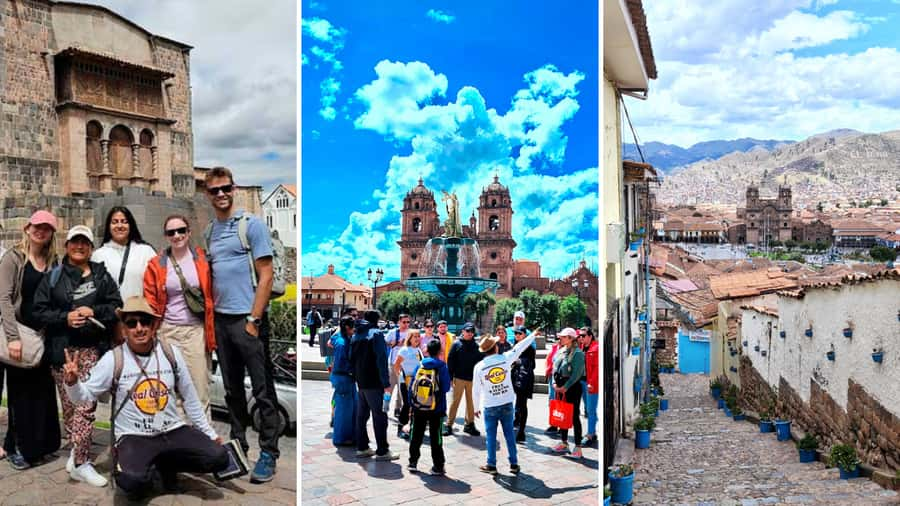
Cusco can feel like several cities layered into one. In the Main Square, Spanish colonial churches frame streets built over Inca foundations. A few blocks away, carefully cut stones show the engineering of the Inca world. Then the streets climb toward San Blas, where workshops, music, and views take over.
This tour connects those pieces in a compact two-hour route. I like that it does not treat Cusco as a string of photo stops. The guide explains why the places matter, then adds local details through music, craft, and food.
That approach suits you if you have just arrived and want a sense of direction before exploring on your own. It also helps if you would otherwise walk past the Inca walls without noticing the unusual joints, symbols, or construction methods.
The booking price is listed at $2 per person, which looks almost symbolic. But you should treat the required gratuity of around 30 soles, or $10, as the meaningful payment for the service. Add those amounts together when comparing this tour with other guided walks.
More Historical Tours in Cusco:
- Cusco: Historical Guided City Tour with 4 Inca Ruins
★ 4.5 · 99 reviews - Cusco: Historic Walking Tour with Pisco Sour and Music Show
★ 4.6 · 65 reviews - Pisco Sour Secrets: Hands-On Mixology in Historic Cusco
★ 4.5 · 50 reviews
Meeting the guide at Cusco’s Main Square
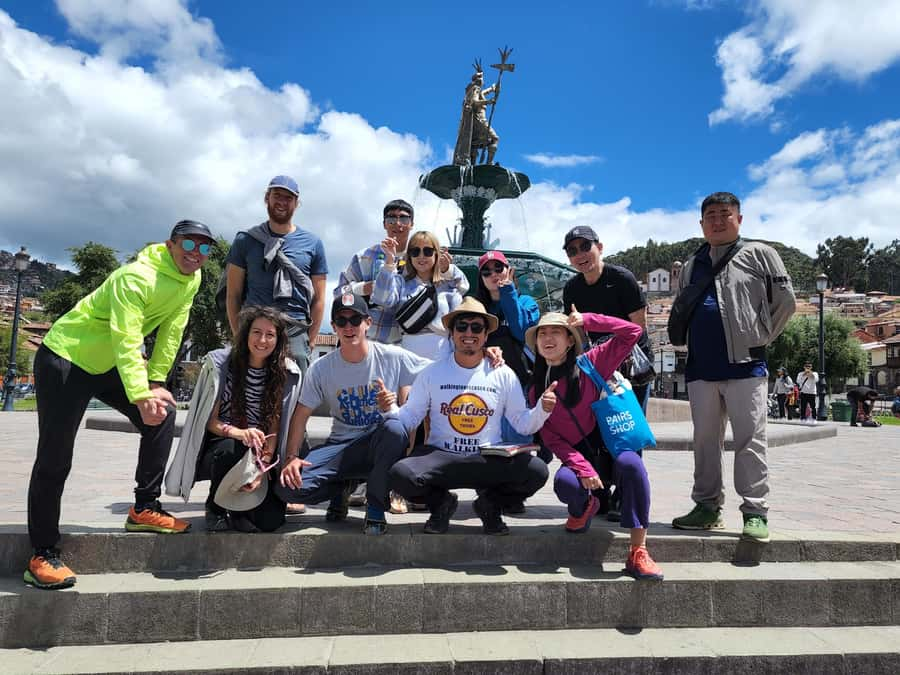
The meeting point is the Inca Fountain on Cusco Main Square, also called Plaza de Armas. The listed coordinates are -13.5167681, -71.9787795.
This is a useful starting place because the square is easy to recognize and puts you beside two of the city’s most important colonial buildings. Your guide speaks either English or Spanish, and the group is expected to contain roughly 10 people.
The small size matters. Cusco’s streets can be noisy, especially around the central square, so staying close to the guide is still sensible. One recorded comment noted that the loudspeaker did not always work well, which is a practical reason to stand near the guide rather than drift to the back.
The walk lasts two hours, so wear shoes suited to uneven streets and bring water. Water is not included. The route is a walking tour rather than a vehicle excursion, and the activity is not suitable for wheelchair users.
The Cathedral and Company of Jesus
The first section introduces you to the Main Square and its grandest buildings. The Cathedral gives you a look at Spanish colonial power and Catholic influence in Cusco. The nearby Company of Jesus adds another striking example of colonial architecture.
The value here is not simply seeing two impressive façades. A guide can explain how the colonial city was built over an older Andean center and help you read the square as more than a place for photographs.
You should expect the guide to pause for commentary rather than rush straight through. This is where the route sets up the contrast that appears again at Qoricancha: colonial buildings on one side, Inca foundations and stonework underneath or nearby.
If you have already spent time in the square, this part may feel familiar. Its usefulness depends on how much context you want. For a first visit, it gives you a clear start and helps place the rest of the walk.
Qoricancha, the Sun Temple
Qoricancha is one of the most important stops on the route. The name refers to the Inca Sun Temple, a place that held major religious importance before the Spanish conquest.
The tour focuses on its historical significance rather than treating it as another church or wall. You get a chance to understand how the site fits into Cusco’s Inca past and the later colonial city.
The information provided does not say that an admission ticket is included, so you should not assume the walk covers entrance fees. The itinerary describes a visit to Qoricancha, but the exact format of the visit is not specified. That distinction matters if you are planning a full museum visit or want extended time inside.
Still, even a guided look at the site can be valuable. The route is designed to explain how Cusco’s past is visible in its buildings, not just in a museum display.
A few more Cusco days worth weighing up
- Cusco: Humantay Lake Tour with Breakfast and Buffet Lunch
★ 4.9 · 2,976 reviews - Cusco: Half-Day City Tour with Sacsayhuaman and Q’enco
★ 4.6 · 1,129 reviews - From Cusco: Vinicunca Rainbow Mountain ATV Tour with Meals
★ 4.6 · 1,060 reviews - City Tour Cusco Qoricancha Sacsayhuaman y Tambomachay
★ 4.7 · 617 reviews
Inca stonework, the 12 and 13 angled stones, and the Andean Trilogy
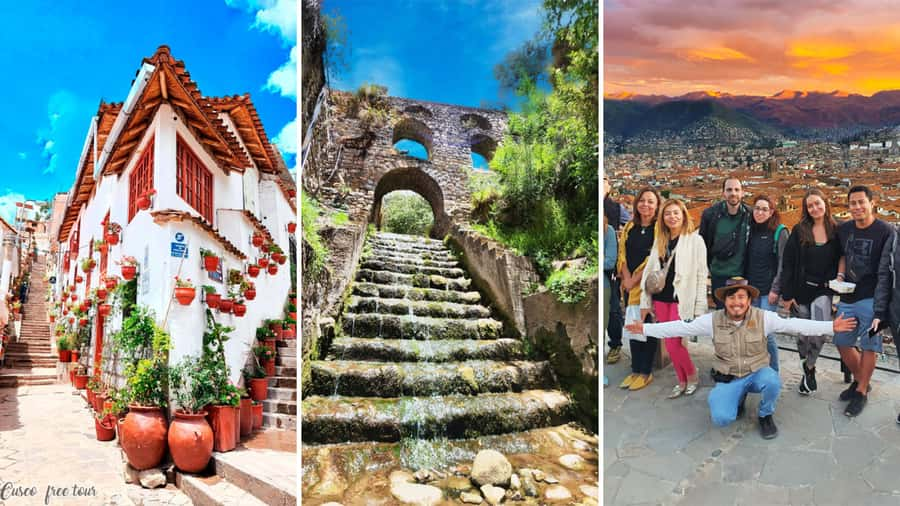
The walk then turns to some of Cusco’s most famous stonework. You will see the legendary 12 and 13 angled stones, examples of the precise fitting that makes Inca masonry so memorable.
Your guide also points out the Andean Trilogy, represented by the condor, puma, and snake carved into an ancient Inca wall. These symbols carry cultural meaning, and the stop gives you a chance to connect the carvings with Andean ideas rather than viewing them as anonymous decoration.
This is one of the strongest parts of the route for curious first-time visitors. You can notice the physical details yourself, but a guide helps explain why particular stones and symbols receive so much attention.
The itinerary also includes Cusco’s most beautiful balcony. The exact balcony is not named, so you should expect a viewing stop rather than a formal attraction with a detailed visit. It adds architectural character to a route already full of old walls and grand churches.
Up toward San Blas
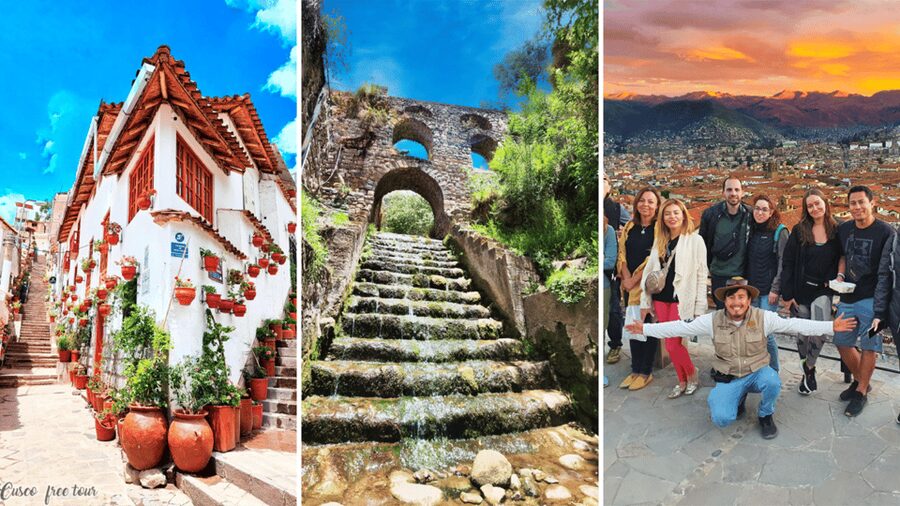
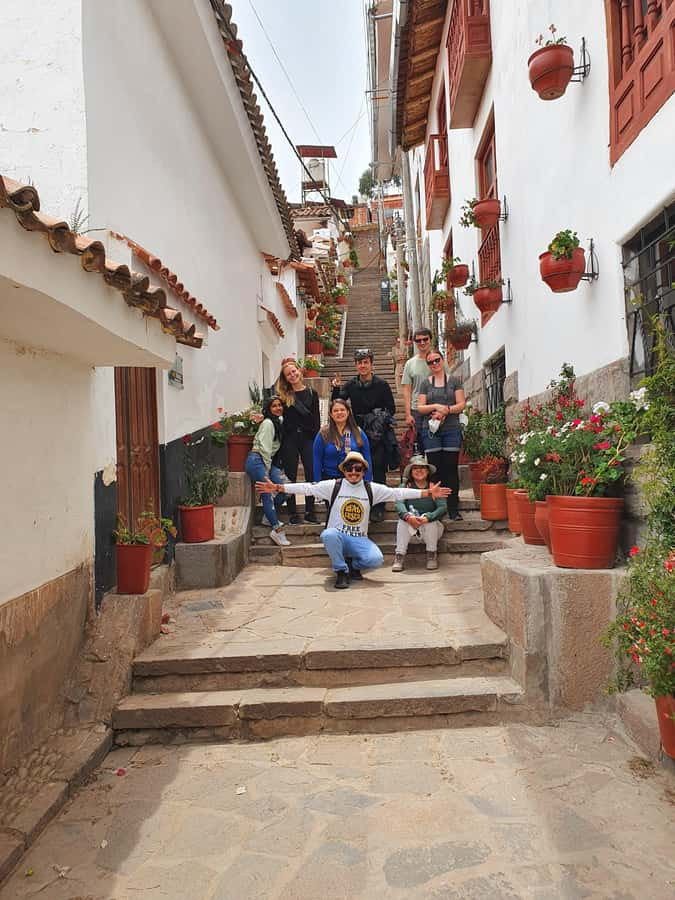
From the central streets, the route continues to San Blas, one of Cusco’s most artistic neighborhoods. The streets are picturesque, but they also rise, so the walk may feel more demanding than the two-hour length suggests.
San Blas gives the tour a welcome change of pace. Instead of focusing only on churches and stone foundations, you see the creative side of the city and learn how local craft remains part of daily life.
I like this section because it makes the experience feel connected to present-day Cusco. The tour is not only about what the Inca built or what the Spanish changed. It also shows you a neighborhood associated with artists and skilled makers.
You should keep your group together on the uphill streets and allow time for the guide’s explanations. A short route can still feel full when it combines history, views, a workshop, music, and several photo stops.
The luthier and Andean instruments
One of the more unusual stops is a visit to a luthier, a craftsperson who makes or works on stringed instruments. You then hear an Andean musical performance and see instruments being played.
This is a real strength of the tour. Many city walks explain architecture but never show how local culture sounds. Here, the music gives you a direct link to Andean traditions, while the luthier visit shows the skill behind the instruments.
The exact length of the performance is not stated, so do not plan on a full concert. Think of it as a cultural demonstration built into the walking route.
The guides have received especially strong praise for explaining Cusco’s past clearly, and this stop adds another layer to that teaching. One guide named Erick was singled out for combining information with humor. That mix can make a history-heavy walk easier to follow.
Views, 7 Borreguitos Street, and Manco Capac
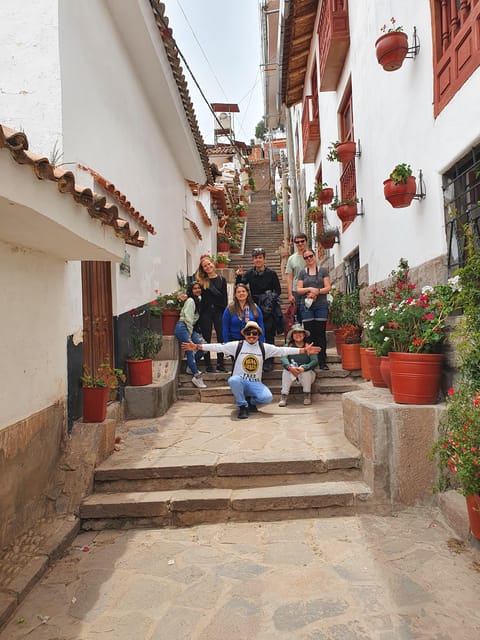
The route includes panoramic city views from San Blas, giving you a chance to look across Cusco after walking through its central streets. The views are a useful pause, especially because the tour spends much of its time among walls, façades, and narrow lanes.
You also stop at 7 Borreguitos Street, described as Cusco’s most picturesque thoroughfare. This is the kind of place where the camera comes out, but the guide’s context makes the stop more than a quick photograph.
The tour ends at the Temple of the First Inca Ruler, Manco Capac. That ending gives the route a clear connection to the early Inca story rather than finishing at a random street corner.
The activity information does not specify the exact walking distance or elevation gain. Since San Blas is reached by uphill streets, I would not choose this as a carefree stroll if you need a flat route or have limited mobility.
Choosing between Pisco Sour and Chicha Morada
At the end, you choose a Pisco Sour, Peru’s national drink, or Chicha Morada, a popular non-alcoholic drink made from purple corn.
The Pisco Sour is a fitting finish to a Cusco introduction, especially if you want to try a well-known Peruvian drink without arranging a separate bar stop. Chicha Morada gives you a good alternative if you do not drink alcohol or simply prefer a sweet, non-alcoholic option.
The drink is described as complimentary, but the guide’s tip is required. Keep that distinction clear. You are not paying only $2 for a free drink and a professional guide. The required gratuity is part of the expected cost of the service.
Personal expenses are not included, and water is not provided. Bring your own bottle and budget for anything else you may want during the walk.
What the praise tells you about the guide service
The strongest pattern in the feedback is the quality of the explanations. Several comments describe the guide as informative, expert, friendly, and clear. One person called the walk a good way to begin time in Cusco, which makes sense given the route’s mix of central landmarks and neighborhood streets.
The cultural material also gets particular emphasis. The luthier visit and Andean instruments were described as a delightful treat, while another comment highlighted music played with beautifully made instruments.
The one clear criticism concerned the loudspeaker. If the device is not working well, hearing every explanation can be difficult in a noisy street. You can reduce that problem by staying close to the guide and asking for repetition when needed.
The overall rating is 4.9 from 11 reviews, a small sample but a strong result. I would place the most weight on the repeated praise for historical explanations, local music, and seeing places you might miss on your own.
Who should book this two-hour route?
I would choose this walk if you want a compact introduction before visiting more sites independently. It suits solo visitors, couples, and small groups who value a live guide but do not want to commit to a full-day tour.
It is especially useful for people interested in:
- Inca construction and symbols
- Colonial buildings in the Main Square
- San Blas crafts and music
- Short cultural activities with a local drink
- A small group rather than a large coach tour
I would hesitate if you need wheelchair access, dislike uphill walking, or want a slow, detailed visit inside every major attraction. The schedule covers many stops, so some locations receive an explanation and a look rather than a long stay.
The language choice is simple: book an English or Spanish guide. If you are sensitive to audio problems, remain near the guide throughout the walk.
Should you book the Cusco Free Walking Tour?
Book it if you want a lively orientation to Cusco that combines major landmarks with details you might not find by wandering alone. The stonework, Andean Trilogy, San Blas music, luthier visit, and final drink give it more character than a basic square-and-church walk.
Just price it honestly. The $2 booking fee is not the full picture because a tip of about 30 soles, or $10, is required. At that effective price, the tour can still offer good value, particularly if your guide explains the sites well and the music stop runs as planned.
I would make this one of your first Cusco activities, then return to the places that catch your interest. Bring water, wear practical shoes, stay close enough to hear, and choose Chicha Morada if you want the local flavor without alcohol.
FAQ
Where does the tour meet?
The meeting point is the Inca Fountain on Cusco Main Square, also called Plaza de Armas. The coordinates are -13.5167681, -71.9787795.
How long does the walking tour last?
The tour lasts two hours.
What languages are available?
The tour is offered with a live guide in English or Spanish.
What landmarks are included?
The route includes Cusco Main Square, the Cathedral, the Company of Jesus, Qoricancha, Inca stonework, the 12 and 13 angled stones, the Andean Trilogy, San Blas, 7 Borreguitos Street, and the Temple of Manco Capac.
Is a drink included?
Yes. You can choose a complimentary Pisco Sour or Chicha Morada at the end of the tour.
Is a tip required?
Yes. A gratuity of around 30 soles, or 10 USD, is required for the guide service.
Is the tour suitable for wheelchair users?
No. The activity is not suitable for wheelchair users or people over 95 years old.
Just added around Cusco
- Waqrapukara 1 day trekking + meals★ 3.9 · 3 reviews
- Visit to the Cochahuasi Animal Sanctuary with rescued animal★ 4.1 · 4 reviews
- Vinicunca Mountain Tour – Full Day Tour to Rainbow Mountain★ 3.4 · 4 reviews
- Valle Sur Cusco | half day★ 4.3 · 3 reviews
- Trek to Humantay Lake from Cusco★ 4.9 · 8 reviews
- Trek to Choquequirao 4 days★ 3.8 · 4 reviews
- rainbow mountain full day★ 5.0 · 44 reviews
- Tour to the HUMANTAY LAGOON from CUSCO★ 5.0 · 35 reviews
Historical Tours, compared.
Lima’s Vibrant Heritage: Exploring the City’s Landmarks Half-day
Read our review →
Historic Center Street Food, Market, and Eateries Tour
Read our review →
Walking tour in the Historic Center of Arequipa
Read our review →
Historic Downtown, Miraflores & Catacombs Private Tour
Read our review →
Machu Picchu Private Archaeological and Historical Guided Tour
Read our review →
Browse the lists this tour appears in