
Reviewed · 2-DAY EXPERIENCES
2 Days Tour to Sacred Valley and Machupicchu
The big draw here is the way two days link the Sacred Valley’s farming sites and Inca towns with Machu Picchu. You move from Chinchero’s market and terraces to Moray’s giant agricultural bowls, the Maras salt pans, Ollantaytambo, and finally the famous citadel itself.
I like the private format and the careful transfer plan. I also like that the route includes places many quick Machu Picchu trips skip, especially Moray and Chinchero. The main drawback is the pace: this is a full two days, with an early start, several long transfers, and little spare time.
Key points at a glance

- Moray and Maras add real variety: See Inca agricultural terraces and working salt ponds in the same stretch of the valley.
- Ollantaytambo is more than a photo stop: You explore the old Inca town and its huge ceremonial ruins before taking the train.
- Machu Picchu gets a private 2.5-hour tour: Your guide leads the main route, then you have some time to walk on your own.
- The private setup gives your group flexibility: Only your party joins the activity, useful when questions, walking speed, or timing vary.
- The return is tightly scheduled: The 14:55 train requires you to keep an eye on the clock after your Machu Picchu visit.
- The price includes a lot of moving parts: At $529 per person, value depends on how much you appreciate organized transport, guides, tickets, and one hotel night.
Why this two-day route works

The Sacred Valley is not one single sight. It is a long corridor of farms, market towns, old terraces, and Inca fortresses, and this tour gives you a broad look before Machu Picchu. That matters because Machu Picchu makes more sense when you have already seen how the Incas shaped food production, water, stone, and mountain settlements.
The route also avoids the common mistake of treating Machu Picchu as a stand-alone day trip from Cusco. You reach Ollantaytambo first, then continue by train to Aguas Calientes. On the second morning, you are already at the base of Machu Picchu rather than trying to fit the entire journey into one exhausting day from Cusco.
The private format is another strong point. Your group alone takes part, so the guide can spend more time on questions and adjust explanations to your interests. Service feedback repeatedly highlights prompt pickups, friendly support, good coordination, and the attention of Carlos and his team. Carlos Rios is also singled out for staying attentive, answering questions, and helping keep the experience easy to manage.
There is a practical tradeoff. Private does not mean slow or leisurely here. The day begins around 6:30 or 7:00 in Cusco, depending on the confirmed pickup arrangement, and the first day packs in several major sites. You should book this for efficient sightseeing, not for long café stops or unplanned wandering.
A few more Machu Picchu days worth weighing up
- From Cusco: 2-Day Trip to the Sacred Valley and Machu Picchu
★ 4.6 · 265 reviews - Cusco: Machu Picchu 2-Day Inca Trail with Panoramic Train
★ 4.9 · 260 reviews - From Cusco: 2-Day Inca Trail to Machu Picchu
★ 4.2 · 244 reviews
Chinchero begins the morning with Inca stonework
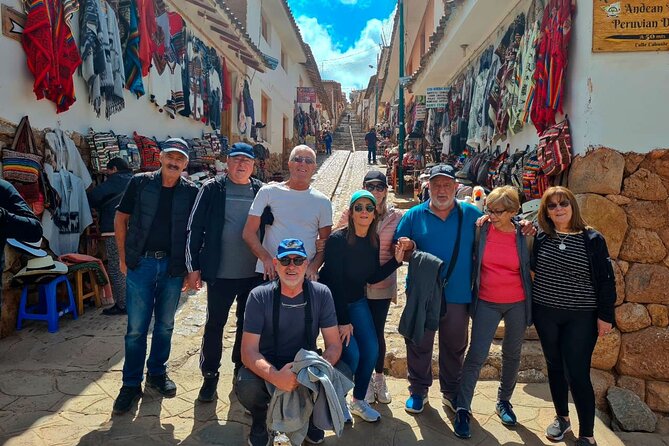
The first stop is Chinchero, where the colonial church, traditional market, archaeological center, and farming terraces share the same visit. You spend about 45 minutes to an hour here, which is enough for an introduction but not enough for a relaxed market morning.
Chinchero is useful as a starting point because it puts everyday agriculture beside monumental Inca construction. You can look across the terraces and see that the Incas were not only building temples and fortresses. They were organizing food production on steep ground, using carefully shaped fields and water systems.
The market gives the stop a local, practical feel. It is also one of the places where you may want to protect your time. If handicrafts interest you, browsing can easily stretch beyond the planned visit, and the rest of the day does not have much room for delay.
The colonial church adds another layer. The stop is not only about ruins, and that mix of Inca foundations, Spanish religious architecture, market activity, and farmland makes Chinchero a good first lesson in how cultures overlap in the Cusco region.
Moray shows the Incas thinking in microclimates

Moray is one of the most unusual sites on the route. Instead of a fortress or temple, you see enormous circular terraces carved into a natural basin. Each level sits at a different depth, creating changes in temperature and growing conditions.
The site is often described as an Inca agricultural laboratory, though the exact purpose is still discussed. The useful point for you is clear: Moray shows careful experimentation with crops, soil, water, and altitude. The tour explains how the terraces may have helped identify suitable conditions for different plants.
The walk is short in the schedule, but the setting rewards a guide who can explain what you are seeing rather than simply point at the circles. This is one of the stops where a private guide can make a noticeable difference. Ask how the terrace walls, drainage, and changing levels worked together.
The schedule combines Moray with the Maras salt mines in a 1 hour 15 minute segment. That means both sites receive a brisk visit. You get a strong overview, but you should not expect a long, quiet walk around either one.
Maras connects an old salt system with living work

The Maras salt mines are made up of many small salt ponds arranged along the mountainside. Water flows through the system, and salt is collected from the evaporation process. The work remains tied to the local community, so this is not simply an abandoned archaeological site.
That living connection gives Maras a different feel from Moray. At Moray, the focus is on agricultural design and Inca engineering. At Maras, the focus shifts to a resource that has been collected and managed through the pre-Inca, Inca, and colonial periods and continues to support local residents.
You will want comfortable shoes and a little patience here. The visit can involve uneven ground, and the schedule is tight. The tour information does not specify the exact walking route, so ask the guide where you will stop and how much time is available for photographs.
Moray and Maras work well together because they show two kinds of resource management. One uses terraces and irrigation to grow crops. The other uses water, evaporation, and hundreds of salt pools to produce a valuable mineral.
Same base, a completely different kind of day:
- From Cusco: Full-Day Group Tour of Machu Picchu
★ 4.7 · 1,767 reviews - Machu Picchu Day Trip from Cusco
★ 4.5 · 1,644 reviews - Machu Picchu: Full-Day Tour from Cusco with Optional Lunch
★ 4.6 · 927 reviews - Cusco: 4-Day Inca Trail to Machu Picchu with Accommodation
★ 4.8 · 432 reviews
Urubamba provides a useful pause
After the morning stops, the route continues to Urubamba for a buffet lunch. This is a sensible break in a busy day. You have already visited several sites, and a sit-down meal gives you a chance to reset before the final ruins and train journey.
The meal is included, which helps the $529 price feel more predictable. You are not left to find food during a narrow transfer window. Still, lunch is described as a buffet rather than a specific restaurant or menu, so diners with strict food needs should ask what choices will be available before departure.
Urubamba also helps you understand the Sacred Valley as a settled agricultural area rather than just a chain of monuments. The town sits amid the valley route that links the major sites, and the pause breaks up what could otherwise feel like one long sequence of buses and ruins.
Ollantaytambo is the day’s strongest Inca town
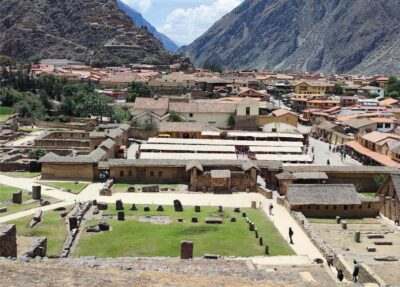
Ollantaytambo is a highlight because it combines a living town with major Inca remains. You explore the old streets and the archaeological park with a guide before boarding the train to Aguas Calientes.
The ruins are dramatic, with large stonework and high terraces rising above the settlement. The site served important military, religious, and administrative purposes, and its position made it a key point in the Sacred Valley. Your guide’s explanation matters here because the scale of the stones can distract from how the town and terraces fit together.
The one-hour visit is enough to see the main features, but it is not generous. Ollantaytambo deserves more time than a rushed photo stop, especially if you enjoy architecture or want to understand the connection between the town and the ruins. The good news is that the train departure creates a clear structure. You know why you must keep moving.
From Ollantaytambo, the train takes you to Aguas Calientes, where you spend the night in a hotel. This overnight stop is one of the tour’s most useful choices. It removes the need to return to Cusco after Machu Picchu and places you close to the next morning’s bus ride.
Machu Picchu gets the time it needs

The second day begins with the bus from Aguas Calientes to the Machu Picchu archaeological site. Once inside, a private guide leads a 2.5-hour visit through the main streets and principal areas of the citadel.
That length is important. Machu Picchu can feel confusing without a route, especially when stone walls, plazas, terraces, and ceremonial spaces appear one after another. A guided visit gives you a framework for the site instead of leaving you to guess what each area was used for.
The tour description also allows time after the guided portion for independent exploration. You can revisit plazas connected with the site’s spiritual and ceremonial functions and climb carved stone stairs at your own pace, within the access rules and time allowed by your admission.
Do not treat this as unlimited free time. The 14:55 train sets a firm deadline. After descending to Aguas Calientes, you buy lunch on your own, then board the train back to Ollantaytambo. Private transport takes you from the station to Cusco and back to the meeting point or your hotel.
This is where good coordination matters most. The service record places strong emphasis on punctual transport, quick answers, and help when plans change. You should still keep your belongings organized and confirm the train time with your guide before leaving the archaeological site.
What the $529 price means

At $529 per person, this is not the cheapest way to see Machu Picchu. The price makes more sense if you value a private activity, organized transfers, admission tickets, a hotel night in Aguas Calientes, a guided Machu Picchu visit, and the Sacred Valley stops in one package.
The tour also includes a buffet lunch in Urubamba. Lunch in Aguas Calientes is on your own, and the available information does not specify every hotel feature or the exact train service, so those are worth confirming before you pay.
You are also paying for reduced planning pressure. The route involves road transport, a train connection, an overnight stay, a morning bus, a protected archaeological site, and a return transfer. Handling each part yourself can be done, but it takes more coordination.
The value is weaker if you want a slow cultural trip. The first day is packed, and the second day has a fixed return train. For a short visit to Cusco, though, the package covers an impressive amount of ground and gives you a guide for the places where context adds the most.
Who should book this experience
I would choose this tour if you have only two days for the Sacred Valley and Machu Picchu and want one company responsible for the main connections. It suits couples, families, friends, and solo visitors who prefer a private group rather than joining a large bus tour.
It is also a good match if you care about service. The strongest pattern in the service feedback is attention from Carlos and the wider team, along with timely pickups, helpful transfers, friendly guides, and quick solutions when plans need adjusting.
You may want another option if you dislike early mornings, prefer long visits at each archaeological site, or want to choose every meal and hotel yourself. The schedule is efficient, but it is not flexible in the way an entirely private custom trip could be.
Cancellation is straightforward but strict: you need to cancel at least three full days before the local start time for a full refund. Changes made inside that period are not accepted.
Should you book it?
Book this two-day tour if you want the main Sacred Valley sights, a night in Aguas Calientes, and a guided Machu Picchu visit without arranging every ticket and transfer yourself. The combination of Moray, Maras, Ollantaytambo, and Chinchero gives you more context than a Machu Picchu-only trip.
The key question is pace. If you can handle an early start and a tightly planned first day, $529 buys a well-organized route with private attention and strong support from Carlos and his team. If you want quiet walks, extended market time, or a slower stay in the valley, add more days and build the schedule yourself.
FAQ
How long is the tour?
The experience lasts approximately two days. The first day covers the Sacred Valley and ends with an overnight stay in Aguas Calientes. The second day is devoted mainly to Machu Picchu and the return journey to Cusco.
Where does the tour start?
The listed meeting point is Av. El Sol 580, Cusco 08002, Peru. Pickup is described as beginning at about 6:30 am, while the stated activity start time is 7:00 am, so confirm your exact pickup time after booking.
Is this a private tour?
Yes. Only your group participates in the activity. This allows the guide to focus on your party and respond to your questions and walking pace.
What is included at Machu Picchu?
Admission is included, along with a private guided visit lasting about 2.5 hours. You then have some time to explore independently before returning to Aguas Calientes.
Is lunch included?
A buffet lunch in Urubamba on the first day is included. Lunch in Aguas Calientes on the second day is not included.
What time is the return train?
The return train is scheduled for 14:55 from Aguas Calientes to Ollantaytambo. From there, private transport takes you back to Cusco and the meeting point or your hotel.
Just added around Machu Picchu
- Private Tour Guide in Machupicchu from Aguas Calientes.★ 5.0 · 40 reviews
- Inca Trail Machu Picchu 4 Days★ 5.0 · 39 reviews
- Machupicchu Guide Service★ 5.0 · 42 reviews
- Machu Picchu, Cusco & Lima 7-Day Tour★ 5.0 · 30 reviews
- 7 Days: Lima, Ica, Cusco & Machupicchu with local flights★ 5.0 · 52 reviews
- Machu picchu one day by train all included★ 4.5 · 53 reviews
- Exclusive Huayna Picchu Tour in 1 Day from Cusco★ 5.0 · 31 reviews
- Wonderful Cusco 5-Day Tour with Entrance to Machupicchu★ 5.0 · 46 reviews
2-Day Experiences, compared.
2-Day Trip to the Sacred Valley and Machu Picchu
Read our review →
Machu Picchu 2-Day Inca Trail with Panoramic Train
Read our review →
2-Day Tour Colca Canyon in Arequipa with end in Puno
Read our review →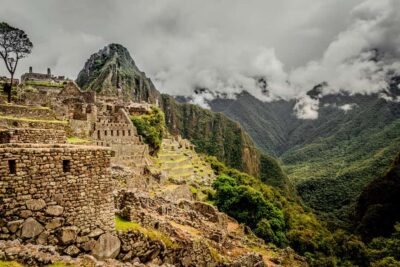
Lake Titicaca 2-Day Tour to Uros, Amantani and Taquile
Read our review →Browse the lists this tour appears in