
Reviewed · FOOD & DRINK
Lima: Food Tour on Local Market
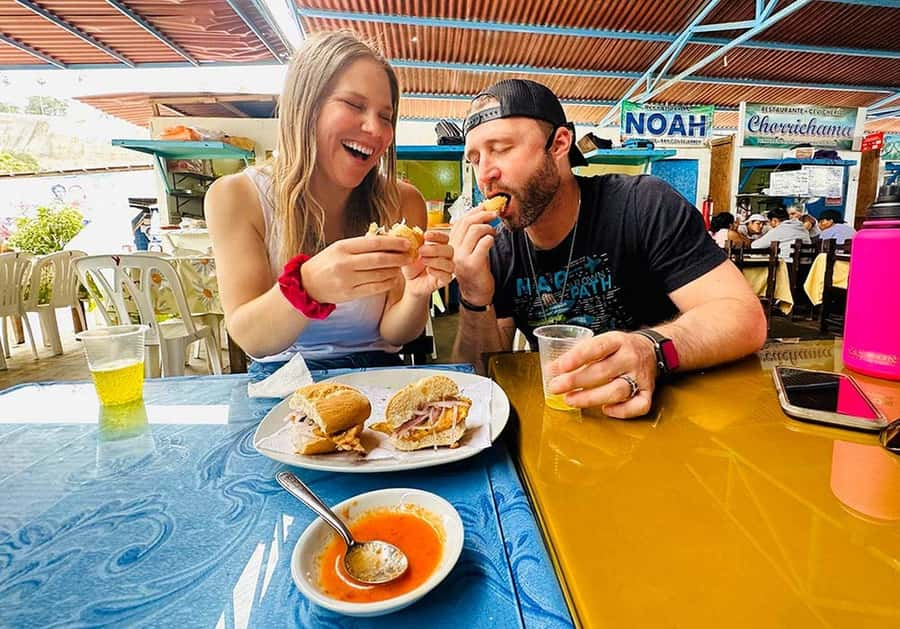
Lima’s best introduction may come one bite at a time. This three-hour walk moves through Barrios Altos, Chinatown, the Central Market, and local food stops, with nine Peruvian snacks included in the $75 price. You get ceviche, anticuchos, picarones, lucuma, Chinese-Peruvian bites, and other foods that would be hard to order with confidence on your own.
I like two things here. First, the food is prepared by local vendors, so you are tasting everyday Lima rather than a polished restaurant version of Peru. Second, the route links food with culture, especially the Chinese influence in Chinatown and the long-running street-food traditions around the market.
The main drawback is the price. At $75 for three hours, this is not a cheap snack crawl, and the tour involves walking through busy central streets. You should also arrive hungry, since eating a full meal beforehand would work against the point of the experience.
Key points to know before booking
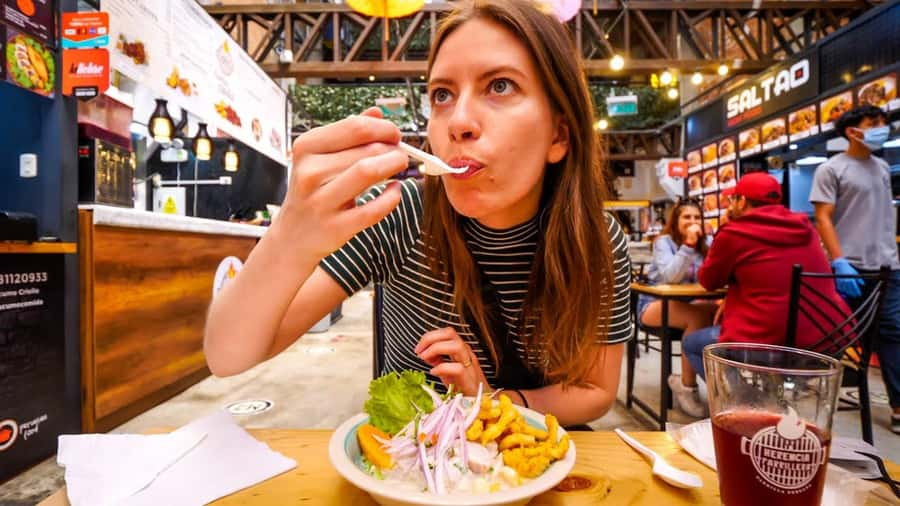
- Nine tastings are included: Ceviche, choclo con queso, papa rellena, siu mai, min pao, lucuma juice, anticuchos, picarones, pan con chicharrón, and emoliente are part of the food trail, with the exact serving order subject to the route.
- The tour starts and ends at Jr. Cusco 400: Transportation to and from the meeting point is not included.
- Chinatown adds useful context: You learn how Chinese cooking and migration shaped Peruvian food, then taste dishes such as siu mai and min pao.
- Giovanna has led the experience: One particularly strong outing became a private tour with Giovanna, who explained the food and local culture in detail.
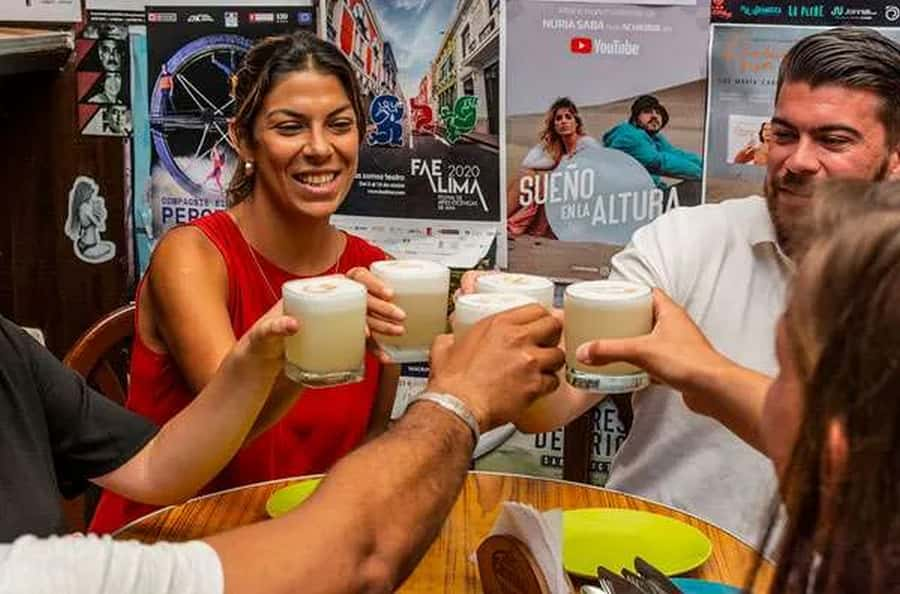
- Pisco Sour costs extra: The final stop at Bolivarsito Bar includes the option to order one, but it is not part of the tour price.
- You can cancel up to 24 hours ahead: The tour also offers reserve-now, pay-later booking and English or Spanish guiding.
Why this food walk works in central Lima
Lima food tours can easily become a parade of famous dishes with little sense of place. This route has a better idea: it uses food to explain the city. You begin in Barrios Altos, pass through Chinatown, enter the Central Market, and finish with a drink or fruit stop. Each neighborhood gives the next tasting a bit more meaning.
The route also gives you a useful first look at central Lima. You are not confined to one restaurant or a cooking studio. You see food being sold in the places where local residents buy and eat it. That makes the experience more direct, though it also means you should expect city streets rather than a quiet, carefully staged setting.
The tour is advertised as one of the top tours in Peru, but rankings are less useful than the actual plan. The practical question is whether you want a compact introduction to Lima through small portions. If you do, the range of food and the guide’s explanations make the $75 easier to justify.
More Food Tours in Lima
- Lima: Ultimate Peruvian Food Tour
★ 4.9 · 700 reviews - Lima: Historic Center Street Food, Market, and Eateries Tour
★ 4.9 · 216 reviews - Experience Lima: Taste 12 Snacks and Visit Top Monuments
★ 5.0 · 138 reviews
Barrios Altos starts with familiar Peruvian comfort food
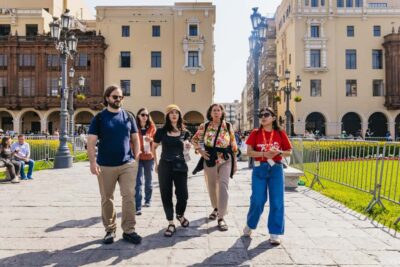
The walk begins at Jr. Cusco 400, followed by a stroll through Barrios Altos. Your first tastes include choclo con queso and papa rellena, two foods that show how simple ingredients can become satisfying street fare.
Choclo con queso pairs large-kernel Peruvian corn with cheese. It is a good early tasting because it is straightforward and lets you focus on the texture of the corn. Papa rellena, a stuffed potato preparation, is more substantial and gives you a sense of the hearty food often associated with Peruvian home cooking and street stalls.
The Barrios Altos portion is not only about eating. You walk historic streets and get an early look at central Lima before moving toward the market areas. The pace is described as leisurely, but three hours goes quickly once several tastings and explanations are included.
You should wear comfortable shoes and avoid a large breakfast. The food comes in tasting portions, but nine stops add up. If you are sensitive to rich or fried foods, pace yourself from the start.
Ceviche brings Peru’s coastal flavor into the walk
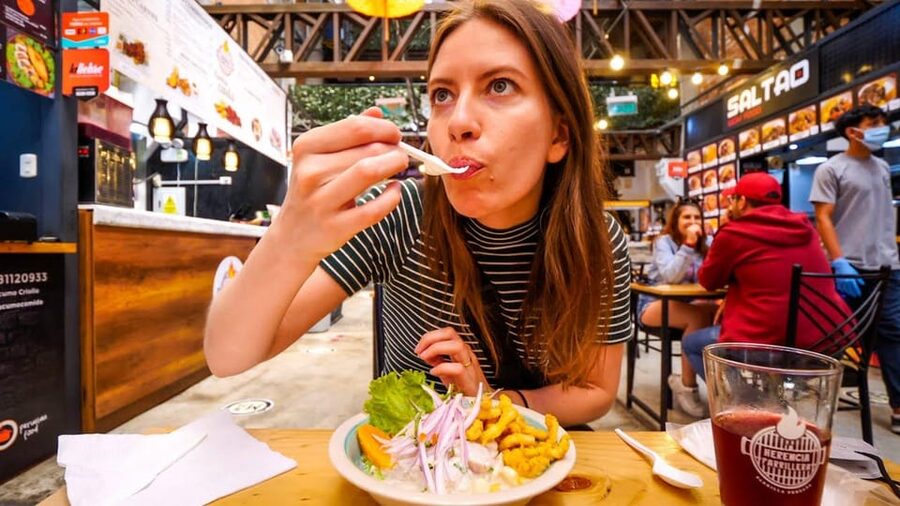
A stop for fresh ceviche follows the Barrios Altos walk. For many people, this is the dish they most want to try in Peru, and tasting it with a guide gives you a useful starting point for understanding its place in local cooking.
The tour describes the ceviche as fresh and flavorful, but it does not specify the exact fish, preparation time, or serving style. That matters because ceviche can vary from one vendor to another. You should expect a sample rather than a full restaurant plate, and the available ingredients may change.
This is one of the more valuable parts of the experience for first-time visitors. A guide can explain what you are eating and help you connect the dish to Lima’s coastal setting without forcing you to decipher a menu on your own. It also breaks up the potato and fried-food tastings with something brighter and lighter.
Chinatown explains Peru’s Chinese culinary connection
Lima’s Chinatown is a major reason to choose this tour instead of a generic market walk. Here, you learn how Chinese culture influenced Peruvian society and food, then try siu mai and min pao.
These tastings point toward the wider Peruvian-Chinese cooking tradition. The tour does not promise a full meal at a formal chifa restaurant, but the small dumpling and bun samples let you see how Chinese dishes became part of Lima’s food culture.
I like this stop because it adds a social and cultural layer to the eating. You are not just checking off dishes. You are seeing how migration and local traditions shaped the food people recognize as Peruvian today.
The Chinatown section may be especially useful if you have little background on Peru. The guide speaks in English or Spanish, and the route is designed to explain the connection as you walk. If your main goal is a long sit-down meal, this stop will feel too brief. If you want context with several tastes, it earns its place.
More Market Tours in Lima
- Market Tour, Tasting of 35 Fruits, and 4-Course Peruvian Cooking Class in Lima
★ 5.0 · 86 reviews - #1 Rated Cooking Classes with Local Market Tour & Pickup
★ 5.0 · 69 reviews - Private Cooking + Market with Maido’s Former Creative Chef (+trasportation)
★ 5.0 · 49 reviews - Lima: Market Tour, 35 Fruits Tasting & Cooking Class
★ 5.0 · 3 reviews
Central Market turns ingredients into a lesson
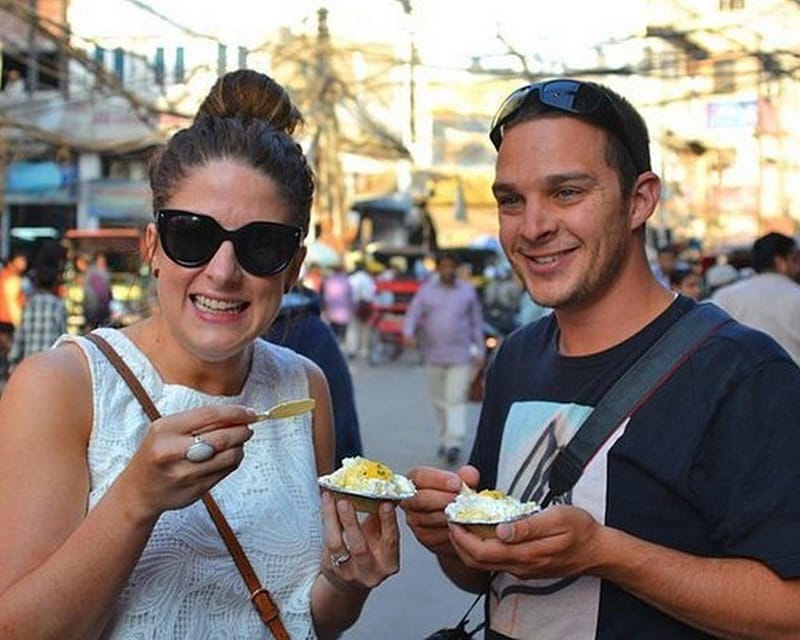
At the Central Market, the focus shifts from prepared snacks to the raw materials and aromas of local cooking. You see traditional ingredients and spices, then try lucuma juice along with more substantial street foods.
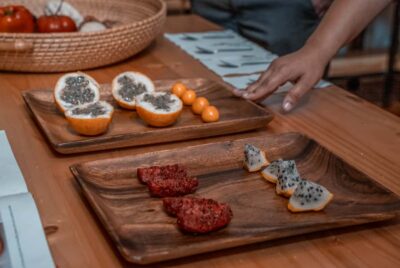
Lucuma is a Peruvian fruit with a sweet, distinctive flavor. Trying it as juice gives you a simple way to encounter an ingredient that may not be familiar from home. The market also provides a useful setting for understanding how fruit, produce, spices, and prepared foods fit together in daily Lima life.
The market is likely to feel active and crowded at times. That is part of the appeal, but it can make conversation and movement less easy than at a restaurant. Keep your belongings secure, stay close to the guide, and expect the sensory side of the experience to be stronger than the visual polish.
A particularly practical touch is the guide’s cutting board for sharing fruit. That detail matters because exotic fruit can be difficult to portion while walking. It also turns the tasting into a small group activity rather than a quick sip or bite handed over without explanation.
Anticuchos and picarones make the market stop memorable
At the Central Market, you help prepare your own anticuchos. These grilled skewers are one of Peru’s best-known street foods, and taking part in the preparation makes the tasting more hands-on than simply receiving a finished sample.
The available information does not specify the exact ingredients or cooking setup, so you should not expect a full cooking class. Think of it as a brief practical encounter with the food, followed by a taste.
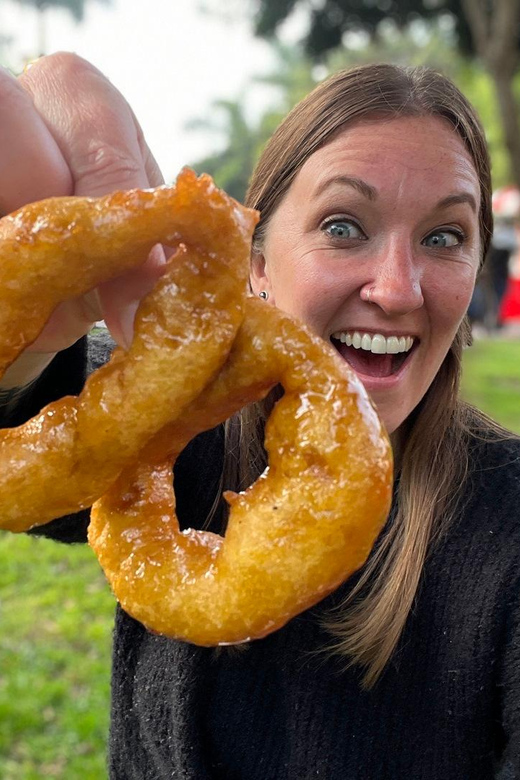
Picarones provide the sweet counterpoint. This traditional dessert is commonly associated with fried dough and a sweet topping, though the tour details do not give the precise recipe used at the stop. It is a useful pairing with the savory anticuchos and gives you another example of how Peruvian street food moves between salty, sweet, grilled, and fried flavors.
By this point, you will have tried enough food to understand why the warning about eating lightly matters. The tastings are meant to be manageable, but the cumulative amount can replace lunch for many people.
Chinitos serves the tour’s most filling pairing
The route continues to Chinitos for pan con chicharrón and emoliente. This is a more substantial food pairing than the earlier small tastes.
Pan con chicharrón is a well-known Peruvian sandwich built around pork, while emoliente is a traditional warm drink. Together, they give you a satisfying look at a common Lima eating pattern: a filling sandwich paired with a street-style beverage rather than a formal dining experience.
This stop may be the moment when you realize the tour is not simply centered on delicate samples. Some foods are hearty, rich, or fried. If you enjoy trying local specialties in their usual settings, that is a strength. If you prefer light food and carefully controlled portions, ask the guide about pacing and dietary needs before the walk begins.
Dietary restrictions should be shared when you book. The tour includes food, but the available information does not promise substitutions for every allergy, intolerance, or dietary preference.
Bolivarsito Bar finishes with fruit and a Pisco Sour option
The final stop is Bolivarsito Bar. Here, you can try seasonal exotic fruits and listen to popular Peruvian music in a park setting. The fruit gives the tour a fresh finish after the heavier foods, and the music adds a final piece of local culture without turning the experience into a formal performance.
A Pisco Sour is available as an optional tasting, but it costs extra. The tour price does not include it, so you should budget separately if you want to try Peru’s most famous cocktail. Since the fruit is seasonal, the exact selection may vary.
This ending is relaxed, but it is worth keeping your expectations clear. The description promises a park visit, fruit, and popular music, not a large live show or a scenic overlook. The phrase pristine vistas may sound like a central highlight, but the route’s real value is its food and city context.
What the $75 price really covers
At $75 per person, this is a premium-priced street-food tour. You are paying more than the cost of buying individual snacks on your own, but the comparison is not quite fair. The fee includes nine food tastings, a certified English or Spanish guide, route planning, explanations about Lima and Chinatown, and help navigating foods that may be unfamiliar.
The price makes the most sense if you are visiting Lima for a short time and want an organized introduction. It also works well on your first day or two, when you can use the guide’s explanations to shape later meals.
The value is weaker if you already know Lima’s food scene, speak Spanish comfortably, and prefer to explore markets without a guide. You may be able to eat similar foods for less by ordering independently. You also pay for the structure and cultural explanation, not just the snacks.
Transportation is not included, so you must make your own way to Jr. Cusco 400 and return there at the end. The tour lasts three hours, and starting times depend on availability. A certified guide leads the walk, with English and Spanish offered.
The tour is wheelchair accessible, but the route includes street walking, markets, and food stops. If you use a wheelchair, confirm the practical details for the particular departure, especially around market movement and vendor access.
Who should book this Lima food tour
I would recommend this experience to you if you want:
- A first taste of Peruvian street food without planning several stops yourself
- A short tour that combines food with Lima’s central neighborhoods
- A guide who can explain ingredients, history, and local customs
- A mix of savory, sweet, fruit, seafood, meat, and Chinese-Peruvian dishes
- A practical introduction before exploring Lima independently
It is also a good fit for curious eaters who enjoy trying unfamiliar foods in small portions. One outing led by Giovanna became a private tour, and her friendly explanations helped make the food and local culture easier to understand. You may not receive a private tour, but the guide’s role is clearly an important part of the experience.
I would think twice if you want a slow restaurant lunch, a quiet sightseeing walk, or a tour built around dramatic views. You should also reconsider if $75 feels high for a three-hour activity or if you have strict dietary needs that have not been confirmed in advance.
The experience has an overall rating of 5 from eight reviews, with praise focused on the guides, the range of foods, the cultural explanations, and the way the stops fit into three hours. That matches the strongest feature of the tour: it gives you a lot of different tastes without asking you to commit to full plates.
Should you book it?
Book this tour if you want Lima explained through everyday food rather than presented as a list of monuments. The combination of Barrios Altos, Chinatown, Central Market, Chinitos, and Bolivarsito gives you a useful cross-section of the city in one compact outing.
The best reason to choose it is the range. You can try ceviche, lucuma, anticuchos, picarones, pan con chicharrón, emoliente, and Chinese-Peruvian specialties while learning how they fit into Lima’s culture.
Skip it if you are looking for a budget food crawl or a full meal at each stop. At $75, you are buying guidance, organization, and cultural explanation along with the food. For a first visit, that can be good value. For an experienced Lima eater, it may be less compelling.
FAQ
Where does the Lima food tour start?
The tour starts at Jr. Cusco 400 in Lima.
Where does the tour end?
The walk returns to Jr. Cusco 400.
How long does the tour last?
The experience lasts three hours.
How much does the tour cost?
The listed price is $75 per person.
Which languages are available?
The certified tour guide can lead the experience in English or Spanish.
Is food included in the price?
Yes. Food tastings are included in the tour price.
Is a Pisco Sour included?
No. A Pisco Sour at Bolivarsito Bar is optional and costs extra.
What foods will I taste?
The route includes foods such as choclo con queso, papa rellena, ceviche, siu mai, min pao, lucuma juice, anticuchos, picarones, pan con chicharrón, and emoliente.
Is transportation included?
No. Transfers are not included, so you must arrange your own transportation to and from the meeting point.
Can I cancel the booking?
Yes. You can cancel up to 24 hours in advance for a full refund. You can also reserve now and pay later.
Just added around Lima
- Guided Tours in Colonial and Modern Lima★ 5.0 · 54 reviews
- Full Day Pilgrims★ 5.0 · 28 reviews
- Tour Miraflores + Fotografía Profesional★ 5.0 · 47 reviews
- Lima Airport Transfers by SUV/Van★ 5.0 · 34 reviews
- Sandboarding and Off Road in Lima (National Park Lomas de Ancón)★ 5.0 · 54 reviews
- Lima City tour and Catacombs Museum (04 hours) Private Tour with guide in Lima★ 5.0 · 32 reviews
- In Lima: Sandboarding Off Road Half Day!!★ 5.0 · 36 reviews
- Peruvian Experience: Interactive, Cultural & Gastronomic Guided Tour★ 5.0 · 42 reviews
Food & Drink, compared.
Historic Center Street Food, Market, and Eateries Tour
Read our review →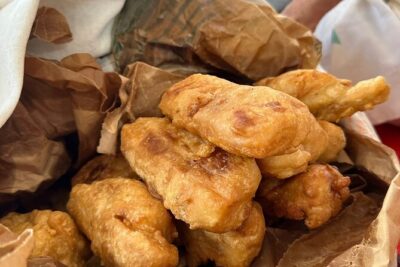
Food and Culture Full day Tour in the Sacred Valley
Read our review →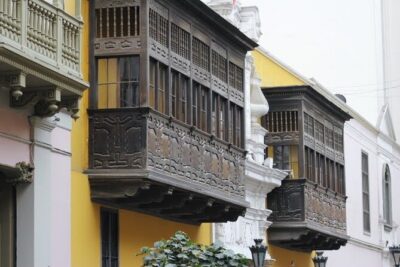
Experience Lima: Taste 12 Snacks and Visit Top Monuments
Read our review →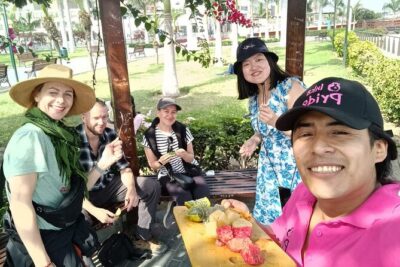
Cook an Authentic Ceviche And Peruvian Pisco Sour!
Read our review →
Miraflores Trending Flavors Half-Day Walking Tour
Read our review →
Browse the lists this tour appears in