
Reviewed · HISTORICAL TOURS
Aymara Route Mystical Cultural Tour
The most unusual stop here is Aramu Muru, a carved stone portal where you can pause for meditation or join a ceremonial activity. It is the kind of place that feels very different from Puno’s better-known Lake Titicaca excursions. I also like the route’s mix of archaeology and living Andean practice, especially the circular Waru Warus, old agricultural systems that show how people tested ways to grow grains and tubers at high altitude.
I like the comfortable transport, the included entrance tickets, and the guide’s use of maps, photographs, and even drone footage to explain the sites. The main thing to consider is the long day and the choice you may face at Aramu Muru: some departures offer a ceremony, while others make room for a short walk and better photo views. You may not get every option in one visit.
At $32 per person, this is an unusually full day for Puno, especially if you want more than the standard lake circuit. The route is not polished into one grand attraction. Some stops are simple, open-air sites, and the experience depends on the guide, the weather, and your interest in Aymara culture.
Key points at a glance
- Aramu Muru gives the day its mystical turn: You can spend time at the stone portal, meditate, and possibly take part in a ceremony.
- The route covers several different kinds of sites: You see a fertility temple, pre-Inca funerary towers, agricultural fields, and the historic town of Juli.
- The Waru Warus are practical archaeology: These circular raised fields show an old method for protecting crops from cold and frost.
- Guiding is a major part of the value: English and Spanish tours include an official tourism guide, with maps, photos, explanations, and sometimes drone videos.
- Transport and tickets are included: That matters on a route spread across the southern Puno region.
- Plan for sun, altitude, and a full day: Comfortable shoes, a hat, sunglasses, water, cash, and layered clothing will make the outing easier.
What this Puno route is really about
The Aymara Route is best understood as a cultural day trip rather than a single headline attraction. It links several places south of Puno, each offering a different clue to the area’s past and present. You will see stone monuments, farming technology, ceremonial spaces, and the town of Juli, sometimes called the Rome of America.
The published duration varies slightly. The activity is sold as an eight-hour tour, while the detailed schedule gives a total of about seven hours and ten minutes. Departure times depend on availability, and the usual return to Puno is around 4 or 5 pm. Allow most of the day, not just a quick morning outing.
The route also involves frequent stops. That is good news if you like variety, but it means you should not expect long, quiet stretches at any one monument. The guide is central to the experience because several locations need explanation to make sense.
More Historical Tours in Puno & Lake Titicaca:
- Puno: History and Culture Walking Tour
★ 4.1 · 13 reviews - Lima’s Vibrant Heritage: Exploring the City’s Landmarks Half-day
★ 4.5 · 581 reviews - Lima: Historic Center Street Food, Market, and Eateries Tour
★ 4.9 · 216 reviews
Chucuito and the Temple of Fertility
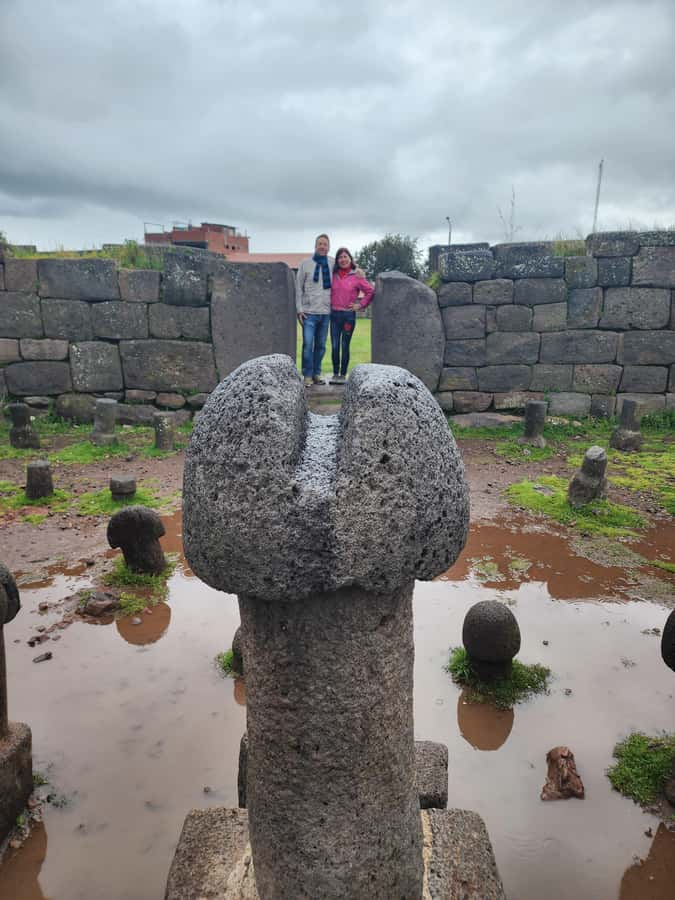
The first major stop is Chucuito, south of Puno. The focus is the Temple of Fertility, a small and striking archaeological site known for its stone phallic forms. The main display includes six smaller phalluses and one larger central example.
The site is direct and memorable. You do not need a long museum visit to understand why it attracts attention, but the guide can place it within Andean ideas about fertility and reproduction. This is also a good point to ask questions, since the monument can otherwise seem like a quick photo stop.
Expect about 45 minutes to an hour here, including the guided visit, walking, and photos. The exact timing can vary because the route is not only a series of fixed museum appointments. If you want souvenirs, this is one of the places where you may find small items for sale.
I would keep an open mind at Chucuito. The site is unusual, and some people may find its presentation playful or surprising rather than solemn. It is still one of the day’s most distinctive stops, and it gives the route an immediate sense of difference from a standard Puno city tour.
Molloco’s square and circular chullpas
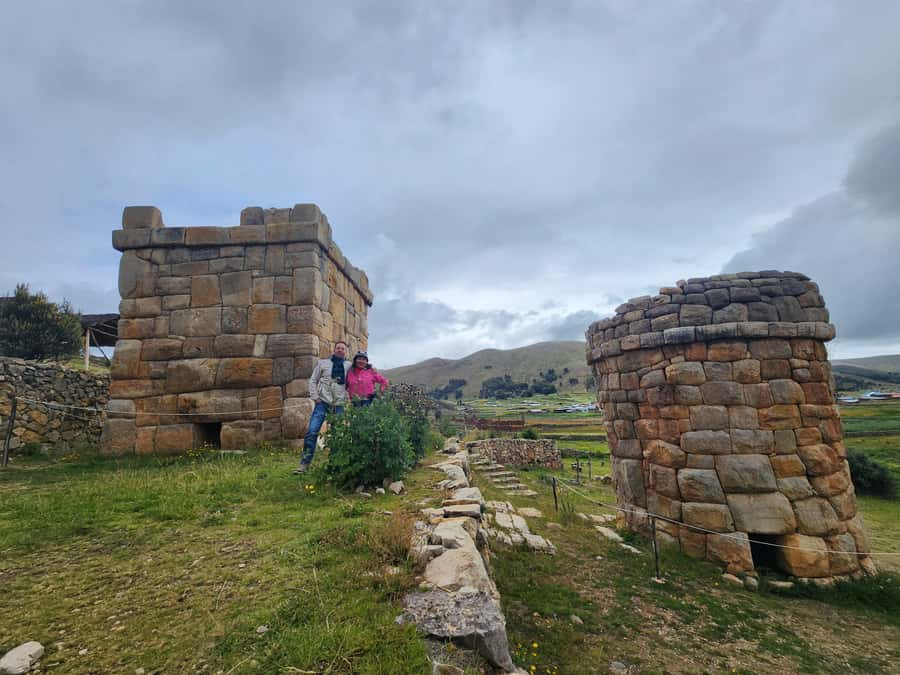
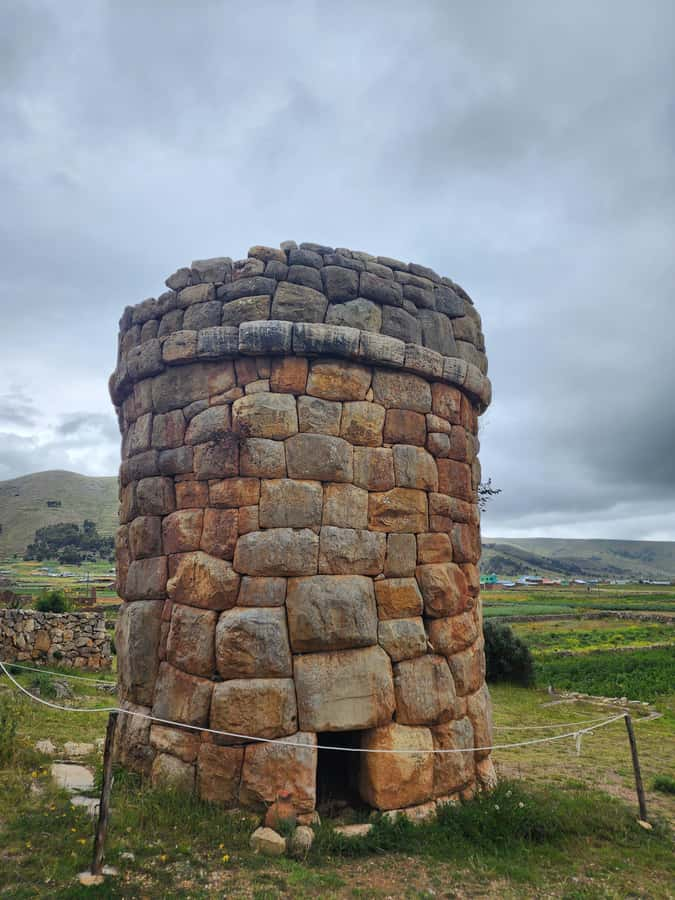
Next comes the Chullpas de Molloco in the Acora area. These funerary towers differ from the more famous towers at Sillustani, which is useful if you have already seen Sillustani or want a less familiar archaeological stop.
Molloco includes three square-style towers and one circular tower. The details matter because they show that Andean funerary architecture was not one fixed design. The guide can point out the shapes, construction, and the niches beneath the floor that formed part of the burial arrangement.
Plan on roughly 45 minutes to an hour. This is an outdoor visit, so you will be walking on uneven ground and standing in the sun. Wear shoes with a firm sole, and bring a hat. The site is more rewarding when you look closely at the structure instead of treating it as another photo background.
The drawback is that the remains are not presented like a large, fully developed visitor complex. If you want extensive signs, exhibits, or a formal museum setting, this may feel basic. Your guide’s explanation is what turns the stone towers into a meaningful stop.
Circular Waru Warus and old farming skill
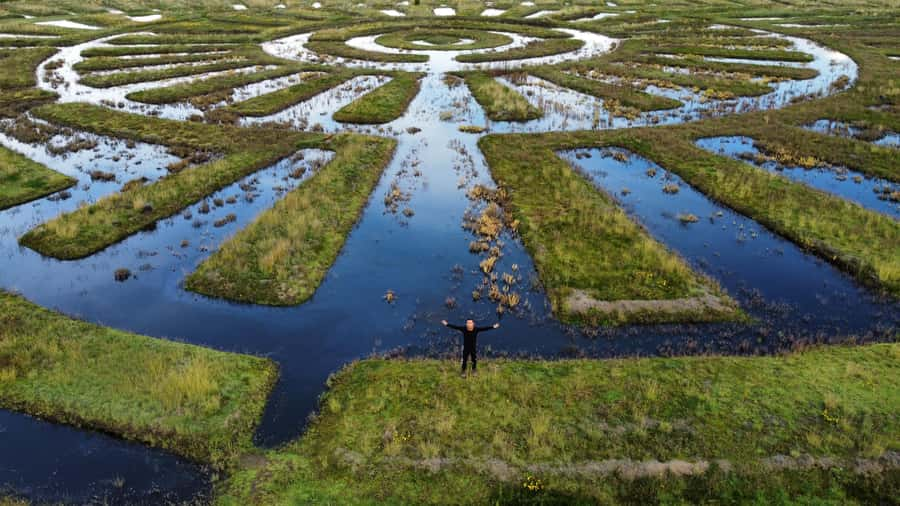
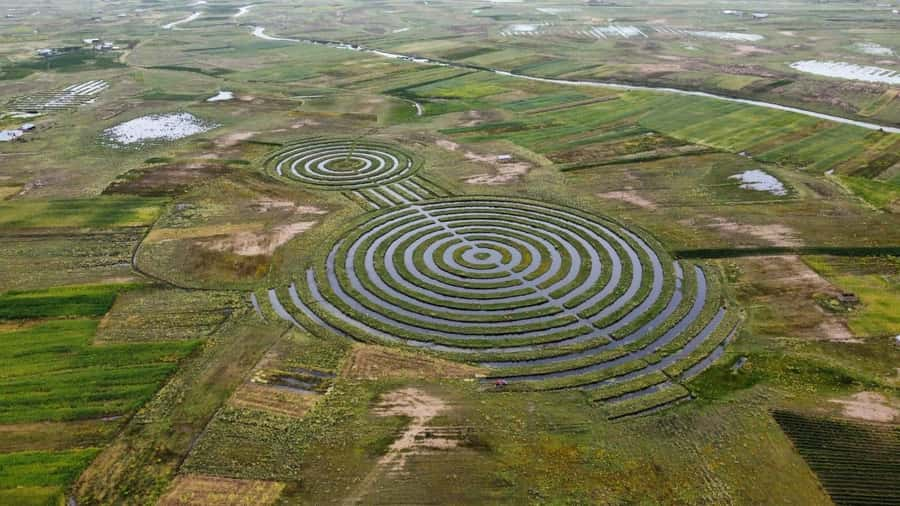
The circular Andean Waru Warus are one of the most useful stops on the route. These are raised agricultural structures built around lower channels or planting areas. They were used as a kind of practical laboratory for growing Andean grains and tubers.
Their value is easy to miss from ground level. The arrangement makes more sense when you understand how the raised fields and water channels could help manage cold conditions, moisture, and crop growth. In a high-altitude region, farming required careful local solutions, not just hard work.
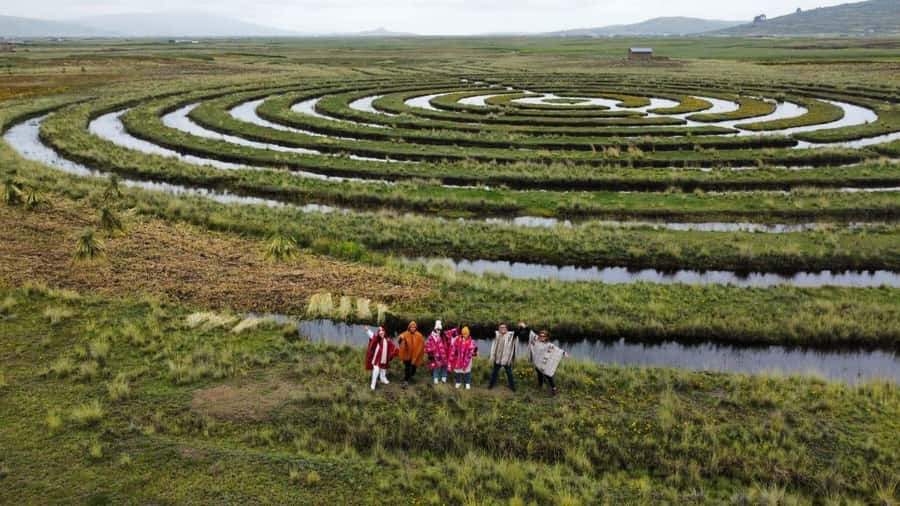
This is also where the tour’s drone footage can add something special. The shape of the fields is much clearer from above than from a path beside them. Some departures provide free drone videos showing the group and the site from the air. That is a useful extra, not just a novelty, because the full pattern is difficult to see while standing among the fields.
You should still keep expectations realistic. The Waru Warus are an open-air agricultural site, not a reconstructed village or an interactive farm. The visit lasts about 45 minutes to an hour, and the guide’s maps, photos, and explanations make a real difference.
A few more Puno & Lake Titicaca days worth weighing up
- From Puno: Uros, Amantaní & Taquile Islands 2-Day Tour
★ 4.5 · 452 reviews - From Puno: Floating Islands of the Uros Half-Day Tour
★ 4.4 · 394 reviews - Lake Titicaca 2-Day Tour to Uros, Amantani and Taquile
★ 4.4 · 199 reviews - Puno: Full-Day Tour of Lake Titicaca and Uros & Taquile
★ 4.4 · 178 reviews
Aramu Muru, meditation, and the ceremony choice
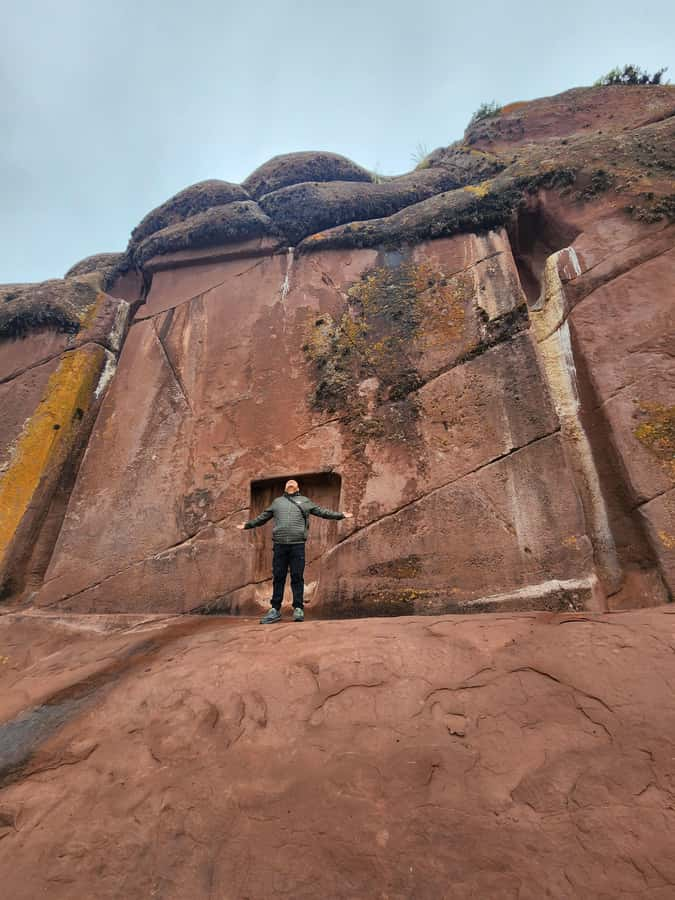
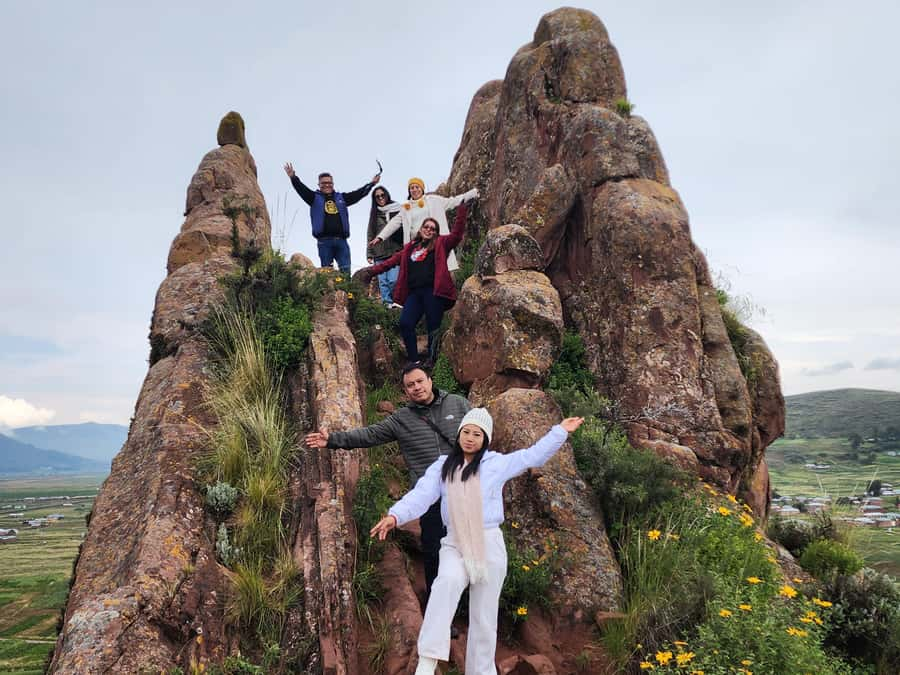
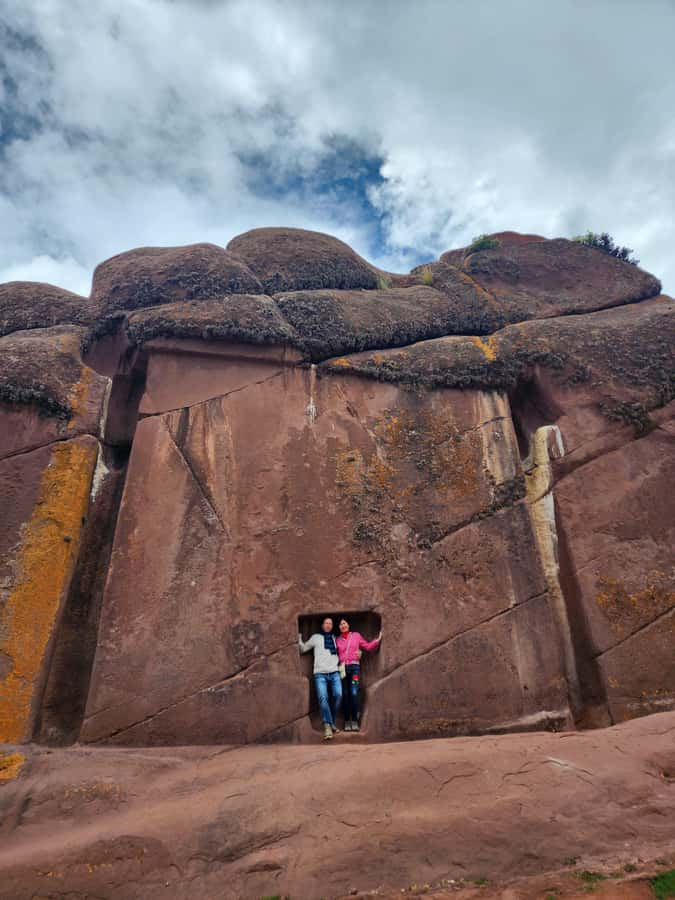
Aramu Muru is the emotional center of the day for many people. The site is known for a large stone portal cut into a rock face, with surrounding formations that invite close viewing and photography. It is often presented as a place connected with spiritual practice and local beliefs.
The scheduled visit lasts about an hour. You may have time for a guided explanation, quiet meditation, and photos. Some departures include a ceremonial or initiation-style activity. Other groups choose a short walk instead, often because the nearby views and rock formations make good photographs.
This is the point where you should ask the guide what is planned before the day begins. The ceremony and the short walk may not both fit comfortably into the schedule. If meditation or ritual matters most to you, say so early. If you prefer movement and photos, the walk may be the better choice.
The site is atmospheric, but it is worth keeping your expectations grounded. Aramu Muru is not a conventional temple with a large interior or a long series of objects to inspect. Its appeal comes from the stone opening, the setting, the quiet pause, and the meaning people attach to it.
The ceremony can be intense for some participants. You should join only if you feel comfortable with the activity and understand what the guide describes. You can also simply observe the place and take time to reflect.
Juli, the Rome of America
The final major area is Juli, known in the tour description as the Rome of America. The stop includes the town and its beach, with optional activities depending on the schedule and conditions.
Juli adds a different mood to the day. After archaeological sites and the unusual stone portal, you get a more local setting with open views and room for a break. It can be a welcome change from standing around monuments, especially if you want a little free time.
The schedule gives about an hour here, though the detailed route also mentions a break, shopping, sightseeing, and possible food options. A barbecue restaurant may be offered, with several choices explained by the guide and prices presented ahead of time. Food is not listed among the included items, so carry cash for lunch or other purchases.
The reference to Juli as the Rome of America may sound grand, but the stop is best enjoyed at a modest pace. You are not getting a full city tour of Rome in miniature. You are visiting a historic Puno-area town with a beach, local activity, and a chance to break up the drive.
Transport, guiding, and the value of the price
The price is $32 per person. That includes first-class transportation, entrance tickets, and an official tourism guide. For a route that covers Chucuito, Acora, the Waru Warus, Aramu Muru, and Juli, the package offers good value.
The vehicle matters because you spend much of the day moving between sites. One booking had a puncture, but a replacement vehicle arrived in about half an hour. That incident shows both sides of the transport question: the operator handled the problem, but road travel can still bring delays.
The guides work in English and Spanish. A strong guide is especially important here because many of the attractions are simple structures without much on-site interpretation. One guide used maps and photographs throughout the day and checked that participants were comfortable. The drone videos, when available, add a memorable record of the group and show the Waru Warus from an angle you cannot get on foot.
Hotel pickup is included, but you need to send the hotel address and a phone number or WhatsApp contact in advance. That is practical rather than glamorous, yet it can prevent confusion at the start of the morning. The finish point is listed at Cajamarca 236 in Puno, so confirm the exact drop-off plan when you book.
You can cancel up to 24 hours before departure for a full refund, and the reserve-now, pay-later option keeps your plans flexible. Check the starting time before booking because availability changes.
What to bring for this open-air day
Bring comfortable walking shoes, a hat, sunglasses, and clothing that works in changing high-altitude weather. A camera is worthwhile, especially at Aramu Muru and the Waru Warus.
Carry cash for food, shopping, and optional activities. Biodegradable insect repellent is also recommended. Check the weather and local social conditions the day before departure, and leave the operator a working contact number.
The route is not suitable for people with epilepsy. If you have concerns about the ceremony, walking, or the day’s pace, ask before departure. The tour includes walking and outdoor stops, but the supplied information does not give a detailed accessibility assessment.
Who should book the Aymara Route
I would choose this tour if you have already seen Puno’s main sights and want a day built around less familiar cultural sites. It suits you if you like archaeology, unusual monuments, local farming methods, wide views, and a guide who explains what you are seeing.
It is also a good fit for visitors who want a lot included for a modest price. Transport and tickets remove several small costs, and an English-speaking guide makes the sites easier to understand if you do not speak Spanish.
I would think twice if you dislike long drives, frequent stops, open-air archaeology, or ceremonial activities. The route is not a luxury sightseeing outing, and the sites do not all have formal facilities. The day works best when you are curious and flexible.
Should you book this tour?
Book it if you want to see a less predictable side of the Puno region for $32. The Temple of Fertility, Molloco’s unusual chullpas, the Waru Warus, and Aramu Muru create a varied day that is difficult to arrange as cheaply on your own.
Before paying, ask which Aramu Muru option is scheduled, ceremony or short walk, and confirm the pickup time. If you want practical cultural context, unusual photo stops, and a guide-led route beyond the usual circuit, this is a strong choice. If your priority is a relaxed lake day with very little time in a vehicle, choose another outing.
FAQ
How long does the Aymara Route take?
The activity is advertised as an eight-hour tour. The detailed schedule gives a total of about seven hours and ten minutes, with the usual return to Puno around 4 or 5 pm.
What languages are available?
Live guiding is available in English and Spanish.
Is hotel pickup included?
Yes. You should send your hotel address and a phone number or WhatsApp contact in advance so the pickup can be coordinated.
What is included in the price?
The price includes an official tourism guide, first-class transportation, and entrance tickets for the places visited.
What happens at Aramu Muru?
You visit the stone portal and surrounding rock formations. The schedule may include meditation and a ceremony, or you may choose a short walk and photo time, depending on the departure arrangements.
What should I bring?
Bring comfortable shoes, sunglasses, a hat, comfortable clothes, a camera, cash, and biodegradable insect repellent.
Is the tour suitable for everyone?
The activity is not suitable for people with epilepsy. You should also check the weather and local social conditions the day before departure.
Just added around Puno & Lake Titicaca
- Uros Floating Islands Tour in Puno★ 3.7 · 9 reviews
- TRIP FROM PUNO TO CUSCO WITH THE ROUTE OF THE SUN★ 4.7 · 16 reviews
- Two Day Lake Titicaca Tour With Homestay★ 3.7 · 6 reviews
- Two-Day Tour to Uros with Amantani and Taquile from Puno★ 5.0 · 44 reviews
- Full Day Guided Tour of the Aymara Route from Puno★ 5.0 · 55 reviews
- Full-Day Tour of Uros, Taquile and Sillustani from Puno★ 5.0 · 41 reviews
- Full Day Lake Titicaca Tour to Uros and Taquile Islands★ 4.5 · 56 reviews
- Titicaca Lake 2 Day 1 Night from Cusco to Puno★ 4.5 · 33 reviews
Historical Tours, compared.

Lima’s Vibrant Heritage: Exploring the City’s Landmarks Half-day
Read our review →
Historic Center Street Food, Market, and Eateries Tour
Read our review →
Walking tour in the Historic Center of Arequipa
Read our review →
Historic Downtown, Miraflores & Catacombs Private Tour
Read our review →
Machu Picchu Private Archaeological and Historical Guided Tour
Read our review →
Browse the lists this tour appears in