
Reviewed · HIKING & TREKKING
Ausangate Trek 5 Days
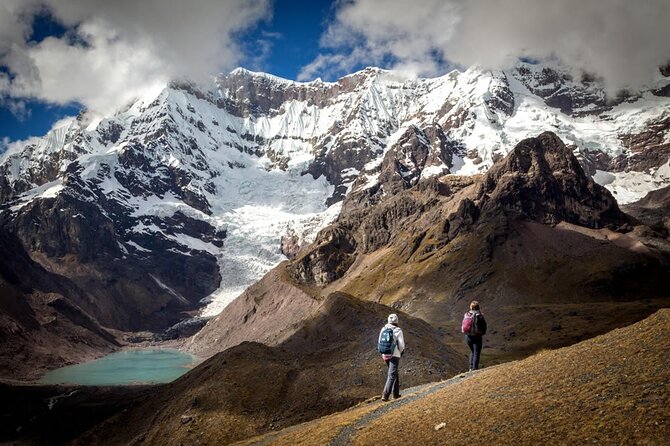
Ausangate is Peru’s quieter answer to the Inca Trail: a five-day circuit around a sacred mountain, with turquoise lakes, glacier views, alpacas, hot springs, and very few other groups. The route reaches 5,200 meters, so the scenery is huge, but the altitude is not a minor detail.
I like the small-group format, capped at 10 people, and the way the trip mixes hard walking with cultural time. I also like the practical comforts: hot meals, a cook, horses carrying equipment, and a soak in Upis and Pacchanta. The main drawback is clear: this is a serious high-altitude trek, with long days and cold camps above 4,200 meters.
Key points to know before booking
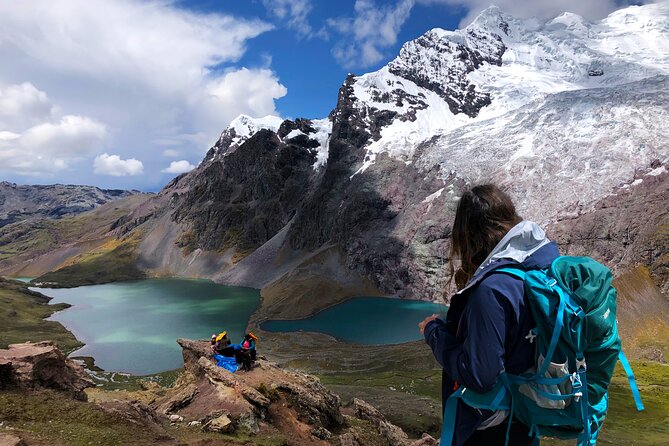
- A five-day circuit around Ausangate: You’ll see the mountain from several angles instead of making a short out-and-back visit.
- Two hot-spring stops: Upis on the first evening and Pacchanta near the end give tired legs a welcome break.
- Three very high passes: The route crosses Arapa at 4,850 meters, Apacheta at about 4,980 meters, and Palomani at 5,200 meters.
- Small groups with a full support crew: The maximum is 10 people, with guides, a cook, an assistant, and horse drivers handling camp logistics.
- Meals are part of the price: Five lunches, four dinners, and four breakfasts are included, along with camping equipment and horses for gear.
- A local cultural visit on the final day: You’ll see food preparation, traditional practices, and weaving before returning to Cusco.
Why Ausangate feels different from Cusco’s famous treks
The Ausangate circuit takes you well away from the busiest routes around Cusco. You spend most of the trip among high Andean valleys, snow-covered peaks, bright glacial lakes, and remote settlements rather than ruins and stone paths.
That makes this a good choice if you want mountain scenery first. You will not spend the days visiting a chain of famous archaeological sites. Instead, the focus is the mountain itself, known as Apu Ausangate, a sacred presence in local Andean belief.
The route also feels personal because the group is small. A maximum of 10 people gives the guide room to adjust the pace and talk with you. The support team matters here. A cook prepares meals in camp, horse drivers move equipment, and the guide handles the route and cultural interpretation.
Names connected with the Vidal Expeditions team include guides Guillermo and Urbano, also called Chino, along with cooks Benigno and Euden and horse driver Angel. The guiding style described for this trip includes local stories, wildlife information, photography help, and explanations of how communities live in the area.
More Hiking Tours in Cusco
- From Cusco: 7 Lakes Ausangate Trek with Breakfast and Lunch
★ 4.8 · 360 reviews - Cusco: Rainbow Mountain Tour and Red Valley Hike (Optional)
★ 4.7 · 149 reviews - Cusco: Full-Day Rainbow Mountain & Red Valley Trekking Tour
★ 4.5 · 121 reviews
Day 1: From Cusco to Upis hot springs
The day begins at 5:00 a.m. in Cusco. Private transportation takes you to Tinke, where you can buy last-minute supplies and have breakfast before continuing to Rondoca, the starting point of the hike.
This early stop is useful. You can pick up small items before leaving the road, although you should not treat it as a substitute for careful packing. The trek quickly moves into a high, remote setting where extra supplies are not easy to find.
At Rondoca, you meet the cook and horse driver. The first walking section takes about two hours before lunch. Along the way, Apu Ausangate begins to dominate the view, giving you an early sense of the scale of the route.
After lunch, you continue toward Upis. The first day is relatively short, about 8 kilometers and three to four hours of hiking, with elevation rising from roughly 3,800 to 4,200 meters. That short distance is not a free pass. Starting camp at 4,200 meters means your body is already dealing with thin air.
The reward is Upis hot springs. You can soak while looking toward the mountains and drink coca tea before dinner. This is a smart first-night setup, since you have time to settle into camp without immediately facing the longest or highest section.
Day 2: Green and turquoise lakes above 4,800 meters
Day two is the first major test. The team wakes you with hot coca tea, followed by breakfast and a long walking day of about 12 kilometers.
You climb to Arapa Pass at 4,850 meters. The pass gives you broad views of Ausangate and the surrounding high country, but reaching it requires a steady uphill effort soon after breakfast. If you are sensitive to altitude, this is where a slow pace and regular water breaks become important.
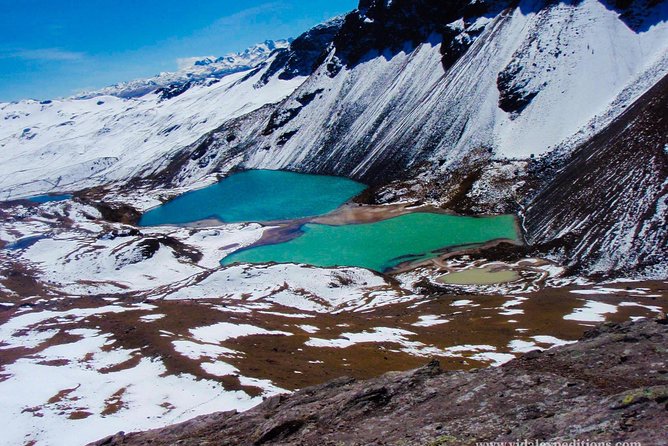
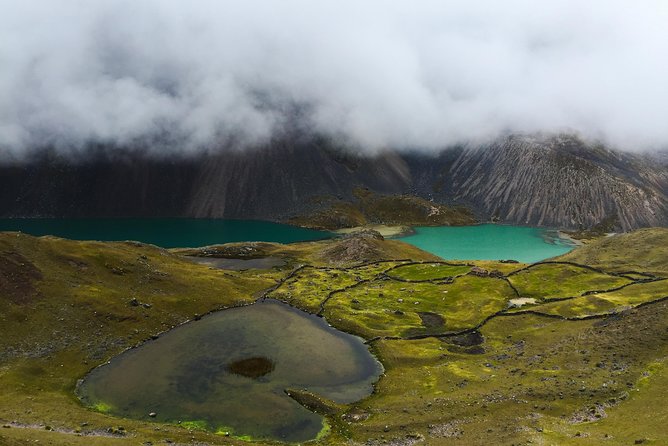
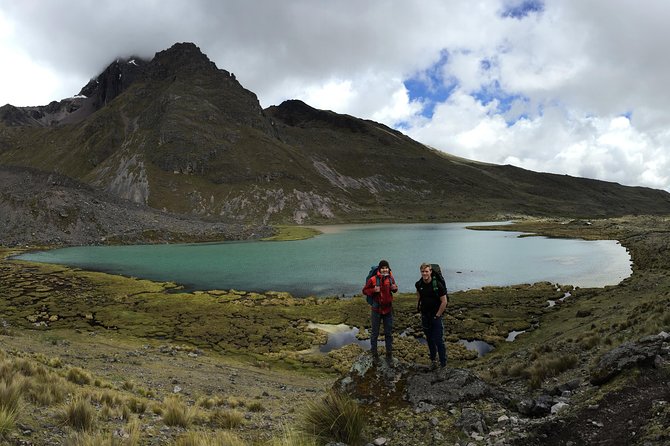
From Arapa, the route drops for about two and a half hours through the valley. You pass the green waters of Puqa Q’ocha before reaching the turquoise Jatun Puqa Q’ocha. Lunch beside the lake is one of the day’s best moments. The color contrast between the water, the high slopes, and the snow-covered mountain makes this a natural place to stop for photos.
The second climb leads to Apacheta Pass at about 4,980 meters. Below it, another turquoise lagoon is fed by melting snow from Ausangate. You then descend for about an hour to Ausangate Qocha, where the second camp sits at approximately 4,630 meters.
This day lasts around seven to eight hours, and the camp elevation is demanding. You should expect cold conditions and a tiring evening. One important practical lesson from this route is to pack for real mountain cold. Warm layers, gloves, a hat, and dry sleeping clothes are not luxuries here.
Day 3: Palomani Pass at 5,200 meters
Day three reaches the highest point of the trek: Palomani Pass at 5,200 meters, or about 17,060 feet. The climb takes around two hours from camp, followed by a descent and more hiking later in the day.
At the pass, the guide performs a ceremony for Apu Ausangate. This gives the high point more meaning than a simple photo stop. You are not just collecting an altitude number. You are being introduced to a local way of understanding the mountain as a sacred being.
The descent takes about an hour to Uchuy Phinaya, where you stop for lunch. Afterward, you continue for a couple of hours to the next campsite. The listed distance is about 13 kilometers, with six to seven hours of hiking and camp near 4,500 meters.
This is likely the toughest day mentally as well as physically. The highest climb is not the only challenge. You must still walk after reaching the pass, and the air remains thin at camp. If you have only done low-altitude day hikes, do not underestimate this section.
The guides are an important part of the experience here. Urbano, also known as Chino, has led this route with encouragement and explanations of the terrain and local culture. Guillermo has also been praised for taking guests to quieter areas and sharing information about wildlife and community traditions. Since guide assignments can vary, you should confirm who will lead your departure.
More Ausangate and seven-lagoon days:
- Excursion to Ausangate & 7 lakes with Coca Ceremony |Private|
★ 5.0 · 80 reviews - Full-Day Tour to Ausangate 7 Lakes
★ 5.0 · 56 reviews - From Cusco: Ausangate 7 Lakes Tour with Meals
★ 4.5 · 47 reviews - Ausangate and Rainbow Mountain Trek – 3 Days / 2 Nights
★ 5.0 · 35 reviews
Day 4: Glacial lakes and Pacchanta hot springs
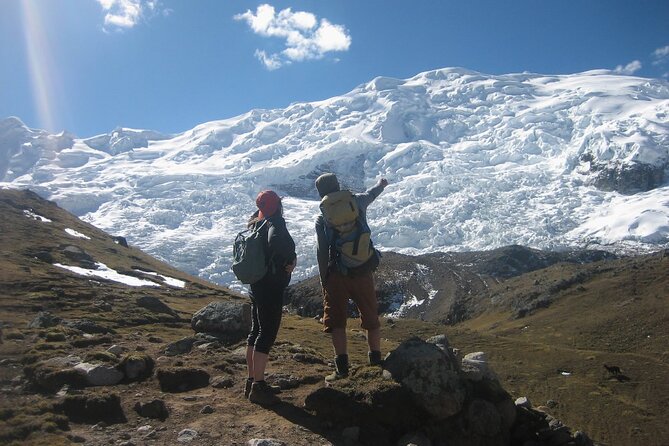
The fourth day begins the gradual move toward lower ground. You cross one more pass and spend the day around deep blue lagoons and glacial lakes with changing colors.
The route still gives you views of Ausangate, but from a new angle. You also see toward Pacchanta Valley, which adds variety after several days of looking at the mountain from the other side. The itinerary even allows for a cold swim if you are brave. That option is best treated as a personal choice, not a required part of the walk.
The day covers about 15 kilometers and takes around six hours. Camp elevation is listed as 4,300 meters while descending, so you are not suddenly dropping into warm lowland conditions. The cold can still be sharp.
The big finish is Pacchanta hot springs. After several nights at high camp and long hours on foot, the soak is more than a pleasant extra. It lets you loosen up before the final cultural visit and drive back to Cusco.
Day 5: Local food, weaving, and the return to Cusco
The final morning begins with breakfast and a ceremony with a local family. You learn about local food preparation, cultural traditions, and weaving techniques before boarding a bus to Cusco.
This closing visit helps balance the trip. Ausangate is not only a mountain challenge, and the local family visit gives you a direct look at daily traditions. It is also a gentler final morning after four days of strenuous walking.
The final day is listed at about three hours. The return by bus means you do not need to hike back along the same route. That keeps the five-day plan focused on the mountain circuit rather than adding a long exit walk.
What the $660 price includes
At $660 per person, the trip offers fair value if you want a supported trek rather than a self-organized expedition. The price includes camping equipment, horses for carrying equipment, five lunches, four dinners, and four breakfasts.
The horse support is especially useful. You walk with less weight while the camp gear moves ahead, and the horse driver helps with putting up and taking down camp. The cooking setup also changes the feel of the trip. Meals are prepared for you after long days, rather than leaving you to manage food and camp chores alone.
The price does not include the entrance fee, listed as 20 soles, or a sleeping bag. You need to arrange the sleeping bag yourself, and that deserves attention because the camps are high and the nights can be very cold.
The food is one of the strongest parts of the operation. Benigno has prepared varied meals in camp, with Euden assisting on some departures. That matters more than it might sound. A hot, filling dinner can make a cold evening much easier, and breakfast gives you a better start before the next pass.
How hard is this Ausangate trek?
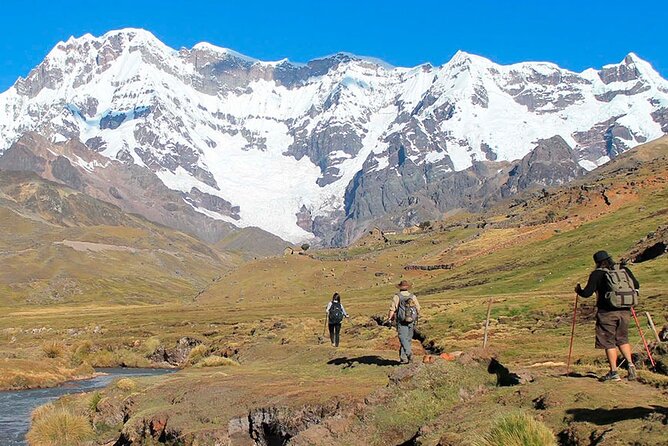
The tour requires a moderate fitness level, but the altitude makes the route harder than the mileage alone suggests. Distances range from about 8 to 15 kilometers per day, with hiking times from three to eight hours.
The most demanding sections are the climbs to Arapa, Apacheta, and Palomani. You spend multiple nights above 4,200 meters, including a camp around 4,630 meters. The itinerary does not provide an acclimatization day within the trek, so you should take altitude preparation seriously before arriving.
Your best strategy is to walk slowly, drink regularly, eat even when your appetite is low, and tell the guide early if you feel unwell. The small group helps because the guide can keep a closer eye on the pace.
This route suits you if you already enjoy long walks and are comfortable with basic camping. It is less suitable if you want easy sightseeing, warm evenings, or a flexible schedule with short daily outings.
Cold-weather packing and camp comfort
Bring the warmest mountain clothing you have. Past participants with Himalayan trekking experience still found Ausangate cold at night, so do not pack only for daytime sun.
You should plan for:
- Warm layers and a waterproof outer layer
- Hat, gloves, and warm socks
- A sleeping bag suitable for high camps
- Sun protection for intense high-altitude light
- Small personal items you may want to buy in Tinke
Camping equipment is included, but the supplied information does not specify every item or sleeping bag rating. Ask Vidal Expeditions what tents and pads are provided, and confirm whether any extra equipment can be rented.
The hot springs at Upis and Pacchanta are valuable stops, but they do not turn this into a comfortable resort trip. The mountain remains cold, remote, and physically demanding between those soaks.
Who should book this trek?
I would choose this trip if I wanted a quieter alternative to Peru’s busiest routes and cared more about dramatic mountain scenery than ruins. It is also a good fit if you want a supported camping trip with meals, horses, and cultural contact built into the schedule.
The maximum group size of 10 is a strong point. Some departures may be much smaller, even just two people, which can make the walking pace and guide time feel more personal. The tradeoff is that a very small departure may feel quiet and less social, depending on the group.
You should also book it if the idea of learning about Apu Ausangate, local food, and weaving appeals to you. The ceremony at Palomani Pass and the final family visit give the trek a cultural frame that a simple mountain hike would not have.
Booking details worth checking
Confirmation is provided at booking, and the listed start time is 5:00 a.m. Free cancellation is available up to 24 hours before the start time for a full refund. Changes or cancellations inside 24 hours are not accepted for a refund.
The trip depends on good weather and a minimum number of participants. If Vidal Expeditions cancels for either reason, you are offered another date or experience, or a full refund.
Should you book the Ausangate Trek?
Book it if you want high Andean scenery, quiet trails, hot springs, and a small support team. The route offers a strong mix of physical challenge and local culture, and the included meals and horse support make the logistics much easier.
Skip it if you are not prepared for four nights of high camping, a 5,200-meter pass, cold weather, and long walking days. For the right person, the $660 price is reasonable because it covers food, camp support, equipment, and transport arrangements across a demanding route. Just arrive prepared, pack seriously for cold, and confirm the sleeping bag plan before departure.
FAQ
Where does the Ausangate Trek begin?
The tour starts with a 5:00 a.m. pickup in Cusco. You travel by private transportation to Tinke, then continue to Rondoca, where the hike begins.
How high does the trek go?
The highest point is Palomani Pass at 5,200 meters, or about 17,060 feet. Other major passes include Arapa at 4,850 meters and Apacheta at about 4,980 meters.
How many people can join the tour?
The maximum group size is 10 people. The actual group may be smaller.
Are meals included?
Yes. The tour includes five lunches, four dinners, and four breakfasts. Camping equipment and horses for carrying equipment are also included.
Is a sleeping bag included?
No. A sleeping bag is not included, so you need to bring or arrange one separately.
Are entrance fees included?
No. The entrance fee is listed separately at 20 soles.
What happens if bad weather cancels the trek?
If poor weather causes cancellation, you are offered a different date or experience, or a full refund. The same options apply if the minimum number of participants is not reached.
More 5-Day Experiences in Cusco
- Classic Choquequirao Trek – 5 Days / 4 Nights
★ 5.0 · 52 reviews - Manu National Park Tours from Cusco 5 Days
★ 3.8 · 5 reviews - From Cusco: Salkantay trek 5 days/4 nights meals included
★ 4.0 · 3 reviews - Small Group 5 Days Salkantay and Machu Picchu by Llactapata Tour
★ 5.0 · 88 reviews
Just added around Cusco
- Waqrapukara 1 day trekking + meals★ 3.9 · 3 reviews
- Visit to the Cochahuasi Animal Sanctuary with rescued animal★ 4.1 · 4 reviews
- Vinicunca Mountain Tour – Full Day Tour to Rainbow Mountain★ 3.4 · 4 reviews
- Valle Sur Cusco | half day★ 4.3 · 3 reviews
- Trek to Humantay Lake from Cusco★ 4.9 · 8 reviews
- Trek to Choquequirao 4 days★ 3.8 · 4 reviews
- rainbow mountain full day★ 5.0 · 44 reviews
- Tour to the HUMANTAY LAGOON from CUSCO★ 5.0 · 35 reviews
Hiking & Trekking, compared.
7 Lakes Ausangate Trek with Breakfast and Lunch
Read our review →

Rainbow Mountain Tour and Red Valley Hike (Optional)
Read our review →
Full-Day Rainbow Mountain & Red Valley Trekking Tour
Read our review →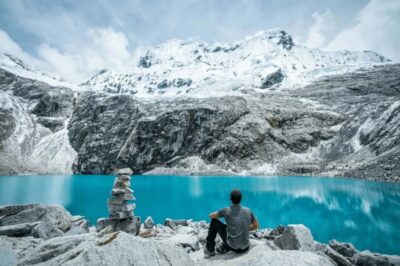
Browse the lists this tour appears in