
Reviewed · PUNO & LAKE TITICACA TOURS
Cusco: Scenic Route of the Sun to Puno with Buffet Lunch
The best part of this Cusco to Puno trip is that the long road journey becomes a proper cultural outing. Instead of sitting on a direct bus all day, you stop at an ornate colonial church, an impressive Inca temple, the high pass at Abra La Raya, and Pucará, an early Andean center. Raqchi is the star for me, with its huge temple walls and open mountain setting.
I also like the comfortable bus and careful timing. Guides such as Manuel, Matias, Shelma, and Juan Carlos have earned praise for clear English, helpful explanations, and small touches such as morning snacks, coca tea, and local sweet bread. The main drawback is the early start and the full 11-hour schedule, with fairly brief visits at some stops.
Key details before you book

- Four substantial sightseeing stops: Visit Andahuaylillas, Raqchi, Abra La Raya, and the Lithic Museum of Pucará.
- Raqchi gives you the strongest Inca site: See the Temple of Wiracocha and its reported 15-meter walls.
- Lunch is built into the day: The buffet includes beef, chicken, fish, side dishes, salads, desserts, and herbal drinks.
- The bus is set up for a long ride: Expect reclining-style comfort, heating and air conditioning, a bathroom, drinks, and an oxygen tank.
- Budget for entrance fees: Tickets to the three paid sites cost 53 soles in total, about $13, and are paid locally.
- This is a transfer with a sightseeing bonus: You finish at the Puno bus terminal, making it useful if you are moving on to Lake Titicaca.
Why this bus ride is worth making into a full day
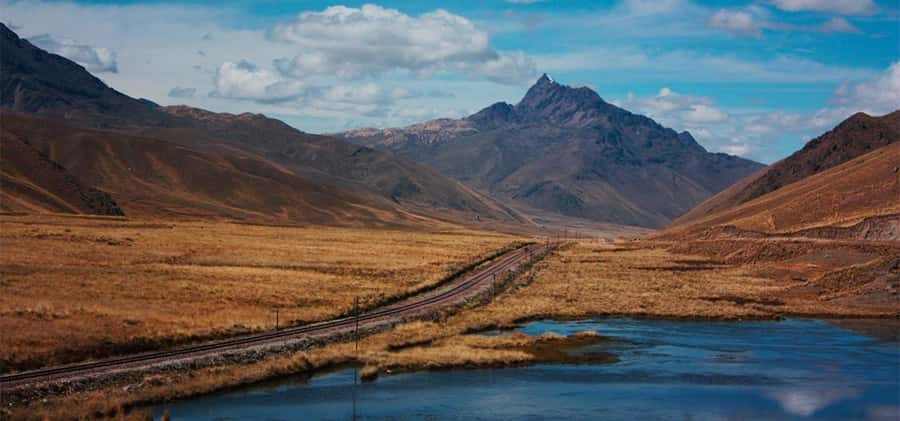
Cusco and Puno are linked by a scenic road across the high Andes. A direct bus gets you from one city to the other, but it leaves the cultural stops to the imagination. This service takes the same general journey and breaks it into guided visits, meals, photo stops, and short rests.
At $44 per person, the price is reasonable for what is included. You are paying for transport, a bilingual guide, buffet lunch, onboard drinks, and visits to four notable places. The extra entrance fees add about $13, so your practical total is closer to $57 before any breakfast or personal purchases.
The value depends on what you want from the day. If you only need the cheapest possible ride to Puno, a regular bus may be more suitable. If you would otherwise pay separately for transport, meals, and site visits, this trip offers a tidy package and saves you from arranging the route yourself.
The group experience also matters. You are not hiring a private car for your own timetable. You follow a set departure, set stops, and set meal break. That structure keeps the journey moving, but it means you should be comfortable with a long shared excursion.
A few more Puno & Lake Titicaca days worth weighing up
- From Puno: Uros, Amantaní & Taquile Islands 2-Day Tour
★ 4.5 · 452 reviews - From Puno: Floating Islands of the Uros Half-Day Tour
★ 4.4 · 394 reviews - Lake Titicaca 2-Day Tour to Uros, Amantani and Taquile
★ 4.4 · 199 reviews
Leaving Cusco at 6:40 AM
The bus leaves from Alameda Pachacuteq 499B, near Cusco’s transport area. You are asked to arrive 30 minutes early, so plan to be at the terminal by 6:10 AM. The supplied information also shows an inconsistent reference to 6:10 PM, but the published departure schedule describes an early morning start. Confirm the exact departure time when booking.
An early start is part of the bargain. You will not get a lazy morning at the hotel, and one review specifically wished for more quiet time after boarding. On the other hand, an early departure lets you cover the long route without arriving in Puno late at night.
The bus includes hot drinks such as tea, coffee, coca tea, and other herbal infusions. Cold drinks include mineral water, Coca-Cola, and Inca Kola. Some guides have also provided a small breakfast bag, cake, or local chuta bread, but those extras should not be treated as guaranteed inclusions.
The vehicle is one of the stronger parts of the experience. It has heating and air conditioning, a clean bathroom, power outlets according to one detailed account, and enough comfort for a full day on the road. Two drivers may operate the journey, and the driving has been praised for being smooth and careful.
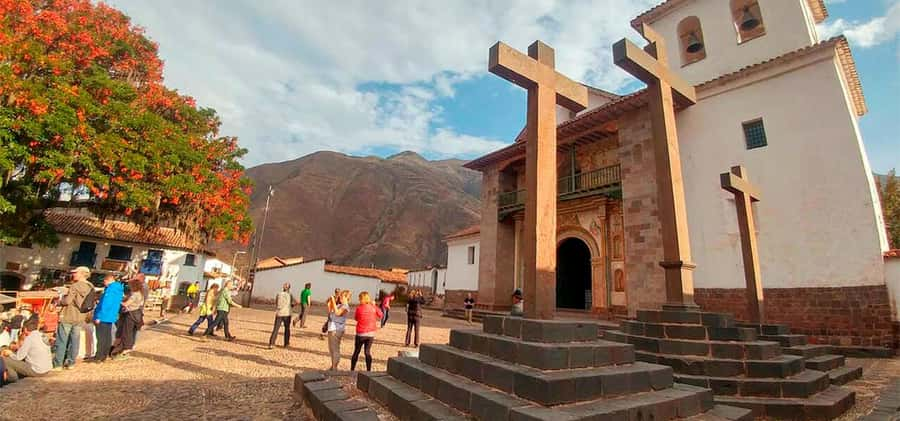
Andahuaylillas Church and its painted interior
The first scheduled visit is Andahuaylillas, reached at about 7:40 AM. The Church of Saint Peter the Apostle is a 16th-century Jesuit church built on an earlier Inca sacred site. Its nickname, the Sistine Chapel of America, refers to the painted interior rather than its size.
Inside, you can expect elaborate frescoes, carved decoration, and gold leaf work. This is not simply a quick roadside church. It shows how Spanish Catholic art was placed over an older Andean religious setting, creating one of the most striking colonial interiors along the route.
The planned visit lasts about 45 minutes. That is enough time for a guided explanation and a look inside, but not enough for a slow study of every wall. Listen closely to the guide here. The meaning of the imagery is easier to understand with context, and the church is more rewarding when you notice how local traditions shaped the decoration.
There is one practical caution. One account describes the usual church being closed after concerns about earthquake damage, with the group taken to another village church instead. The replacement still had impressive frescoes and murals, but the exact church visited can depend on local conditions. This flexibility is useful, though you should not assume every departure will have the identical first stop.
Raqchi and the 15-meter Temple of Wiracocha
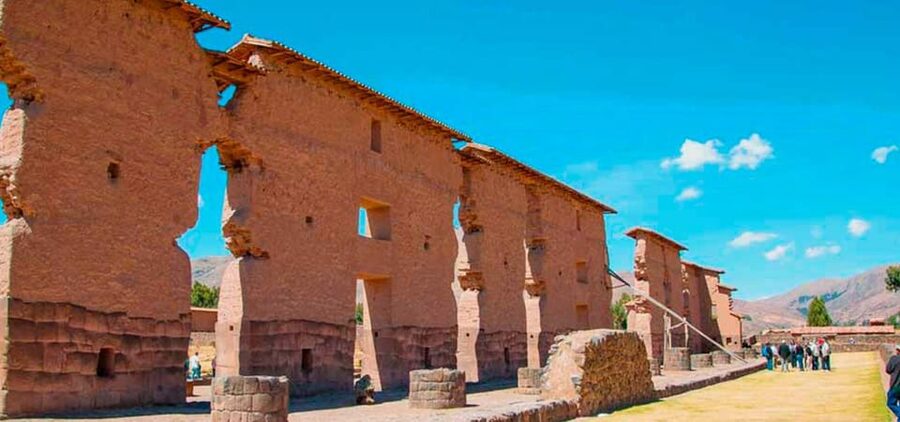
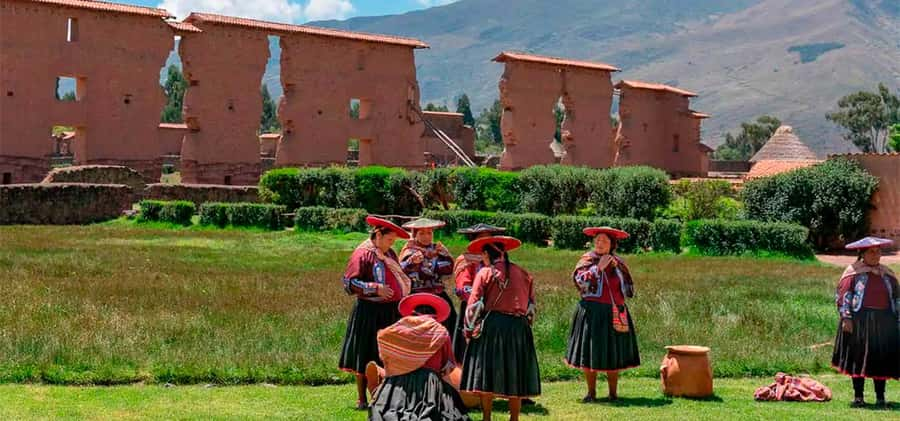
Raqchi comes next, at roughly 10:15 AM, and it is likely to be the most memorable archaeological stop. The site is associated with the Inca emperor who honored Wiracocha, an invisible supreme god in Andean belief.
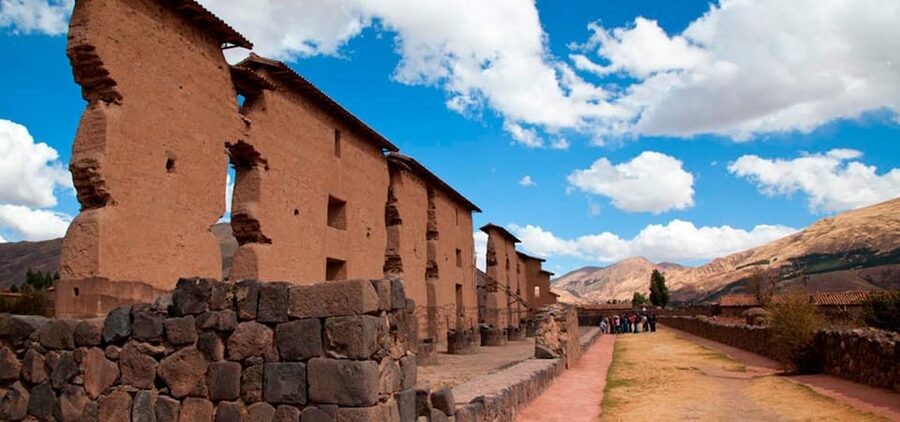
The Temple of Wiracocha is the main sight. Its surviving walls reach about 15 meters, giving you a clear sense of the building’s original scale. The temple once had a central section and rows of columns, while the surrounding complex included courtyards, storage areas, and other structures.
Your guide helps turn scattered stonework into a readable place. Without that explanation, you might see only walls and foundations. With it, you can picture a major religious and administrative center serving people moving through the highlands.
The visit is scheduled for about an hour. Wear shoes that are comfortable on uneven ground, and bring a warm layer even if Cusco begins sunny. Raqchi is open and exposed, and the temperature can change quickly at altitude.
Raqchi also gives you one of the clearest views of how the Inca used large-scale construction to express power and belief. It is less enclosed than a museum and less polished than a major city monument. That raw setting is part of its appeal.
Same base, a completely different kind of day:
- Puno: Full-Day Tour of Lake Titicaca and Uros & Taquile
★ 4.4 · 178 reviews - Puno: Full-Day Route of the Sun Tour to Cusco with Lunch
★ 4.7 · 131 reviews - Floating Islands of the Uros
★ 4.2 · 101 reviews - From Puno: full day tour to Uros and Taquile with Lunch
★ 4.6 · 95 reviews
Buffet lunch near Sicuani
At about 11:35 AM, the bus stops in the Marangani area near Sicuani for a buffet lunch. The meal takes about 50 minutes, so this is a functional break rather than a long restaurant visit.
The spread includes beef, chicken, fish, hot side dishes, fresh and cooked salads, desserts, and herbal infusions. Several detailed accounts describe the food as surprisingly good, while another calls it simple but pleasant. That is a fair expectation: you get variety and a chance to eat a proper meal, but this is not a destination dining experience.
The lunch stop is valuable because the road day is long. You can use the meal to stretch, visit the facilities, and refill your energy before the higher part of the route. The restaurant is described as clean, and the setting includes mountain views.
You should still eat something before leaving Cusco. Breakfast is not included, and the early start leaves little room for finding food at the terminal. Bring a small snack if you tend to eat early, even though the onboard service may include drinks or an occasional morning food bag.
Abra La Raya, the high point of the journey
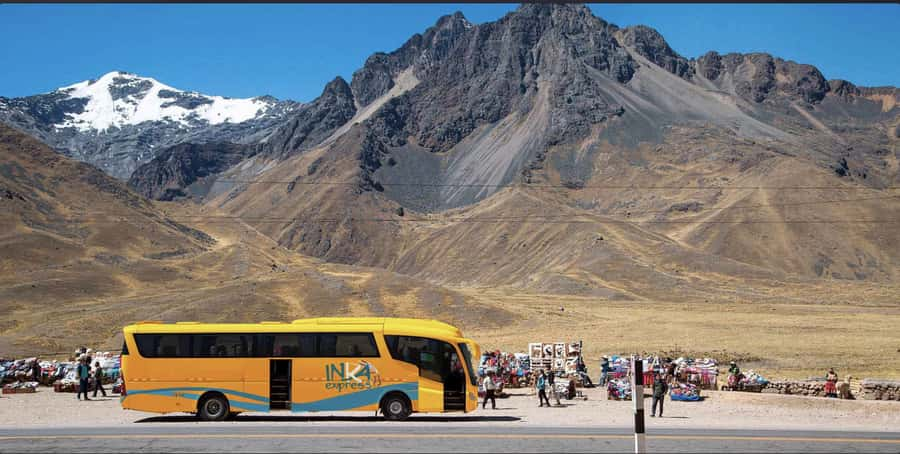
The bus reaches Abra La Raya at about 2:15 PM. This pass marks the natural border between the Cusco and Puno regions and offers broad views of the Andes.
The stop lasts only about 10 minutes, so treat it as a photo break, not a walk. You will have time to step out, take pictures, and feel the colder high-altitude air. Snow-capped peaks and rolling hills create the classic Andean view, with the road cutting through an enormous open setting.
A short stop is sensible here. The altitude can make exertion uncomfortable, and the point is to take in the view rather than climb around. Move slowly, keep your jacket handy, and do not wander far from the bus.
This is also where the route’s changing scenery becomes clear. The road has carried you from the Cusco area toward the broad uplands of Puno. If you sit by a window, keep your camera ready throughout the day rather than waiting only for scheduled stops. One driver has been praised for slowing down at scenic points, but that should be seen as a courtesy, not a promised part of the schedule.
Pucará and the beginnings of Andean civilization
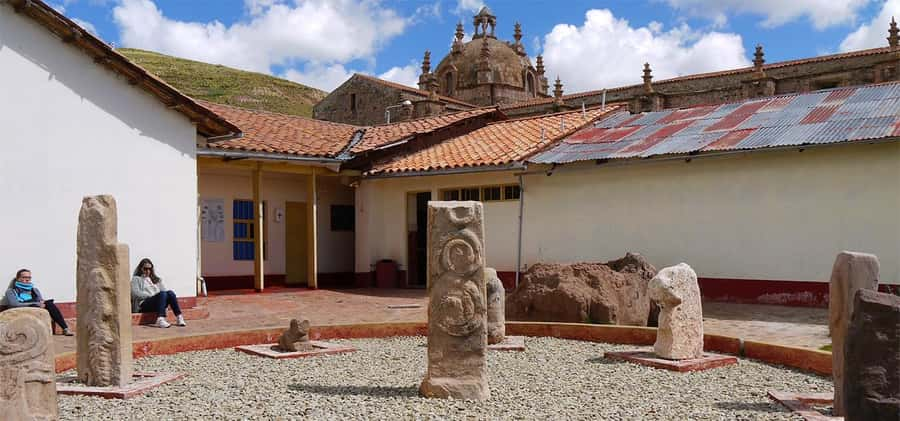
The final major stop is Pucará, reached at about 3:20 PM. The Lithic Museum presents material from the Pucará culture, which flourished from about 500 BC to 200 AD.
This stop adds an important layer to the day. The route is not only about the Inca period. Pucará takes you farther back, toward an early Andean society with its own religious practices, artisans, priests, and warriors.
The museum visit lasts about 45 minutes. Displays of stone figures and other objects help explain the culture that developed before the better-known Inca state. The stop is compact, but it gives you a useful timeline for understanding Peru’s past.
You will also find this a good place for a final bathroom break and coffee before the last run to Puno. Guides have handled the bilingual groups in practical ways, sometimes dividing English and Spanish speakers so one group can use the facilities while the other tours. That can make a busy stop feel less cramped.
The guide can make or break the day
The itinerary is fixed, but the guide shapes how much you take from it. The strongest feedback centers on clear English, steady organization, and a willingness to answer questions.
Several guides have been singled out by name, including Manuel, Matias, Shelma, Elizabeth, Alfredo, and Juan Carlos. Manuel has been praised for fluent English and for keeping both language groups informed. Matias has been described as enthusiastic, and Juan Carlos added local food context with chuta bread.
You may receive a different guide, but the service is bilingual in Spanish and English. That matters on a route where the meaning of a church, temple, or museum is not always obvious from the buildings alone.
Good guides also help with the practical rhythm of the day. They point out where to meet, keep the group on time, answer travel questions, and help passengers with luggage. You should still keep track of the bus and return promptly after each stop, especially at Abra La Raya, where the break is short.
How the schedule feels in real life
This is an 11-hour day, with departure in the morning and arrival at the Puno bus terminal around 5:30 PM. The activity information also describes it as about 10 hours in one place, so allow the full 11 hours and accept that road conditions may affect the exact arrival time.
The day is well paced for a transfer, but it is not relaxed sightseeing. You spend many hours seated, and the stops are designed to give you a clear introduction rather than unlimited independent time.
That tradeoff works well if you have luggage and need to reach Puno anyway. The bus handles the route while the guide supplies context, and you avoid arranging separate taxis or local connections between remote sites.
It may be less suitable if you prefer long museum visits, private photography time, or a flexible departure. The bus waits for the group, and the route covers a lot of ground. Think of it as a guided overland journey with four carefully chosen interruptions.
What to bring and what to budget
Bring your passport or another required identification document if your operator requests it, though no specific document rule is provided here. More importantly, bring layers, sun protection, water, and comfortable shoes.
The bus supplies drinks, but you may want personal snacks because breakfast is not included. At the high pass, a warm layer is useful. At the same time, Cusco’s morning can begin more comfortably than Abra La Raya, so dressing in layers is more practical than relying on one heavy coat.
Plan on 53 soles for the entrance tickets to Andahuaylillas, Raqchi, and Pucará. These fees are paid in person because the money goes directly to the local communities. Carry soles rather than assuming a card will be accepted.
The $44 tour price includes the core transport and service. Once you add the site fees, lunch, and drinks already covered, the package is good value for a full day. It is especially useful if you were already planning to travel from Cusco to Puno and want more than a direct ride.
Should you book this Cusco to Puno bus tour?
I would book it if you want a comfortable, organized transfer and would enjoy seeing several Andean sites along the way. Raqchi, Abra La Raya, and Pucará give the journey real variety, while Andahuaylillas adds a striking colonial stop.
You should choose another option if your priority is the lowest fare, a late start, or complete control over the schedule. The early departure and long day are real commitments.
For most people moving between Cusco and Puno, this is a smart use of travel time. Arrive early, budget for the 53 soles in entrance fees, bring layers and a snack, and sit near a window if you can. You will reach Puno having seen far more than the inside of a bus.
FAQ
How long does the Cusco to Puno journey take?
The activity lasts about 11 hours. It departs in the morning and is scheduled to arrive at the Puno bus terminal around 5:30 PM.
Where does the bus leave from?
The departure point is Alameda Pachacuteq 499B in Cusco. You should arrive 30 minutes before departure.
What time does the bus depart?
The stated departure time is 6:40 AM. The meeting information also contains an inconsistent evening reference, so confirm the exact time when booking.
Which sites are included?
The guided stops are Andahuaylillas Church, the Raqchi archaeological complex, Abra La Raya, and the Lithic Museum of Pucará.
Is lunch included?
Yes. A buffet lunch in the Marangani, Sicuani area is included, with meat, fish, side dishes, salads, desserts, and herbal drinks.
Are entrance tickets included?
No. Entrance tickets for Andahuaylillas, Raqchi, and Pucará cost 53 soles in total, about $13, and are paid locally.
Is the tour available in English?
Yes. The service has live bilingual guides in Spanish and English.
What is included on the bus?
The service includes luxury bus transport, hot and cold drinks, a bathroom, heating, air conditioning, and an oxygen tank.
Just added around Puno & Lake Titicaca
- Uros Floating Islands Tour in Puno★ 3.7 · 9 reviews
- TRIP FROM PUNO TO CUSCO WITH THE ROUTE OF THE SUN★ 4.7 · 16 reviews
- Two Day Lake Titicaca Tour With Homestay★ 3.7 · 6 reviews
- Two-Day Tour to Uros with Amantani and Taquile from Puno★ 5.0 · 44 reviews
- Full Day Guided Tour of the Aymara Route from Puno★ 5.0 · 55 reviews
- Full-Day Tour of Uros, Taquile and Sillustani from Puno★ 5.0 · 41 reviews
- Full Day Lake Titicaca Tour to Uros and Taquile Islands★ 4.5 · 56 reviews
- Titicaca Lake 2 Day 1 Night from Cusco to Puno★ 4.5 · 33 reviews
Puno & Lake Titicaca Tours, compared.
Lake Titicaca 2-Day Tour to Uros, Amantani and Taquile
Read our review →
Full-Day Tour of Lake Titicaca and Uros & Taquile
Read our review →
Full-Day Route of the Sun Tour to Cusco with Lunch
Read our review →
Browse the lists this tour appears in