

Reviewed · TRUJILLO TOURS
Shore Excursion from Salaverry port
The most striking part of this Salaverry shore excursion is the chance to see two major Peruvian cultures in one outing. You’ll visit the Moche temples of the Sun and Moon, then follow the story forward to the Chimú adobe city of Chan Chan. I like the clear variety: religious murals, museum pieces, carved temple panels, and broad palace ruins all appear in a single morning.
I also like the small-group transport and the guides’ strong record for clear explanations. Alfredo has been praised for friendly, easy-to-follow English, while William is noted for keeping the commentary well timed rather than turning every stop into a long speech. The main caution is time: the planned duration is five hours, but one outing lasted seven, so check your ship’s return schedule carefully.
Key points to know before you book
- Moche temples first: See Huaca de la Luna, a religious center, and Huaca del Sol, an administrative complex built over many generations.
- A useful museum stop: The Huacas de Moche Museum adds ceramics, utensils, artifacts, and tombs that help explain what you see outside.
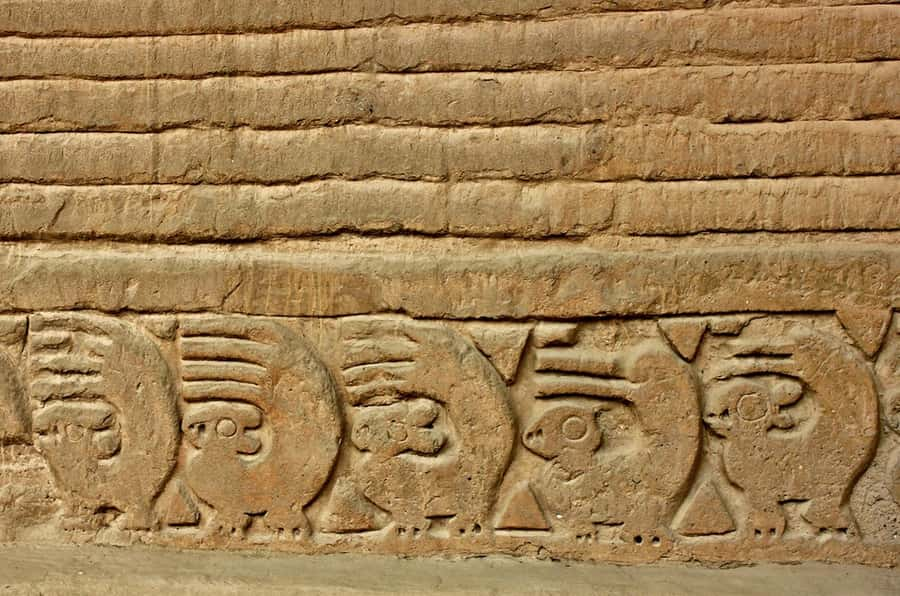
- Two Chimú sites: Huaca Arcos Iris offers carved adobe panels and ritual niches before you continue to Chan Chan.
- UNESCO listed Chan Chan: Explore the former Chimú capital, once home to an estimated 30,000 to 60,000 people.
- Straightforward port transport: Pickup begins after you take the cruise ship shuttle to Salaverry Plaza, where you look for the JD ADVENTURE sign.
- Bring cash and contact details: Entrance fees, food, and drinks are not included, and the operator needs your mobile number and ship schedule.
Why this excursion makes sense from Salaverry
Salaverry is your gateway to the archaeological sites around Trujillo, and this tour uses the port call efficiently. Instead of choosing only one ruin, you get a compact introduction to the Moche and Chimú civilizations, two cultures that shaped this part of northern Peru.
The itinerary also has a sensible order. You begin with the Moche temples and their museum, then visit a Chimú temple and finish at Chan Chan. That gives you a basic timeline without asking you to sit through a long classroom lecture before seeing anything.
The price is $80 per person. That is fair if you value having transport, a guide, and several major sites arranged around a cruise stop. The value depends on the entrance fees, since they are extra, and on how smoothly the day runs. Food and drinks are also separate.
Because transport is provided from the port area and the outing is designed for a small group, you avoid the bother of arranging separate taxis to several widely spaced archaeological sites. That convenience matters on a port day, when a missed connection can spoil more than a morning.
A few more Peru days worth weighing up
- Lima: Shore excursion from the Port of Callao for Cruises
★ 4.3 · 10 reviews - Trujillo Shore Excursion from Salaverry Port
★ 5.0 · 9 reviews
Getting from the ship to Salaverry Plaza
You do not meet the guide directly at the cruise ship. First, take the shuttle bus provided by your cruise company. The ride to Salaverry Plaza takes about 10 minutes.
At the plaza, look for the JD ADVENTURE sign. The operator provides fuller meeting instructions two days before arrival, so keep checking your email. You must also provide a valid mobile number for WhatsApp contact, along with your ship’s arrival and departure times.
This is a small point, but it matters. Port meeting arrangements can be less obvious than a hotel lobby pickup. Having the company’s sign and a working phone should make the handoff easier. I would save the operator’s contact details before leaving the ship and keep the meeting instructions available offline.
The advertised start is 8:30 a.m. The planned duration is five hours, but one recent outing lasted seven hours and still included an additional restaurant stop. That may have been an extended version of the day, but you should not assume the return will happen exactly five hours after departure. If your ship has a tight all-aboard time, ask for a realistic return estimate before you leave the port.
Huaca del Sol and Huaca de la Luna: two very different Moche temples
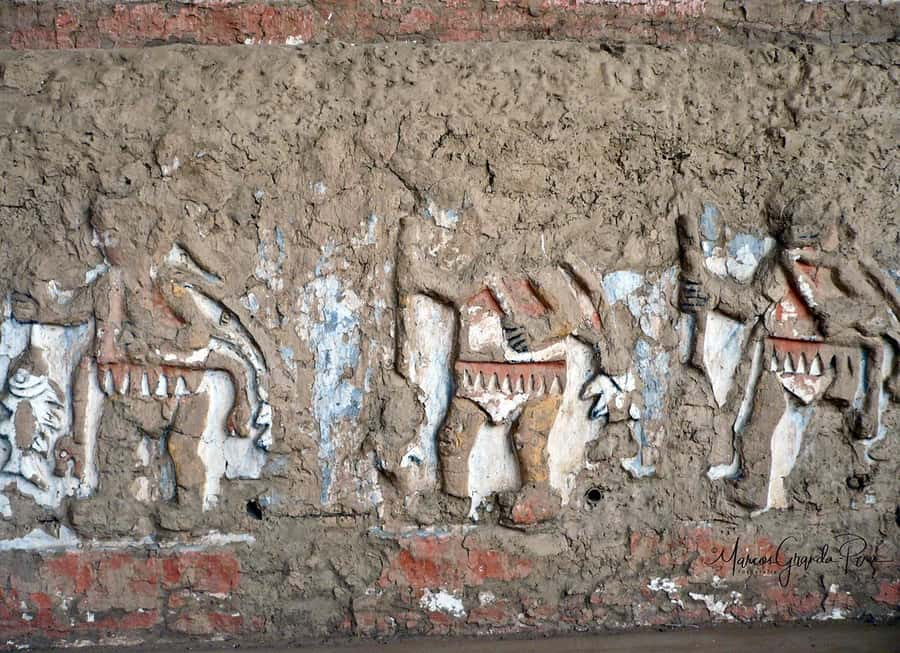
The first major stop is the Sun and Moon complex, also called Huaca del Sol and Huaca de la Luna. These enormous adobe structures were built by the Moche over roughly 700 years.
The temples were not made in one go. Each generation added a new platform, sealing the remains of dead rulers inside the older structure before covering it with fresh construction. The result is a stepped pyramid that grew layer by layer.
Huaca de la Luna served as a religious complex. Huaca del Sol functioned as an administrative center. Seeing both helps you understand that this was not simply a pair of similar ruins. One site focused on ceremony and belief, while the other supported government and practical control.
Your guide is especially useful here. Without explanation, adobe walls and eroded platforms can look like one large mound. A guide can point out the difference between the two temples, explain how the layers were built, and connect the visible remains with Moche political and religious life.
The Moche are also known for their distinctive ceramics and painted decoration. The supplied information does not promise a particular mural or preserved room on the visit, so do not book this expecting every famous image to be visible. The real strength of this stop is the scale of the temples and the way the guide explains their changing purpose.
The site is outdoors and involves walking around archaeological remains. The tour is not recommended for people with mobility impairments, pregnant women, or people with certain pre-existing medical conditions. You should also take the heat and walking seriously, even though no specific weather conditions are promised.
The Huacas de Moche Museum adds the human detail
After the temple area, you visit the Huacas de Moche Museum. This is an important part of the outing because it puts smaller objects beside the giant adobe structures.
The collection includes artifacts, ceramics, utensils, and tombs. These objects can answer questions that a large ruin cannot. What did people use? How were objects decorated? What did burial practices reveal about rank and belief?
I like this combination of field site and museum. The temples give you scale, while the museum gives you details. If you have ever visited an ancient mound and wished you could see the objects found there, this stop helps fill that gap.
The museum also gives your guide something concrete to discuss. A good explanation of a ceramic vessel or burial can make the social structure of the Moche easier to picture than a broad statement about an ancient empire. Alfredo and William are two guides associated with particularly strong feedback for clarity and organization, though the assigned guide may vary.
Same base, a completely different kind of day:
- Cusco: Humantay Lake Tour with Breakfast and Buffet Lunch
★ 4.9 · 2,976 reviews - From Cusco: Sacred Valley & Maras Salt Mines Tour with Lunch
★ 4.8 · 2,227 reviews - From Cusco: Moray, Maras Salt Mines & Chinchero Weavers Tour
★ 4.8 · 1,925 reviews - From Lima: Paracas and Huacachina Oasis Full Day Guided Tour
★ 4.7 · 1,780 reviews
Huaca Arcos Iris and the Chimú connection
The next stop is Huaca Arcos Iris, also known as the Rainbow Temple or El Dragon. The Chimú built it around A.D. 1200, placing it later than the Moche sites.
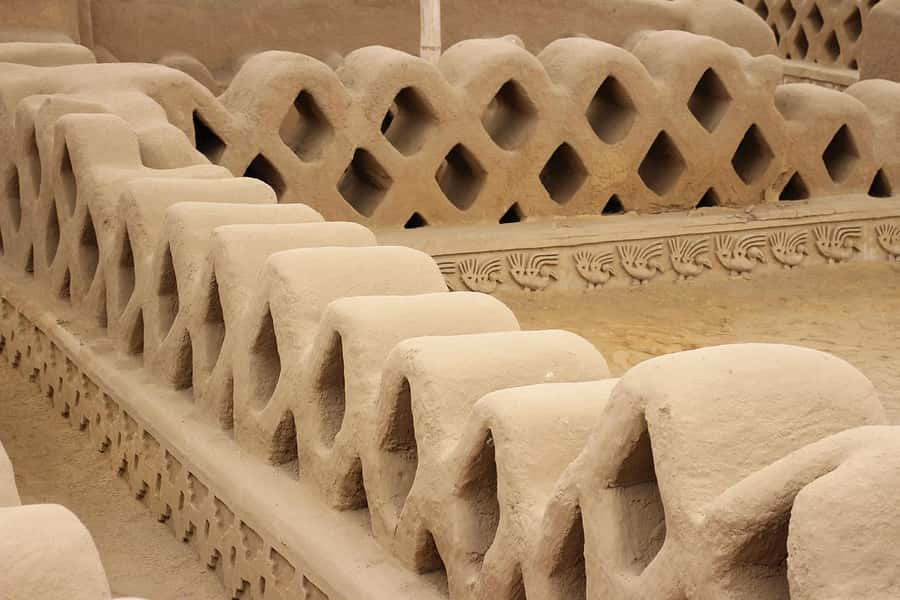
The temple has two platforms, carved adobe panels, and niches once used to store ritual objects. Those surviving details give this stop a different feel from the vast Moche mounds. You are looking more closely at decoration and function rather than only at the size of the construction.
Local tradition identifies Huaca Arcos Iris as the home of Takaynamo, the mythical founder of Chan Chan. Treat that as a legend rather than a confirmed biography. It still adds a useful link between the temple and the Chimú capital you visit next.
This stop is valuable because it prepares you for Chan Chan. You begin to recognize Chimú adobe work and see how ritual spaces could be decorated with repeated forms. The visit is relatively brief within a five-hour schedule, but it adds cultural variety and prevents the outing from becoming only a tour of one huge ruin.
Chan Chan, the Chimú capital in adobe
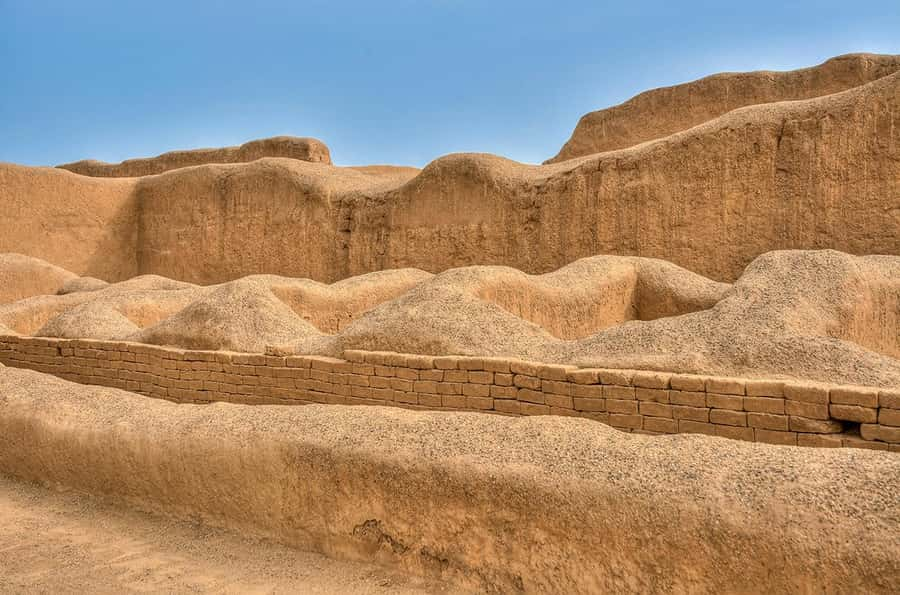
Chan Chan is the grand finale. It was the capital of the Chimú empire and is the largest pre-Columbian adobe city in the Americas. UNESCO listed the archaeological complex as a World Heritage Site in 1986.
The city once included courtyards, terraces, palaces, and gardens. Estimates place its population between 30,000 and 60,000 people. Those numbers are hard to picture until you walk through the remains and consider that Chan Chan was not just a ceremonial building. It was a functioning city with organized spaces for government, ritual life, and daily activity.
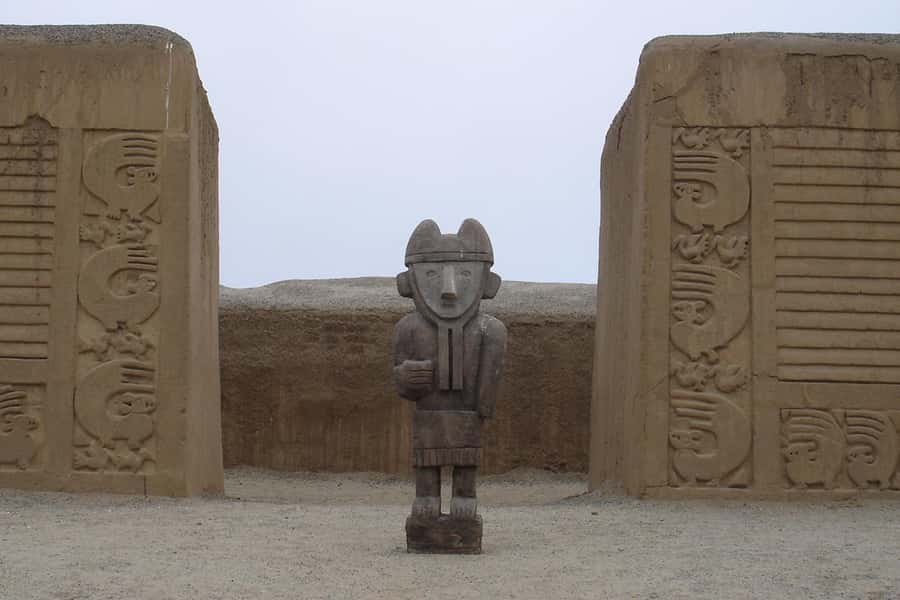
The walls and carved panels are the main attraction. Adobe is vulnerable to rain and erosion, so preservation work and protected areas are part of the modern experience. You may find that some spaces are more open and atmospheric, while others are easier to understand through the guide’s explanation than through the remaining walls alone.
This is where a well-structured guide makes the biggest difference. William has been praised for giving information at the right place and time, rather than delivering an unbroken monologue. That style suits Chan Chan. You need a pause to look at the walls, then a short explanation of what a courtyard, niche, or palace area may have been used for.
Do not expect a complete city with every building intact. Chan Chan is an archaeological complex, not a restored medieval town. Its power comes from the extent of the site and the evidence of careful planning, even where erosion and time have removed much of the original structure.
How the guide shapes the experience
The guide is not a minor detail here. The remains are fascinating, but many features need context. The operator offers English and Spanish, and the strongest comments specifically praise Alfredo’s friendly manner and clear English.
A guide identified as William has also been praised for being structured, competent, and sensitive to the pace of the group. That is useful information for anyone who dislikes long, unbroken speeches. At archaeological sites, timing matters. You want enough explanation to understand what you are seeing, but also quiet time to look around.
The overall rating is 4.5 from eight reviews, with several perfect scores. The most consistent praise centers on the guides, the range of sites, and the organization. One booking described the itinerary as covering all the important sites, while another called out the variety in a single day.
Guide assignments can change, so you should not book on the assumption that Alfredo or William will lead your group. Still, the repeated focus on clear guiding is a good sign for an excursion where interpretation matters as much as transport.
Price, timing, and what is not included
At $80, this is a practical choice if you want several major sites without arranging everything yourself. You receive port pickup and drop-off, transportation in a small group, and an English or Spanish speaking guide.
You must pay entrance fees separately. The amount is not supplied here, so ask about the current cost before departure and bring cash. Food and drinks are also excluded.
One outing ended at a restaurant with ocean views and a delicious ceviche, but that restaurant visit is not listed as a standard included feature. Treat it as a possible extension, not a guaranteed part of the five-hour plan. If it happens, it may explain why a day runs closer to seven hours.
The operator allows free cancellation up to 24 hours in advance and offers reserve now, pay later booking. Those terms are useful when your cruise schedule or port call remains uncertain, but they do not remove the need to confirm your ship’s arrival and departure details.
Who should book this shore excursion?
I would choose this tour if you want archaeological variety and a guide-led visit rather than a quick photo stop. It suits you best if you are curious about how Moche religious centers and Chimú urban planning differed.
It is also a good match for cruise passengers who want round-trip transport and do not want to negotiate separate rides from Salaverry. The small-group format should feel more personal than a large coach, though the exact group size is not given.
You should think twice if you have limited mobility, are pregnant, have a pre-existing medical condition, or are over 95. The activity is specifically not considered suitable for those groups, and the sites require outdoor movement.
Bring cash, keep your phone available for WhatsApp, and carry the ship’s schedule with you. Backpacks, pets, alcohol, and drugs are not allowed. The clothing requirements are not specified, so practical sun-ready clothing and comfortable walking shoes are sensible, but I would confirm any current site rules before departure.
Should you book it?
Book this excursion if you want the strongest archaeological overview available within one Salaverry port call. The route covers Moche temples, museum objects, a Chimú ritual site, and the great adobe capital of Chan Chan. That is a lot of cultural ground for $80 before entrance fees.
The biggest reason to choose it is the guiding. Alfredo’s clear English and William’s well-timed explanations are specifically associated with the experience, and the itinerary needs a good interpreter. The main reason to hesitate is the loose timing. If your ship requires you back at a precise hour, confirm the return plan and leave room for an outing that may run longer than five hours.
FAQ
Where does the tour meet?
Take the cruise ship shuttle bus from the vessel to Salaverry Plaza, a ride of about 10 minutes. Look for the JD ADVENTURE sign. Full meeting details are sent two days before arrival.
What time does the excursion begin?
The advertised start time is 8:30 a.m. You should keep checking email for any change to the departure time.
What sites are included?
The route includes Huaca del Sol, Huaca de la Luna, the Huacas de Moche Museum, Huaca Arcos Iris, and Chan Chan.
Is transportation included?
Yes. Round-trip transportation from Salaverry port is included, using small-group transport.
Are entrance fees and meals included?
No. Entrance fees, food, and drinks are not included. Bring cash for additional costs.
Is the tour available in English?
Yes. The tour offers live guiding in English and Spanish. You must provide a valid mobile number for WhatsApp contact and your ship’s arrival and departure information.
Just added around Peru
- Waqrapukara 1 day trekking + meals★ 3.9 · 3 reviews
- Zipline over the Sacred Valley Trip★ 5.0 · 11 reviews
- Visit Pisac from Cusco: Private Transport★ 4.6 · 9 reviews
- Visit to the Cochahuasi Animal Sanctuary with rescued animal★ 4.1 · 4 reviews
- Walking tour through the Historic Center of Arequipa★ 4.0 · 3 reviews
- Vinicunca Mountain Tour – Full Day Tour to Rainbow Mountain★ 3.4 · 4 reviews
- VISIT THE NATIONAL RESERVE OF PARACAS BY ATV★ 4.8 · 23 reviews
- Uros Floating Islands Tour in Puno★ 3.7 · 9 reviews
Trujillo Tours, compared.
Full Day Tour Huacas, Chan Chan & Huanchaco – Trujillo
Read our review →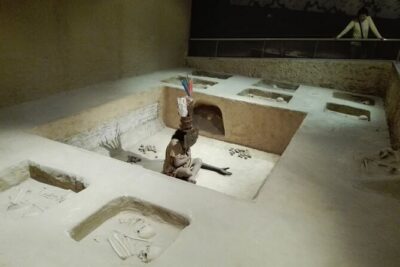
Piramids of Tucume Tour, Sican Museum and Lambayeque city tour
Read our review →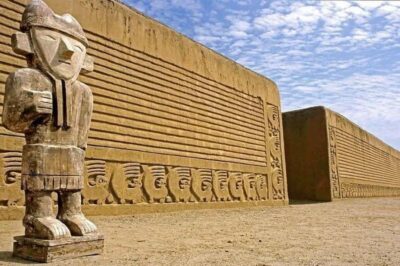
Pyramids of the Sun and the Moon, Huanchaco and Chan Chan
Read our review →Pyramids of the Sun and the Moon, Huanchaco and Chan Chan
Read our review →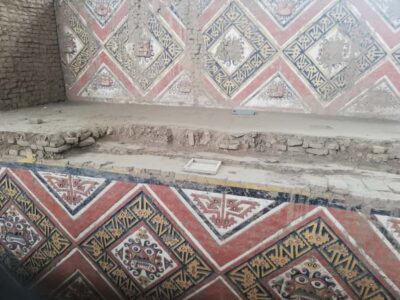

Browse the lists this tour appears in