
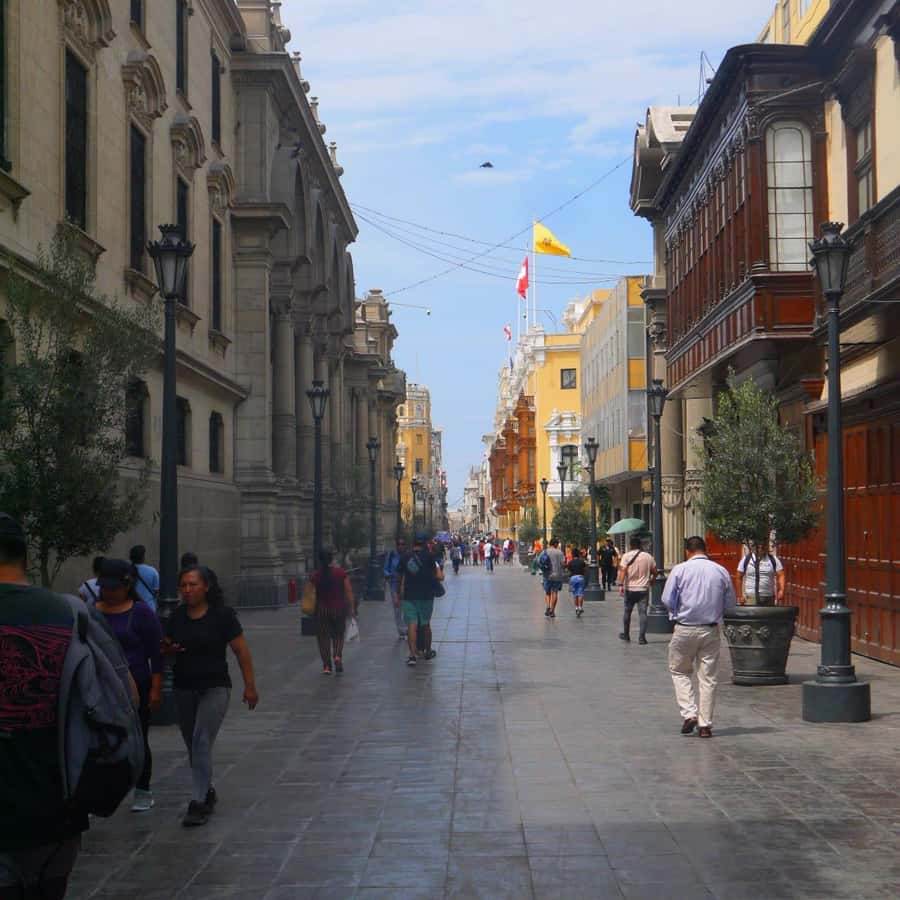
Reviewed · LIMA TOURS
La casa de Aliaga, an alive colonial jewel at Lima center.
Casa de Aliaga is not a reconstructed museum. It is a living home, still connected to the family that has occupied it since the Spanish conquest. That makes this 40-minute visit one of the more unusual ways to understand Lima’s historic center.
I like two things right away: the house sits beside the Government Palace, so it is easy to add to a walking day, and its rooms, paintings, walls, and furnishings still carry the marks of a private family residence. The guide, especially Nicholas, can add useful context about the Aliaga family and the house’s place in Peruvian society.
The main concern is scheduling. A few bookings have suffered from missing or late guides, including one group that waited an hour. The problem was eventually fixed, but you should arrive with enough flexibility in your Lima schedule.
Key points to know before visiting

- One of Peru’s oldest residences: Casa de Aliaga dates to the foundation period of Lima and is presented as the oldest mansion in Peru and one of the oldest in the Americas.
- A home still tied to its founding family: The present owner is described as the 16th direct descendant of the Spanish conqueror who founded the family line in Peru.
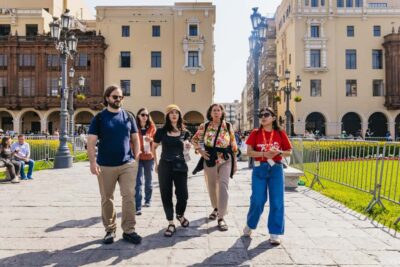
- A central location beside the Government Palace: You meet at the house’s entrance in the pedestrian area of Lima’s historic center.
- A short but focused tour: The guided visit lasts about 40 minutes and covers only a portion of the property.
- English and Spanish tours: The house permits only a small list of authorized guides to conduct these visits.
- Budget for a separate entrance charge: The tour costs $40 per person, with an additional entrance fee of S/. 35, about $9.
Entering a house that has never stopped being a home

Lima’s historic center is full of churches, government buildings, balconies, and grand colonial facades. Casa de Aliaga gives you something different: a residence that was not created as a museum after its original purpose had ended.
The house has remained connected to the Aliaga family from the early days of Lima through the present. That long continuity is the central reason to visit. You are not simply looking at colonial design behind glass. You are seeing a place where a noble family maintained its home, art, and traditions across centuries of political and social change.
The property is linked to the Spanish conqueror who established the family in Peru, and the present owner is the 16th direct descendant. The family also retains a count’s title. These details can feel distant at first, but inside the house they give the visit a human thread: one address, one family line, and an unusually long record of life in Lima.
The building’s location adds to its importance. Casa de Aliaga is next to Peru’s Government Palace, on the right side of the palace when you face the area. The setting makes clear that this was not an isolated country estate. It occupied a place close to political power from the beginning.
A few more Lima days worth weighing up
- Lima: Ultimate Peruvian Food Tour
★ 4.9 · 700 reviews - Lima’s Vibrant Heritage: Exploring the City’s Landmarks Half-day
★ 4.5 · 581 reviews - Private transfers from Lima Airport or to Lima Airport
★ 4.0 · 359 reviews
What you see during the 40-minute visit
The tour begins at the front door of Casa de Aliaga. From there, an authorized guide takes you through the section open for special visits. The visit is short, so expect a selected route rather than a full exploration of every room.
You may see colonial architectural features, painted decoration, family art, and the walls and materials that have been carefully maintained over time. Each part helps explain why the house matters. The appeal is not based only on age. It comes from the combination of age, continued occupation, art, and family ownership.
The guide’s role matters here. A bare walk through old rooms would take only a few minutes to appreciate. With the right explanation, the visit connects the building to the founding of Lima, the Spanish colonial period, and the formation of Peruvian social structures.
Nicholas received particular praise for being pleasant and well informed, and he is a guide you may encounter on this experience. English and Spanish are available, but guide assignments can vary. Because Casa de Aliaga allows only a small list of authorized guides, the quality of the explanation depends partly on the person assigned to your time.
Keep your expectations realistic. Only a small section of the house is open to visitors. You will not inspect the entire residence or see every corner of a property that has developed over centuries. For many people, that limited access makes the visit feel more like a special appointment than a standard museum tour. For others, the $40 tour price may feel high for 40 minutes.
Why the architecture matters more than the clock

Forty minutes can sound brief, and it is. Still, the length works well if you are already exploring central Lima and want a compact cultural stop.
The house gives you a chance to look closely at the materials used in its construction, the condition of its walls, and the paintings that remain in place. These are not just decorative details. They show how a historic residence can preserve several periods at once.
Colonial homes are often judged by their facades, but Casa de Aliaga’s greater interest is the way the property functioned as a private setting. Its rooms and art were part of family life, not assembled later to create a period display. That difference gives the visit a more personal scale.
I also like that the house offers a counterpoint to Lima’s more famous public monuments. Churches and plazas tell the story of the city through religion and government. Casa de Aliaga adds the view of a powerful household, its social position, and its long role in Lima’s elite life.
The property is recognized for its cultural legacy, and its place beside the Government Palace helps explain why. You can connect the house to the wider history of Lima without spending half a day on a large museum.
The unusual value of a living colonial property

The strongest feature here is the house’s continued life. Many old buildings survive as ruins, institutions, or carefully staged attractions. Casa de Aliaga remains associated with its descendants.
That continuity does not mean the house is frozen in the 16th century. It means the building has absorbed time. Its history includes colonial Peru, later changes in society, and the modern city outside its doors. The house is valuable because it lets you consider how one family residence adapted while keeping its identity.
I find this kind of place especially useful for understanding history at a human scale. Dates and political events matter, but a house shows how status, wealth, family ties, art, and architecture worked together in daily life.
The Aliaga family’s long line also raises questions that a good guide can address: how did the family maintain the property, how did its social role change, and what does it mean for a colonial family to remain connected to the same address today? The tour is too short for a full academic treatment, but those are the themes that make the visit more than a quick look at old walls.
Same base, a completely different kind of day:
- Lima: The Charm of Barranco & Pre Inca Pyramid in Miraflores
★ 4.9 · 322 reviews - Lima: Pachacamac Ruins & Barranco Half-Day Guided Tour
★ 4.6 · 296 reviews - Pre Inca Temple of Pachacamac Half-Day Tour from Lima
★ 4.5 · 283 reviews - Lima: Magic Water Circuit Light Show Tour with Pickup
★ 4.9 · 251 reviews
A practical stop in Lima’s historic center

The meeting point is simple: go to Casa de Aliaga in the pedestrian area beside the Government Palace. You do not need a separate excursion outside Lima, and the central location makes it practical to combine with other sights in the historic center.
The house’s position is also useful if you are organizing your day around the main plaza and nearby colonial buildings. Since the visit lasts 40 minutes, it can fit between longer stops. Allow extra time to find the entrance and meet the guide, especially because past scheduling problems have caused delays.
The experience is wheelchair accessible according to the supplied tour information. That is useful, but you may still want to confirm the exact route and access arrangements when booking, since only part of the house is open and historic buildings can have physical limits.
The tour is available in English or Spanish. If the history of Lima is new to you, an English guide can make the details easier to follow. Spanish speakers can choose the language that feels most natural for discussing family history and architecture.
The price: worthwhile for history fans, harder to justify for casual sightseers

The advertised price is $40 per person, and the entrance fee is separate at S/. 35, roughly $9. That puts the total cost near $49 per person before any other expenses.
For a 40-minute visit, this is not a bargain in the usual sightseeing sense. You are paying for access to a private historic property, an authorized guide, and a visit that cannot be arranged as casually as a public museum entry. The limited number of approved guides also suggests that this is a controlled experience rather than a walk-in attraction.
I would consider the price reasonable if you care about colonial architecture, aristocratic families, or the early social history of Lima. You are paying for access to a house with an unusually long family connection, not for a large collection or a full afternoon of activities.
If you simply want to see the main landmarks of the historic center, the cost may be difficult to defend. You will visit only a small part of the property, and the tour ends quickly. In that case, you may prefer to spend your budget on a broader city tour or several public museums.
The value also depends on the guide. A thoughtful explanation can make 40 minutes feel substantial. A delayed start or weak organization can make the price feel much less fair.
Scheduling is the main risk

The most important practical warning concerns the guide meeting. Some bookings have had scheduling problems with Expertizia Travel. In one case, no guide appeared at the arranged time, and the group waited a full hour before the matter was resolved. Another visit began badly when the expected guide did not arrive, though a replacement guide was found and an effort was made to compensate for the problem.
That does not erase the positive experiences. Several visits had smooth, informative guiding, and Nicholas was singled out for his friendly manner and strong command of the subject. Still, you should not book this as the one fixed activity that your entire day depends on.
Leave room before or after the appointment. If you have a flight, train, timed museum ticket, or restaurant reservation, do not place it too close to this tour. The property’s special access rules make it harder to solve a missed appointment than it would be at a regular public attraction.
The activity offers free cancellation up to 24 hours before the scheduled time and allows you to reserve now and pay later. Those terms help if your Lima plans are still changing, but they do not remove the need to check the appointment details carefully.
Who will enjoy Casa de Aliaga most

I would recommend this experience to you if you enjoy:
- Historic homes that still have a family connection
- Colonial architecture and art
- The social history of Lima
- Short cultural visits in the city center
- Places with unusual access rules and a strong sense of continuity
It is also a good choice if you have already seen Lima’s main plaza and want a less obvious stop nearby. The house adds a private, family-centered view of the city.
I would be more cautious if you want a long tour, a large collection, or a complete look at the building. Only part of Casa de Aliaga can be visited, and the experience lasts about 40 minutes. The high total cost makes the limited duration more important.
Families with older children may find the idea of a home occupied by the same family line more memorable than a standard museum display. Younger children may not get as much from the architectural and social detail, though the short duration is manageable.
Should you book Casa de Aliaga?

Book it if the story of a living colonial house appeals to you more than a checklist of major sights. The combination of location, architecture, family continuity, and authorized guiding gives Casa de Aliaga a character you will not find in a normal museum.
Before paying, remember the full cost: $40 per person plus about $9 for admission. Also protect your schedule by leaving extra time around the appointment. If you can accept those conditions, this is a worthwhile specialist visit for anyone curious about Lima’s oldest social layers.
If you need perfect timing or want maximum sightseeing value per dollar, choose with care. Casa de Aliaga is brief and access can be unevenly organized. Its best moments depend on a reliable guide and your interest in what a private historic home can reveal.
FAQ
Where is Casa de Aliaga located?
Casa de Aliaga is in Lima’s historic center, right beside Peru’s Government Palace. The meeting point is at the house’s entrance in the pedestrian area.
How long does the tour last?
The guided visit lasts about 40 minutes.
How much does the experience cost?
The tour costs $40 per person. The entrance fee is separate and costs S/. 35, or about $9.
Is the entrance fee included?
No. The separate entrance fee is not included in the tour price.
Is the tour available in English?
Yes. Live guides are available in English and Spanish.
Who is the current owner of Casa de Aliaga?
The current owner is described as the 16th direct descendant of the Spanish conqueror connected to the family’s founding in Peru. The family also retains a count’s title.
Can I visit the entire house?
No. Only a small section of the house is open for the visit.
Is Casa de Aliaga wheelchair accessible?
The activity is listed as wheelchair accessible.
Can I cancel the booking?
Yes. You can cancel up to 24 hours in advance for a full refund. You can also reserve now and pay later.
Just added around Lima
- Guided Tours in Colonial and Modern Lima★ 5.0 · 54 reviews
- Full Day Pilgrims★ 5.0 · 28 reviews
- Sandboarding and Off Road in Lima (National Park Lomas de Ancón)★ 5.0 · 54 reviews
- Tour Miraflores + Fotografía Profesional★ 5.0 · 47 reviews
- Lima Airport Transfers by SUV/Van★ 5.0 · 34 reviews
- Lima City tour and Catacombs Museum (04 hours) Private Tour with guide in Lima★ 5.0 · 32 reviews
- In Lima: Sandboarding Off Road Half Day!!★ 5.0 · 36 reviews
- Peruvian Experience: Interactive, Cultural & Gastronomic Guided Tour★ 5.0 · 42 reviews
Lima Tours, compared.

Lima’s Vibrant Heritage: Exploring the City’s Landmarks Half-day
Read our review →
Pachacamac Ruins & Barranco Half-Day Guided Tour
Read our review →
Pre Inca Temple of Pachacamac Half-Day Tour from Lima
Read our review →
Magic Water Circuit Light Show Tour with Pickup
Read our review →
Historic Center Street Food, Market, and Eateries Tour
Read our review →
Browse the lists this tour appears in