
Reviewed · PUNO & LAKE TITICACA TOURS
“Waqra Pucara, The Majestic Fortress Revealing Secrets of the Andes”.
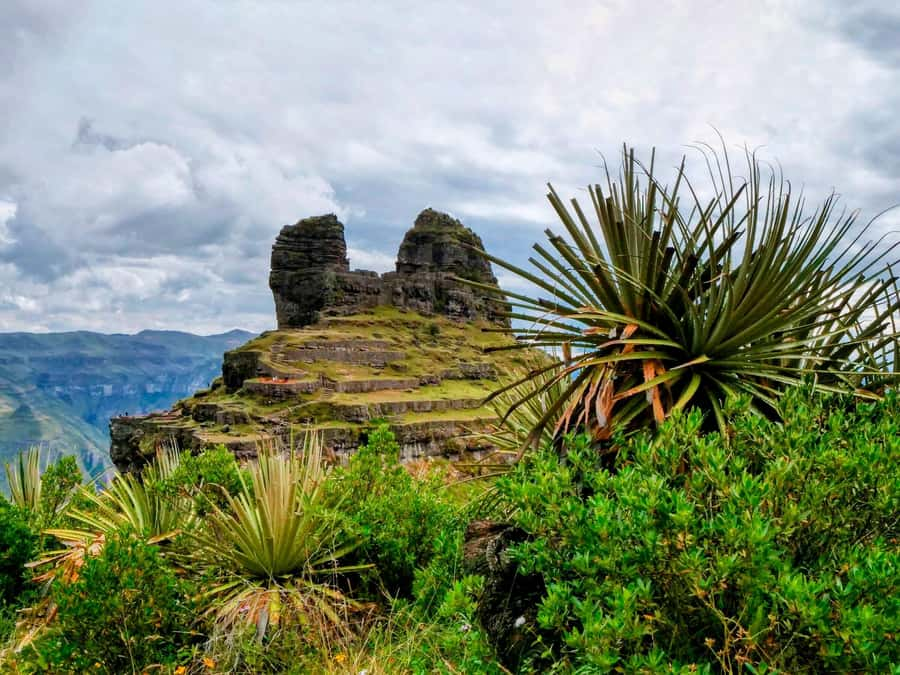
Waqra Pukara is an extraordinary stone fortress shaped like a pair of horns, perched high above the Cusco countryside. The setting does much of the talking: steep rock walls, broad mountain views, old terraces, and a lonely ceremonial site that feels far removed from Cusco’s busy streets.
I like two things here. First, the route passes Pomacanchi Lagoon, one of the largest lakes in the region, with fields and grazing country around it. Second, the tour includes transport, a bilingual Spanish-English guide, breakfast, and lunch, which makes a remote outing easier to manage.
The catch is the day itself. You leave at 4:30 am, spend hours on mountain roads, and hike at high altitude. Communication and pickup have also been unreliable for some bookings, so I would confirm your pickup details directly with CapacHuarmi before going.
Key points to know before booking
- A horn-shaped fortress above the Andes: Waqra Pukara’s unusual form gives the site its local identity and makes the final approach memorable.
- A long mountain day from Cusco: The advertised schedule runs from an early pickup until about 5:00 pm, with roughly 14 hours of touring.
- A hike with conflicting timing: The route is described as about three hours, though some departures have taken closer to one hour.
- Pomacanchi Lagoon adds variety: The drive includes cultivated fields, open meadows, and views around a major regional lake.
- Food and transport are included: Breakfast, lunch, hotel pickup in central Cusco, and round-trip transport are part of the package.
- Altitude and operations matter: This is not suitable if you are dealing with altitude sickness, and pickup communication deserves extra care.
Why Waqra Pukara feels different from Cusco’s better-known ruins
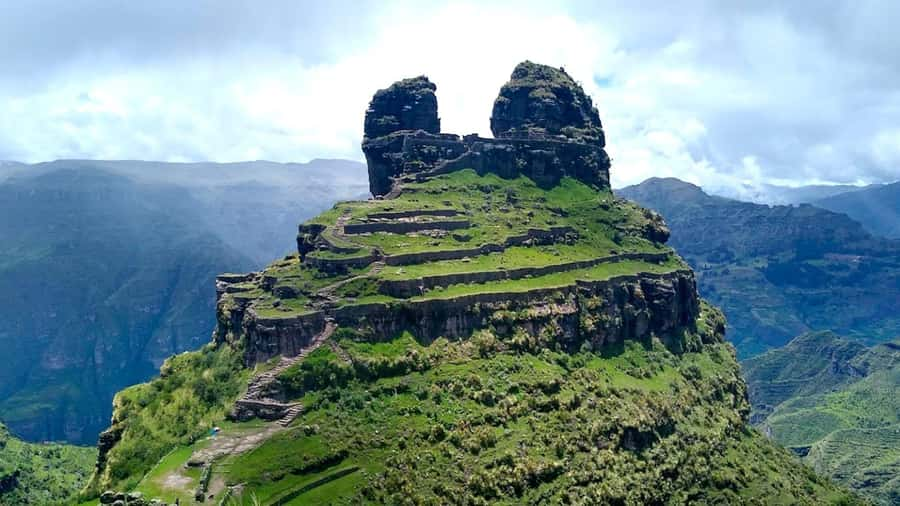
Cusco gives you famous stonework in an urban setting. Waqra Pukara gives you ancient construction on a mountain summit, with very little around it. That difference is the point.
The name is commonly linked to the shape of the rock formation, which resembles horns. The site combines natural cliffs with constructed terraces and ceremonial spaces. You are not simply walking through a set of walls. You are reaching a high rocky stronghold that uses the mountain itself as part of its design.
I find that setting more important than the size of the ruins. Waqra Pukara is not presented as a huge city or a polished museum site. Its appeal comes from the way stonework, cliffs, slopes, and open sky fit together. The approach helps you understand why the location mattered. From above, the surrounding valleys and ridges give the fortress a commanding position.
The guided visit takes place after you reach the site, with time to hear about the archaeological center and then explore independently. The quality of the explanation may vary, so if you want a detailed archaeological discussion, ask questions as you go. Some departures have focused more on taking photographs than on extended interpretation.
A few more Puno & Lake Titicaca days worth weighing up
- From Puno: Uros, Amantaní & Taquile Islands 2-Day Tour
★ 4.5 · 452 reviews - From Puno: Floating Islands of the Uros Half-Day Tour
★ 4.4 · 394 reviews - Lake Titicaca 2-Day Tour to Uros, Amantani and Taquile
★ 4.4 · 199 reviews
The 4:30 am start and the road toward Acomayo
Your day begins before sunrise. Pickup is offered from your hotel in central Cusco, with the listed meeting points also including Centro Histórico and Plaza Kusipata. You should wait in the hotel lobby from 10 minutes before the scheduled pickup time.
This early start is practical rather than glamorous. Waqra Pukara is a long way from Cusco, and the day needs enough hours for the drive, hike, site visit, meal stops, and return. You will want warm clothing, water, snacks, and a phone with the local contact number saved.
The transport is one area where I would keep expectations realistic. The route includes rough mountain roads, and the ride can feel uncomfortable. One departure involved a very bumpy drive with the vehicle scraping the road more than once. Another had a bus that could not manage steep sections, causing a long walk and a wait for replacement transport.
That does not mean every departure will have a problem. It does mean you should treat the vehicle and road conditions as part of the outing, not as a smooth transfer between attractions. If motion sickness affects you, sit where the ride is least rough and bring whatever normally helps you.
Breakfast near Pitumarca
The first main stop is in the Acomayo and Pitumarca area, where breakfast is served. This gives you a chance to eat before the hike rather than starting the climb on an empty stomach.
The food is described as a basic Andean breakfast. It is included, which is useful, but you should still carry snacks because snacks are not included in the price. The meals have received mixed marks for quality, so do not plan on breakfast being a major culinary highlight.
That is a small point with a practical effect. A full day at altitude requires steady energy, and the hike comes after the drive. Bring fruit, nuts, bread, chocolate, or another familiar snack. You can also carry extra water, since the package does not specify that drinks are included.
Pomacanchi Lagoon and the open country
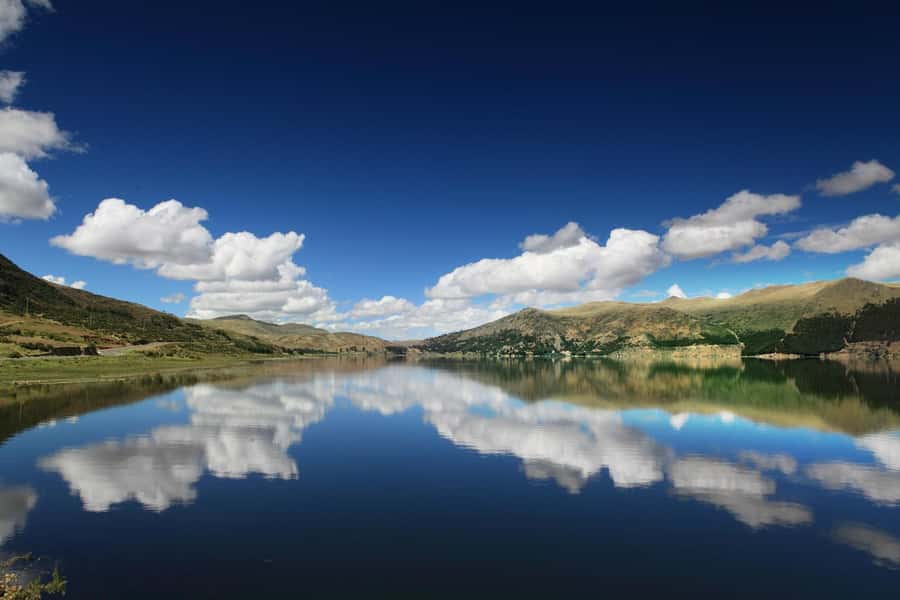
After breakfast, the route follows Pomacanchi Lagoon. This is one of the strongest parts of the day for anyone who likes seeing ordinary Andean life as well as archaeological sites.
The lagoon is surrounded by meadows and cultivated fields. Instead of moving directly from Cusco to a ruin, you pass through working countryside. The broad water and open farmland provide a change from the steep streets and dense buildings of Cusco.
The stop may be short, depending on the day’s timing. Still, look out the window. The route itself gives you a sense of the region’s scale and altitude, and it helps explain why the Waqra Pukara hike is not a quick city excursion. The mountains are not just a backdrop for photographs. They shape the road, the weather, and the pace of the day.
Same base, a completely different kind of day:
- Puno: Full-Day Tour of Lake Titicaca and Uros & Taquile
★ 4.4 · 178 reviews - Puno: Full-Day Route of the Sun Tour to Cusco with Lunch
★ 4.7 · 131 reviews - Cusco: Scenic Route of the Sun to Puno with Buffet Lunch
★ 4.8 · 101 reviews - Floating Islands of the Uros
★ 4.2 · 101 reviews
The hike to the horn-shaped fortress
The hike is described as lasting about three hours, although actual walking time can be shorter on some departures. That difference probably reflects the route, stops, pace, and road access, so you should prepare for a serious mountain walk rather than rely on the shortest reported timing.
You will see local plant life, high mountain scenery, and rock formations along the way. The reward is not one single viewpoint. The route gradually changes your sense of distance from the surrounding settlements and brings the fortress into view from different angles.
The path is not presented as technical climbing, but altitude makes ordinary walking harder. A person who is comfortable on a flat three-hour walk may still struggle here. Take slow, even steps and avoid racing ahead. The optional walking stick can help with balance on uneven ground.
Altitude sickness is the clearest health warning attached to this experience. If you are already experiencing headache, nausea, dizziness, or unusual weakness from altitude, this is not the day to push through. The tour is specifically unsuitable for people with altitude sickness.
Wear shoes with a firm sole. Pack a light rain layer and sun protection, since the weather can change quickly in the mountains, though the tour information does not promise a particular weather pattern. Your bag should stay light enough for the hike, but large enough for water, food, and a spare layer.
Arriving at Waqra Pukara around noon
The plan is to reach the fortress around midday. After a short rest, the bilingual guide leads the archaeological visit.
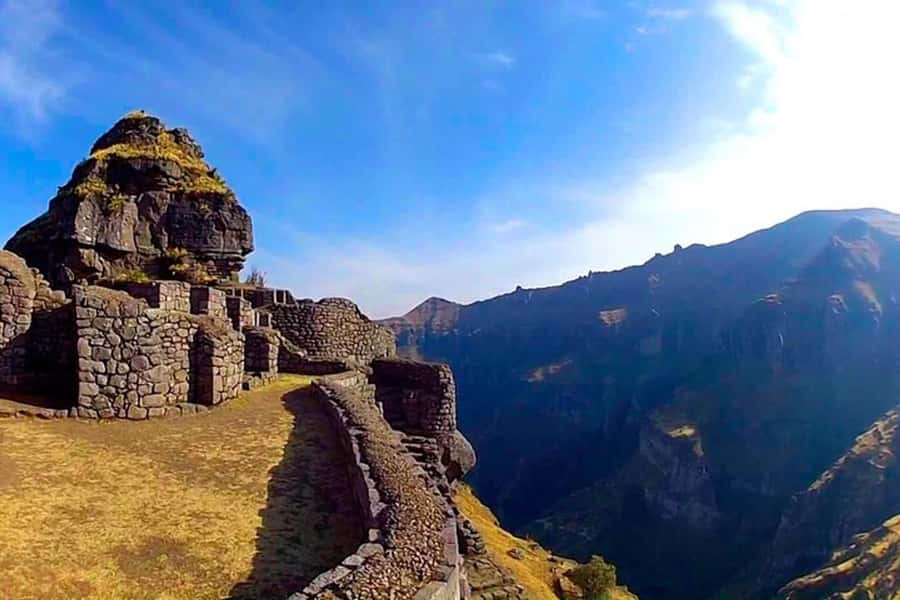
This is where the site earns its place on a Cusco itinerary. The fortress sits at the top of the mountain, surrounded by rock and open views. Its terraces and ceremonial construction show careful work in a difficult location. You can study the stone platforms, follow the shape of the site, and see how the builders used the natural formation.
The visual drama is immediate, but give yourself time to look past the famous outline. Notice how the terraces create usable levels on steep ground. Notice how the rock walls frame views into the surrounding valleys. The site is most interesting when you consider both its engineering and its setting.
The guide is there to provide detailed information in Spanish and English. Explanations may be fairly brief, so ask about the purpose of the terraces, the ceremonial areas, and the relationship between the built sections and the natural rock. After the guided part, you get free time for photos and independent exploration.
That free time is valuable. Waqra Pukara is a place where you will want to move slowly, find different angles, and take in the scale. It is also a place where safety matters. Stay on sensible paths, watch your footing near exposed edges, and do not let a photograph distract you from the drop-offs.
Lunch, the return drive, and the real length of the day
After the fortress visit, the group returns to Pitumarca for lunch. Like breakfast, lunch is included, but the food is best treated as convenient fuel rather than a reason to choose the tour.
The return to Cusco brings the day’s total close to 14 hours. The planned finish is around 5:00 pm at Plaza Regocijo in central Cusco. Delays are possible if the road, weather, or vehicle causes trouble. One alternate departure lost time after a transport failure and had to cut planned lake stops.
This is important when planning your evening. Do not book a dinner reservation, show, or airport transfer too close to the stated return time. The tour ends in central Cusco, not necessarily at your hotel, so allow time to walk or arrange a short transfer after Plaza Regocijo.
What the $50 price really covers
At $50 per person, the package offers fair value if the transport operates as planned. You are paying for a long round trip from Cusco, a bilingual guide, hotel pickup in the center, breakfast, lunch, first aid equipment, and the guided visit.
The entrance fee is not included. Set aside S/15.00 for Waqra Pukara. Snacks and extra expenses are also your responsibility.
I would compare this price with what matters most to you. If you want a remote archaeological site without arranging several separate transfers, the included transport and meals are useful. If you care most about polished logistics, smooth roads, and detailed guiding, the value is less certain.
The operator is CapacHuarmi. Pickup communication deserves attention because two departures had serious problems involving no-show transport or difficulty reaching the company on the day. Those cases may not represent every departure, but they are serious enough that I would confirm the date, pickup point, time, and phone contact before leaving Cusco.
Who should choose this day trip
I would recommend Waqra Pukara to you if you want a less familiar Andean site, enjoy mountain walking, and are willing to trade comfort for scenery and atmosphere. It suits someone who sees the road and hike as part of the experience, not just as obstacles before the ruins.
It is also a good fit if you have already seen Cusco’s central sights and want a full day outside the city. The fortress, lagoon, fields, and mountain views give the trip more variety than a simple ruin visit.
I would be cautious if you are short on time, affected by altitude, or uncomfortable with rough transport. The early start can make the day tiring, and the site does not reward a rushed schedule. If your main goal is easy sightseeing with reliable timing, choose a shorter or more established excursion.
The scenery receives the strongest praise, and that feels fair. Waqra Pukara’s shape and position make it memorable. The service side is less consistent, so your decision should depend on how much uncertainty you can accept.
Should you book Waqra Pukara?
Book it if the fortress itself is your priority and you want a demanding day in a dramatic Andean setting. The combination of mountain construction, terraces, rock formations, and Pomacanchi Lagoon is unusual, and the $50 price includes several useful basics.
Before paying, confirm the pickup details with CapacHuarmi and make sure you are ready for altitude, early rising, rough roads, and a long return. Carry snacks, water, sun protection, and warm or rain-ready layers.
I would not call this an effortless must-do. I would call it a worthwhile choice for the right person: fit enough for the altitude, curious about remote archaeology, and patient when mountain transport does not run like city transport.
FAQ
Where does the tour pick me up?
Pickup is included from hotels in central Cusco. Listed pickup locations include Centro Histórico and Plaza Kusipata. You should wait in your hotel lobby from 10 minutes before the scheduled pickup time.
How long does the Waqra Pukara tour last?
The full day runs for about 14 hours. Pickup begins around 4:30 am, and the tour is scheduled to finish at Plaza Regocijo in central Cusco at approximately 5:00 pm.
Is the hike really three hours long?
The hike is described as approximately three hours, but actual walking time can vary. Some departures have taken closer to one hour, depending on the route and conditions.
Is breakfast and lunch included?
Yes. Breakfast is served in the Acomayo and Pitumarca area, and lunch is planned after the visit to Waqra Pukara. Snacks are not included, so bring your own.
Is the entrance fee included?
No. The Waqra Pukara entrance fee is S/15.00 per person and must be paid separately.
Is the tour suitable for someone with altitude sickness?
No. The experience is not suitable for people with altitude sickness. The hike takes place at high altitude and can be physically demanding.
Just added around Puno & Lake Titicaca
- Uros Floating Islands Tour in Puno★ 3.7 · 9 reviews
- TRIP FROM PUNO TO CUSCO WITH THE ROUTE OF THE SUN★ 4.7 · 16 reviews
- Two Day Lake Titicaca Tour With Homestay★ 3.7 · 6 reviews
- Two-Day Tour to Uros with Amantani and Taquile from Puno★ 5.0 · 44 reviews
- Full Day Lake Titicaca Tour to Uros and Taquile Islands★ 4.5 · 56 reviews
- Full Day Guided Tour of the Aymara Route from Puno★ 5.0 · 55 reviews
- Full-Day Tour of Uros, Taquile and Sillustani from Puno★ 5.0 · 41 reviews
- Titicaca Lake 2 Day 1 Night from Cusco to Puno★ 4.5 · 33 reviews
Puno & Lake Titicaca Tours, compared.
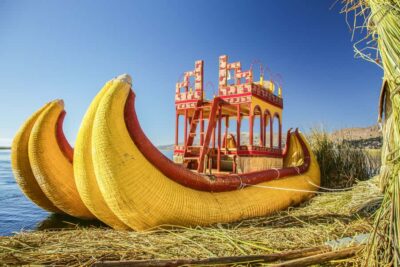
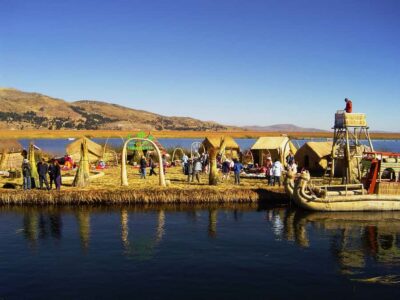
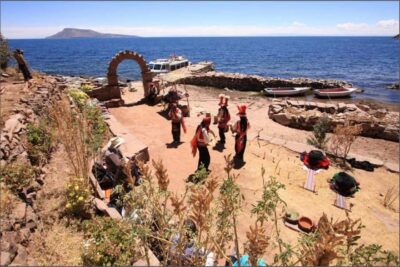
Lake Titicaca 2-Day Tour to Uros, Amantani and Taquile
Read our review →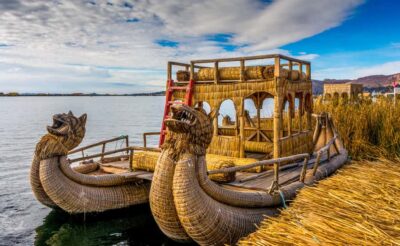
Full-Day Tour of Lake Titicaca and Uros & Taquile
Read our review →
Full-Day Route of the Sun Tour to Cusco with Lunch
Read our review →
Scenic Route of the Sun to Puno with Buffet Lunch
Read our review →
Browse the lists this tour appears in